

Basic information
- Standard SMILES
NC(CO)(CO)CO- InChIKey
LENZDBCJOHFCAS-UHFFFAOYSA-N- Molecular formula
- C4H11NO3
- Average molar mass
- 121.14 g/mol
- Monoisotopic mass
- 121.07389321
Overview
Tris is a primary amino compound that is tert-butylamine in which one hydrogen attached to each methyl group is replaced by a hydroxy group. A compound widely used as a biological buffer substance in the pH range 79; pKa = 8.3 at 20 C; pKa = 7.82 at 37 C. It has a role as a buffer. It is a triol and a primary amino compound. It is a conjugate base of a member of Htris.
Names & identifiers
- Preferred name
- Tris(hydroxymethyl)aminomethane
- IUPAC
- 2-amino-2-(hydroxymethyl)propane-1,3-diol
- English name
- .beta.-D-ribo-Hexopyranose, 1,6-anhydro-3-deoxy-2-O-(1-methylethyl)-4-O-(phenylmethyl)-
- Molecular formula
- C16H22O4
- Molecular weight
- 278.35
Names & synonyms
TrometamolTROMETHAMINE77-86-1Tris(Hydroxymethyl)aminomethaneThamTrisamine2-Amino-2-(hydroxymethyl)-1,3-propanediolTris bufferTromethaneTris-baseTrisaminolPehanorm
Show more names
β-D-ribo-Hexopyranose, 1,6-anhydro-3-deoxy-2-O-(1-methylethyl)-4-O-(phenylmethyl)-.beta.-D-ribo-Hexopyranose, 1,6-anhydro-3-deoxy-2-O-(1-methylethyl)-4-O-(phenylmethyl)-
TalatrolTutofusin trisTris-sterilAddex-tham1,3-Propanediol, 2-amino-2-(hydroxymethyl)-TrispufferTrimethylolaminomethaneTris Amino
Database identifiers
- CAS
136760-04-8、77-86-1- PubChem CID
- 6503
- DTXSID
DTXSID2023723- ChEMBL
CHEMBL1200391- ChEBI
CHEBI:9754- UNII
- 023C2WHX2V
- EC Number
- 201-064-4
- Nikkaji
- J4.214E
Properties
Computed structural properties
- XLogP
- -2.9
- Topological polar surface area
- 86.7 Ų
- Hydrogen bond donors
- 4
- Hydrogen bond acceptors
- 4
- Rotatable bonds
- 3
- Heavy atoms
- 8
- Formal charge
- 0
- Complexity
- 54
Experimental & physicochemical properties
Chemical ClassesOther Uses -> Biological Buffers
Drugs
Pharmaceuticals -> Used in Switzerland
Pharmaceuticals -> Listed in ZINC15
Pharmaceuticals
Cosmetics
Cosmetic ingredients (Tromethamine) -> CIR (Cosmetic Ingredient Review)
Buffering
pHpH of 0.1 molar aq soln = 10.4
SpringerMaterials PropertiesCrystal structure
FragrancesFragrance Ingredient (2-Amino-2-(hydroxymethyl)-1,3-propanediol) -> IFRA transparency List
OdorSLIGHT, CHARACTERISTIC ODOR
TasteFAINT, SWEET, SOAPY TASTE
Color/Form
Crystalline mass
WHITE, CRYSTALLINE POWDER
Solubility
79.1 mg/mL in ethylene glycol; 26 mg/mL in methanol; 14.6 mg/mL in anhyd ethanol; 22 mg/mL in 95% ethanol; 14 mg/mL in dimethyl formamide; 20 mg/mL in acetone; 0.5 mg/mL in ethyl acetate; 0.4 mg/mL in olive oil; 0.1 mg/mL in cyclohexane; 0.05 mg/mL in chloroform; less than 0.05 mg/mL in carbon tetrachloride
In water, 5.50X10+5 mg/L at 25 °C
Human Drugs
FDA approved drugs -> Active ingredient
FDA approved drugs -> Active ingredient
Animal Drugs
Pharmaceuticals -> UK Veterinary Medicines Directorate List
Pharmaceuticals -> Animal Drugs -> Approved in Taiwan
Physicochemical properties
- Boiling point
- 371.4 · 371.4±42.0 °C(Predicted)
- Density
- 1.13 · 1.13±0.1 g/cm3(Predicted)
Safety & regulation
GHS classification
GHS Classification
This chemical does not meet GHS hazard criteria for 19.7% (235 of 1192) of reports.
Warning
H315 (80.2%): Causes skin irritation [Warning Skin corrosion/irritation]
P261, P264, P264+P265, P271, P280, P302+P352, P304+P340, P305+P351+P338, P319, P321, P332+P317, P337+P317, P362+P364, P403+P233, P405, and P501 (click each P-code to see the statement)
Aggregated GHS information provided per 1192 reports by companies from 31 notifications to the ECHA C&L Inventory. Each notification may be associated with multiple companies.
Hazard information
Regulatory Information
Chemical: 1,3-Propanediol, 2-amino-2-(hydroxymethyl)-
1,3-Propanediol, 2-amino-2-(hydroxymethyl)- is listed on the EPA's Chemical Data Reporting (CDR) system. Manufacturers and importers of 1,3-Propanediol, 2-amino-2-(hydroxymethyl)- are required to report information about their production and use of this chemical to the EPA under the Toxic Substances Control Act (TSCA). (40 eCFR Part 711)
Status: Active Update: 06-04-2023 https://echa.europa.eu/registration-dossier/-/registered-dossier/14861
.beta.-D-ribo-Hexopyranose, 1,6-anhydro-3-deoxy-2-O-(1-methylethyl)-4-O-(phenylmethyl)-: Does not have an individual approval but may be used under an appropriate group standard
Tromethamine: Does not have an individual approval but may be used under an appropriate group standard
Other Safety InformationIMAP assessments - 1,3-Propanediol, 2-amino-2-(hydroxymethyl)-: Environment tier I assessment
Hazards Summary
Not expected to be a skin sensitizer, based on similar compounds; Little if any human toxicity observed in many years of use in drugs and/or personal care products and cosmetics; [EPA ChAMP: Submission] A skin and strong eye irritant; [Alfa Aesar MSDS]
FDA Requirements
The Approved Drug Products with Therapeutic Equivalence Evaluations List identifies currently marketed prescription drug products, incl tromethamine, approved on the basis of safety and effectiveness by FDA under sections 505 of the Federal Food, Drug, and Cosmetic Act.
DOT Hazard Classification
Tris, bis-bifluoroamino diethoxy propane (TVOPA)
Forbidden explosives/materials (49 eCFR § 173.54/§ 173.21)
Hazard Classes and CategoriesSkin Irrit. 2 (80.2%)
Safety & protection
Storage ConditionsTromethamine injection should be stored at 20-25 °C; freezing should be avoided. Unused portions of tromethamine solution should be discarded.
Disposal Methods
SRP: At the time of review, criteria for land treatment or burial (sanitary landfill) disposal practices are subject to significant revision. Prior to implementing land disposal of waste residue (including waste sludge), consult with environmental regulatory agencies for guidance on acceptable disposal practices.
Protective Action Criteria (PAC)
18 [mg/m3]
190 [mg/m3]
1200 [mg/m3]
Toxicology
Environmental Fate
TERRESTRIAL FATE: Based on a classification scheme(1), an estimated Koc value of 1(SRC), determined from a structure estimation method(2), indicates that tromethamine is expected to have very high mobility in soil(SRC). However, tromethamine has a pKa of 8.07(3) and should exist partially as a cation under environmental conditions (pH 5-9)(SRC). As a result, tromethamine may have greater adsorption and less mobility than its estimated Koc value indicates since cations generally adsorb more strongly to soils containing organic carbon and clay than neutral species(4). Volatilization of tromethamine from moist soil surfaces is not expected to be an important fate process(SRC) since cations do not volatilize and the estimated Henry's Law constant for the neutral species is 8.7X10⁻¹³ atm-cu m/mole(SRC), using a fragment constant estimation method(5). Tromethamine is not expected to volatilize from dry soil surfaces(SRC) based upon an estimated vapor pressure of 2.2X10⁻⁵ mm Hg(SRC), determined from a fragment constant method(6).
AQUATIC FATE: Based on a classification scheme(1), an estimated Koc value of 1(SRC), determined from a structure estimation method(2), indicates that tromethamine is not expected to adsorb to suspended solids and sediment(SRC). However, tromethamine has a pKa of 8.07(3) and should exist partially as a cation under environmental conditions (pH 5-9)(SRC). As a result, tromethamine may have greater adsorption to suspended solids and sediment than its estimated Koc value indicates(SRC). Volatilization from water is not expected(4) since cations do not volatilize and the estimated Henry's Law constant for the neutral species (free base) of tromethamine is 8.7X10⁻¹³ atm cu m/mol(SRC), calculated using a fragment constant estimation method(5). According to a classification scheme(6), an estimated BCF of 3(SRC), from an estimated log Kow of -1.56(7) and a regression-derived equation(8), suggests the potential for bioconcentration in aquatic organisms is low(SRC).
ATMOSPHERIC FATE: According to a model of gas/particle partitioning of semivolatile organic compounds in the atmosphere(1), tromethamine, which has a an estimated vapor pressure of 2.2X10⁻⁵ mm Hg at 25 °C(SRC), determined from a fragment constant method(2), is expected to exist in both the vapor and particulate phases in the ambient atmosphere. Vapor-phase tromethamine is degraded in the atmosphere by reaction with photochemically-produced hydroxyl radicals(SRC); the half-life for this reaction in air is estimated to be 11 hours(SRC), calculated from its rate constant of 3.4X10⁻¹¹ cu cm/molecule-sec at 25 °C(SRC) that was derived using a structure estimation method(3). Particulate-phase tromethamine is removed from the atmosphere by wet and dry deposition(SRC). Tromethamine does not contain chromophores that absorb at wavelengths >290 nm and therefore is not expected to be susceptible to direct photolysis by sunlight(4).
Toxicity SummarySafe in the present practices of use and concentration. Ingredient, concentration, and use information are available in documents discoverable at https://cir-reports.cir-safety.org
Soil Adsorption/Mobility
Using a structure estimation method based on molecular connectivity indices(1), the Koc of tromethamine can be estimated to be 1(SRC). According to a classification scheme(2), this estimated Koc value suggests that tromethamine is expected to have very high mobility in soil(SRC). The pKa of tromethamine is 8.07(3), indicating that this compound will partially exist as a cation in the environment. As a result, the mobility of tromethamine may be overestimated since cations generally adsorb more strongly to soils containing organic carbon and clay than neutral species(4).
Human Toxicity Excerpts
/HUMAN EXPOSURE STUDIES/ In studies of tromethamine administration in healthy individuals, the ventilatory rate remained constant, but a reduced tidal volume produced a decrease in minute ventilation and in carbon dioxide output; arterial oxygen saturation decreased by an average of about 5%.
/SIGNS AND SYMPTOMS/ Too rapid administration and/or excessive amounts of tromethamine may cause alkalosis, hypoglycemia, overhydration or solute overload.
Artificial Pollution SourcesTromethamine's production and use as an emulsifying agent, in the synthesis of surface-active agents and vulcanization accelerators(1) may result in its release to the environment through various waste streams(SRC).
Environmental BiodegradationTromethamine yielded no oxygen uptake when incubated with pure cultures of different strains of bacteria(1), indicating biodegradation may be slow in the environment.
Carcinogen Classification
Tris(chloropropyl) phosphate (TCPP)
Group 2A: Probably carcinogenic to humans
Volume 141
In prep.
2026
Drug Induced Liver Injury
Drug Induced Liver Injury Rank (DILIrank 2.0)
Tromethamine
Ambiguous-DILI-concern
6
Adverse reactions
DOI:10.1016/j.drudis.2016.02.015
Environmental Bioconcentration
An estimated BCF of 3 was calculated for tromethamine (SRC), using an estimated log Kow of -1.56(1) and a regression-derived equation(2). According to a classification scheme(3), this BCF suggests the potential for bioconcentration in aquatic organisms is low(SRC).
Volatilization from Water/Soil
Tromethamine is a weak base with pKa of 8.07(1). This estimated pKa indicates tromethamine will partially exist in the protonated form in the environment. Volatilization from moist soil and water is not expected since cations do not volatilize and the estimated Henry's Law constant for the neutral species (free base) of tromethamine is 8.7X10⁻¹³ atm cu m/mol(SRC), using a fragment constant estimation method(2). Tromethamine is not expected to volatilize from dry soil surfaces(SRC) based upon an estimated vapor pressure of 2.2X10⁻⁵ mm Hg(SRC), determined from a fragment constant method(3).
Non-Human Toxicity Excerpts
/LABORATORY ANIMALS: Acute Exposure/ Even after neutralization, large oral doses in lab animals cause weakness, collapse, & coma (without convulsions). Injections of high doses in animals produce hypoglycemia, but concurrent administration of glucose does not prevent death.
Environmental Abiotic Degradation
The rate constant for the vapor-phase reaction of tromethamine with photochemically-produced hydroxyl radicals has been estimated as 3.4X10⁻¹¹ cu cm/molecule-sec at 25 °C(SRC), using a structure estimation method(1). This corresponds to an atmospheric half-life of about 11 hours(SRC) at an atmospheric concentration of 5X10+5 hydroxyl radicals per cu cm(1). Tromethamine is not expected to undergo hydrolysis in the environment due to the lack of hydrolyzable functional groups(2). Tromethamine does not contain chromophores that absorb at wavelengths >290 nm and therefore is not expected to undergo direct photolysis by sunlight(2).
Regulatory information
FDA Requirements
The Approved Drug Products with Therapeutic Equivalence Evaluations List identifies currently marketed prescription drug products, incl tromethamine, approved on the basis of safety and effectiveness by FDA under sections 505 of the Federal Food, Drug, and Cosmetic Act.
Chemistry & industry
Pharmacology
ATC Code
B - Blood and blood forming organs
B - Blood and blood forming organs
QB - Blood and blood forming organs
QB - Blood and blood forming organs
Mechanism of Action
Tromethamine is an alkalinizing agent which acts as a proton (hydrogen ion) acceptor. Tromethamine is a weak base; following IV injection, it attracts and combines with hydrogen ions and their associated acid anions and the resulting salts are excreted in urine. Tromethamine can combine with lactic, pyruvic, and other metabolic acids and with carbonic acid. ... At pH 7.4, approximately 70% of the tromethamine present in plasma is in the ionized (protonated) form; if pH is decreased from pH 7.4, the ionized fraction of the drug is increased. In contrast to the ionized fraction of tromethamine, which upon administration reacts only with acid in the extracellular fluids, the fraction of the dose which remains un-ionized at physiologic pH is thought to be capable of penetrating the cell membrane to combine with intracellular acid. Since administration of tromethamine reduces hydrogen ion concentration, there is a decrease in proton donor and an increase in proton acceptor concentrations in body buffers. In the bicarbonate:carbonic acid buffer, the concentration of dissolved carbon dioxide is decreased (at least until regulatory mechanisms compensate) and the concentration of bicarbonate is increased. The reduction of carbon dioxide tension removes a potent stimulus to breathing and may result in hypoventilation and hypoxia.
Tromethamine ... acts as a weak, osmotic diuretic, increasing the flow of alkaline urine containing increased amounts of electrolytes.
By removing protons from hydronium ions, ionization of carbonic acid is shifted so as to decrease pCO2 and to increase bicarbonate. Excess bicarbonate is then gradually excreted in kidney. /Tromethamine is an/ especially useful way to manage excessively high pCO2 in respiratory acidosis...
Metabolism/MetabolitesTromethamine is not metabolized appreciably.
MeSH Pharmacological Classification
A chemical system that functions to control the levels of specific ions in solution. When the level of hydrogen ion in solution is controlled the system is called a pH buffer.
Usually inert substances added to a prescription in order to provide suitable consistency to the dosage form. These include binders, matrix, base or diluent in pills, tablets, creams, salves, etc.
Absorption, Distribution and Excretion
Tromethamine is substantially eliminated by the kidneys. ... Ionized tromethamine (chiefly as the bicarbonate salt) is rapidly and preferentially excreted in urine at a rate that depends on the infusion rate. The manufacturer states that urinary excretion continues over a period of 3 days; 75% or more appears in the urine after 8 hours. In some studies, 50-75% of an iv dose was recovered in urine within 24 hours, but another study reported recovery in healthy adults to be 64% and 77% after 2 and 3 days, respectively.
It is not known whether tromethamine is distributed in human milk.
Ionized tromethamine is excreted by kidney, so the effect is that of excretion of hydrogen ions. Elimination of drug from body is entirely by renal excretion. Excretion of tromethamine is accompanied by osmotic diuresis, since clinical doses of drug considerably add to osmolarity of glomerular filtrate.
In rats of different age (5 to 240 days old) the renal excretion of Trishydroxymethylaminomethane (THAM) was studied. In 5 and in 240 days old rats the renal excretion of THAM was slower than in rats of other age groups. Stimulation of diuresis by i.p. injection of mannitol, thiazide or by oral water load resulted in an increase in THAM excretion in 5 and in 240 days old rats. The renal excretion of THAM was also increased by repeated administration of THAM in all age groups, except in new born rats. Possible mechanisms of action are discussed.
The distribution of 14C labelled THAM (tris-hydroxymethylaminomethane) was determined between intra- and extracellular space of nephrectomized Sprague-Dawley rats as a function of time at constant plasma pH of 7.4. The following results were obtained: An equilibrium in the distribution of THAM between ECS and ICS will not occur before 6-12 hours after administration. This indicates that THAM permeates very slowly into the intracellular compartment, which is in contrast to the general assumption that it quickly diffuses into the intracellular space to restore the intracellular acidosis. THAM disappears from the extracellular space in a multiexponential fashion, indicating that it equilibrates with the different body tissues at largely variable rates. The equilibrium which occurs between both body compartments 6-12 hours after THAM application does not agree with the values which are expected for transfer of only the nonionised substance. At plasma pH 7.4 and a "mean whole body pHi" of 6.88, THAM is distributed with a distribution ratio of 4 (ICS/ECS), a value quite different from the value of 11 which would be expected for exclusive nonionic diffusion. Thus THAM is also transferred across the cell membrane in ionized form. These results indicate that the influx of THAM into the intracellular space is too slow (when compared to the renal elimination kinetics) to influence intracellular pH significantly by direct buffer action. Moreover, only a fraction of THAM enters the intracellular space in the nonionized form, thus reducing (to an even greater extent) the direct effect of THAM on the intracellular acid-base equilibrium.
Tissue LocationsPlacenta
Uses & manufacturing
Uses
CIR ingredient: Tromethamine
Used in chemical manufacturing (surface-active agents, vulcanization accelerators, and pharmaceuticals), as an emulsifying agent (cosmetics, mineral oil and paraffin wax emulsions, leather dressings, textile specialties, polishes, cleaning compounds, and soluble oils), and as an absorbent for acidic gases, biological buffer, acidimetric standard, and therapeutic alkalinizing agent; [Merck Index] Used in buffer systems for the freezer storage of sperm; [REPROTOX] Used in to regulate pH in the transport of live aquatic species, cell culture media, and anti-inflammatory drugs; [EPA ChAMP: Submission]
Leather Tanning and Processing [Category: Industry]
In the synthesis of surface-active agents, vulcanization accelerators, pharmaceuticals. As emulsifying agent for cosmetic creams and lotions, mineral oil and paraffin wax emulsions, leather dressings, textile specialties, polishes, cleaning compounds, so-called soluble oils. Absorbent for acidic gases. Biological buffer.
Therapeutic Category: Alkalinizing agent
MEDICATION
U.S. Production
2023: 10,000,000 - <50,000,000 lb
Production volumes for non-confidential chemicals reported under the Inventory Update Rule. [Table#4578]
1,3-Propanediol, 2-amino-2-(hydroxymethyl)- is listed as a High Production Volume (HPV) chemical (65FR81686). Chemicals listed as HPV were produced in or imported into the U.S. in >1 million pounds in 1990 and/or 1994. The HPV list is based on the 1990 Inventory Update Rule. (IUR) (40 CFR part 710 subpart B; 51FR21438).
Consumer UsesLaboratory chemicals
Industry UsesOther
Methods of Manufacturing
... Prepared by reduction of tris(hydroxymethyl)nitromethane.
May be prepared by reducation or catalytic hydrogenation of the corresponding nitro compd. ... Preparation by by electrolytic reduction: McMillan, US patent 2485982 (1949 to Comm Solvents Corp)
Formulations/Preparations
Tromethamine formulations: Parenteral injection 36 mg/mL (18 g) Tham, Hospira.
TROMETHAMINE, NF (THAM), IS AVAIL AS 0.3 MOLAR SOLN ADJUSTED TO PH 8.6 WITH ACETIC ACID. IT IS ALSO SUPPLIED AS POWDER (THAM-E) TO BE DISSOLVED IN 1 L OF STERILE WATER. EACH L CONTAINS 300 MMOLES (36 G) OF TROMETHAMINE, 30 MMOLES OF SODIUM CHLORIDE, & 5 MMOLES OF POTASSIUM CHLORIDE.
Household ProductsInformation on 2 consumer products that contain Tromethamine in the following categories is provided:
Use Classification
Fragrance Ingredients
Pharmaceuticals -> Animal Drugs -> Approved in Taiwan
Cosmetics -> Buffering
General Manufacturing Information
Wholesale and Retail Trade
1,3-Propanediol, 2-amino-2-(hydroxymethyl)-: ACTIVE
Suppliers50 total
国药集团化学试剂有限公司86-21-63210123 · [email protected]
北京华美互利生物化工010-56205725 · [email protected]
梯希爱(上海)化成工业发展有限公司021-67121386 · [email protected]
上海阿拉丁生化科技股份有限公司400-6206333 13167063860 · [email protected]
武汉德晟生化科技有限公司0711-3702650 18971041571 · [email protected]
INTATRADE GmbH+49 3493/605464 · [email protected]
T&W GROUP021-61551611 13296011611 · [email protected]
爱斯特(成都)生物制药股份有限公司+86-28-85122536 85324413 · [email protected]
上海如吉生物科技发展有限公司+86-21-65211385-8001 36031160 · [email protected]
北京安司莫森技术有限公司010-82954736 13391601435 · [email protected]
韶远科技(上海)有限公司021-50795510 4000665055 · [email protected]
科瑞迪化学400-821-5857 021-64326257 · [email protected]
上海将来实业股份有限公司400-0066400 13621662912 · [email protected]
Syntechem Co.,Ltd[email protected]
上海迈瑞尔生化科技有限公司4006356688 18621169109 · [email protected]
武汉易泰科技有限公司上海分公司18930552037 · [email protected]
大连美仑生物技术有限公司0411-62910999 13889544652 · [email protected]
阿法埃莎(中国)化学有限公司400-6106006 · [email protected]
南京纽安洁化工科技有限公司0515-82159099 13770142076
安耐吉化学&3A(安徽泽升科技股份有限公司)400-0056266 · [email protected]
秦皇岛天资化工有限公司13313337629 15227250682 · [email protected]
上海瀚鸿科技股份有限公司021-54306202 13764082696 · [email protected]
常州市淇奥化工有限公司0519-85607258
上海景颜化工科技有限公司13817811078 · [email protected]
嘉兴市艾森化工有限公司0573-85285100 18627885956 · [email protected]
上海泰坦科技股份有限公司400-6009262 15618770481 · [email protected]
武汉丰泰威远科技有限公司027-87465837 19945049750 · [email protected]
南京美博生物科技有限公司025-58619198 · [email protected]
Beckmann-Kenko GmbH+49 4241 9308 88 · [email protected]
山东西亚化学有限公司13355009207 13355009207 · [email protected]
唐山默内德贸易有限公司0315-8309571 15633399667 · [email protected]
玛雅试剂+86 (573) 82222445 (0)18006601000 452520369 · [email protected]
四川库利南科技有限公司400-1166-196 18981987031 · [email protected]
天津希恩思生化科技有限公司400 638 7771 · [email protected]
湖南汇百侍生物科技有限公司0731-85526065 13308475853 · [email protected]
河南多贝化工有限公司0370-2785118 17550508557 · [email protected]
斯百全化学(上海)有限公司021-021-021-67601398-809-809-809 15221380277 · [email protected]
北京泰亚杰科技有限公司021-33690831-8001 13552411790;18616022633 · [email protected]
上海源叶生物科技有限公司13636370518 · [email protected]
艾科试剂4008-755-333 18080918076 · [email protected]
上海思域化工科技有限公司86-21-34053660 · [email protected]
赛默飞世尔科技(中国)有限公司800-810-5118 · [email protected]
北京伊诺凯科技有限公司400-810-7969 010-59572699 · [email protected]
Wuhan NCE Biomedical Co.,Ltd.4000-027-021 |24 +86-13986109188 | +86-15623472865 | +81-08033611988
上海遐瑞医药科技有限公司+86 21 61551611
上海健超生物科技有限公司150-2103-5486 18017383231 · [email protected]
TCI AMERICA800-4238616 · [email protected]
TOKYO CHEMICAL INDUSTRY CO., LTD.03-36680489 · [email protected]
TCI Europe320-37350700 · [email protected]
上海贤鼎生物科技有限公司4009209199 · [email protected]
Additional notes
DefinitionChEBI: Tris is a primary amino compound that is tert-butylamine in which one hydrogen attached to each methyl group is replaced by a hydroxy group. A compound widely used as a biological buffer substance in the pH range 7--9; pKa = 8.3 at 20 ℃; pKa = 7.82 at 37 ℃. It has a role as a buffer. It is a triol and a primary amino compound. It is a conjugate base of a member of Htris.
Related reactions
463 records





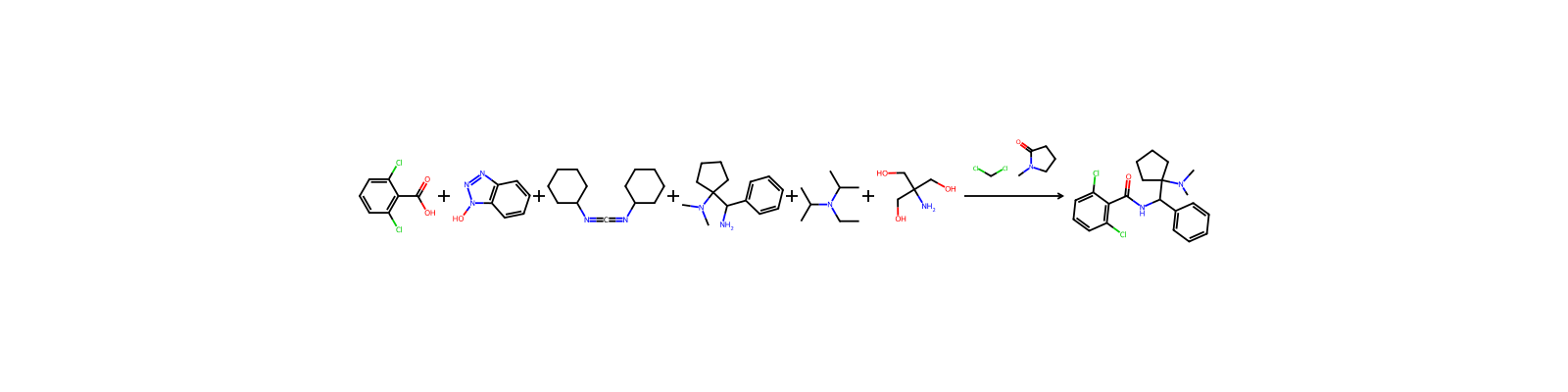

Linked notes
Loading…