
Vinyltriethoxysilane
Completing data — refresh the page later to see the latest
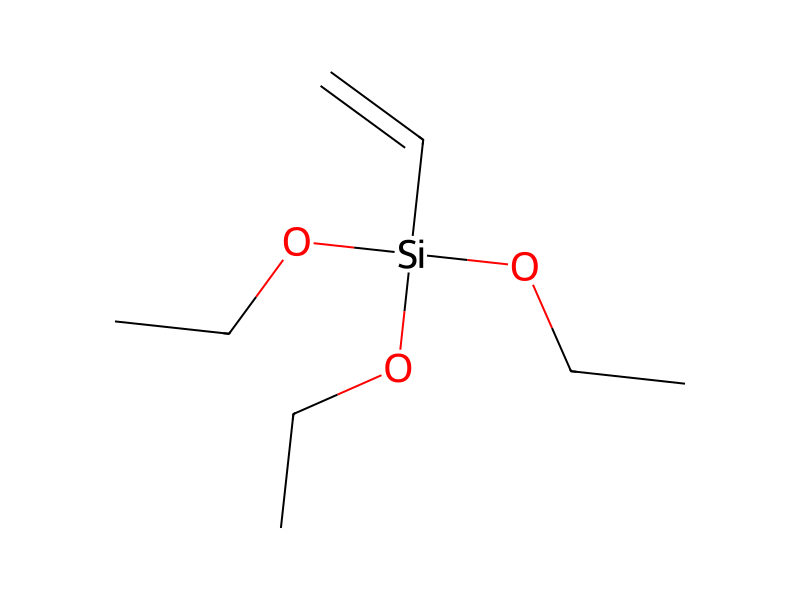
Basic information
- CAS
78-08-0- Standard SMILES
C=C[Si](OCC)(OCC)OCC- InChIKey
FWDBOZPQNFPOLF-UHFFFAOYSA-N- Molecular formula
- C8H18O3Si
- Average molar mass
- 190.31 g/mol
- Monoisotopic mass
- 190.10252097
Overview
aqueous adhesive for affixing sections to glass slides when hydrolyzed
Names & identifiers
- Preferred name
- Vinyltriethoxysilane
- IUPAC
- ethenyl(triethoxy)silane
- English name
- Triethoxyvinylsilane
- Molecular formula
- C8H18O3Si
- Molecular weight
- 190.31
Names & synonyms
VinyltriethoxysilaneTRIETHOXYVINYLSILANE78-08-0Silane, ethenyltriethoxy-Triethoxy(vinyl)silaneTriethoxyvinylsilicaneSilane, triethoxyvinyl-VTESSilane A 151Triethoxyvinyl silaneethenyltriethoxysilaneKBE 1003
Show more names
VTEOEthenyltriethyloxy-silaneA 151nv1107CV-4910CFS-080kbe1003
NV 11078V1TKX755VRefChem:901964201-081-7Union carbide A-151ethenyl(triethoxy)silaneVTS-ECCRIS 2645
Database identifiers
- CAS
78-08-0- PubChem CID
- 6516
- DTXSID
DTXSID3044463- ChEMBL
CHEMBL3188350- UNII
- 8V1TKX755V
- EC Number
- 201-081-7
- Nikkaji
- J44.149J
Properties
Computed structural propertiesFilling in
- Topological polar surface area
- 27.7 Ų
- Hydrogen bond donors
- 0
- Hydrogen bond acceptors
- 3
- Rotatable bonds
- 7
- Heavy atoms
- 12
- Formal charge
- 0
- Complexity
- 110
Experimental & physicochemical properties
Chemical ClassesMetals -> Metalloid Compounds (Silicon)
SpringerMaterials PropertiesChemical shift
Density0.901 @25 °C
Vapor Pressure
2.28 [mmHg]
2.25 [mm Hg] @20 °C
Physical Description
Liquid
Colorless liquid with a fruity odor; [Alfa Aesar MSDS]
Physicochemical properties
- Melting point
- 0 °C · <0°C
- Boiling point
- 160 · 160-161 °C(lit.)
- Density
- 0.903 g/mL · 0.903 g/mL at 25 °C(lit.)
- vapor pressure
- 7 hPa · 7 hPa (20 °C)
- refractive index
- 20 · n20/D 1.398(lit.)
- Flash point
- 94 °F · 94 °F
- storage temp.
Safety & regulation
Safety information is for reference only and does not replace the supplier’s Safety Data Sheet (SDS), applicable regulations, or professional assessment.
GHS classification
GHS Classification
This chemical does not meet GHS hazard criteria for 17.7% (63 of 356) of reports.
Warning
H226 (82.3%): Flammable liquid and vapor [Warning Flammable liquids]
P210, P233, P240, P241, P242, P243, P261, P264+P265, P271, P280, P303+P361+P353, P304+P340, P305+P351+P338, P319, P337+P317, P370+P378, P403+P233, P403+P235, P405, and P501 (click each P-code to see the statement)
Aggregated GHS information provided per 356 reports by companies from 10 notifications to the ECHA C&L Inventory. Each notification may be associated with multiple companies.
Hazard information
Regulatory Information
Chemical: Silane, ethenyltriethoxy-
Regulation (EC) No 1935/2004 (amended)
Silane, ethenyltriethoxy- is listed on the EPA's Chemical Data Reporting (CDR) system. Manufacturers and importers of Silane, ethenyltriethoxy- are required to report information about their production and use of this chemical to the EPA under the Toxic Substances Control Act (TSCA). (40 eCFR Part 711)
REACH registered substance: Triethoxy(vinyl)silane (EC: 201-081-7)
Silane, ethenyltriethoxy-: Does not have an individual approval but may be used under an appropriate group standard
Other Safety InformationEvaluation - Chemicals that are unlikely to require further regulation to manage risks to environment
Hazards SummaryA mild skin and eye irritant; [RTECS] Hydrolyzed by water; A mild skin and strong eye irritant; [Alfa Aesar MSDS] See Octamethyltrisiloxane and Dimethoxydimethylsilane.
Hazard Classes and CategoriesFlam. Liq. 3 (82.3%)
Safety & protection
Chemistry & industry
Pharmacology
MeSH Pharmacological ClassificationSubstances that cause the adherence of two surfaces. They include glues (properly collagen-derived adhesives), mucilages, sticky pastes, gums, resins, or latex.
Uses & manufacturing
Uses
Used as an adhesive for glass slides; [REPROTOX] Used as a coupling agent on inorganic substances (fillers) blended into polymers that function as adhesion promoters, crosslinkers, and/or surface modifiers; Also used to make general purpose polymers; [ExPub: EC: EFSA]
Working with Glues and Adhesives [Category: Other]
U.S. Production2023: 100,000 - <250,000 lb
Consumer UsesAdhesion/cohesion promoter
Industry UsesIntermediate
General Manufacturing Information
Custom Compounding of Purchased Resins
Silane, ethenyltriethoxy-: ACTIVE
Applications
Descriptionvinyltriethoxysilane, is a vinyl-functional silane that may be used to improve the bond between glass fiber or mineral fillers and resins that are reactive towards the vinyl group. It is also employed to functionalize resins via free radical mechanisms - copolymerization or grafting - and to modify surfaces. vinyltriethoxysilane is mainly applied in these aspects: In the preparation of moisture-curing polymers, e.g. polyethylene. Silane crosslinked polyethylene is widely used as cable isolation, and sheathing mainly in low voltage applications as well as for hot water/sanitary pipes and underfloor heating. As a co-monomer for the preparation of different polymers such as polyethylene or acrylics. Those polymers show an improved adhesion to inorganic surfaces and they can also be crosslinked with moisture. As an efficient adhesion promoter for various mineral-filled polymers, improving mechanical and electrical properties especially after exposure to moisture. Improving the compatibility of fillers with polymers, leading to a better dispersibility, reduced melt viscosity and easier processing of filled plastics. Pre-treating of glass, metals, or ceramic surfaces, improve the adhesion of coatings on these surfaces and corrosion resistance. As moisture scavenger, it reacts rapidly with water. This effect is used widely in sealants.
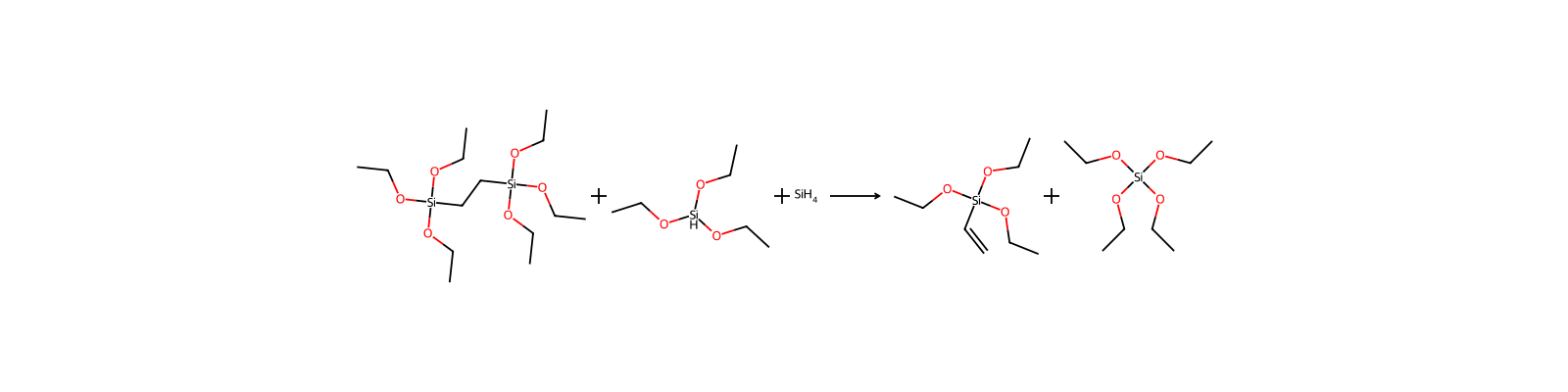
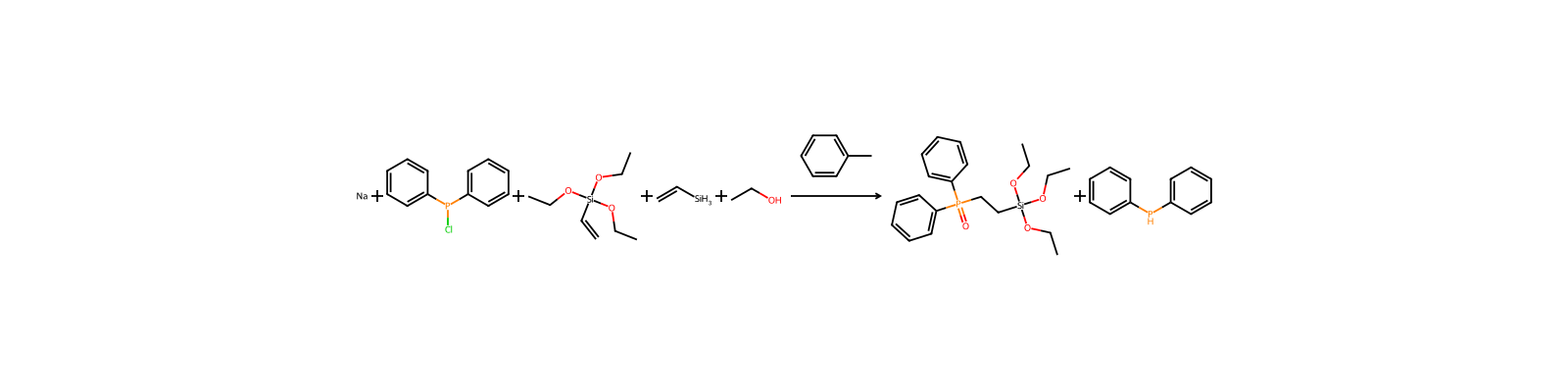
Related reactions
11 records



Compound notes
Loading…