Basic information
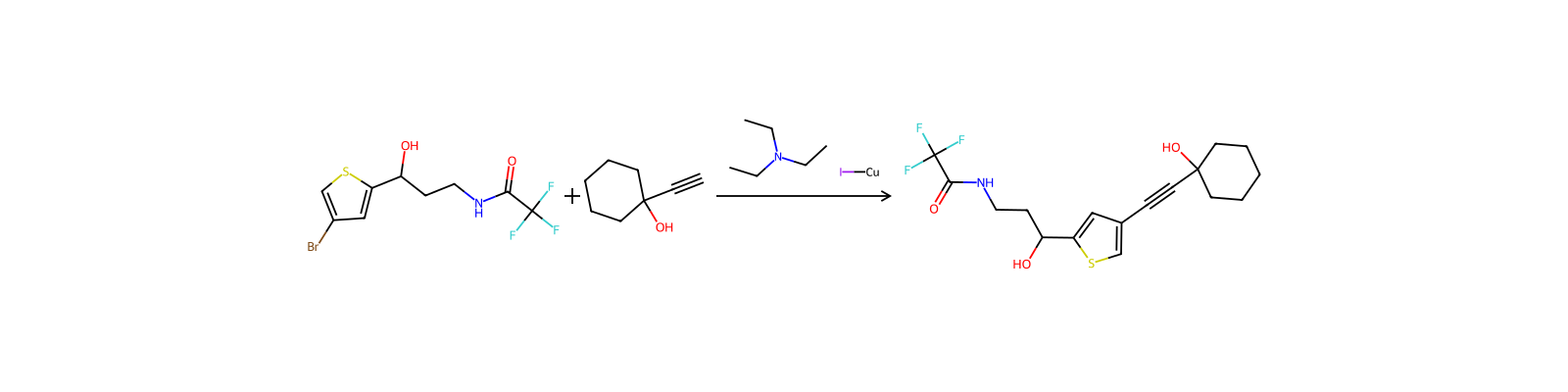
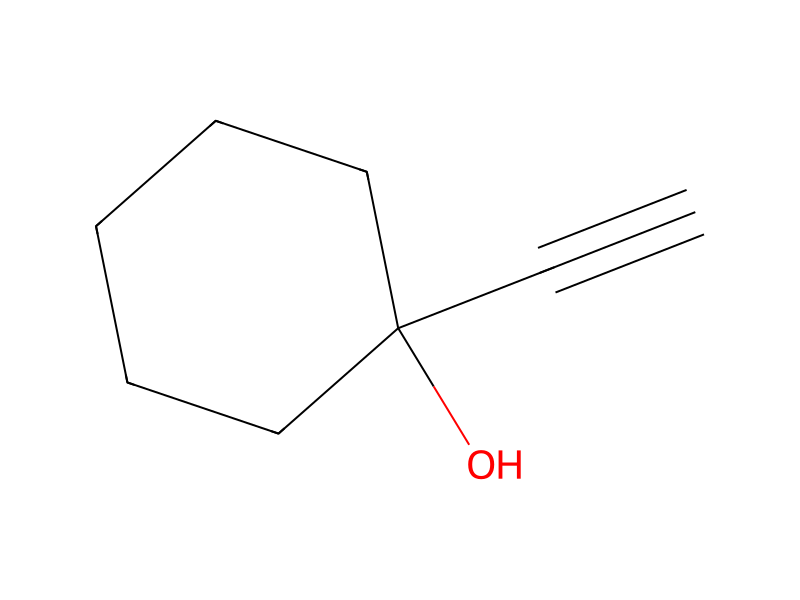
- Standard SMILES
C#CC1(O)CCCCC1- InChIKey
QYLFHLNFIHBCPR-UHFFFAOYSA-N- Molecular formula
- C8H12O
- Average molar mass
- 124.18 g/mol
- Monoisotopic mass
- 124.088815
Overview
See also: Cyclohexanol, ethynyl- (annotation moved to).
Names & identifiers
- Preferred name
- 1-Ethynylcyclohexanol
- IUPAC
- 1-ethynylcyclohexan-1-ol
- English name
- 1-Ethynyl-1-cyclohexanol
- Molecular formula
- C8H12O
- Molecular weight
- 124.18
Names & synonyms
1-Ethynyl-1-cyclohexanol1-Ethynylcyclohexanol78-27-31-Ethynylcyclohexan-1-olEthynylcyclohexanolCYCLOHEXANOL, 1-ETHYNYL-(1-Hydroxycyclohexyl)ethyne1-Ethynyl-1-hydroxycyclohexaneDTXSID0021757NSC 8194EINECS 201-100-9BRN 0471404
Show more names
1-ETHINYL-1-CYCLOHEXANOLHCC-OH-1-cycLnsc8194ohexanoL1-EthynyL
1-Hydroxy-1-ethynylcyclohexaneAI3-070646RV04025EHNSC-8194DTXCID801757EC 201-100-94-06-00-00348 (Beilstein Handbook Reference)1Ethynyl1cyclohexanol
Database identifiers
- CAS
28652-54-2、78-27-3- PubChem CID
- 6525
- DTXSID
DTXSID0021757- ChEMBL
CHEMBL394631- UNII
- 6RV04025EH
- EC Number
- 201-100-9、249-123-3
- Nikkaji
- J55.435I
Properties
Computed structural properties
- XLogP
- 1.7
- Topological polar surface area
- 20.2 Ų
- Hydrogen bond donors
- 1
- Hydrogen bond acceptors
- 1
- Rotatable bonds
- 1
- Heavy atoms
- 9
- Formal charge
- 0
- Complexity
- 134
Experimental & physicochemical properties
PolymersOther Classes -> Alcohols and Polyols, Other
SpringerMaterials PropertiesOptical coefficient
LogP1.73
Vapor Pressure0.13 [mmHg]
Food Contact Substances
FCS -> FDA Cumulative Estimated Daily Intake (CEDI)
FCS -> FDA Inventory of Food Contact Substances Listed in 21 CFR
FCS -> FDA Inventory of Effective Food Contact Substance (FCS) Notifications
FCS -> FDA Inventory of Effective Food Contact Substance (FCS) Notifications
Physical Description
Other Solid
White crystalline solid with a slight odor; mp = 30-33 deg C; [Alfa Aesar MSDS]
Physicochemical properties
- Melting point
- 30 · 30-33 °C(lit.)
- Boiling point
- 180 °C · 180 °C(lit.)
- Density
- 0.967 g/mL · 0.967 g/mL at 25 °C(lit.)
- vapor pressure
- 1 mm · <1 mm Hg ( 20 °C)
- refractive index
- 1.481 · 1.481-1.484
- Flash point
- 163 °F · 163 °F
- storage temp.
- 30 °C · Store below +30°C.
- solubility
- 10 g/L · 10 g/L (20°C)
- form
- Liquid After Melting
- pka
- 13.34 · 13.34±0.20(Predicted)
- color
- Clear colorless to light yellow
- PH
- 7 · 7 (1g/l, H2O, 20℃)
- explosive limit
- 1.3 · 1.3-8.7%(V)
- Water Solubility
- 10 g/L · 10 g/L (20 ºC)
- BRN
- 471404 · 471404
- InChI
- 1S/C8H12O/c1-2-8(9)6-4-3-5-7-8/h1,9H,3-7H2
- InChIKey
- QYLFHLNFIHBCPR-UHFFFAOYSA-N
- SMILES
- OC1(CCCCC1)C#C
- LogP
- 1.49 at · 1.49 at 25℃
- Indirect Additives used in Food Contact Substances
- 1 · 1-ETHYNYLCYCLOHEXANOL
- FDA 21 CFR
- 176.17 · 176.170
- CAS DataBase Reference
- 78 · 78-27-3(CAS DataBase Reference)
- EWG's Food Scores
- 1 · 1
- FDA UNII
- 6 RV04025EH · 6RV04025EH
- NIST Chemistry Reference
- 1 · Cyclohexanol, 1-ethynyl-(78-27-3)
- EPA Substance Registry System
- 1 · Cyclohexanol, 1-ethynyl- (78-27-3)
- UNSPSC Code
- 12352104 · 12352104
- NACRES
- 22 · NA.22
- Symbol(GHS)
- 6 · GHS06
- Signal word
- Danger
- Hazard statements
- 302 · H302-H311-H315-H319
- Precautionary statements
- 264 · P264-P270-P280-P301+P312-P302+P352+P312-P305+P351+P338
- PPE
- 95 · dust mask type N95 (US), Eyeshields, Faceshields, Gloves
- Hazard Codes
- Xn,Xi
- Risk Statements
- 21 · 21/22-36-36/37/38-20/21/22-36/38
- Safety Statements
- 36 · 36/37-36/37/39-26-36-22
- RIDADR
- 2811 · UN 2811 6.1/PG 3
- WGK Germany
- 1 · 1
- RTECS
- 9100000 · GV9100000
- Autoignition Temperature
- 365 °C · 365 °C
- TSCA
- TSCA listed
- HazardClass
- 6.1 · 6.1
- PackingGroup
- III
- HS Code
- 29061900 · 29061900
- Storage Class
- 6.1 C · 6.1C - Combustible acute toxic Cat.3toxic compounds or compounds which causing chronic effects
- Hazard Classifications
- 3 DermalAcute · Acute Tox. 3 DermalAcute Tox. 4 OralEye Irrit. 2Skin Irrit. 2
- Toxicity
- 50 orally · LD50 orally in Rabbit: 583 mg/kg LD50 dermal Rabbit 973 mg/kg
- REACH Registrations
- Active
- Limited Quantities
- 5 L · 5.0 L (1.3 gallons) (liquid) or 5.0 kg (11 lbs) (solid)
- Excepted Quantities
- Max Inner Pack (30g or 30ml) and Max Outer Pack (1Kg or 1L)
Safety & regulation
GHS classification
GHS Classification
Danger
H302 (99.6%): Harmful if swallowed [Warning Acute toxicity, oral]
P262, P264, P264+P265, P270, P280, P301+P317, P302+P352, P305+P351+P338, P316, P321, P330, P332+P317, P337+P317, P361+P364, P362+P364, P405, and P501 (click each P-code to see the statement)
Aggregated GHS information provided per 268 reports by companies from 8 notifications to the ECHA C&L Inventory. Each notification may be associated with multiple companies.
Hazard information
Regulatory Information
Chemical: Cyclohexanol, 1-ethynyl-
Cyclohexanol, 1-ethynyl- is listed on the EPA's Chemical Data Reporting (CDR) system. Manufacturers and importers of Cyclohexanol, 1-ethynyl- are required to report information about their production and use of this chemical to the EPA under the Toxic Substances Control Act (TSCA). (40 eCFR Part 711)
Status: Active Update: 07-04-2023 https://echa.europa.eu/registration-dossier/-/registered-dossier/10699
1-ethynylcyclohexanol: Does not have an individual approval but may be used as a component in a product covered by a group standard. It is not approved for use as a chemical in its own right.
Hazards SummaryA mild skin irritant; Oral LD50 (rat) = 600 uL/kg; Dermal LD50 (rabbit) = 1 mL/kg; [RTECS] A strong eye irritant; Harmful by ingestion; Toxic by skin absorption; [Alfa Aesar MSDS]
Hazard Classes and CategoriesAcute Tox. 4 (99.6%)
Safety data
- PPE
- dust mask type N95 (US), Eyeshields, Faceshields, Gloves
- wgk
- 1
- tsca
- TSCA listed
- rtecs
- GV9100000
- ridadr
- UN 2811 6.1/PG 3
- hs_code
- 29061900
- Toxicity
- LD50 orally in Rabbit: 583 mg/kg LD50 dermal Rabbit 973 mg/kg
- risk_code
- 21/22-36-36/37/38-20/21/22-36/38
- Signal word
- Danger
- Symbol(GHS)
- GHS06
- hazard_code
- Xn,Xi
- safety_code
- 36/37-36/37/39-26-36-22
- hazard_class
- 6.1
- Storage Class
- 6.1C - Combustible acute toxic Cat.3toxic compounds or compounds which causing chronic effects
- packing_group
- III
- Hazard statements
- H302-H311-H315-H319
- Limited Quantities
- 5.0 L (1.3 gallons) (liquid) or 5.0 kg (11 lbs) (solid)
- Excepted Quantities
- Max Inner Pack (30g or 30ml) and Max Outer Pack (1Kg or 1L)
- REACH Registrations
- Active
- Hazard Classifications
- Acute Tox. 3 DermalAcute Tox. 4 OralEye Irrit. 2Skin Irrit. 2
- Autoignition Temperature
- 365 °C
- Precautionary statements
- P264-P270-P280-P301+P312-P302+P352+P312-P305+P351+P338
Chemistry & industry
Uses & manufacturing
UsesUsed as an industrial processing aid, intermediate, and laboratory reagent; [ExPub: ECHA REACH Registrations]
U.S. Production2023: <50,000 lb
Industry UsesIntermediate
General Manufacturing Information
All Other Basic Organic Chemical Manufacturing
Cyclohexanol, 1-ethynyl-: ACTIVE
Applications
UsesStabilization of chlorinated organic compounds, intermediate, corrosion inhibitor for mineral acids, medicine (sedative).
Uses1-Ethynyl-1-cyclohexanol (ECHO) can undergo acetylation in the presence of a catalytic amount of ruthenium chloride at room temperature. It can be used to synthesize novel organotellurium(IV) compounds with potent inhibitory activity towards Cathepsin B. The polymerization of ECHO by transition metal catalysts leads to the formation of poly(ECHO). It can also react with transition metal hydride complexes to form vinyl derivatives by inserting into the M-H bonds.
Upstream & downstream products
Upstream raw materials
Downstream products
Suppliers1 total
Hefei TNJ Chemical Industry Co.,Ltd.+86-0551-65418671 +86-189 4982 3763 · [email protected]
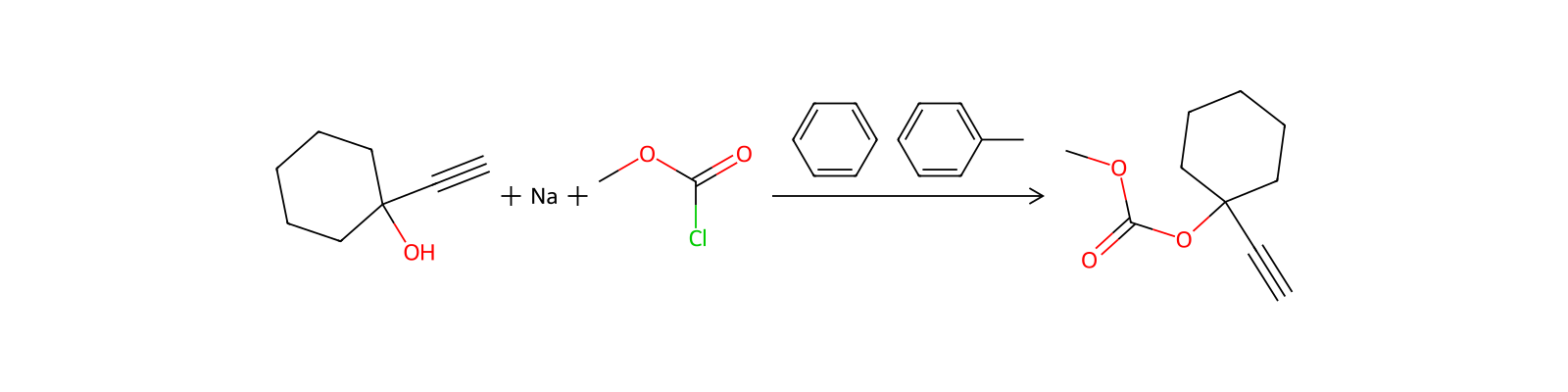
Related reactions
62 records






Linked notes
Loading…