HomeMCPWorkbenchSkills
HomeWorkbenchNotificationsMe
llms.txt · MCP GuidePrivacy Policy · Terms of Service · Supportv1.8.3
  1. Home
  2. /Compound

Siseptin

HCID 65334
New reaction
Print
Basic informationNames & identifiersPropertiesSafety & regulationChemistry & industryRelated reactionsCompound notes
Substructure searchFind similar structures

Basic information

CAS
53179-09-2
Standard SMILES
CN[C@@H]1[C@@H](O)[C@@H](O[C@@H]2[C@@H](O)[C@H](O[C@H]3OC(CN)=CC[C@H]3N)[C@@H](N)C[C@H]2N)OC[C@]1(C)O.O=S(=O)(O)O
InChIKey
JVTNJDPXUPRGIE-XMKQNZKISA-N
Molecular formula
C19H39N5O11S
Average molar mass
545.6 g/mol

Names & identifiers

Preferred name
Siseptin
IUPAC
(2R,3R,4R,5R)-2-[(1S,2S,3R,4S,6R)-4,6-diamino-3-[[(2S,3R)-3-amino-6-(aminomethyl)-3,4-dihydro-2H-pyran-2-yl]oxy]-2-hydroxycyclohexyl]oxy-5-methyl-4-(methylamino)oxane-3,5-diol;sulfuric acid
English name
Sisomycin Sulfate
Molecular formula
C19H39N5O11S
Molecular weight
545.61

Names & synonyms

SiseptinSisomicin sulfate salt(2R,3R,4R,5R)-2-[(1S,2S,3R,4S,6R)-4,6-diamino-3-[[(2S,3R)-3-amino-6-(aminomethyl)-3,4-dihydro-2H-pyran-2-yl]oxy]-2-hydroxycyclohexyl]oxy-5-methyl-4-(methylamino)oxane-3,5-diol;sulfuric acidSCHEMBL28801778JVTNJDPXUPRGIE-XMKQNZKISA-NAKOS026750063SISOMICIN SULFATE6)-o-(2,6-diamino-2,3,4,6-tetradeoxy-alpha-d-glycero-hex-4-enopyranosyl-(1-4))sisominmensisoBaymicinSisolline
Show more names
extramycinpathomycinSisobioticsisomycinsulfate

Database identifiers

CAS
53179-09-2
PubChem CID
65334

Properties

Computed structural properties

Topological polar surface area
297 Ų
Hydrogen bond donors
10
Hydrogen bond acceptors
16
Rotatable bonds
6
Heavy atoms
36
Formal charge
0
Complexity
724

Physicochemical properties

Melting point
70 · 70-73C
Boiling point
155 ℃ · 155℃
Flash point
110 ° · >110°(230°F)
storage temp.
2 · Keep in dark place,Inert atmosphere,2-8°C
solubility
2 O: · H2O: soluble50mg/mL
form
powder
color
white to off-white
optical activity
25 · [α]25/D 100 to 110° in water (Specific rotation (anhydrous), C=1)
Water Solubility
Soluble in water
Merck
14 · 14,8550
Stability
Hygroscopic
Major Application
pharmaceutical (small molecule)
InChIKey
JVTNJDPXUPRGIE-QNJHHENCNA-N
FDA UNII
14444371 C · K14444371C
UNSPSC Code
41116107 · 41116107
NACRES
24 · NA.24

Safety & regulation

Safety information is for reference only and does not replace the supplier’s Safety Data Sheet (SDS), applicable regulations, or professional assessment.

Safety data

wgk
3
rtecs
WK2288000
hs_code
2941901010
Toxicity
LD50 in mice (mg/kg): 34 i.v., 221 i.p., 288 s.c. (Weinstein)
risk_code
61-20/21/22-36/37/38
Signal word
Danger
Symbol(GHS)
GHS07,GHS08
hazard_code
T,Xi
safety_code
53-22-36/37/39-45-36-26
Storage Class
6.1C - Combustible acute toxic Cat.3toxic compounds or compounds which causing chronic effects
Hazard statements
H312+H332-H360
Hazard Classifications
Acute Tox. 4 DermalAcute Tox. 4 InhalationRepr. 1B
Precautionary statements
P202-P261-P280-P302+P352+P312-P304+P340+P312-P308+P313

Chemistry & industry

Applications

Usesantibacterial, binds to ribosomes

UsesSisomicin Sulfate Salt is an aminoglycoside antibiotic. It can also be used as reactant/reagent in structural and kinetics study of self-assembling macrocyclic dimer natural product aminoglycoside 66-40C and unnatural variants.

Upstream & downstream products

Upstream raw materials

StarchpeptoneXANTHOPTERINSOYBEAN MEALDextrin

Related reactions

1 records
New reaction record
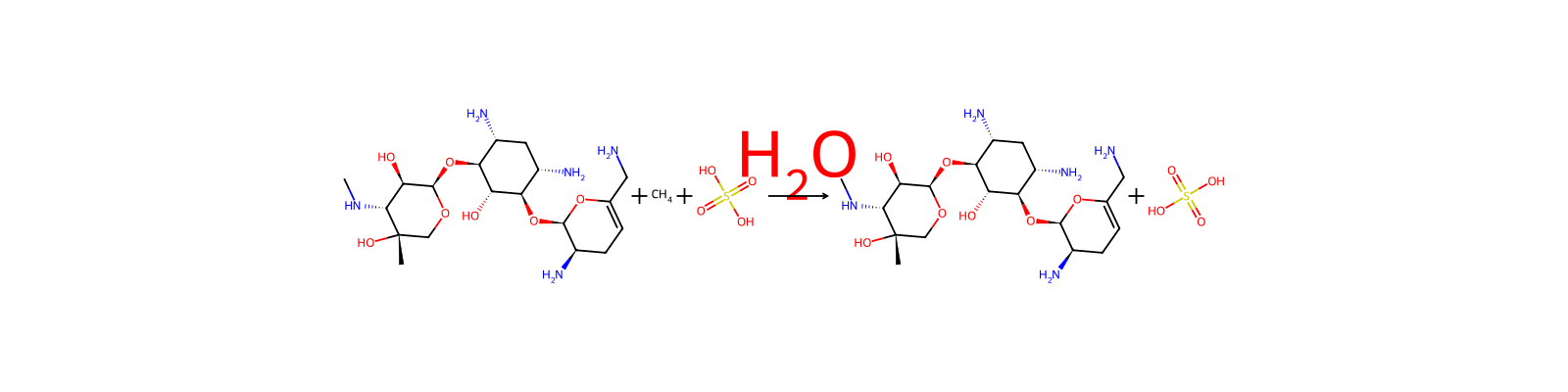
HRID 1758030 reaction equation
HRID 1758030As product

Compound notes

On this pageBasic informationNames & identifiersPropertiesSafety & regulationChemistry & industryRelated reactionsCompound notes
Symbol(GHS)
7 · GHS07,GHS08
Signal word
Danger
Hazard statements
312 · H312+H332-H360
Precautionary statements
202 · P202-P261-P280-P302+P352+P312-P304+P340+P312-P308+P313
Hazard Codes
T,Xi
Risk Statements
61 · 61-20/21/22-36/37/38
Safety Statements
53 · 53-22-36/37/39-45-36-26
WGK Germany
3 · 3
RTECS
2288000 · WK2288000
HS Code
2941901010 · 2941901010
Storage Class
6.1 C · 6.1C - Combustible acute toxic Cat.3toxic compounds or compounds which causing chronic effects
Hazard Classifications
4 DermalAcute · Acute Tox. 4 DermalAcute Tox. 4 InhalationRepr. 1B
Toxicity
50 in · LD50 in mice (mg/kg): 34 i.v., 221 i.p., 288 s.c. (Weinstein)