
Trimethylsilyl triflate
Completing data — refresh the page later to see the latest

Basic information
- CAS
27607-77-8- Standard SMILES
C[Si](C)(C)OS(=O)(=O)C(F)(F)F- InChIKey
FTVLMFQEYACZNP-UHFFFAOYSA-N- Molecular formula
- C4H9F3O3SSi
- Average molar mass
- 222.26 g/mol
- Monoisotopic mass
- 221.99937634
Overview
deprotecting cpd for peptides
Names & identifiers
- Preferred name
- Trimethylsilyl triflate
- IUPAC
- trimethylsilyl trifluoromethanesulfonate
- English name
- Trimethylsilyl trifluoromethanesulfonate
- Molecular formula
- C4H9F3O3SSi
- Molecular weight
- 222.26
Names & synonyms
Trimethylsilyl trifluoromethanesulfonate27607-77-8Trimethylsilyl triflateTrimethylsilyl trifluoromethanesulphonateTrimethylsilyl trifluoromethylsulfonateMethanesulfonic acid, trifluoro-, trimethylsilyl estertrimethylsilyltriflatetrimethylsilanol trifluoromethanesulfonateUNII-Z84V0CBH9JZ84V0CBH9JTMS-TFMSEINECS 248-565-4
Show more names
TMS TRIFLATETrimethylsltrifluoromethanesulphonateTRIFLUOROMETHANESULFONIC ACID TRIMETHYLSILYL ESTERTrimethylsilyl trifluromethanesulfonateTRIMETHYLSILYTrimethylsllytrifluoromethanesulphonate
trimethylsilyltrifluoromethane sulfonate1,1,1-Trifluoromethanesulfonic acid trimethylsilyl esterDTXSID2067325TRIMETHYLSILYL TRIFLATE [MI]RefChem:191816DTXCID8037704248-565-4TMSOTf
Database identifiers
- CAS
27607-77-8- PubChem CID
- 65367
- DTXSID
DTXSID2067325- UNII
- Z84V0CBH9J
- EC Number
- 248-565-4
- Nikkaji
- J208.993I
Properties
Computed structural propertiesFilling in
- Topological polar surface area
- 51.8 Ų
- Hydrogen bond donors
- 0
- Hydrogen bond acceptors
- 6
- Rotatable bonds
- 2
- Heavy atoms
- 12
- Formal charge
- 0
- Complexity
- 244
Experimental & physicochemical properties
PFASPFAS -> PFAS identified in REACH Regulation EC No. 1272/2008
SpringerMaterials Properties29Si nuclear magnetic resonance spectrum
Physicochemical properties
- Melting point
- 25 °C · 25°C
- Boiling point
- 77 °C/80 · 77 °C/80 mmHg (lit.)
- Density
- 1.228 g/mL · 1.228 g/mL at 25 °C (lit.)
- vapor pressure
- 4.7 hPa · 4.7 hPa (20 °C)
- refractive index
- 20 · n20/D 1.36(lit.)
- Flash point
- 78 °F · 78 °F
- storage temp.
- 30 °C · Store below +30°C.
- solubility
- sol aliphatic and aromatic hydrocarbons, haloalkanes, ethers.
- form
- Fuming Liquid
- color
- Clear colorless to light brown
- Specific Gravity
- 1.15 · 1.15
Safety & regulation
Safety information is for reference only and does not replace the supplier’s Safety Data Sheet (SDS), applicable regulations, or professional assessment.
GHS classification
GHS Classification
This chemical does not meet GHS hazard criteria for 6.3% (4 of 63) of reports.
Danger
H226 (92.1%): Flammable liquid and vapor [Warning Flammable liquids]
P210, P233, P240, P241, P242, P243, P260, P264, P280, P301+P330+P331, P302+P361+P354, P303+P361+P353, P304+P340, P305+P354+P338, P316, P321, P363, P370+P378, P403+P235, P405, and P501 (click each P-code to see the statement)
Aggregated GHS information provided per 63 reports by companies from 10 notifications to the ECHA C&L Inventory. Each notification may be associated with multiple companies.
Hazard information
Regulatory Information
Chemical: Methanesulfonic acid, trifluoro-, trimethylsilyl ester
REACH registered substance: Trimethylsilyl trifluoromethanesulphonate (EC: 248-565-4)
Trimethylsilyl trifluoromethanesulphonate: Does not have an individual approval but may be used under an appropriate group standard
Hazard Classes and CategoriesFlam. Liq. 3 (92.1%)
CSL Reaction Information
CSL00179
Trimethyl phosphite + Trimethylsilyl triflate
Reaction resulted in an explosion
Explosive
Not Available
User Reported
Safety data
- F
- 10-21
- PPE
- Faceshields, Gloves, Goggles, type ABEK (EN14387) respirator filter
- wgk
- 3
- tsca
- TSCA listed
- ridadr
- UN 2920 8/PG 2
Chemistry & industry
Uses & manufacturing
General Manufacturing InformationMethanesulfonic acid, 1,1,1-trifluoro-, trimethylsilyl ester: ACTIVE
Applications
UsesTrimethylsilyl Trifluoromethanesulfonate is a trialkylsilyl triflate used as a catalyst in organic synthesis. Trimethylsilyl Trifluoromethanesulfonate is used in combination with boron trifluoride eth yl ether to prepare a Lewis acid that is more powerful than its components and especially effective in acetonitrile solvent. Trimethylsilyl is a common reagent used in a Dieckmann-like cyclization of ester-imides and diesters.
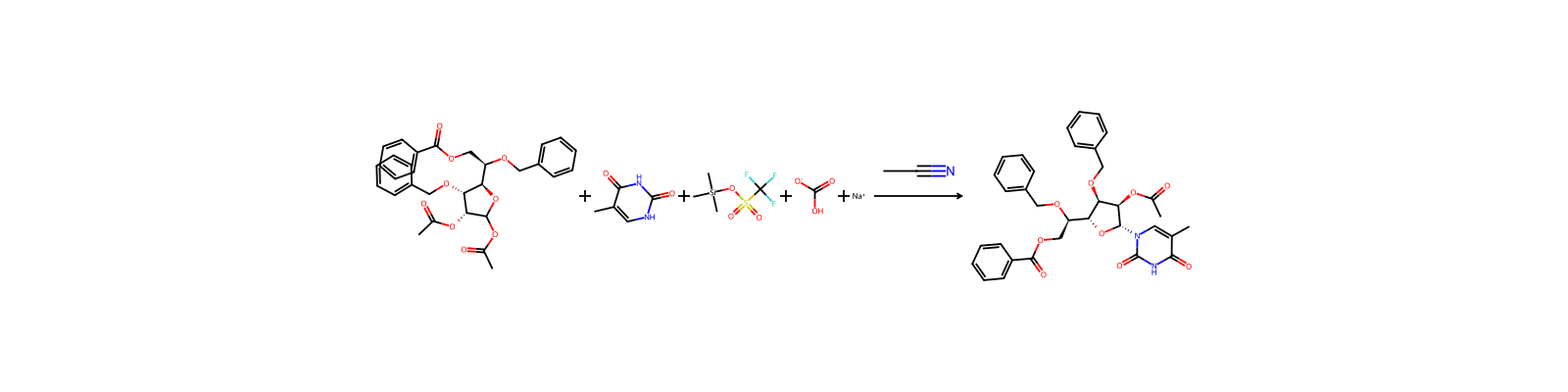
UsesTrimethylsilyl Trifluoromethane sulfonate is generally used following reactions:1. Silylation. TMSOTf is widely used in the conversion of car bonyl compounds to their enol ethers. The conversion is some 109 faster with TMSOTf/triethylamine than with chlorotrimethy lsilane.Dicarbonyl compounds are converted to the corresponding bis enol ethers; this method is an improvement over the previous two step method.In general, TMSOTf has a tendency toC-silylation which is seen most clearly in the reaction of esters, whereC-silylation dominates over O-silylation.2.Carbonyl Activation. 1,3-Dioxolanation of conjugated enals is facilitated by TMSOTf in the presence of 1,2-bis(trimethylsilyl oxy)ethane. In particular, highly selective protection of sterically differentiated ketones is possible (eq 10).TMSOTf mediates a stereoselective aldol-type condensation of silyl enol ethers and acetals (or orthoesters). The nonbasic reaction conditions are extremely mild. The use of TMSOTf in aldol reactions of silyl enol ethers and ketene acetals with aldehydes is ubiquitous. Stereoselective cyclization of α,β-unsaturated enamide esters is induced by TMSOTf and has been used as a route to quinolizidines and indolizidines.3.The often difficult conjugate addition of alkynyl organometallic reagents to enones is greatly facilitated by TMSOTf. In particular, alkynyl zinc reagents (normally unreactive with α,β-unsaturated carbonyl compounds) add in good yield.The formation of nitrones by reaction of aldehydes and ketones with N-methyl-N,O-bis(trimethylsilyl)hydroxylamine is accelerated when TMSOTf is used as a catalyst; the acceleration is particularly pronounced when the carbonyl group is under a strong electronic influence.5. Methyl glucopyranosides and glycopyranosyl chlorides undergo allylation with allylsilanes under TMSOTf catalysis to give predominantly α-allylated carbohydrate analogs.Glycosidation is a reaction of massive importance and wide spread employment. TMSOTf activates many selective glycosidation reactions.4.O-Silylation. The formation of TMS ethers can be achieved by reacting the requisite alcohol with TMSOTf and an amine (triethy lamine, pyridine, or 2,6-lutidine) in dichloromethane;C-Silylation. Depending on the reaction conditions, sec ondary amides can be either C-silylated or N-silylated;N-Silylation. The N-bis-silylation of α-amino acids with TMSOTf is only effective for glycine; for other α-amino acids N-mono-silylation prevails because the larger size of the carbon chain at the α-position hinders bis-silylation;C,O-Bis-silylation. Bis-silylation ofα,β-unsaturated carbonyl compounds can be achieved by palladium-TMSOTf-catalyzed addition of disilanes to enones, enals, or aromatic aldehydes via an η3-silyloxyallylpalladium intermediate;Carbonyl Activation. TMSOTf frequently acts as a Lewis acid and it is able to activate severa
Related reactions
884 records






Compound notes
Loading…