HomeMCPWorkbenchSkills
HomeWorkbenchNotificationsMe
llms.txt · MCP GuidePrivacy Policy · Terms of Service · Supportv1.8.1
  1. Home
  2. /Compound

Azobisisobutyronitrile

HCID 6547

New reaction
Print
Basic informationOverviewNames & identifiersPropertiesSafety & regulationChemistry & industryRelated reactionsCompound notes
Substructure searchFind similar structures

Basic information

CAS
34241-39-9
Standard SMILES
CC(C)(C#N)N=NC(C)(C)C#N
InChIKey
OZAIFHULBGXAKX-UHFFFAOYSA-N
Molecular formula
C8H12N4
Average molar mass
164.21 g/mol
Monoisotopic mass
164.1061964

Overview

Insoluble in water and denser than water. Moderately toxic by ingestion. Readily ignited by sparks or flames. Burns intensely and persistently. Toxic oxides of nitrogen produced during combustion. Used as a catalyst, in vinyl polymerizations and a blowing agent for plastics.

Names & identifiers

Preferred name
Azobisisobutyronitrile
IUPAC
2-(2-cyanopropan-2-yldiazenyl)-2-methylpropanenitrile
English name
AIBN
Molecular formula
C8H12N4
Molecular weight
164.21

Names & synonyms

78-67-12,2'-Azobis(2-methylpropionitrile)AzobisisobutyronitrileAzdhPorofor NAceto AZIBPianofor anPorofor 57Azobis(isobutyronitrile)Chkhz 57VAZO 64AZODIISOBUTYRONITRILE
Show more names
AIBNABINAZOISOBUTYRONITRILEAIVN2,2'-Azobisisobutyronitrile2,2-AZOBIS(2-METHYLPROPIONITRILE)ALPHA,ALPHA'-AZOISOBUTYRONITRILEPropanenitrile, 2,2'-azobis[2-methyl-
2,2'-Azobis(2-methylpropanenitrile)DTXSID10264572,2'-azobis(2-cyanopropane)PERKADOX AIBNDTXCID60809637alpha,alpha'-azobis(isobutyronitrile)Azobis[isobutyronitrile]2,2'-Azobis[2-methylpropionitrile]

Database identifiers

CAS
34241-39-9、78-67-1
PubChem CID
6547
DTXSID
DTXSID1026457
ChEMBL

Properties

Computed structural properties

XLogP
1.3
Topological polar surface area
72.3 Ų
Hydrogen bond donors
0
Hydrogen bond acceptors
4
Rotatable bonds
2
Heavy atoms
12
Formal charge
0
Complexity
251

Experimental & physicochemical properties

Chemical Classes · 2 items

Nitrogen Compounds -> Nitriles

Flammable agents - 3rd degree

SpringerMaterials PropertiesBoiling point
Density1.1 g/cm³
Color/Form · 2 items

CRYSTALS FROM ETHANOL + WATER

WHITE POWDER

Solubility · 3 items

SOL IN METHANOL @ 0, 20, 40 °C: 1.8, 4.96, 16.06 G/100 ML; SOL IN ETHANOL @ 0, 20, 40 °C: 0.58, 2.04, 7.15 G/100 ML

INSOL IN WATER; SOL IN MANY ORG SOLVENTS; SOL IN VINYL MONOMERS

Solubility in water at 20 °C: none

Melting Point221 °F (105 °C)
Vapor Pressure · 2 items

0.0067 [mmHg]

Vapor pressure, Pa at 20 °C:

Food Contact SubstancesFCS -> FDA Inventory of Food Contact Substances Listed in 21 CFR
Physical Description

Safety & regulation

Safety information is for reference only and does not replace the supplier’s Safety Data Sheet (SDS), applicable regulations, or professional assessment.

GHS classification

GHS Classification · 6 items

Danger

H242: Heating may cause a fire [Danger Self-reactive substances and mixtures; Organic peroxides]

P210, P234, P235, P240, P261, P264, P270, P271, P273, P280, P301+P317, P304+P340, P317, P330, P370+P378, P403, P410, P411, P420, and P501 (click each P-code to see the statement)

Danger

H242 (100%): Heating may cause a fire [Danger Self-reactive substances and mixtures; Organic peroxides]

P210, P234, P235, P240, P261, P264, P270, P271, P273, P280, P301+P317, P304+P340, P317, P330, P370+P378, P403, P410, P411, P420, and P501 (click each P-code to see the statement)

Hazard information

Regulatory Information · 5 items

Chemical: Propanenitrile, 2,2'-azobis[2-methyl-

Propanenitrile, 2,2'-(1,2-diazenediyl)bis[2-methyl- is listed on the EPA's Chemical Data Reporting (CDR) system. Manufacturers and importers of Propanenitrile, 2,2'-(1,2-diazenediyl)bis[2-methyl- are required to report information about their production and use of this chemical to the EPA under the Toxic Substances Control Act (TSCA). (40 eCFR Part 711)

REACH registered substance: 2,2'-dimethyl-2,2'-azodipropiononitrile (EC: 201-132-3)

Propanenitrile, 2,2'-azobis(2-methyl)-: HSNO Approval: HSR001429 Approved with controls

The New Jersey Worker and Community Right to Know Act requires public and private employers to provide information about hazardous substances at their workplaces. (N.J.S.A. 34:5A-1 et. seq.)

Other Safety InformationIMAP assessments - Propanenitrile, 2,2'-azobis[2-methyl-: Human health tier I assessment
DOT LabelFlammable Solid
Fire Hazards · 2 items

Excerpt from ERG Guide 150 [Substances (Self-Reactive / Temperature Controlled)]:

Chemistry & industry

Pharmacology

Metabolism/MetabolitesIN ORGANISM, FORMS HCN WHICH IS FOUND IN BLOOD, LIVER & BRAIN.

Uses & manufacturing

Uses · 5 items

Used as blowing agent (elastomers and plastics), catalyst (vinyl polymerizations), curing agent (unsaturated polyester resins), and fumigant (when heated); [HSDB]

Plastic Composites Manufacturing [Category: Industry]

BLOWING AGENT FOR ELASTOMERS & PLASTICS; INITIATOR FOR FREE RADICAL REACTIONS

CATALYST FOR VINYL POLYMERIZATIONS & FOR CURING UNSATURATED POLYESTER RESINS

AZOBISNITRILES ARE CARRIER GASES FOR FUMIGANTS. COMPOUND CONTAINING PERMETHRIN 10, 2,2'-AZOBISISOBUTYRONITRILE 80, & MOLDING AGENT 10 PARTS WAS GRANULATED. WHEN HEATED 92% OF PERMETHRIN GASIFIED.

U.S. Production2023: 1,000,000 - <2,500,000 lb
Consumer UsesOther
Industry UsesChain transfer agent
Methods of Manufacturing · 2 items

...BY OXIDATION OF ALPHA,ALPHA'-HYDRAZOBUTYRIC ACID DINITRILE: OVERBERGER ET AL, J AM CHEM SOC 71, 2661 (1949); HORNER, SCHWENK, ANN 566, 69 (1950); FROM 2-AMINOISOBUTYRONITRILE + NAOCL: BRITISH PATENT 672,106 (1952 TO DU PONT)...

...FROM 2,2'-DICHLORO-2,2'-AZOPROPANE: BENZING, ANN 631, 1 (1960); BRITISH PATENT 929,182 (1963 TO MONSANTO).

General Manufacturing Information · 2 items

Plastics Material and Resin Manufacturing

Propanenitrile, 2,2'-(1,2-diazenediyl)bis[2-methyl-: ACTIVE

Applications · 9 items

DescriptionAzobisisobutyronitrile (abbreviated AIBN) is an organic compound with the formula [(CH3)2C(CN)]2N2. This white powder is soluble in alcohols and common organic solvents but is insoluble in water. It is often used as a foamer in plastics and rubber and as a radical initiator. It's soluble in a wide variety of organic solvents, including alcohol-based solvents. Insoluble in water and denser than water. Moderately toxic by ingestion. Readily ignited by sparks or flames. Burns intensely and persistently. Toxic oxides of nitrogen produced during combustion. Used as a catalyst, in vinyl polymerizations and a blowing agent for plastics.

Related reactions

3,883 records
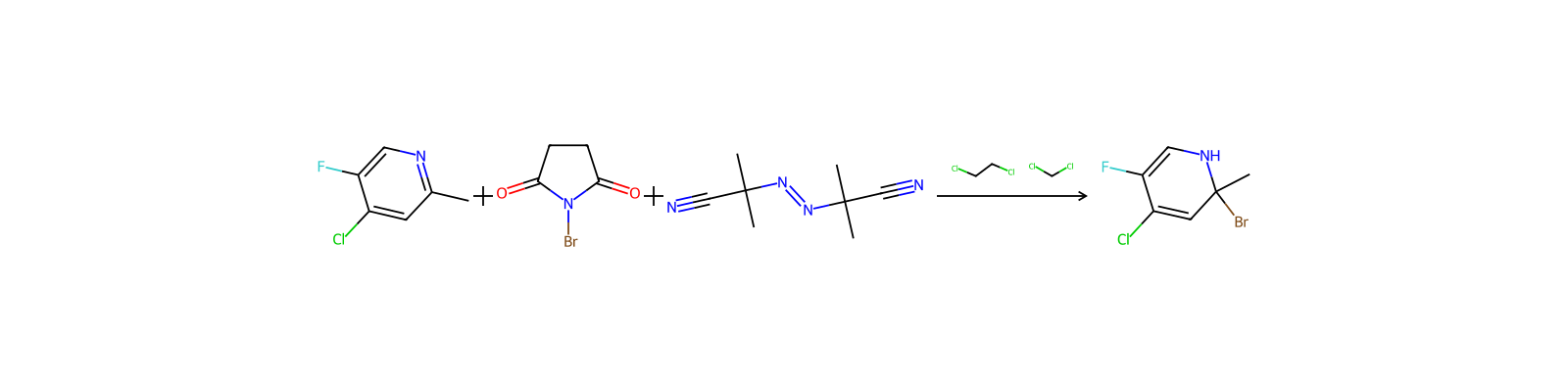
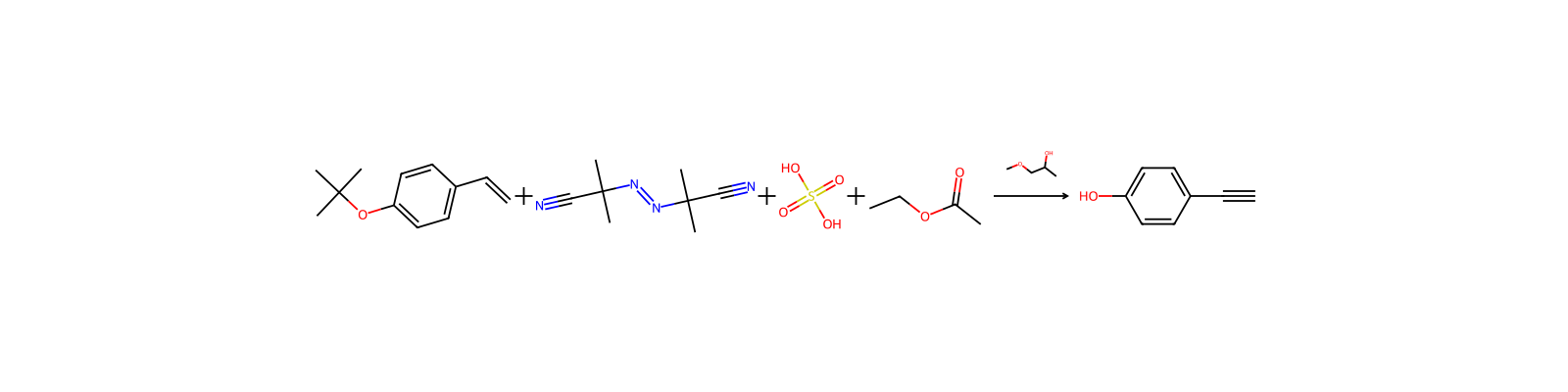
New reaction record
HRID 1402 reaction equation
HRID 1402As reactantuspto-grants-1998_03
HRID 1865 reaction equation
HRID 1865As reactantuspto-grants-1998_03
HRID 2449 reaction equation
HRID 2449As catalystuspto-grants-1998_03
HRID 2675 reaction equation
HRID 2675As reactantuspto-grants-1998_03
HRID 2676 reaction equation
HRID 2676As reactantuspto-grants-1998_03
HRID 2940 reaction equation
HRID 2940As reactantuspto-grants-1998_03
HRID 2943 reaction equation
HRID 2943As reactantuspto-grants-1998_03
HRID 2946 reaction equation
HRID 2946As reactantuspto-grants-1998_03
PreviousPage 1 of 486

Compound notes

On this pageBasic informationOverviewNames & identifiersPropertiesSafety & regulationChemistry & industryRelated reactionsCompound notes
CHEMBL1886625
ChEBI
CHEBI:189360
UNII
FZ6PX8U5YB
EC Number
201-132-3、829-366-7
Nikkaji
J1.955K、J3.670.816F
· 4 items

Insoluble in water and denser than water. Moderately toxic by ingestion. Readily ignited by sparks or flames. Burns intensely and persistently. Toxic oxides of nitrogen produced during combustion. Used as a catalyst, in vinyl polymerizations and a blowing agent for plastics.

Dry Powder; Other Solid; Large Crystals; CBI

White solid; [ICSC] Fine white crystals; [MSDSonline]

WHITE POWDER.

Autoignition Temperature · 2 items

147 °F (64 °C)

64 °C

Other Experimental PropertiesDECOMPOSES @ 107 °C

Physicochemical properties

Melting point
102 · 102-104 °C (dec.)(lit.)
Boiling point
281.68 °C · 281.68°C (rough estimate)
Density
1.11 · 1.11
vapor pressure
0.81 Pa · 0.81Pa at 24.85℃
refractive index
20 · n20/D1.495
Flash point
4 ℃ · 4℃
storage temp.
2 · 2-8°C
solubility
Chloroform (Slightly), Methanol (Slightly)
form
Solid
color
Crystals from EtOH
Odor
odorless
Water Solubility
Insoluble
Specific Heat Capacity
1.45 J/ · Cp(crystal): 1.45 J/(g·K), at 25℃
Merck
13 · 13,920
BRN
1708400 · 1708400
Henry's Law Constant
2.4 · 2.4×100 mol/(m3Pa) at 25℃, Duchowicz et al. (2020)
Stability
Stability Flammable solid. Shock sensitive. Thermally unstable. May be explosive in combination with acetone or heptane. Incompatible with oxidizing agents.
InChI
1S/C8H12N4/c1-7(2,5-9)11-12-8(3,4)6-10/h1-4H3/b12-11+
InChIKey
OZAIFHULBGXAKX-VAWYXSNFSA-N
SMILES
CC(C)(\N=N\C(C)(C)C#N)C#N
LogP
1.1 at · 1.1 at 25℃
CAS DataBase Reference
78 · 78-67-1(CAS DataBase Reference)
Indirect Additives used in Food Contact Substances
AZO-BIS-ISOBUTYRONITRILE
FDA 21 CFR
175.105 · 175.105; 176.170; 177.2420
FDA UNII
6 PX8U5YB · FZ6PX8U5YB
NIST Chemistry Reference
2 · 2,2'-Azo-bis-isobutyronitrile(78-67-1)
EPA Substance Registry System
Azobis(isobutyronitrile) (78-67-1)
UNSPSC Code
12352102 · 12352102
NACRES
22 · NA.22
Symbol(GHS)
2 · GHS02,GHS06,GHS08
Signal word
Danger
Hazard statements
301 · H301+H331-H361-H373-H412-H242
Precautionary statements
501 · P501-P273-P260-P270-P202-P220-P210-P234-P201-P271-P264-P280-P370+P378-P308+P313-P301+P310+P330-P304+P340+P311-P411-P420-P403+P233-P403+P235-P405
target organs
Central nervous system
PPE
Eyeshields, Faceshields, Gloves, type ABEK (EN14387) respirator filter
Hazard Codes
E,Xn,F,Xi
Risk Statements
2 · 2-11-20/22-52/53-67-65-48/20-38-63-66-36
Safety Statements
39 · 39-41-47-61-62-36/37-16-26
RIDADR
3234 · UN 3234 4.1
WGK Germany
2 · 2
RTECS
800000 · UG0800000
F
4.4 · 4.4
TSCA
TSCA listed
HazardClass
4.1 · 4.1
PackingGroup
II
HS Code
2926909090 · 2926909090
Storage Class
3 · 3 - Flammable liquids
Hazard Classifications
3 Asp · Aquatic Chronic 3Asp. Tox. 1Flam. Liq. 2Repr. 2Skin Irrit. 2STOT RE 2STOT SE 3
Hazardous Substances Data
78 · 78-67-1(Hazardous Substances Data)
Toxicity
670 mg/kg · LDLo orl-rat: 670 mg/kg 34ZIAG 0,117,69
REACH Registrations
Active
Excepted Quantities
Forbidden

Highly flammable. Finely dispersed particles form explosive mixtures in air. Risk of fire and explosion when dissolving in organic solvents. Explosive.

Health HazardsExcerpt from ERG Guide 150 [Substances (Self-Reactive / Temperature Controlled)]:
Hazards Summary · 1 item

Forms hydrogen cyanide in the body; [Merck Index] Decomposed by warming forming toxic fumes such as tetramethylsuccinonitrile and cyanide; May decompose explosively from heating, shock, friction, or concussion; May cause CNS and liver effects; [ICSC] May form explosive mixture of dust in air; May self-decompose or self-ignite from heat, chemical reaction, or impact; [CAMEO] Effects in high-dose animal studies include toxicity to liver and kidneys; [eChemPortal: SIDSUNEP] Highly flammable; May explode from shock, friction, fire, or other source of ignition; May cause irritation; Targets the CNS, liver, and kidneys; [MSDSonline] See NITRILES.

Reactive GroupAzo, Diazo, Azido, Hydrazine, and Azide Compounds
EC ClassificationSymbol: E, Xn; R: 2-11-20/22-52/53; S: (2)-39-41-47-61
UN ClassificationUN Hazard Class: 4.1
Reactivity AlertsExplosive
Reactivity Profile · 1 item

Self-decomposition or self-ignition may be triggered by heat, chemical reaction, friction or impact. Self-accelerating decomposition may occur if the specific control temperature is not maintained. These materials are particularly sensitive to temperature rises. AZODIISOBUTYRONITRILE is an azo compound. Azo, diazo, azido compounds can detonate. This applies in particular to organic azides that have been sensitized by the addition of metal salts or strong acids. Toxic gases are formed by mixing materials of this class with acids, aldehydes, amides, carbamates, cyanides, inorganic fluorides, halogenated organics, isocyanates, ketones, metals, nitrides, peroxides, phenols, epoxides, acyl halides, and strong oxidizing or reducing agents. Flammable gases are formed by mixing materials in this group with alkali metals. Explosive combination can occur with strong oxidizing agents, metal salts, peroxides, and sulfides.

Chemical Dangers · 1 item

Decomposes on warming. This produces toxic fumes of tetramethylsuccinonitrile (see ICSC 1121) and cyanide. May decompose explosively on shock, friction or concussion. May explode on heating. Reacts violently with alcohols, oxidants, ketones such as acetone, aldehydes and hydrocarbons such as heptane. This generates fire and explosion hazard.

Safety & protection

Fire Fighting · 2 items

Excerpt from ERG Guide 150 [Substances (Self-Reactive / Temperature Controlled)]:

Use water in large amounts, water spray. In case of fire: keep drums, etc., cool by spraying with water.

First Aid Measures · 4 items

Fresh air, rest. Refer for medical attention.

Remove contaminated clothes. Rinse skin with plenty of water or shower.

First rinse with plenty of water for several minutes (remove contact lenses if easily possible), then refer for medical attention.

Induce vomiting (ONLY IN CONSCIOUS PERSONS!). Give a slurry of activated charcoal in water to drink. Refer for medical attention .

First AidExcerpt from ERG Guide 150 [Substances (Self-Reactive / Temperature Controlled)]:
Safe StorageFireproof. Cool. Separated from strong oxidants and incompatible materials. See Chemical Dangers.
Nonfire Spill ResponseExcerpt from ERG Guide 150 [Substances (Self-Reactive / Temperature Controlled)]:
Spillage Disposal · 1 item

Consult an expert! Personal protection: filter respirator for organic gases and particulates adapted to the airborne concentration of the substance. Do NOT let this chemical enter the environment. Remove all ignition sources. Sweep spilled substance into covered containers. If appropriate, moisten first to prevent dusting.

Isolation and EvacuationExcerpt from ERG Guide 150 [Substances (Self-Reactive / Temperature Controlled)]:
Eye PreventionWear safety goggles or eye protection in combination with breathing protection.
Fire PreventionNO open flames, NO sparks and NO smoking. Do NOT expose to friction or shock. Closed system, dust explosion-proof electrical equipment and lighting. Prevent deposition of dust. Prevent build-up of electrostatic charges (e.g., by grounding).
Inhalation RiskEvaporation at 20 °C is negligible; a harmful concentration of airborne particles can, however, be reached quickly when dispersed.
Skin PreventionProtective gloves.
Exposure PreventionPREVENT DISPERSION OF DUST!

Toxicology

Adverse EffectsOccupational hepatotoxin - Secondary hepatotoxins: the potential for toxic effect in the occupational setting is based on cases of poisoning by human ingestion or animal experimentation.
Exposure RoutesThe substance can be absorbed into the body by ingestion.
Signs and SymptomsHeadache. Nausea. Weakness. Convulsions.
ICSC Environmental DataThe substance is harmful to aquatic organisms. The substance may cause long-term effects in the aquatic environment.
Human Toxicity ExcerptsMAY BE TOXIC BY INGESTION.
Probable Routes of Human Exposure...IS TOXIC, & RELEASES NITROGEN GAS & RESIDUE OF TETRAMETHYL SUCCINIC DINITRILE, WHICH PERSISTS IN FOAM. THIS COMPD...HAS BEEN BELIEVED TO BE CAUSE OF HEADACHE, NAUSEA, & OTHER ILL-DEFINED SYSTEMIC COMPLAINTS IN WORKERS.
Toxicity DataLC (rat) > 12,000 mg/m3/4h

Safety data

F
4.4
PPE
Eyeshields, Faceshields, Gloves, type ABEK (EN14387) respirator filter
wgk
2
tsca
TSCA listed
rtecs
UG0800000
ridadr
UN 3234 4.1
hs_code
2926909090
Toxicity
LDLo orl-rat: 670 mg/kg 34ZIAG 0,117,69
risk_code
2-11-20/22-52/53-67-65-48/20-38-63-66-36
Signal word
Danger
Symbol(GHS)
GHS02,GHS06,GHS08
hazard_code
E,Xn,F,Xi
safety_code
39-41-47-61-62-36/37-16-26
hazard_class
4.1
Storage Class
3 - Flammable liquids
packing_group
II
target organs
Central nervous system
Hazard statements
H301+H331-H361-H373-H412-H242
Excepted Quantities
Forbidden
REACH Registrations
Active
Hazard Classifications
Aquatic Chronic 3Asp. Tox. 1Flam. Liq. 2Repr. 2Skin Irrit. 2STOT RE 2STOT SE 3
Precautionary statements
P501-P273-P260-P270-P202-P220-P210-P234-P201-P271-P264-P280-P370+P378-P308+P313-P301+P310+P330-P304+P340+P311-P411-P420-P403+P233-P403+P235-P405
Hazardous Substances Data
78-67-1(Hazardous Substances Data)

Uses2,2'-Azobis(2-methylpropionitrile) is used as an initiator in polymer radical polymerization because its molecules can easily undergo split reactions and form molecules with high activation energy. 2,2'-Azobis(2-methylpropionitrile) (AIBN) is the most commonly used azo initiator. Its characteristic is that the decomposition reaction is relatively stable, only one kind of free radical is generated, and basically no induced decomposition occurs, so it is often used in the kinetics research of free radical polymerization.

UsesAzobisisobutyronitrile (AIBN) is an azo-compound and is widely used as a free radical initiator. This compound has labile carbon-nitrogen covalent bond which undergoes homolytic scission under thermal, chemical or photochemical conditions producing free radicals. They are useful in many reactions like halogenation, polymerisation of vinyl monomers, grafting reactions, curing of rubbers and unsaturated polymers and cross-linking of polyolefins. AIBN can be used as an initiator in the synthesis of highly cross-linked Poly(divinylbenzene) (PDVB) polymers. It also can be used as an initiator in the polymerization process of 2-hydroxyethyl methacrylate (HEMA).

UsesThe polymerization initiator for Vinyl chloride, vinyl acetate, acrylonitrile and blowing agent for rubber, plastic , in an amount of 10% to 20%. This product can also be used as curing agents, pesticides and organic synthesis intermediates. This product is a highly toxic substance, mice are orally LD5017.2~25mg/kg, the organic cyanide released by the decomposition when it is heated has a greater poison on the human body .

DescriptionAzobisisobutylonitrile (AIBN) is a white crystallinecompound. Molecular weight= 164.21; Specific gravity(H2O:1)= 1.11 at 25℃; Boiling point= decomposes;Freezing/Melting point= 99°103℃ (decomposes);Autoignition temperature= 63℃. NFPA 704 M HazardIdentification (based on NFPA-704M Rating System):Health 3, Flammability 2, Reactivity 2. Insoluble in water.

UsesUsed as an initiator in the synthesis of highly cross-linked Poly(divinylbenzene) (PDVB) polymers. 1 Used as an initiator in the polymerization process of 2-hydroxyethyl methacrylate (HEMA). 2

Usesfoaming agent and inhibitor in plastic and elastomer materials

Uses2,2′-Azobis(2-methylpropionitrile) (AIBN) is a radical initiator. AIBN solution can be used to initiate radical-induced reactions, specifically free-radical polymerizations. It can be used in:Synthesis of styrene-vinyl pyridine diblock copolymers by reversible addition-fragmentation chain transfer (RAFT) polymerization.Preparation of silicon oxycarbide glasses.Synthesis of poly [N-(p-vinyl benzyl) phthalimide] for the preparation of titanium dioxide composites for electrophoretic displays.

General DescriptionInsoluble in water and denser than water. Moderately toxic by ingestion. Readily ignited by sparks or flames. Burns intensely and persistently. Toxic oxides of nitrogen produced during combustion. Used as a catalyst, in vinyl polymerizations and a blowing agent for plastics.

Upstream & downstream products

Upstream raw materials

BUTYRONITRILESodium hypochloriteAcetone cyanohydrinHydrazinium hydroxide solutionAcetoneChlorineSodium cyanide

Downstream products

4-[4-(Bromomethyl)phenyl]-1,2,3-thiadiazoleDichloroacetyl chloridesuper absorbent resin synthesized by microwave cation ion radiation4-(Piperidine-1-carbonyl)phenylboronic acid2,1,3-Benzothiadiazol-5-ylmethanol4-(2-Cyanoethylaminocarbonyl)phenylboronic acidDideoxyinosine2,1,3-Benzothiadiazole-5-carbaldehyde3-(2-Cyanoethylaminocarbonyl)phenylboronic acidgraft copolymer PAA-G-PIPA microsphere2-(Bromomethyl)benzoic acid2,6-Dichlorobenzaldehyde5-Dibenzosuberenone2-(Diphenylphosphino)ethyltriethoxysilaneFTHALIDE4-Benzofurazancarboxaldehyde2-Trifluoromethylquinoline-7-carboxylic acid4-(1,2,3-Thiadiazol-4-yl)benzaldehydea new kind of liquid crystal copolymer3,7-dichloro-8-dichloro methyl quinolineMethyl 4-(bromomethyl)-3-methoxybenzoate1-(3-Chloro-4-((cyclopropylamino)methyl)phenyl)ethanone3-Quinolin-2-ylpropanoic acid4-(1,2,3-Thiadiazol-4-yl)benzylamine hydrochloride2-Chlorobenzyl chlorideMaleic acid-allyl alcohol copolymerdimethylacrolyl phenoxy propanestyrene copolymer optical plasticsMethyl alpha-bromo-2-chlorophenylacetate5-(Bromomethyl)-2,1,3-benzothiadiazoleamphoteric super absorbent resin synthesized by microwave radiationDicofol3-Phenoxyphenylacetonitrile3-Chloro-4-((cyclopropylamino)methyl)benzaldehyde11-Bromoundecanoic acidDeflazacort3-(Piperidinomethyl)benzaldehyde2-Nitroacetophenone2,4-Dichlorobenzyl chloride2-Nitrobenzyl bromide4-(Pyrrolidin-1-ylmethyl)benzeneboronic acid, pinacol ester 97%1-[4-(4,4,5,5-tetramethyl-1,3,2-dioxaborolan-2-yl)benzyl]pyrrolidine

Additional notes

DefinitionChEBI: (E)-Azobis(isobutyronitrile) is an azo compound.