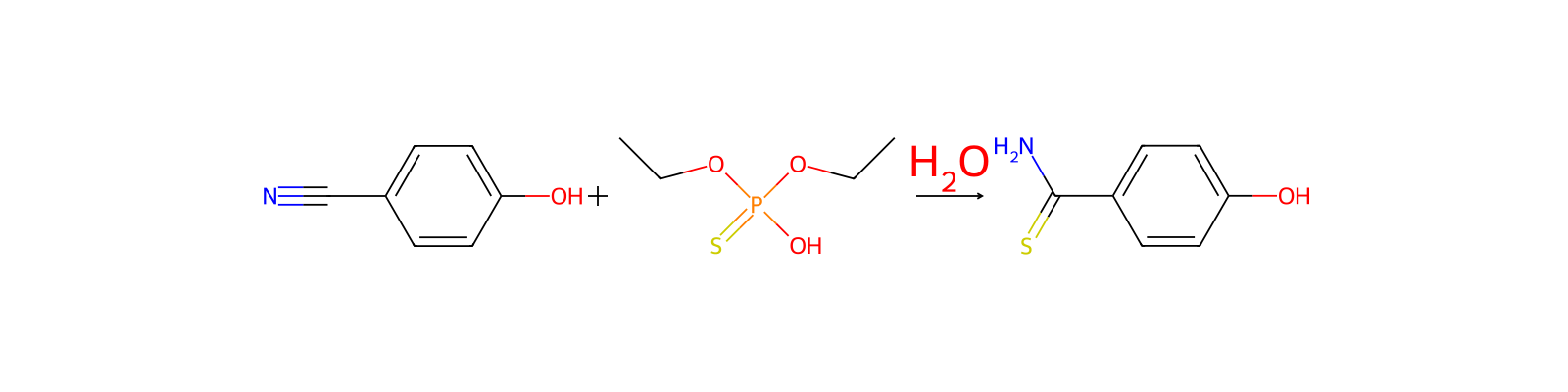
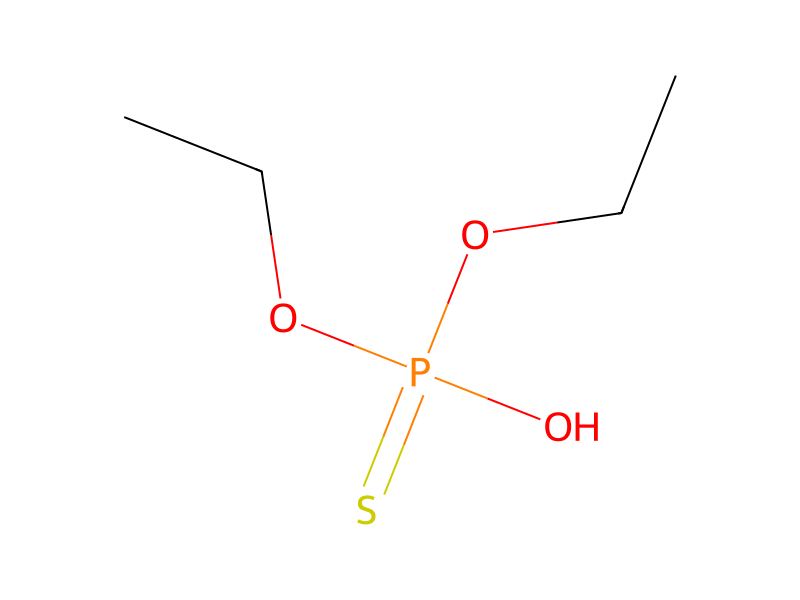
Basic information
- Standard SMILES
CCOP(O)(=S)OCC- InChIKey
PKUWKAXTAVNIJR-UHFFFAOYSA-N- Molecular formula
- C4H11O3PS
- Average molar mass
- 170.17 g/mol
- Monoisotopic mass
- 170.01665184
Overview
O,O-diethyl hydrogen thiophosphate is an organic thiophosphate that is the diethyl ester of phosphorothioic O,O,O-acid. It has a role as a mouse metabolite and a human xenobiotic metabolite. It is a conjugate acid of an O,O-diethyl thiophosphate.
Names & identifiers
- Preferred name
- O,O-diethyl phosphorothioate
- IUPAC
- diethoxy-hydroxy-sulfanylidene-λ5-phosphane
- English name
- O,O-Diethyl thiophosphate, potassium salt
- Molecular formula
- C4H11O3PS
- Molecular weight
- 170.17
Names & synonyms
2465-65-8O,O-Diethyl hydrogen phosphorothioateDETP (ester)O,O-Diethyl phosphorothionateDiethyl hydrogen phosphorothionateO,O-DIETHYL PHOSPHOROTHIOATEFND2ADQ374DTXSID9052844NSC-289183NSC-289427RefChem:928011DTXCID6031336
Show more names
O,O-diethyl O-hydrogen phosphorothioateDEPThDETP(ester)Chlorpyrifos Impurity 4Chlorpyrifos Impurity 2Thiophosphoric acid diethylO,O-DIETHYLPHOSPHOROTHIOATEThiophosphoric acid O,O-diethylO,O'-diethyl thiophosphoric acid
DETPO,O-DIETHYL HYDROGEN THIOPHOSPHATEDiethylthiophosphoric acidO,O-Diethyl thiophosphatePhosphorothioic acid, O,O-diethyl esterCHEBI:28006O,O-DIETHYL S-HYDROGEN PHOSPHOROTHIOATEdiethoxy-hydroxy-sulfanylidene-lambda5-phosphane
Database identifiers
- CAS
2465-65-8、5871-17-0- PubChem CID
- 655
- DTXSID
DTXSID9052844- ChEMBL
CHEMBL1232328- ChEBI
CHEBI:28006- UNII
- FND2ADQ374
- Nikkaji
- J80.493B
Properties
Computed structural properties
- XLogP
- 1.4
- Topological polar surface area
- 70.8 Ų
- Hydrogen bond donors
- 1
- Hydrogen bond acceptors
- 4
- Rotatable bonds
- 4
- Heavy atoms
- 9
- Formal charge
- 0
- Complexity
- 106
Experimental & physicochemical properties
Physical DescriptionSolid
Physicochemical properties
- Melting point
- 180 · 180-186 °C(lit.)
- Boiling point
- 105 · 105-106 °C(Press: 2 Torr)
- Density
- 1.1806 g/cm3 · 1.1806 g/cm3
- pka
- -0.1 · -0.10±0.34(Predicted)
- FDA UNII
- 2 ADQ374 · FND2ADQ374
- Hazard Codes
- Xi
- Risk Statements
- 36 · 36/37/38
- Safety Statements
- 26 · 26-36
- WGK Germany
- 3 · 3
Safety & regulation
Toxicology
Toxicity Summary
Diethylthiophosphate (DETP) induces DNA damage only in the hepatic cell lines, and this effect could be related to a secondary non-diffusible metabolite generated by the activity of P450 enzymes since P450 enzyme inhibitors also inhibited the induction of DNA damage in hepatic cells. This organophosphorous (OP) metabolite has shown some toxicity in human peripheral blood mononucleated cells (PBMC). DETP is a cytotoxic compound in human PBMC. A relationship between urinary levels of DETP and the number of sperm susceptible to chromatin alteration has been reported among rural agricultural workers. In addition, a correlation between the frequency of aneuploidy in sperm and the levels of DETP in urine was identified in a rural population exposed to OP pesticides, indicating that the potential for genotoxicity following OP exposure may depend on the type and quantity of specific metabolites produced, such as DETP. (A15411)
Carcinogen ClassificationNo indication of carcinogenicity to humans (not listed by IARC).
Safety data
- wgk
- 3
- risk_code
- 36/37/38
- hazard_code
- Xi
- safety_code
- 26-36
Chemistry & industry
Pharmacology
Metabolism/Metabolites
Diethyl thiophosphate is a known human metabolite of Diazinon.
Metabolism of organophosphates occurs principally by oxidation, by hydrolysis via esterases and by reaction with glutathione. Demethylation and glucuronidation may also occur. Oxidation of organophosphorus pesticides may result in moderately toxic products. In general, phosphorothioates are not directly toxic but require oxidative metabolism to the proximal toxin. The glutathione transferase reactions produce products that are, in most cases, of low toxicity. Paraoxonase (PON1) is a key enzyme in the metabolism of organophosphates. PON1 can inactivate some organophosphates through hydrolysis. PON1 hydrolyzes the active metabolites in several organophosphates insecticides as well as, nerve agents such as soman, sarin, and VX. The presence of PON1 polymorphisms causes there to be different enzyme levels and catalytic efficiency of this esterase, which in turn suggests that different individuals may be more susceptible to the toxic effect of organophosphate exposure.
Uses & manufacturing
UsesThis is a natural compound that is used as a pesticide.
Upstream & downstream products
Downstream products
Suppliers8 total
广州隽沐生物科技股份有限公司020-36607679; 13502246435 · [email protected]
广东云星生物技术有限公司0751-18902340975/189023400307 18902340307 · [email protected]
Moxin Chemicals+86-17320513646 +86-17320513646 · [email protected]
深圳振强药物研发有限公司0755-66853366 13670046396 · [email protected]
湖北扬信医药科技有限公司15347293736 · [email protected]
广东翁江化学试剂有限公司0751-2815987 13927875076 · [email protected]
湖北摩科化学有限公司18627753421; 18627756402 · [email protected]
广州奥司汀生物技术有限公司15918640830 13268843209 · [email protected]
Additional notes
DefinitionThe distance from the top to the bottom of an object, measured in units of length.
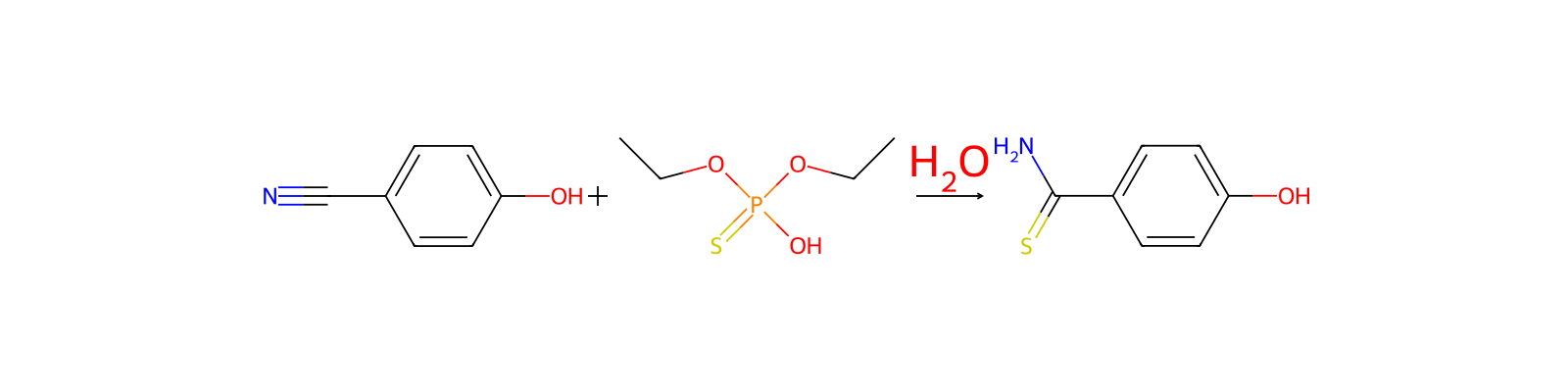
Related reactions
3 records

Linked notes
Loading…