HomeMCPWorkbenchSkills
HomeWorkbenchNotificationsMe
llms.txt · MCP GuidePrivacy Policy · Terms of Service · Supportv1.8.0
  1. Home
  2. /Compound

Chloroacetamide

HCID 6580
New noteNew reactionRequest quotes
Print preview

Completing data — refresh the page later to see the latest

Basic informationOverviewNames & identifiersPropertiesSafety & regulationChemistry & industryRelated reactionsCompound notes
Substructure searchFind similar structures

Basic information

CAS
79-07-2
Standard SMILES
NC(=O)CCl
InChIKey
VXIVSQZSERGHQP-UHFFFAOYSA-N
Molecular formula
C2H4ClNO
Average molar mass
93.51 g/mol
Monoisotopic mass
92.99814143

Overview

2-chloroacetamide is a monocarboxylic acid amide that is acetamide substituted by a chloro group at position 2. It has a role as an antimicrobial cosmetic preservative, a fungicide, a herbicide and an antimicrobial agent. It is a primary carboxamide, a monocarboxylic acid amide, an organochlorine compound and a N-acylammonia.

Names & identifiers

Preferred name
Chloroacetamide
IUPAC
2-chloroacetamide
English name
Chloroacetamide
Molecular formula
C2H4ClNO
Molecular weight
93.51

Names & synonyms

2-ChloroacetamideChloroacetamide79-07-2Acetamide, 2-chloro-CHLORACETAMIDEMicrocide2-ChloroethanamideMergal AFChloracetamidalpha-Chloroacetamide2-ChloracetamideUSAF DO-29
Show more names
KM 1010/2/79NSC 8408mergalafNSC 54286
DTXSID9041570NSC-542862R97846T1LDTXCID7021570RefChem:125357201-174-22-Chloro-acetamide.alpha.-Chloroacetamide

Database identifiers

CAS
79-07-2
PubChem CID
6580
DTXSID
DTXSID9041570
ChEMBL
CHEMBL346368
ChEBI
CHEBI:234507
UNII
2R97846T1L
EC Number
201-174-2
Nikkaji
J1.491E

Properties

Computed structural propertiesFilling in

XLogP
-0.5
Topological polar surface area
43.1 Ų
Hydrogen bond donors
1
Hydrogen bond acceptors
1
Rotatable bonds
1
Heavy atoms
5
Formal charge
0
Complexity
44.9

Experimental & physicochemical properties

Chemical ClassesOther Uses -> Biocides/Disinfectants
Cosmetics · 2 items

Cosmetic ingredients (Chloroacetamide) -> CIR (Cosmetic Ingredient Review)

Preservative

SpringerMaterials PropertiesMoessbauer quadrupole effect
LogP · 3 items

log Kow = -0.53

-0.53

-0.53

OdorCharacteristic odor
DensityRelative density of the vapour/air-mixture at 20 °C (air = 1): 1.00
Color/Form · 2 items

Crystals from water

Colorless to pale yellow crystals

Solubility · 4 items

In water, 90,000 mg/L at 25 °C

Solubility in water: 98 g/mL at 20 °C

Soluble in alcohol; insoluble in ether

Solubility in water, g/100ml at 20 °C: 98

Safety & regulation

Safety information is for reference only and does not replace the supplier’s Safety Data Sheet (SDS), applicable regulations, or professional assessment.

GHS classification

GHS Classification · 6 items

Danger

H301: Toxic if swallowed [Danger Acute toxicity, oral]

P203, P261, P264, P270, P272, P280, P301+P316, P302+P352, P318, P321, P330, P333+P317, P362+P364, P405, and P501 (click each P-code to see the statement)

Danger

H301 (92.5%): Toxic if swallowed [Danger Acute toxicity, oral]

P203, P261, P264, P264+P265, P270, P272, P280, P301+P316, P302+P352, P305+P351+P338, P318, P321, P330, P333+P317, P337+P317, P362+P364, P405, and P501 (click each P-code to see the statement)

Hazard information

Regulatory Information · 3 items

Chemical: Acetamide, 2-chloro-

Status: Active Update: 15-05-2018 https://echa.europa.eu/registration-dossier/-/registered-dossier/11045

2-Chloroacetamide: Does not have an individual approval but may be used under an appropriate group standard

Other Safety InformationIMAP assessments - Acetamide, 2-chloro-: Human health tier II assessment
Fire HazardsNot combustible. Gives off irritating or toxic fumes (or gases) in a fire.
Fire PotentialNot combustible.
Hazards Summary · 1 item

Allergic contact dermatitis reported in hairdressers and shoemakers; [Kanerva, 1769] A skin and eye irritant; May cause skin sensitization; Animal tests show that this substance possibly causes toxicity to human reproduction or development. [ICSC] Danger of skin sensitization; [MAK]

FDA RequirementsChloracetamide is an indirect food additive for use only as a component of adhesives.

Chemistry & industry

Pharmacology

Absorption, Distribution and ExcretionThe substance can be absorbed into the body by inhalation of its aerosol, through the skin and by ingestion.

Uses & manufacturing

Uses · 6 items

CIR ingredient: Chloroacetamide

Used as a preservative in paints, glues, metalworking fluids, and leather; [Kanerva, p. 1769]

Metal Machining [Category: Heat or Machine]

Intermediate

Chloroacetamide is a versatile intermediate. In addition, it has biocidal properties and, therefore, is used as an industrial preservative. Because of its good solubility in water, chloroacetamide is a particularly suitable biocide for protection of the aqueous phase, ... in water-containing paints, and as a wood preservative. Its insecticidal action on aphids and its use as a hardener for urea and melamine resins have also been described.

FORMER USE: Chloroacetamide is used as a preservative and antiseptic in cosmetics. Its function is to retard the deterioration of cosmetic products by slowing the growth of bacteria or fungi.

U.S. Production · 4 items

(1986) 10 thousand-500 thousand pounds

(1990) 10 thousand-500 thousand pounds

(1998) 10 thousand-500 thousand pounds

Production volumes for non-confidential chemicals reported under the Inventory Update Rule.[Table#7102]

Methods of Manufacturing · 2 items

Prepared from ethyl chloroacetate and ammonia; ... from chloroacetyl chloride and ammonium acetate ... .

... Obtained on an industrial scale by reaction of methylchloroacetate with ammonia at low temperature. Manufacture from chloroacetic acid and cyanamide at 150 to 200 °C also has been described.

Use ClassificationCosmetics -> Preservative
General Manufacturing InformationAcetamide, 2-chloro-: ACTIVE

Related reactions

260 records
New reaction record
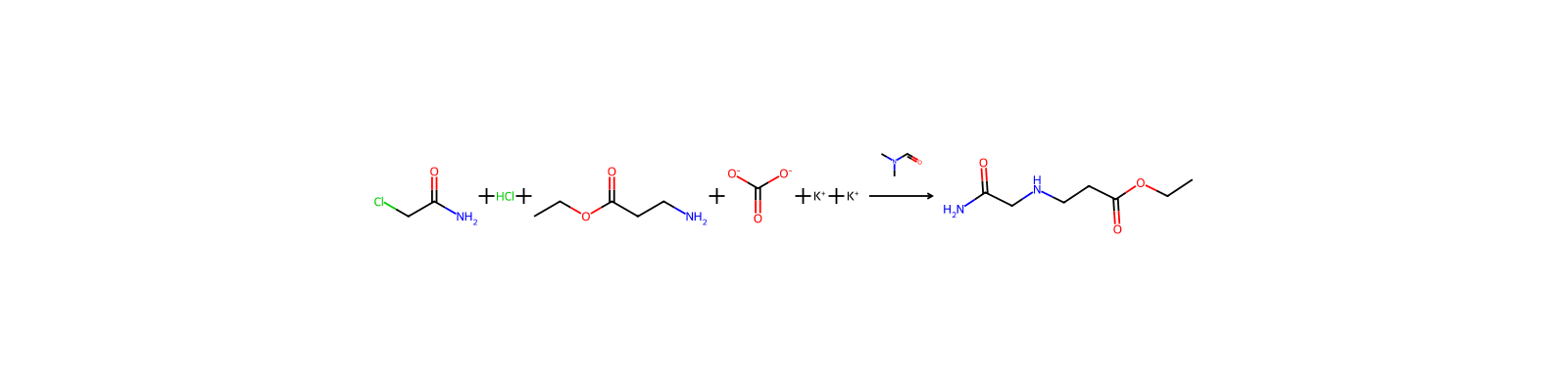
HRID 27411 reaction equation
HRID 27411As reactantuspto-grants-1980_09
HRID 47081 reaction equation
HRID 47081As reactantuspto-grants-1979_11
HRID 51184 reaction equation
HRID 51184As reactantuspto-grants-2004_03
HRID 105842 reaction equation
HRID 105842As reactantTraining data from https://doi.org/10.1039/C8SC04228D (2/10)
HRID 114331 reaction equation
HRID 114331As reactantTraining data from https://doi.org/10.1039/C8SC04228D (2/10)
HRID 121599 reaction equation
HRID 121599As reactantTraining data from https://doi.org/10.1039/C8SC04228D (2/10)
HRID 123473 reaction equation
HRID 123473As reactantTraining data from https://doi.org/10.1039/C8SC04228D (2/10)
HRID 136936 reaction equation
HRID 136936As reactantTraining data from https://doi.org/10.1039/C8SC04228D (9/10)
Page 1 of 33

Compound notes

Loading…

On this pageBasic informationOverviewNames & identifiersPropertiesSafety & regulationChemistry & industryRelated reactionsCompound notes
More actions
New noteNew reactionRequest quotes
Corrosivity
Strong irritant to skin and tissue
Flash Point · 2 items

170 °C

170 °C

Boiling PointApproximately 225 °C (decomposes)
Decomposition · 3 items

Decomposes on heating. This produces toxic fumes including nitrogen oxides and chlorine.

When heated to decomposition it emits very toxic fumes of /hydrogen chloride and nitrogen oxides/.

225 °C

Physicochemical properties

Melting point
116 · 116-118 °C(lit.)
Boiling point
224.5 °C · 224.5 °C
Density
0.84 · 0.84
bulk density
760 kg/m3 · 760kg/m3
vapor pressure
0.05 mm · 0.05 mm Hg ( 20 °C)
refractive index
1.448 · 1.4480 (estimate)
Flash point
170 °C · 170 °C
storage temp.
30 °C · Store below +30°C.
solubility
1 g/10 · methanol: soluble1g/10 mL
pka
14.69 · 14.69±0.40(Predicted)
form
Crystalline Powder
color
White
PH
3.8 · 3.8-4.1 (40g/l, H2O, 20℃)
Water Solubility
Soluble in water(90g/L).
Merck
14 · 14,2110
BRN
878191 · 878191
Henry's Law Constant
2.5 · 2.5×103 mol/(m3Pa) at 25℃, HSDB (2015)
Cosmetics Ingredients Functions
PRESERVATIVE
Cosmetic Ingredient Review (CIR)
Chloroacetamide (79-07-2)
InChI
1S/C2H4ClNO/c3-1-2(4)5/h1H2,(H2,4,5)
InChIKey
VXIVSQZSERGHQP-UHFFFAOYSA-N
SMILES
NC(=O)CCl
LogP
-0.53 · -0.530
CAS DataBase Reference
79 · 79-07-2(CAS DataBase Reference)
Indirect Additives used in Food Contact Substances
CHLORACETAMIDE
FDA 21 CFR
175.105 · 175.105; 176.170
EWG's Food Scores
5 · 5-8
FDA UNII
2 R97846T1L · 2R97846T1L
NIST Chemistry Reference
2 · Acetamide, 2-chloro-(79-07-2)
EPA Substance Registry System
2 · Acetamide, 2-chloro- (79-07-2)
UNSPSC Code
12352111 · 12352111
NACRES
22 · NA.22
Symbol(GHS)
6 · GHS06,GHS08
Signal word
Danger
Hazard statements
301 · H301-H317-H361f
Precautionary statements
201 · P201-P280-P301+P310+P330-P302+P352
PPE
3 · Eyeshields, Faceshields, Gloves, type P3 (EN 143) respirator cartridges
Hazard Codes
T
Risk Statements
25 · 25-43-62
Safety Statements
22 · 22-36/37-45
RIDADR
2811 · UN 2811 6.1/PG 3
WGK Germany
2 · 2
RTECS
5075000 · AB5075000
TSCA
TSCA listed
HazardClass
6.1 · 6.1
PackingGroup
III
HS Code
29241900 · 29241900
Storage Class
6.1 C · 6.1C - Combustible acute toxic Cat.3toxic compounds or compounds which causing chronic effects
Hazard Classifications
3 OralRepr · Acute Tox. 3 OralRepr. 2Skin Sens. 1
Hazardous Substances Data
79 · 79-07-2(Hazardous Substances Data)
Toxicity
50 orally · LD50 orally in Rabbit: 138 mg/kg LD50 dermal Rat > 2000 mg/kg
REACH Registrations
Active
EC Classification
Symbol: T; R: 25-43-62; S: (1/2)-22-36/37-45
UN ClassificationUN Hazard Class: 6.1; UN Pack Group: III
Chemical DangersDecomposes on heating. This produces toxic fumes including nitrogen oxides and chlorine. Reacts with strong oxidants, strong reducing agents, strong acids and strong bases.
Packaging and LabellingDo not transport with food and feedstuffs.
Toxic Combustion ProductsGives off irritating or toxic fumes (or gases) in a fire.
Hazard Classes and Categories · 4 items

Acute Tox. 3 (92.5%)

Acute toxicity - category 3

Acute toxicity (Oral) - Category 3

Repr. 2

Safety & protection

Fire FightingIn case of fire in the surroundings, use appropriate extinguishing media.
First Aid Measures · 4 items

Fresh air, rest.

Remove contaminated clothes. Rinse and then wash skin with water and soap.

Rinse with plenty of water for several minutes (remove contact lenses if easily possible).

Rinse mouth. Give a slurry of activated charcoal in water to drink. Refer for medical attention .

Safe StorageSeparated from strong oxidants, strong bases, strong acids and food and feedstuffs. Ventilation along the floor. Store in an area without drain or sewer access.
Fire Fighting ProceduresIn case of fire in the surroundings, use appropriate extinguishing media.
Storage ConditionsSeparated from strong oxidants, strong bases, strong acids and food and feedstuffs. Ventilation along the floor. Store in an area without drain or sewer access.
Cleanup Methods · 1 item

Spillage Disposal. Personal protection: particulate filter respirator adapted to the airborne concentration of the substance. Do NOT let this chemical enter the environment. Sweep spilled substance into covered sealable containers. If appropriate, moisten first to prevent dusting. Carefully collect remainder. Then store and dispose of according to local regulations.

Disposal Methods · 1 item

SRP: The most favorable course of action is to use an alternative chemical product with less inherent propensity for occupational exposure or environmental contamination. Recycle any unused portion of the material for its approved use or return it to the manufacturer or supplier. Ultimate disposal of the chemical must consider: the material's impact on air quality; potential migration in soil or water; effects on animal, aquatic, and plant life; and conformance with environmental and public health regulations.

Spillage Disposal · 1 item

Personal protection: particulate filter respirator adapted to the airborne concentration of the substance. Do NOT let this chemical enter the environment. Sweep spilled substance into covered sealable containers. If appropriate, moisten first to prevent dusting. Carefully collect remainder. Then store and dispose of according to local regulations.

Preventive Measures · 5 items

SRP: The scientific literature for the use of contact lenses in industry is conflicting. The benefit or detrimental effects of wearing contact lenses depend not only upon the substance, but also on factors including the form of the substance, characteristics and duration of the exposure, the uses of other eye protection equipment, and the hygiene of the lenses. However, there may be individual substances whose irritating or corrosive properties are such that the wearing of contact lenses would be harmful to the eye. In those specific cases, contact lenses should not be worn. In any event, the usual eye protection equipment should be worn even when contact lenses are in place.

SRP: Local exhaust ventilation should be applied wherever there is an incidence of point source emissions or dispersion of regulated contaminants in the work area. Ventilation control of the contaminant as close to its point of generation is both the most economical and safest method to minimize personnel exposure to airborne contaminants.

Do NOT take working clothes home.

Prevent dispersion of dust! Avoid all contact! Use local exhaust or breathing protection.

Do not eat, drink, or smoke during work. Wash hands before eating.

Eye PreventionWear safety spectacles, face shield or eye protection in combination with breathing protection if powder.
Inhalation RiskA harmful concentration of airborne particles can be reached quickly when dispersed, especially if powdered.
Skin PreventionProtective gloves. Protective clothing.

Toxicology

Ecotoxicity Values · 5 items

EC50; Species: Eisenia andrei (Earthworm) adult; topical >25 mg/kg dry soil for 28 days; Effect: decreased growth

LC50; Species: Eisenia andrei (Earthworm) adult; topical 23.3 mg/kg dry soil for 28 days

EC50; Species: Eisenia andrei (Earthworm) adult; topical 18.5 mg/kg dry soil for 56 days; Effect: decreased progeny counts

LC50; Species: Eisenia fetida (Earthworm) topical using filter paper 2.7 ug/sq cm for 48 hr

LC50; Species: Eisenia fetida (Earthworm) topical 38.5 mg/kg artificial soil for 14 days

Environmental Fate · 3 items

TERRESTRIAL FATE: Based on a classification scheme(1), an estimated Koc value of 4.2(SRC), determined from a log Kow of -0.53(2) and a regression-derived equation(3), indicates that chloroacetamide is expected to have very mobility in soil(SRC). Volatilization of chloroacetamide from moist soil surfaces is not expected to be an important fate process(SRC) given an estimated Henry's Law constant of 3.9X10⁻⁹ atm-cu m/mole(SRC), using a fragment constant estimation method(4). Chloroacetamide is not expected to volatilize from dry soil surfaces(SRC) based upon an estimated vapor pressure of 1.1X10⁻² mm Hg mm Hg at 25 deg (SRC), determined from a fragment constant method(2). Utilizing the Zahn-Wellens test, 90% biodegradation was reached in 6 days(5) indicating that biodegradation may be an important environmental fate process in soil(SRC).

AQUATIC FATE: Based on a classification scheme(1), an estimated Koc value of 4.2(SRC), determined from a log Kow of -0.53(2) and a regression-derived equation(3), indicates that chloroacetamide is not expected to adsorb to suspended solids and sediment(SRC). Volatilization from water surfaces is not expected(4) based upon an estimated Henry's Law constant of 3.9X10⁻⁹ atm-cu m/mole(SRC), developed using a fragment constant estimation method(5). According to a classification scheme(6), an estimated BCF of 3(SRC), from its log Kow(3) and a regression-derived equation(3), suggests the potential for bioconcentration in aquatic organisms is low(SRC). A hydrolysis half-life of 53 days at pH 8(7) suggests that hydrolysis may be an important environmental fate process for chloroacetamide in alkaline waters(SRC). Utilizing the Zahn-Wellens test, 90% biodegradation was reached in 6 days(8) indicating that biodegradation may be an important environmental fate process in water(SRC).

ATMOSPHERIC FATE: According to a model of gas/particle partitioning of semivolatile organic compounds in the atmosphere(1), chloroacetamide, which has an estimated vapor pressure of 1.1X10⁻² mm Hg at 25 °C(SRC), determined from a fragment constant method(2), is expected to exist solely as a vapor in the ambient atmosphere. Vapor-phase chloroacetamide is degraded in the atmosphere by reaction with photochemically-produced hydroxyl radicals(SRC); the half-life for this reaction in air is estimated to be 5 days(SRC), calculated from its rate constant of 2.3X10⁻¹² cu cm/molecule-sec at 25 °C(SRC) that was derived using a structure estimation method(3). Chloroacetamide does not contain chromophores that absorb at wavelengths >290 nm(4) and, therefore, is not expected to be susceptible to direct photolysis by sunlight(SRC).

Adverse Effects · 1 item

Reproductive Toxin - A chemical that is toxic to the reproductive system, including defects in the progeny and injury to male or female reproductive function. Reproductive toxicity includes developmental effects. See Guidelines for Reproductive Toxicity Risk Assessment.

Exposure RoutesThe substance can be absorbed into the body in hazardous amounts by ingestion. The substance can be absorbed into the body through the skin.
Toxicity Summary · 2 items

Based on the data included in this report and the reconfirmation that Chloroacetamide is a potential human sensitizer at use concentrations, the Expert Panel concludes that Chloroacetamide is unsafe for use as a cosmetic ingredient.

The ingredient is unsafe for use in cosmetics

Signs and Symptoms · 4 items

Cough.

Redness. Pain.

Redness. Pain.

Sore throat.

ICSC Environmental DataThe substance is harmful to aquatic organisms.
Soil Adsorption/Mobility · 1 item

The Koc of chloroacetamide is estimated as 4.2(SRC), using a log Kow of -0.53(1) and a regression-derived equation(2). According to a classification scheme(3), this estimated Koc value suggests that chloroacetamide is expected to have very high mobility in soil.

Human Toxicity Excerpts · 5 items

/HUMAN EXPOSURE STUDIES/ Six subjects were used in a study of the effect of elicitation concentration in contact dermatitis testing. All of the subjects had positive reactions to a 1% solution of chloroacetamide in a Draize test conducted 6 months before the study reported here. Chloroacetamide at four concentrations in petrolatum (0.5, 0.1, 0.05, and 2%) was applied to the upper back of the subjects, and the reactions were scored. Four of the six subjects had positive reactions to the 2% concentration, and 1 subject had a positive reaction to the 0.5% concentration. None of the subjects had reactions to the 0.1 and 0.05% concentrations.

/HUMAN EXPOSURE STUDIES/ Chloroacetamide was patch tested on 465 dermatological patients ranging in age from 2 to 80 years, with an average age of 37 years. Chloroacetamide, 0.1% in petrolatum, was applied using the ICDRG procedure and scored at 24, 48, and 72 hr. Seven of the 465 subjects had a positive reaction to chloroacetamide. Of the 7 subjects who had positive reactions, 5 were younger women who had mainly facial lesions.

/HUMAN EXPOSURE STUDIES/ A mixture of 70% chloroacetamide and 30% sodium benzoate was tested for ocular irritation in humans. A 5% solution of this mixture was instilled without rinse into the human eye and caused slight discomfort, lacrimation, and blurred vision lasting 15 to 30 minutes.

/HUMAN EXPOSURE STUDIES/ From February 1989 to January 1990, the Swiss Contact Dermatitis Research Group conducted a 1-year study to examine the frequency of sensitization to a series of 13 common preservatives. A group of 2295 consecutive outpatients with suspected allergic contact dermatitis (age range 7-90 years, with a mean age of 42; 911 males, 1384 females) was tested. The %s of positive reactions to the preservatives studied are as follows, in descending order: formaldehyde 5.7%, benzalkonium chloride 5.5%, Kathon CG 5.5%, thimerosal 4.2%, chlorhexidine digluconate 2.0%, DMDM hydantoin 1.7%, paraben mix 1.7%, chloroacetamide 1.5%, Bronopol 1.2%, imidazolidinyl urea 1.0%, quaternium 15 1.0%, triclosan 0.8%, 2,4-dichlorobenzyl alcohol 0.4%. These relatively high values suggest a heavy exposure of the Swiss population to topical preservatives.

For more Human Toxicity Excerpts (Complete) data for CHLOROACETAMIDE (16 total), please visit the HSDB record page.

Artificial Pollution Sources · 1 item

Chloroacetamide's production and use as a chemical intermediate for the production of herbicides and insecticides(1) may result in its release to the environment through various waste streams(SRC). The compound was formerly used as a preservative in various cosmetics(2).

Environmental BiodegradationAEROBIC: Chloroacetamide underwent greater than 90% biodegradation in 6 days using an activated sludge inoculum and the Zahn-Wellens test(1).
Environmental Bioconcentration · 1 item

An estimated BCF of 3 was calculated in fish for chloroacetamide(SRC), using a log Kow of 0.53(1) and a regression-derived equation(2). According to a classification scheme(3), this BCF suggests the potential for bioconcentration in aquatic organisms is low(SRC).

Regulatory information

FDA RequirementsChloracetamide is an indirect food additive for use only as a component of adhesives.

Safety data

PPE
Eyeshields, Faceshields, Gloves, type P3 (EN 143) respirator cartridges
wgk
2
tsca
TSCA listed
rtecs
AB5075000
ridadr
UN 2811 6.1/PG 3
hs_code
29241900
Toxicity
LD50 orally in Rabbit: 138 mg/kg LD50 dermal Rat > 2000 mg/kg
risk_code
25-43-62
Signal word
Danger
Symbol(GHS)
GHS06,GHS08
hazard_code
T
safety_code
22-36/37-45
hazard_class
6.1
Storage Class
6.1C - Combustible acute toxic Cat.3toxic compounds or compounds which causing chronic effects
packing_group
III
Hazard statements
H301-H317-H361f
REACH Registrations
Active
Hazard Classifications
Acute Tox. 3 OralRepr. 2Skin Sens. 1
Precautionary statements
P201-P280-P301+P310+P330-P302+P352
Hazardous Substances Data
79-07-2(Hazardous Substances Data)
Applications · 4 items

DescriptionChloroacetamide is a preservative used in several applications such as in cutting metalwork fluids, in paints or in glues. It can induce contact dermatitis in hairdressers, or in shoemakers when used as a leather preservative.

Uses2-Chloroacetamide is used as surface-active agent in home laundry, cleaning products & household formulated cleaners, other industrial uses, petroleum production, polymer processing.

UsesA component of herbicidal mixtures of cellulose biosynthesis inhibitors with VLCFA inhibitors.

Usespreservative in cosmetic and pharmaceutical creams, shampoos, bath lotions, etc.; preservative in glues, cooling fluids.

Upstream & downstream products

Upstream raw materials

Ammonium chlorideEthyl chloroacetate2-HydroxyacetamideChloroacetyl chlorideChloroacetic anhydride

Downstream products

MachetteL-Aspartic acid2-IodoacetamideChloroacetonitrile3-aminopropanamide2-Chloro-5-methoxyphenylboronic acidChloroacetyl isocyanateFluoroacetamideNitrazepam1-Naphthaleneacetamide2-(4-Formylphenoxy)acetamide2-Chloro-N-phenylacetamide2,2',4'-Trichloroacetophenone