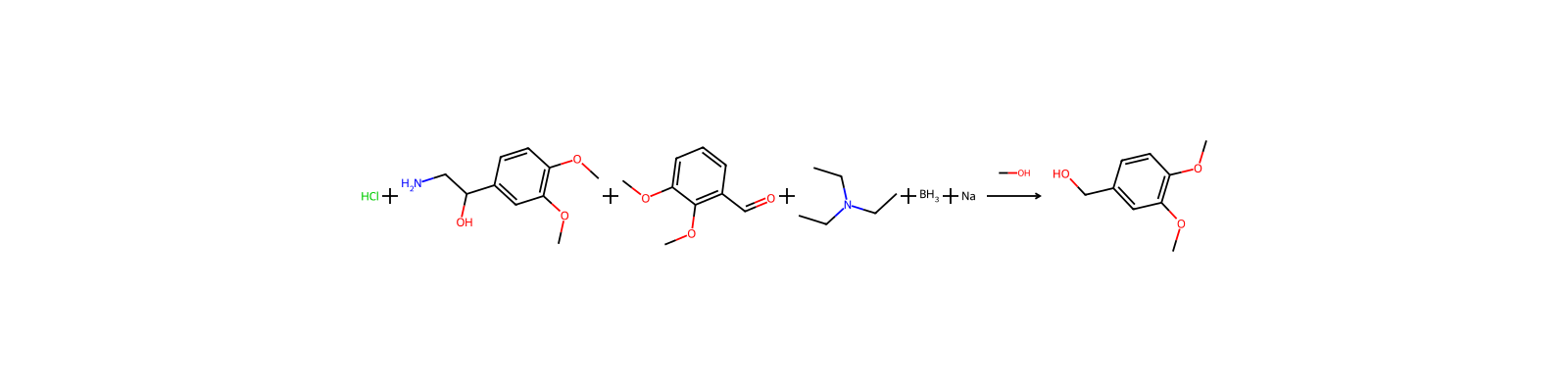
HRID 9054As reactant

86-51-1COc1cccc(C=O)c1OCJIVGSHFYXPRRSZ-UHFFFAOYSA-NO-Veratraldehyde is a dimethoxybenzene.
86-51-1DTXSID80235333CHEMBL3039102CHEBI:228697Safety information is for reference only and does not replace the supplier’s Safety Data Sheet (SDS), applicable regulations, or professional assessment.
Warning
H315 (100%): Causes skin irritation [Warning Skin corrosion/irritation]
P261, P264, P264+P265, P271, P280, P302+P352, P304+P340, P305+P351+P338, P319, P321, P332+P317, P337+P317, P362+P364, P403+P233, P405, and P501 (click each P-code to see the statement)
Aggregated GHS information provided per 44 reports by companies from 4 notifications to the ECHA C&L Inventory. Each notification may be associated with multiple companies.
Chemical: Benzaldehyde, 2,3-dimethoxy-
Benzaldehyde, 2,3-dimethoxy-: Does not have an individual approval but may be used as a component in a product covered by a group standard. It is not approved for use as a chemical in its own right.
Description2,3-Dimethoxybenzaldehyde, commonly known as o-veratrol, is an important aromatic aldehyde compound. Its structure is characterized by two methoxy substituents and one aldehyde group at the ortho (2 and 3) positions of the benzene ring. Due to its unique chemical structure, this compound occupies a central position in the field of pharmaceutical intermediates, especially as a key precursor in the synthesis of berberine. Furthermore, it possesses significant biological activities, such as antifungal and antiviral effects.
Uses2,3-Dimethoxybenzaldehyde possess antifungal activity of redox-active benzaldehydes that target cellular antioxidation. It could function as chemosensitizing agents in concert with conventional drugs to improve antifungal efficacy.
UsesA benzaldehyde derivative that may possess antifungal activity of redox-active benzaldehydes that target cellular antioxidation. It could function as chemosensitizing agents in concert with convention al drugs or fungicides to improve antifungal efficacy.