
2,4-Dichlorobenzoyl chloride
Completing data — refresh the page later to see the latest
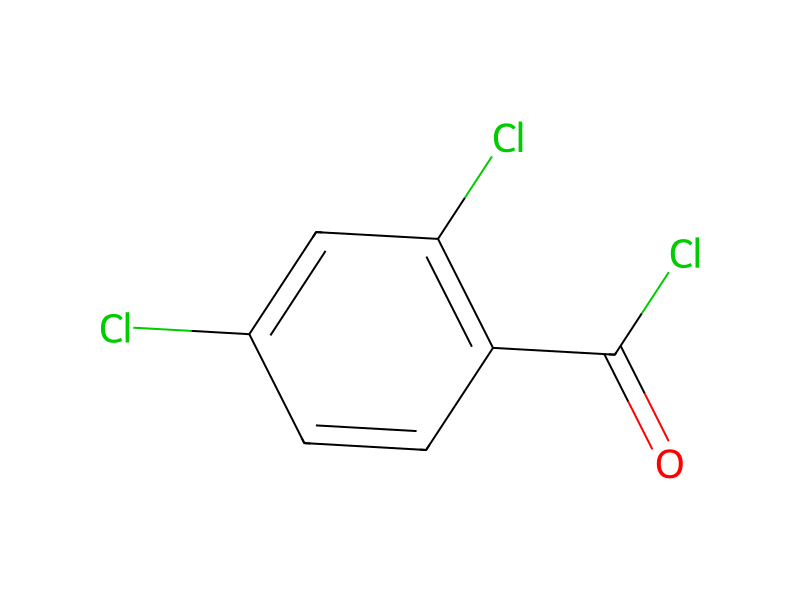
Basic information
- CAS
89-75-8- Standard SMILES
O=C(Cl)c1ccc(Cl)cc1Cl- InChIKey
CEOCVKWBUWKBKA-UHFFFAOYSA-N- Molecular formula
- C7H3Cl3O
- Average molar mass
- 209.5 g/mol
- Monoisotopic mass
- 207.92494776
Names & identifiers
- Preferred name
- 2,4-Dichlorobenzoyl chloride
- IUPAC
- 2,4-dichlorobenzoyl chloride
- English name
- 2,4-Dichlorobenzoyl chloride
- Molecular formula
- C7H3Cl3O
- Molecular weight
- 209.46
Names & synonyms
2,4-Dichlorobenzoyl chloride89-75-8Benzoyl chloride, 2,4-dichloro-DTXSID2052603EINECS 201-936-4CCRIS 8616AI3-14890DTXCID6031176EC 201-936-4RefChem:443457Benzoyl chloride, 2,4dichloro201-936-4
Show more names
2,4-DichlorobenzoylDCOC2,4-DCOCBUTTPARK 45\07-362,4-DichlorbenzoylchloridDICHLOROBENZOYLCHLORIDE-2,42,4-dichloro-benzoylchlorid4-DichlorobenzoylChloride99%DICHLOROBENZOYLCHLORIDE(3,5-)
MFCD000006612,4-dichlorobenzene-1-carbonyl chlorideo,p-dichlorobenzoyl chloride2,4-dichloro-benzoyl chloride2,4-DichlorobenzoylchlorideWWA3MW5SL52,4-dichloro benzoylchloride2.4-dichlorobenzoyl chloride
Database identifiers
- CAS
89-75-8- PubChem CID
- 66645
- DTXSID
DTXSID2052603- ChEMBL
CHEMBL3561077- UNII
- WWA3MW5SL5
- EC Number
- 201-936-4
- Nikkaji
- J1.173H
Properties
Computed structural propertiesFilling in
- XLogP
- 3.8
- Topological polar surface area
- 17.1 Ų
- Hydrogen bond donors
- 0
- Hydrogen bond acceptors
- 1
- Rotatable bonds
- 1
- Heavy atoms
- 11
- Formal charge
- 0
- Complexity
- 160
Experimental & physicochemical properties
Chemical ClassesToxic Gases & Vapors -> Acid Halides
SpringerMaterials PropertiesNuclear quadrupole resonance spectroscopy
Physical DescriptionColorless solid or liquid; mp = 21 deg C; [Acros Organics MSDS]
Physicochemical properties
- Melting point
- 16 · 16-18 °C (lit.)
- Boiling point
- 150 °C/34 · 150 °C/34 mmHg (lit.)
- Density
- 1.494 g/mL · 1.494 g/mL at 25 °C (lit.)
- vapor pressure
- 0.1 mm · 0.1 mm Hg ( 32 °C)
- refractive index
- 20 · n20/D 1.592(lit.)
- Flash point
- 280 °F · 280 °F
- storage temp.
- 30 °C · Store below +30°C.
- solubility
- soluble in Benzene,Ether,Toluene
Safety & regulation
Safety information is for reference only and does not replace the supplier’s Safety Data Sheet (SDS), applicable regulations, or professional assessment.
GHS classification
GHS Classification
Danger
H314 (100%): Causes severe skin burns and eye damage [Danger Skin corrosion/irritation]
P260, P261, P264, P271, P280, P301+P330+P331, P302+P361+P354, P304+P340, P305+P354+P338, P316, P319, P321, P363, P403+P233, P405, and P501 (click each P-code to see the statement)
Aggregated GHS information provided per 87 reports by companies from 7 notifications to the ECHA C&L Inventory. Each notification may be associated with multiple companies.
Hazard information
Regulatory Information
Chemical: Benzoyl chloride, 2,4-dichloro-
Status: Active Update: 15-02-2021 https://echa.europa.eu/registration-dossier/-/registered-dossier/5926
2,4-Dichlorobenzoyl chloride: Does not have an individual approval but may be used under an appropriate group standard
Hazards SummaryHydrolyzed by water or moisture producing gaseous and aqueous hydrogen chloride; Causes burns and lachrymation; Inhalation may cause corrosive injuries to upper respiratory tract; [Acros Organics MSDS] See Benzoyl chloride.
Hazard Classes and CategoriesSkin Corr. 1B (100%)
Toxicology
Adverse EffectsDermatotoxin - Skin burns.
Safety data
- F
- 10-19-21
- PPE
- Faceshields, Gloves, Goggles, type ABEK (EN14387) respirator filter
- wgk
Chemistry & industry
Uses & manufacturing
General Manufacturing InformationBenzoyl chloride, 2,4-dichloro-: ACTIVE
Applications
Uses2,4-Dichlorobenzoyl chloride was used in the synthesis of thioesters of 4-chlorobenzoate and 2,4-dichlorobenzoate.
Upstream & downstream products
Upstream raw materials
Downstream products
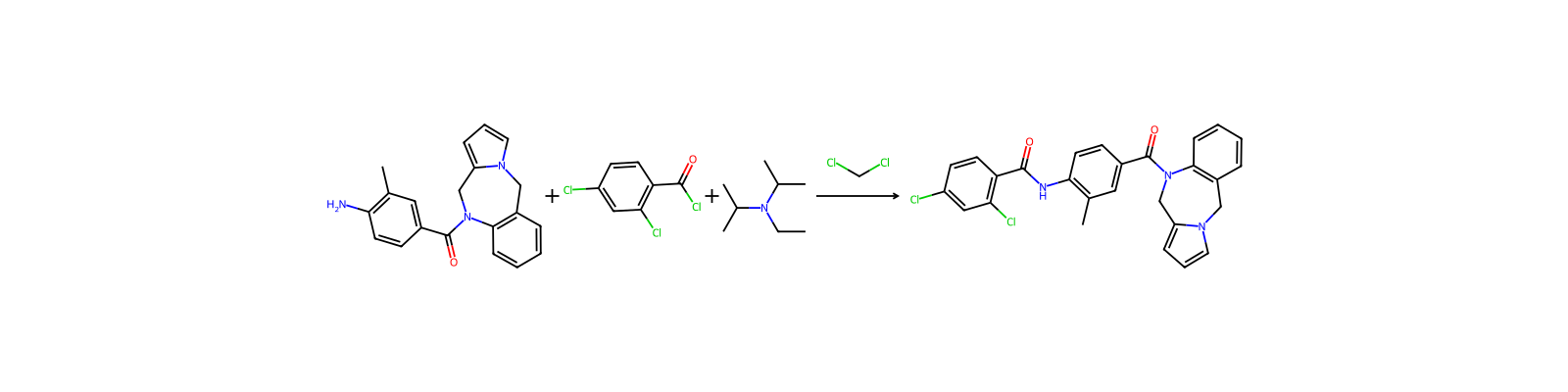
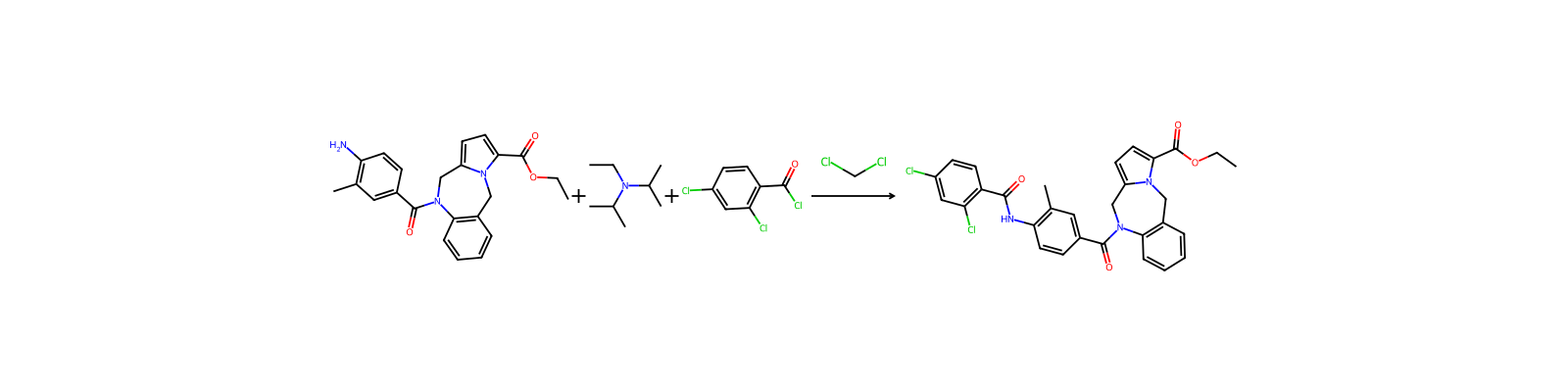
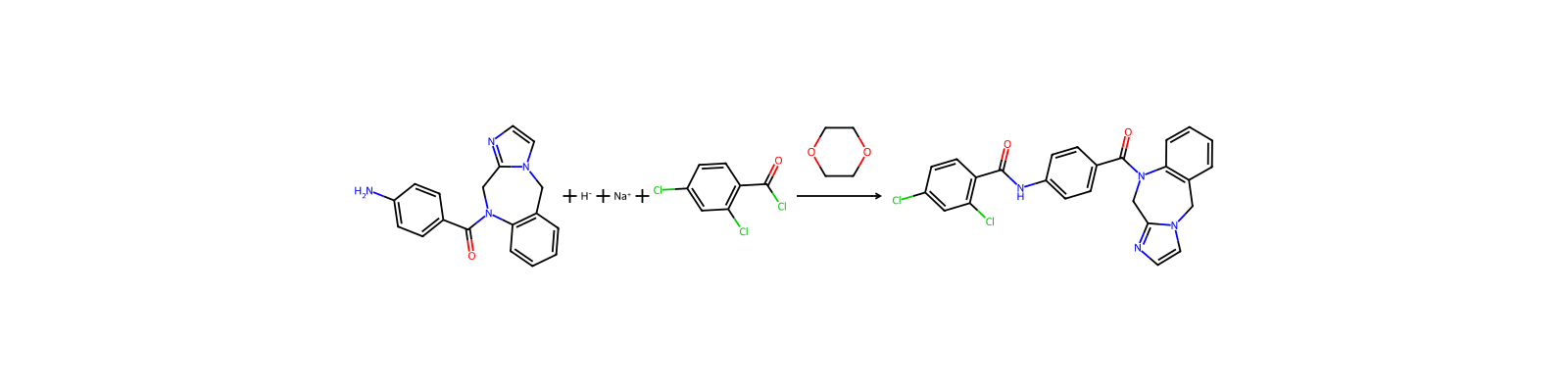
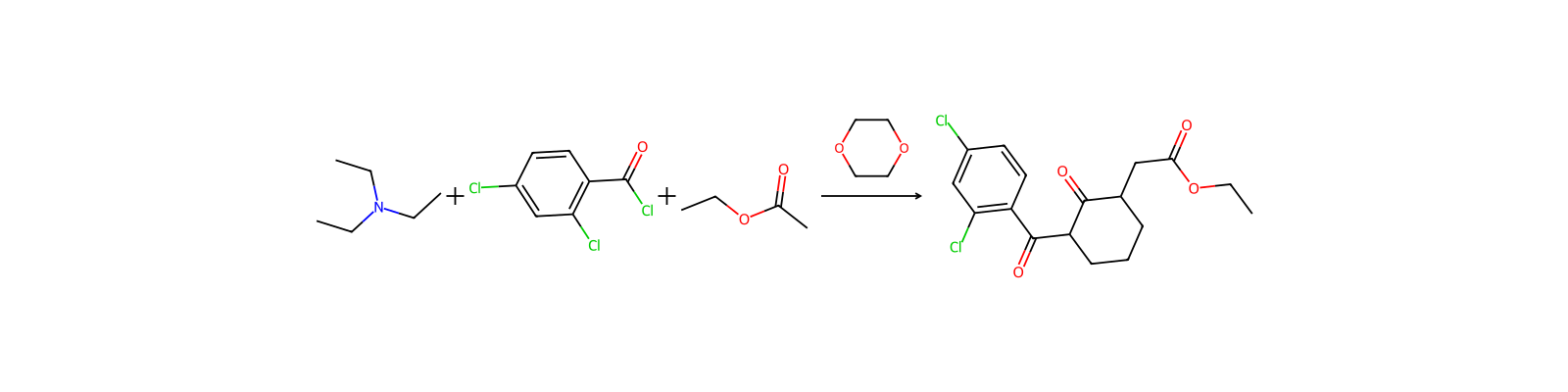
Related reactions
406 records



Compound notes
Loading…