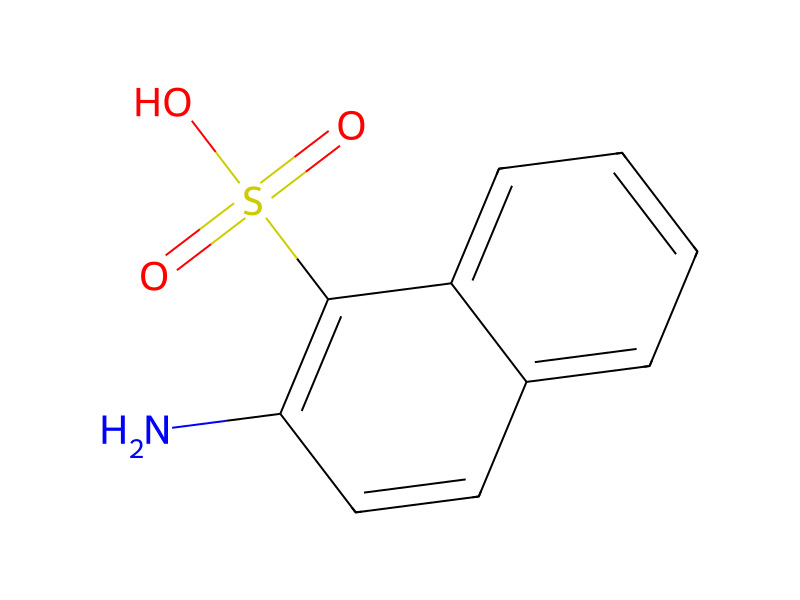
Basic information
- Standard SMILES
Nc1ccc2ccccc2c1S(=O)(=O)O- InChIKey
GWIAAIUASRVOIA-UHFFFAOYSA-N- Molecular formula
- C10H9NO3S
- Average molar mass
- 223.25 g/mol
- Monoisotopic mass
- 223.03031432
Names & identifiers
- Preferred name
- 2-Amino-1-naphthalenesulfonic acid
- IUPAC
- 2-aminonaphthalene-1-sulfonic acid
- English name
- 2-Aminonaphthalene-1-sulfonic acid
- Molecular formula
- C10H9NO3S
- Molecular weight
- 223.25
Names & synonyms
81-16-32-AMINO-1-NAPHTHALENESULFONIC ACIDTobias acid2-Naphthylamine-1-sulfonic acidKyselina tobiasova1-Naphthalenesulfonic acid, 2-amino-F9QKW1FCE0Kyselina 2-naftylamin-1-sulfonovaDTXSID7020922NSC-5523DTXCID90922RefChem:463279
Show more names
C10H8NO3STOBIAS ACITOBIAC ACIDSUPER J ACIDTobiasacid,98%Tourette's acidWln: L66J bswq czkyselinatobiasova
201-331-52-aminonaphthalene-1-sulfonic acidCCRIS 9048MFCD000039882-Naphthylamino,1-sulfonic acid2-Amino-naphthalenesulfonic acidNSC5523BBL034632
Database identifiers
- CAS
72556-60-6、81-16-3- PubChem CID
- 6670
- DTXSID
DTXSID7020922- ChEMBL
CHEMBL3182507- UNII
- F9QKW1FCE0
- EC Number
- 201-331-5
- Nikkaji
- J3.857A
Properties
Computed structural properties
- XLogP
- 1.8
- Topological polar surface area
- 88.8 Ų
- Hydrogen bond donors
- 2
- Hydrogen bond acceptors
- 4
- Rotatable bonds
- 1
- Heavy atoms
- 15
- Formal charge
- 0
- Complexity
- 322
Experimental & physicochemical properties
LogPlog Kow= -1.16
Color/Form
WHITE NEEDLES
Anhydrous scales from hot water; hydrated needles from cold water
Solubility
Slightly sol in cold water; more sol in hot water; very slightly sol in alcohol, ether
In water, 4,100 mg/l @ 20 °C
DecompositionWhen heated to decomp it emits very toxic fumes of /nitrogen oxides and sulfur oxides/.
Physical DescriptionWhite solid; [HSDB] Light orange crystalline powder; [MSDSonline]
Dissociation ConstantspK1= 2.35 in water @ 25 °C
Physicochemical properties
- Melting point
- 180 °C · 180 °C
- Boiling point
- 220 °C · 220°C (rough estimate)
- Density
- 1.3588 · 1.3588 (rough estimate)
- refractive index
- 1.525 · 1.5250 (estimate)
- storage temp.
- -20 °C · -20°C Freezer, Under inert atmosphere
- solubility
- DMSO (Slightly), Methanol (Slightly, Heated), Water (Slightly, Heated)
- form
- Solid
- pka
- 1 · pK1: 2.35 (25°C)
- color
- White to Off-White
- Water Solubility
- 4.083 g/L · 4.083g/L(20 ºC)
- Merck
- 14 · 14,6406
- BRN
- 613084 · 613084
- InChI
- 1S/C10H9NO3S/c11-9-6-5-7-3-1-2-4-8(7)10(9)15(12,13)14/h1-6H,11H2,(H,12,13,14)
- InChIKey
- GWIAAIUASRVOIA-UHFFFAOYSA-N
- SMILES
- Nc1ccc2ccccc2c1S(O)(=O)=O
- CAS DataBase Reference
- 81 · 81-16-3(CAS DataBase Reference)
- EWG's Food Scores
- 1 · 1
- FDA UNII
- 9 QKW1FCE0 · F9QKW1FCE0
- NIST Chemistry Reference
- 2 · 2-Naphthylamine-1-sulfonic acid(81-16-3)
- EPA Substance Registry System
- 2 · 2-Amino-1-naphthalenesulfonic acid (81-16-3)
- UNSPSC Code
- 12352100 · 12352100
- NACRES
- 22 · NA.22
- Symbol(GHS)
- 7 · GHS07
- Signal word
- Warning
- Hazard statements
- 320 · H320-H319
- Precautionary statements
- 264 · P264-P305+P351+P338+P337+P313-P280i-P305+P351+P338-P337+P313
- PPE
- 95 · Eyeshields, Gloves, type N95 (US)
- Risk Statements
- 36 · 36/37/38-40
- Safety Statements
- 26 · 26-36/37/39
- RIDADR
- 2585 · 2585
- WGK Germany
- 1 · 1
- RTECS
- 1250000 · QK1250000
- TSCA
- TSCA listed
- HS Code
- 2921.45 · 2921.45.9010
- HazardClass
- 8 · 8
- PackingGroup
- III
- Storage Class
- 11 · 11 - Combustible Solids
- Hazardous Substances Data
- 81 · 81-16-3(Hazardous Substances Data)
Safety & regulation
GHS classification
GHS Classification
This chemical does not meet GHS hazard criteria for 76.5% (26 of 34) of all reports.
Warning
H319 (20.6%): Causes serious eye irritation [Warning Serious eye damage/eye irritation]
P264+P265, P280, P305+P351+P338, and P337+P317 (click each P-code to see the statement)
Aggregated GHS information provided per 34 reports by companies from 5 notifications to the ECHA C&L Inventory.;Reported as not meeting GHS hazard criteria per 26 of 34 reports by companies.;There are 4 notifications provided by 8 of 34 reports by companies with hazard statement code(s).;Information may vary between notifications depending on impurities, additives, and other factors. The percentage value in parenthesis indicates the notified classification ratio from companies that provide hazard codes. Only hazard codes with percentage values above 10% are shown. For more detailed information, please visit ECHA C&L website.
Hazard information
Regulatory Information
Chemical: 1-Naphthalenesulfonic acid, 2-amino-
1-Naphthalenesulfonic acid, 2-amino-: Does not have an individual approval but may be used as a component in a product covered by a group standard. It is not approved for use as a chemical in its own right.
Hazards SummaryAn eye irritant; [HSDB] An irritant; [MSDSonline]
Hazard Classes and CategoriesEye Irrit. 2 (20.6%)
Skin, Eye, and Respiratory IrritationsAn eye irritant.
Safety & protection
Disposal Methods
SRP: The most favorable course of action is to use an alternative chemical product with less inherent propensity for occupational exposure or environmental contamination. Recycle any unused portion of the material for its approved use or return it to the manufacturer or supplier. Ultimate disposal of the chemical must consider: the material's impact on air quality; potential migration in soil or water; effects on animal, aquatic, and plant life; and conformance with environmental and public health regulations.
Preventive Measures
SRP: The scientific literature for the use of contact lenses in industry is conflicting. The benefit or detrimental effects of wearing contact lenses depend not only upon the substance, but also on factors including the form of the substance, characteristics and duration of the exposure, the uses of other eye protection equipment, and the hygiene of the lenses. However, there may be individual substances whose irritating or corrosive properties are such that the wearing of contact lenses would be harmful to the eye. In those specific cases, contact lenses should not be worn. In any event, the usual eye protection equipment should be worn even when contact lenses are in place.
Toxicology
Ecotoxicity ValuesLC50 Brachydanio rerio 5,946 mg/L/96 hr
Environmental Fate
TERRESTRIAL FATE: Based on a classification scheme(1), an estimated Koc value of 220(SRC), determined from a structure estimation method(2), indicates that 2-amino-1-naphthalenesulfonic acid is expected to have moderate mobility in soil(SRC). The pKa of 2-amino-1-naphthalenesulfonic acid is 2.35(3), indicating that this compound will exist as an anion in the environment and anions typically have greater mobility in soils than do neutral species(4). However, 2-amino-1-naphthalenesulfonic acid is also an aromatic amine and these compounds are susceptible to strong irreversible binding to humic material due to the high reactivity of the aromatic amino group(5). Volatilization of 2-amino-1-naphthalenesulfonic acid from moist soil surfaces is not expected to be an important fate process because anions do not volatilize. 2-Amino-1-naphthalenesulfonic acid is not expected to volatilize from dry soil surfaces(SRC) based upon an estimated vapor pressure of 5.3X10⁻¹⁰ mm Hg(SRC), determined from a fragment constant method(6). A screening study using an activated sludge inoculum(7) suggests biodegradation in soil occurs slowly(SRC).
AQUATIC FATE: Based on a classification scheme(1), an estimated Koc value of 220(SRC), determined from a structure estimation method(2), indicates that 2-amino-1-naphthalenesulfonic acid is expected to adsorb to suspended solids and sediment(SRC). Volatilization from water surfaces is not expected because 2-amino-1-naphthalenesulfonic acid will exist as an anion in water based on a pKa of 2.35(3), and anions do not volatilize. According to a classification scheme(4), BCF values of 6 or less measured in carp(5), suggest bioconcentration in aquatic organisms is low(SRC). A screening study using an activated sludge inoculum(5) suggests biodegradation in water occurs slowly(SRC).
ATMOSPHERIC FATE: According to a model of gas/particle partitioning of semivolatile organic compounds in the atmosphere(1), 2-amino-1-naphthalenesulfonic acid, which has an estimated vapor pressure of 5.3X10⁻¹⁰ mm Hg at 25 °C(SRC), determined from a fragment constant method(2), is expected to exist solely in the particulate phase in the ambient atmosphere. Particulate-phase 2-amino-1-naphthalenesulfonic acid may be removed from the air by wet and dry deposition(SRC). Naphthalene and structurally related chemicals absorb light greater than 290 nm and are susceptible to photolysis(3); however the rate of this potential reaction is not known for 2-amino-1-naphthalenesulfonic(SRC).
Soil Adsorption/Mobility
Using a structure estimation method based on molecular connectivity indices(1), the Koc for 2-amino-1-naphthalenesulfonic acid can be estimated to be 220(SRC). According to a classification scheme(2), this estimated Koc value suggests that 2-amino-1-naphthalenesulfonic acid is expected to have moderate mobility in soil. The pKa of 2-amino-1-naphthalenesulfonic acid is 2.35(3), indicating that this compound will exist as an anion in the environment and anions typically have greater mobility in soils than do neutral species(4). However, 2-amino-1-naphthalenesulfonic acid is also an aromatic amine and these compounds are susceptible to strong irreversible binding to humic material due to the high reactivity of the aromatic amino group(5).
Human Toxicity Excerpts
/HUMAN EXPOSURE STUDIES/ An eye irritant.
/SPECIAL STUDIES/ Immunological studies have shown an increased lymphocyte reactivity in patients with early stage bladder cancer and individuals with pre-stage-T1 exposed to bladder carcinogens (2-naphthylamine and industrial 1-naphthylamine containing 4-8% 2-naphthylamine) before 1952, i.e., those at high risk of developing bladder cancer. Because of the close chemical similarity of Tobias acid (2-naphthylamine-1 sulfonic acid) to 2-naphthylamine, the lymphocytotoxicity of workers exposed to this chemical was investigated. The workers using Tobias acid, unlike those exposed to 2-naphthylamine, have lymphocytes with a normal range of reactivity towards bladder cancer cells, which is in keeping with the suggestion that Tobias acid is noncarcinogenic.
Artificial Pollution Sources2-Amino-1-naphthalenesulfonic acid's production and use as a dyestuff intermediate(1) may result in its release to the environment through various waste streams(SRC).
Environmental Biodegradation
A screening study using an activated sludge inoculum and 2-amino-1-naphthalenesulfonic acid at a concn of 1 mg/l resulted in 95-97% biodegradation over 108 days(1). At concns greater than 25 mg/l, 2-amino-1-naphthalenesulfonic was shown to be toxic to the microbes(1). 2-Amino-1-naphthalenesulfonic acid, present at 100 mg/l, reached 4% of its theoretical BOD in 2 weeks using an activated sludge inoculum at 30 mg/l and the Japanese MITI test(2); however, this low oxygen consumption may be due to microbial toxicity(SRC). No biodegradation data was located for 2-amino-1-naphthalenesulfonic in soil or water(SRC).
Environmental Bioconcentration
BCF values of 6 or less were measured for carp exposed to either 0.5 or 5 ug/l of 2-amino-1-naphthalenesulfonic acid over an 8 week exposure period(1). According to a classification scheme(2), these BCF values suggest bioconcentration in aquatic organisms is low(SRC).
Volatilization from Water/Soil
The pKa of 2-amino-1-naphthalenesulfonic acid is 2.35(1), which indicates this compound will exist as an anion in the environment. Volatilization from water and moist soil surfaces will not occur since anions do not volatilize. Volatilization from dry soil is not expected(SRC), based on its estimated vapor pressure of 5.3X10⁻¹⁰ mm Hg at 25 °C determined from a fragment constant method(2).
Environmental Abiotic Degradation
The pKa's for 2-amino-1-naphthalenesulfonic acid have been estimated as 0.59 and 3.79 by an estimation method based on perturbed molecular orbital theory and linear free energy (LFER) methods(1). A pKa of 2.35 has also been reported (presumably for the sulfonic acid moiety)(2). These pKa values indicate 2-amino-1-naphthalenesulfonic will primarily exist as an anion in the environment(SRC). Other than the loss of a proton from the sulfonic acid group, or the protonation of the amine group at very low pH, no other hydrolysis reactions are expected to occur(SRC). Naphthalene and structurally related chemicals absorb light greater than 290 nm and are susceptible to photolysis(3); however the rate of this potential reaction is not known for 2-amino-1-naphthalenesulfonic acid(SRC).
Probable Routes of Human ExposureOccupational exposure to 2-amino-1-naphthalenesulfonic acid may occur through inhalation of dust and dermal contact with this compound at workplaces where 2-amino-1-naphthalenesulfonic acid is produced or used. (SRC)
Environmental Fate/Exposure Summary
2-Amino-1-naphthalenesulfonic acid's production and use as a dyestuff intermediate may result in its release to the environment through various waste streams. If released to air, an estimated vapor pressure of 5.3X10⁻¹⁰ mm Hg at 25 °C indicates 2-amino-1-naphthalenesulfonic acid will exist solely in the particulate phase in the ambient atmosphere. Particulate-phase 2-amino-1-naphthalenesulfonic acid will be removed from the atmosphere by wet and dry deposition. 2-Amino-1-naphthalenesulfonic acid absorbs light greater than 290 nm and may be susceptible to photolysis; however, the rate of this potential reaction is not known. If released to soil, 2-amino-1-naphthalenesulfonic acid is expected to have moderate mobility based upon an estimated Koc of 220. 2-Amino-1-naphthalenesulfonic acid has a pKa of 2.35 and exists as an anion in moist soils and anions generally have greater mobility than neutral species. Volatilization from moist soil surfaces is not expected to be an important fate process because anions do not volatilize. 2-Amino-1-naphthalenesulfonic acid is not expected to volatilize from dry soil surfaces based upon its estimated vapor pressure. No biodegradation data were located for 2-amino-1-naphthalenesulfonic acid in soil or water; but a screening study using an activated sludge inoculum suggests biodegradation occurs slowly in the environment. If released into water, 2-amino-1-naphthalenesulfonic acid is expected to adsorb to suspended solids and sediment based upon the estimated Koc. Volatilization from water surfaces is not expected to be an important fate process because this compound will primarily exist as an anion and anions do not volatilize. Other than the loss of a proton from the sulfonic acid group, or the protonation of the amine group at very low pH, no hydrolysis reactions are expected to occur. Measured BCF value of 6 or lower in fish suggest that bioconcentration in aquatic organisms is low. Occupational exposure to 2-amino-1-naphthalenesu
Antidote and Emergency Treatment
Basic treatment: Establish a patent airway. Suction if necessary. Watch for signs of respiratory insufficiency and assist ventilations if necessary. Administer oxygen by nonrebreather mask at 10 to 15 L/min. Monitor for shock and treat if necessary ... . Anticipate seizures and treat if necessary ... . For eye contamination, flush eyes immediately with water. Irrigate each eye continuously with normal saline during transport ... . Do not use emetics. For ingestion, rinse mouth and administer 5 ml/kg up to 200 ml of water for dilution if the patient can swallow, has a strong gag reflex, and does not drool. Administer activated charcoal ... . /Naphthalene and Related Compounds/
Advanced treatment: Consider orotracheal or nasotracheal intubation for airway control in the patient who is unconscious. Start an IV with lactated Ringer's. Adequate hydration must be maintained to prevent renal failure secondary to myoglobinuria unless signs of cerebral or pulmonary edema are present. For hypotension with signs of hypovolemia, administer fluid cautiously. Watch for signs of fluid overload ... . Administer 1% solution methylene blue if patient is symptomatic with severe hypoxia, cyanosis, and cardiac compromise not responding to oxygen. ... . Treat seizures with diazepam ... . Use proparacaine hydrochloride to assist eye irrigation ... . /Naphthalene and related compounds/
Basic Treatment: Establish a patent airway. Suction if necessary. Encourage patient to take deep breaths. Watch for signs of respiratory insufficiency and assist ventilations if necessary. Administer oxygen by nonrebreather mask at 10 to 15 L/min. Monitor for pulmonary edema and treat if necessary ... . Monitor for shock and treat if necessary ... . Anticipate seizures and treat if necessary ... . For eye contamination, flush eyes immediately with water. Irrigate each eye continuously with normal saline during transport ... . Do not use emetics. For ingestion, rinse mouth and administer 5 ml/kg up to 200 ml of water for dilution if the patient can swallow, has a strong gag reflex, and does not drool ... . /Irritating materials/
Advanced treatment: Consider orotracheal or nasotracheal intubation for airway control in the patient who is unconscious, has severe pulmonary edema, or is in respiratory arrest. Early intubation at the first sign of upper airway obstruction may be necessary. Positive pressure ventilation techniques with a bag valve mask device may be beneficial. Monitor cardiac rhythm and treat arrhythmias if necessary ... . Start an IV with D5W /SRP: "To keep open", minimal flow rate/. Use lactated Ringer's if signs of hypovolemia are present. Watch for signs of fluid overload. Consider drug therapy for pulmonary edema ... . Treat seizures with diazepam (Valium) ... Use proparacaine hydrochloride to assist eye irrigation ... . /Irritating materials/
NAPHTHALENE toxicosis caused by vapor inhalation can usually be managed simply by removing the individual to fresh air. Skin contamination should be removed promptly by washing with soap and water. Eye contamination should be removed by flushing with copious amounts of clear water. Irritation may be severe, and if it persists, should receive medical attention. SRP: /It may be helpful to empty stomach and administer dose of activated charcoal/ Examine the plasma for evidence of hemolysis: a reddish-brown tinge. Examine the blood smear for "ghosts" and Heinz bodies. If /hemolysis is/ present, monitor red blood cell count and hematocrit for anemia, urine for protein, and cells. Measure direct- and indirect-reacting bilirubin in the plasma. Monitor fluid balance and blood electrolytes. If possible, monitor urinary excretion of naphthol to assess severity of poisoning and clinical progress. If hemolysis is clinically significnt, administer intravenous fluids to accelerate urinary excretion of the naphthol metabolite and protect the kidney from products of hemolysis. Use Ringer's-lactate or sodium bicarbonate to keep urine pH above 7.5. Consider use of mannitol, or furosemide, to promote diuresis. If urine flow declines, intravenous infusions must be carefully monitored to avoid fluid overload. Institute hemodialysis. Consider charcoal hemoperfusion in tandem to extract naphthalene and end-products. If anemia is severe, blood transfusions may be needed. Hydrocortisone may be of some benefit if significant hemolysis is present. /Fumigant poisoning/
Regulatory information
Regulatory Information
Chemical: 1-Naphthalenesulfonic acid, 2-amino-
1-Naphthalenesulfonic acid, 2-amino-: Does not have an individual approval but may be used as a component in a product covered by a group standard. It is not approved for use as a chemical in its own right.
Safety data
- PPE
- Eyeshields, Gloves, type N95 (US)
- wgk
- 1
- tsca
- TSCA listed
- rtecs
- QK1250000
- ridadr
- 2585
- hs_code
- 2921.45.9010
- risk_code
- 36/37/38-40
- Signal word
- Warning
- Symbol(GHS)
- GHS07
- safety_code
- 26-36/37/39
- hazard_class
- 8
- Storage Class
- 11 - Combustible Solids
- packing_group
- III
- Hazard statements
- H320-H319
- Precautionary statements
- P264-P305+P351+P338+P337+P313-P280i-P305+P351+P338-P337+P313
- Hazardous Substances Data
- 81-16-3(Hazardous Substances Data)
Chemistry & industry
Pharmacology
Metabolism/Metabolites2-Aminonaphthalene-1-sulfonic acid ...was rapidly absorbed by rats given oral dose and was excreted ...unchanged.
Absorption, Distribution and Excretion
2-Aminonaphthalene-1-sulfonic acid, important dyestuff intermediate, was rapidly absorbed by rats given oral dose and was excreted in urine entirely unchanged. To confirm that no scission of C-S bond had occurred, (35)SO4(2-) was sought but not detected after admin of (35)S-2-aminonaphthalene-1-sulfonic acid.
(35)S-labeled Tobias acid was admin iv or orally 1 mg/kg to rats resulted in almost exclusive urine elimination from iv and equal elimination in urine and feces from oral admin. There was significant absorption by GI tract.
Uses & manufacturing
Uses
Used in optical brighteners and as a diazo component in acid dyes , red reactive dyes, and pigments; [HSDB]
Tobias acid is used as a diazo component in acid dyes (eg, C.I. Acid Yellow 19), red reactive dyes, and pigments such as the important Lithol Reds, (eg, C.I. Pigment Red 49).
Azo dye intermediate, optical brighteners
Methods of Manufacturing
PREPD BY SULFONATION OF 2-NAPHTHYLAMINE: TINKER, HANSEN, US PATENT 1,969,189 (1934 TO DU PONT).
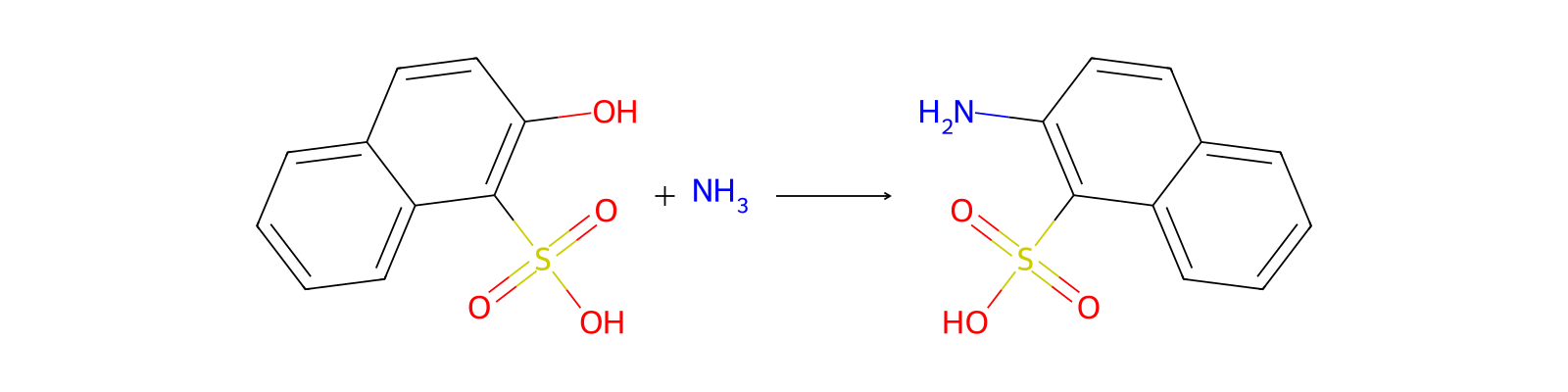
Sulfonation of beta-naphthol with chlorosulfonic acid in nitrobenzene at 0 °C followed by heating the resulting 1-sulfonic acid with ammonium hydrogen sulfite and ammonia at 145-150 °C. Purification is by precipitation from dilute solution of the sodium salt.
By amination of the appropriate hydroxynaphthalenesulfonic acid.
General Manufacturing Information
1-Naphthalenesulfonic acid, 2-amino-: ACTIVE
2-NAPHTHYLAMINE CAN BE USED AS INTERMEDIATE IN PRODN OF ... DYES. HOWEVER, IT IS NOT NOW USUALLY USED AS SUCH, & FREQUENTLY 2-AMINO-1-NAPHTHALENE-SULFONIC ACID IS SUBSTITUTED FOR IT.
Applications
UsesAzo dye intermediate, optical brighteners. Sulfonation with oleum gives 2-aminonaphthalene-1,5-disulfonic acid, which can be desulfonated to produce 2-aminonaphthalene-5- sulfonic acid. Tobias acid is used as a diazo component in acid dyes (e.g., C.I. Acid Yellow 19), red reactive dyes, and pigments such as the important Lithol Reds, [e.g., C.I. Pigment Red 49]. The free acid of C.I. Pigment Red 49 is also remarkably insoluble and can be used as a pigment.
Uses2-Amino-1-naphthalenesulfonic acid has been used in the preparation of 2-(2-naphthylamino)benzoxazole by reacting with 2-chlorobenzoxazole.
General Description2-Amino-1-naphthalenesulfonic acid is a manufacturing intermediate in the monosulfo monoazo color additive D&C Red No. 34 and its lakes.
Upstream & downstream products
Upstream raw materials
Downstream products
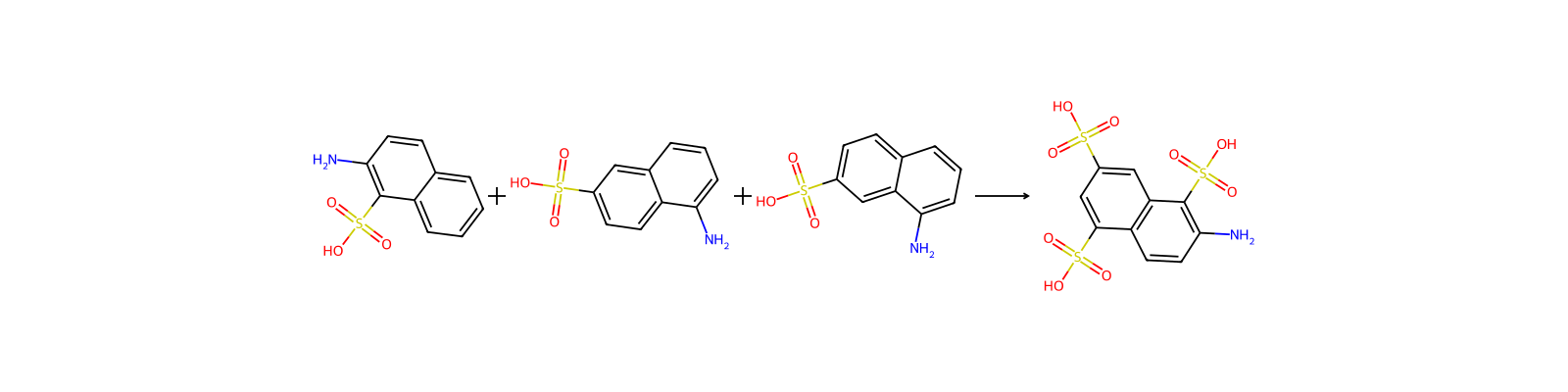
Related reactions
4 records


Linked notes
Loading…