

Basic information
- Standard SMILES
O=C1c2ccccc2C(=O)c2c(O)ccc(O)c21- InChIKey
GUEIZVNYDFNHJU-UHFFFAOYSA-N- Molecular formula
- C14H8O4
- Average molar mass
- 240.21 g/mol
- Monoisotopic mass
- 240.04225874
Overview
Quinizarin is a dihydroxyanthraquinone having the two hydroxy substituents at the 1- and 4-positions; formally derived from anthraquinone by replacement of two hydrogen atoms by hydroxy groups. It has a role as a dye.
Names & identifiers
- Preferred name
- Quinizarin
- IUPAC
- 1,4-dihydroxyanthracene-9,10-dione
- English name
- 1,4-Dihydroxyanthraquinone
- Molecular formula
- C14H8O4
- Molecular weight
- 240.21
Names & synonyms
Quinizarin1,4-Dihydroxyanthraquinone81-64-11,4-dihydroxyanthracene-9,10-dioneQuinizarineChinizarinSolvent Orange 86Smoke Orange R1,4-DihydroxyanthrachinonMacrolex Orange GG1,4-Dihydroxy-9,10-anthraquinone9,10-Anthracenedione, 1,4-dihydroxy-
Show more names
DSD ACID1,4-DHAQQUINAZARINQuinizalin4-Dihydroxyanthraquinone
Anthraquinone, 1,4-dihydroxy-1,4-Dioxyanthraquinone1,4-Doa1,4-DIHYDROXY-9,10-ANTHRACENEDIONEC.I. 58050DTXSID80444648S496ZV3CSCI 58050
Database identifiers
- CAS
81-64-1- PubChem CID
- 6688
- DTXSID
DTXSID8044464- ChEMBL
CHEMBL17594- ChEBI
CHEBI:37487- UNII
- 8S496ZV3CS
- EC Number
- 201-368-7
- Nikkaji
- J3.861J、J710.748J
Properties
Computed structural properties
- XLogP
- 3.7
- Topological polar surface area
- 74.6 Ų
- Hydrogen bond donors
- 2
- Hydrogen bond acceptors
- 4
- Rotatable bonds
- 0
- Heavy atoms
- 18
- Formal charge
- 0
- Complexity
- 342
Experimental & physicochemical properties
Chemical ClassesDyes -> Anthraquinone Dyes
SpringerMaterials Properties13C nuclear magnetic resonance spectrum
Color/Form
ORANGE CRYSTALS FROM ACETIC ACID; ORANGE PLATES FROM ETHER; DEEP RED NEEDLES FROM ALCOHOL, BENZENE, TOLUENE, XYLENE
YELLOW RED LEAFLETS FROM ETHER; RED CRYSTALS FROM TOLUENE, ACETIC ACID
Solubility
MODERATELY SOL IN ALCOHOL WITH RED COLOR
SOL IN ETHER WITH BROWN COLOR & YELLOW FLUORESCENCE
SOL WITH VIOLET COLOR IN AQ ALKALIES & IN AMMONIA
1 G SOL IN ABOUT 13 G OF BOILING GLACIAL ACETIC ACID
For more Solubility (Complete) data for 1,4-DIHYDROXY-9,10-ANTHRACENEDIONE (6 total), please visit the HSDB record page.
Flash Point222 °C
Melting Point196 °C
Vapor Pressure0.00000002 [mmHg]
Physical Description
Dry Powder
Yellow-red, orange, or deep red solid; [HSDB] Orange powder; [MSDSonline]
Stability/Shelf LifeBLACK PPT WITH CO2; SUBLIMES @ HIGH VACUUM
Collision Cross Section148.9 Ų [M-H]- [CCS Type: DT; Buffer gas: N2; Ionization: ESI-; Dataset: TOXCAST; Source Identifier: DTXSID8044464]
Other Experimental PropertiesUV: 1-545 (Organic Electronic Spectral Data, Phillips et al, John Wiley & Sons, New York) /1,5-Dihydroxyanthraquinone/
Physicochemical properties
- Melting point
- 195 · 195-200 °C
- Boiling point
- 450 °C · 450 °C
- Density
- 1.3032 · 1.3032 (rough estimate)
- bulk density
- 350 kg/m3 · 350kg/m3
- vapor density
- 8.3 · 8.3 (vs air)
- vapor pressure
- 1 mm · 1 mm Hg ( 196.7 °C)
- refractive index
- 1.543 · 1.5430 (estimate)
- Flash point
- 222 °C · 222 °C
- storage temp.
- 30 °C · Store below +30°C.
- solubility
- 1 g/l · <1g/l
- pka
- pK (18°) 9.51
- Colour Index
- 58050 · 58050
- form
- powder
- color
- red-brown
- Water Solubility
- 1 g/L · <1 g/L (20 ºC)
- Merck
- 14 · 14,8064
- BRN
- 1914036 · 1914036
- Henry's Law Constant
- 1.2 · 1.2×102 mol/(m3Pa) at 25℃, Duchowicz et al. (2020)
- InChI
- 1S/C14H8O4/c15-9-5-6-10(16)12-11(9)13(17)7-3-1-2-4-8(7)14(12)18/h1-6,15-16H
- InChIKey
- GUEIZVNYDFNHJU-UHFFFAOYSA-N
- SMILES
- Oc1ccc(O)c2C(=O)c3ccccc3C(=O)c12
- LogP
- 4.2 at · 4.2 at 25℃
- CAS DataBase Reference
- 81 · 81-64-1(CAS DataBase Reference)
- EWG's Food Scores
- 1 · 1
- FDA UNII
- 8 S496ZV3CS · 8S496ZV3CS
- NIST Chemistry Reference
- 9 · 9,10-Anthracenedione, 1,4-dihydroxy-(81-64-1)
- EPA Substance Registry System
- Quinizarin (81-64-1)
- UNSPSC Code
- 12352115 · 12352115
- NACRES
- 23 · NA.23
- Symbol(GHS)
- 9 · GHS09
- Signal word
- Warning
- Hazard statements
- 410 · H410
- Precautionary statements
- 273 · P273
- PPE
- 95 · Eyeshields, Faceshields, Gloves, type N95 (US)
- Hazard Codes
- Xi,N
- Risk Statements
- 36 · 36/37/38-43-50/53
- Safety Statements
- 22 · 22-24/25-36/37-26-61-60
- RIDADR
- 3077 · UN 3077 9 / PGIII
- WGK Germany
- 2 · 2
- RTECS
- 6600000 · CB6600000
- TSCA
- TSCA listed
- HS Code
- 2914 · 2914 69 80
- PackingGroup
- III
- Storage Class
- 13 · 13 - Non Combustible Solids
- Hazard Classifications
- 1 Aquatic · Aquatic Acute 1Aquatic Chronic 1
- Hazardous Substances Data
- 81 · 81-64-1(Hazardous Substances Data)
- Toxicity
- 50 orally · LD50 orally in Rabbit: > 5000 mg/kg
- REACH Registrations
- Active
Safety & regulation
GHS classification
GHS Classification
This chemical does not meet GHS hazard criteria for 0.3% (7 of 2238) of reports.
Warning
H315 (90.9%): Causes skin irritation [Warning Skin corrosion/irritation]
P261, P264, P264+P265, P271, P280, P302+P352, P304+P340, P305+P351+P338, P319, P321, P332+P317, P337+P317, P362+P364, P403+P233, P405, and P501 (click each P-code to see the statement)
Aggregated GHS information provided per 2238 reports by companies from 17 notifications to the ECHA C&L Inventory. Each notification may be associated with multiple companies.
Not Classified
Hazard information
Regulatory Information
Chemical: 9,10-Anthracenedione, 1,4-dihydroxy-
9,10-Anthracenedione, 1,4-dihydroxy- is listed on the EPA's Chemical Data Reporting (CDR) system. Manufacturers and importers of 9,10-Anthracenedione, 1,4-dihydroxy- are required to report information about their production and use of this chemical to the EPA under the Toxic Substances Control Act (TSCA). (40 eCFR Part 711)
Status: Active Update: 14-06-2022 https://echa.europa.eu/registration-dossier/-/registered-dossier/20342
9,10-Anthracenedione, 1,4-dihydroxy-: Does not have an individual approval but may be used under an appropriate group standard
Hazards SummaryA mutagen and irritant; Effects in high-dose animal studies include changes in renal tubules and weight loss; [RTECS] Emergency treatment: irritants; [HSDB] An irritant; [MSDSonline]
Hazard Classes and Categories
Skin Irrit. 2 (90.9%)
Hazardous to the aquatic environment (Acute) - Category 1
Toxicology
Non-Human Toxicity Excerpts
ACUTE TOXICITY OF 1,4-DIHYDROXYANTHRAQUINONE WAS TESTED IN ANIMALS & DID NOT SENSITIZE MANY, BUT PRODUCED A VERY SEVERE REACTION IN THOSE AFFECTED.
1,4-DIHYDROXYANTHRAQUINONES DID NOT ALTER COLONIC WATER ABSORPTION BUT RESTRICTED SODIUM ABSORPTION & CAUSED AN APPARENT RELEASE OF POTASSIUM INTO THE LUMEN.
IN VITRO STUDY INDICATED ANTHRAQUINONE DYES TO BE INHIBITORS OF MITOCHONDRIA ADENINE NUCLEOTIDE TRANSLOCATION & OXIDATIVE PHOSPHORYLATION. MOST OF THE DYES INHIBITED MITOCHONDRIAL (14)C-ADP UPTAKE IN A PARTIALLY COMPETITIVE-NONCOMPETITIVE MANNER.
QUINIZARIN GLUCOSIDE TETRAACETATE WAS RENDERED MUTAGENIC TO SALMONELLA TYPHIMURIUM BY ENZYME EXTRACTS OF RAT CECAL BACTERIA (APPARENTLY BY AGLYCONE FORMATION).
Safety data
- PPE
- Eyeshields, Faceshields, Gloves, type N95 (US)
- wgk
- 2
- tsca
- TSCA listed
- rtecs
- CB6600000
- ridadr
- UN 3077 9 / PGIII
- hs_code
- 2914 69 80
- Toxicity
- LD50 orally in Rabbit: > 5000 mg/kg
- risk_code
- 36/37/38-43-50/53
- Signal word
- Warning
- Symbol(GHS)
- GHS09
- hazard_code
- Xi,N
- safety_code
- 22-24/25-36/37-26-61-60
- Storage Class
- 13 - Non Combustible Solids
- packing_group
- III
- Hazard statements
- H410
- REACH Registrations
- Active
- Hazard Classifications
- Aquatic Acute 1Aquatic Chronic 1
- Precautionary statements
- P273
- Hazardous Substances Data
- 81-64-1(Hazardous Substances Data)
Chemistry & industry
Pharmacology
Mechanism of Action
LAXATIVE EFFECTS OF 6 ANTHRAQUINONES WERE RELATED TO THEIR ABILITY TO UNCOUPLE PHOSPHORYLATION IN BOTH PLANT (PHASEOLUS AUREUS) & ANIMAL (GUINEA PIGS INTESTINE) MITOCHONDRIA. THE STRUCTURAL REQUIREMENTS WERE: A RIGID PLANAR STRUCTURE AND AT LEAST 1 OH GROUP, PREFERENTIALLY IN POSITION 1, 1 AND 8, 2, 3, 6, AND 7.
Uses & manufacturing
Uses
Used as an antioxidant in synthetic lubricants and a fungicide for control of powdery mildew; [HSDB] Used in the fuel and textile processing industries and as a coloring agent and intermediate; [IUCLID]
Petroleum Production and Refining [Category: Industry]
ANTIOXIDANT IN SYNTHETIC LUBRICANTS
IN THE SYNTHESIS OF EXPERIMENTAL ANTITUMOR AGENTS
FUNGICIDE FOR CONTROL OF POWDERY MILDEW
U.S. Production2023: 75,000 - <500,000 lb
Industry UsesIntermediate
Methods of Manufacturing
...BY DIAZOTIZING P-CHLOROANILINE, CONDENSING WITH PHTHALIC ANHYDRIDE, & HYDROLYZING: BRITISH PATENT 373,999, CA 27, 3946 (1933); BY TREATING ANTHRAQUINONE WITH AMMONIUM PERSULFATE IN SULFURIC ACID: WACKER, J PRAKT CHEM [2] 54, 90 (1896). BY HEATING P-CHLOROPHENOL, PHTHALIC ANHYDRIDE & EITHER SULFURIC ACID OR ALUMINUM CHLORIDE: REYNOLDS, BIGELOW, J AM CHEM SOC 48, 420 (1926); US PATENT 1,845,632, CA 26, 2203; ORG SYN COLL VOL I, 476 (NEW YORK, 1941).
General Manufacturing Information
Synthetic Dye and Pigment Manufacturing
9,10-Anthracenedione, 1,4-dihydroxy-: ACTIVE
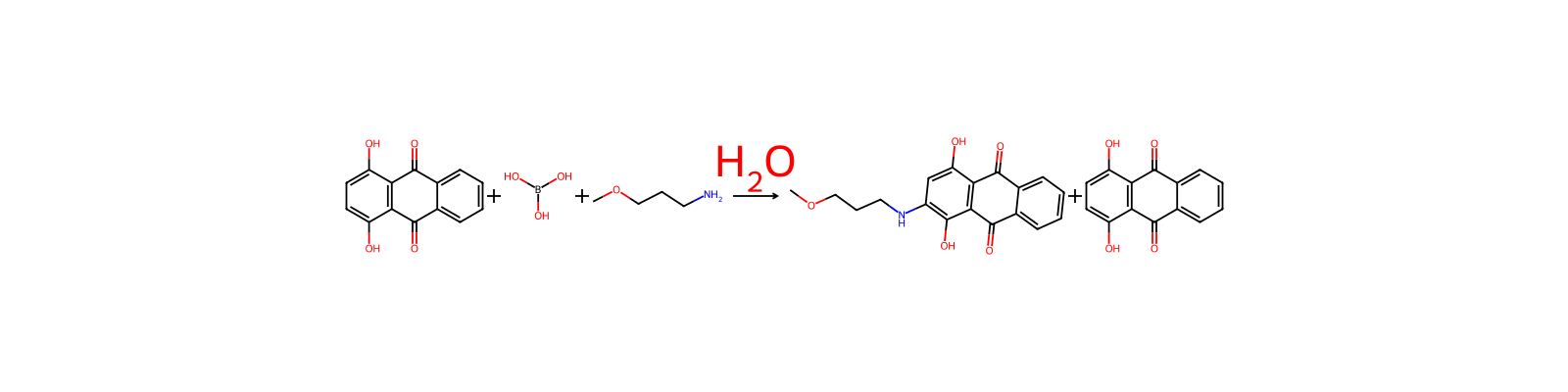
THE CONDENSATION OF ALKYLENEDIAMINES WITH QUINIZARIN GAVE COMPD MARKEDLY ACTIVE AGAINST BOTH LEUKEMIAS & SOLID TUMORS IN MICE.
1,4-DIHYDROXYANTHRAQUINONE IS FUNGICIDE @ 4000 PPM FOR CONTROL OF POWDERY MILDEW (ERYSIPHE POLYGONI) ON INOCULATED CRANBERRY BEAN SEEDLINGS.
Applications
Uses1,4-Dihydroxyanthraquinone, also known as quinizarin, is of great importance in manufacturing disperse, acid, and vat dyes.
Uses1,4-Dihydroxyanthraquinone is used to color gasoline and some heating oils. It is used as an intermediate for the synthesis of indanthrene- and alizarin-derived dyes. It is also used to form lake pigments with calcium, barium and lead. It may be used in the synthesis of cyclopentanoids by cyclization of α,β-unsaturated aldehyde with 1,4-Dihydroxyanthraquinone. It has been studied as a long range emissive ratiometric fluorescent probe for live cell imaging.
UsesAntioxidant in synthetic lubricants, dyes.
General Description1,4-Dihydroxyanthraquinone is an organic dye molecule with an aromatic structure. It is a derivative of anthraquinone bearing hydroxyl moieties. They may find uses in pharmacological, biochemical and dye industries. Anthraquinone dye are resistant to degradation.
Upstream & downstream products
Upstream raw materials
Downstream products
Suppliers50 total
国药集团化学试剂有限公司86-21-63210123 · [email protected]
梯希爱(上海)化成工业发展有限公司021-67121386 · [email protected]
衢州润东化工有限公司0570-8789886 18892685668 · [email protected]
上海阿拉丁生化科技股份有限公司400-6206333 13167063860 · [email protected]
上海如吉生物科技发展有限公司+86-21-65211385-8001 36031160 · [email protected]
韶远科技(上海)有限公司021-50795510 4000665055 · [email protected]
Syntechem Co.,Ltd[email protected]
上海迈瑞尔生化科技有限公司4006356688 18621169109 · [email protected]
阿法埃莎(中国)化学有限公司400-6106006 · [email protected]
太原市瑞和丰科贸有限公司+86 351 7031519 · [email protected]
安耐吉化学&3A(安徽泽升科技股份有限公司)400-0056266 · [email protected]
上海瀚鸿科技股份有限公司021-54306202 13764082696 · [email protected]
上海诗丹德标准技术服务有限公司021-021-57127007-6622-6622 17621252073 · [email protected]
孝感深远化工有限公司15527621225; 15527621225 · [email protected]
山东西亚化学有限公司13355009207 13355009207 · [email protected]
玛雅试剂+86 (573) 82222445 (0)18006601000 452520369 · [email protected]
四川库利南科技有限公司400-1166-196 18981987031 · [email protected]
天津希恩思生化科技有限公司400 638 7771 · [email protected]
上海源叶生物科技有限公司13636370518 · [email protected]
艾科试剂4008-755-333 18080918076 · [email protected]
上海思域化工科技有限公司86-21-34053660 · [email protected]
赛默飞世尔科技(中国)有限公司800-810-5118 · [email protected]
北京伊诺凯科技有限公司400-810-7969 010-59572699 · [email protected]
上海遐瑞医药科技有限公司+86 21 61551611
TCI AMERICA800-4238616 · [email protected]
TOKYO CHEMICAL INDUSTRY CO., LTD.03-36680489 · [email protected]
TCI Europe320-37350700 · [email protected]
上海贤鼎生物科技有限公司4009209199 · [email protected]
上海将来实业股份有限公司400-0066400 13621662912 · [email protected]
上海将来实业股份有限公司021-61552785 · [email protected]
安徽科迪达化工有限公司0554-2106669 · [email protected]
郑州鸿晟医药科技有限公司0371-0371-13526885213 15637198702 · [email protected]
成都零六生物科技有限公司400-1166-196 13458535857 · [email protected]
湖南华腾制药有限公司400-8592883 · [email protected]
上海德榜化工有限公司021-61531158 · [email protected]
杭州杰恒化工有限公司0571-87396432 · [email protected]
上海有朋化工有限公司021-69005955 13701776567 · [email protected]
北京海力扬化学科技有限公司13718199399 · [email protected]
北京欣赛维化学科技有限公司010-56218822 13717722232 · [email protected]
四川海诺威科技有限公司13708085536 13708085536 · [email protected]
上海凯赛化工有限公司021-33516722 13701817765 · [email protected]
上海彤源化工有限公司021-021-69182866 13701855675 · [email protected]
北京华扬致成科技有限公司13716033033 · [email protected]
上海蓝润化学有限公司021-69515658 ; 69515628 13701998368 · [email protected]
上海容立化学科技有限公司021-69992220 13701886816 · [email protected]
上海康拓化工有限公司021-69185552 13701777608 · [email protected]
Sigma-Aldrich西格玛奥德里奇(上海)贸易有限公司021-61415566 800-8193336 · [email protected]
TargetMol中国(陶术生物)021-021-33632979 15002134094 · [email protected]
武汉天植生物技术有限公司18607101326 15172504745 · [email protected]
北京诺其雅盛生物科技有限公司4000-819-385 010-62329685 13718666987
Additional notes
DefinitionChEBI: Quinizarin is a dihydroxyanthraquinone having the two hydroxy substituents at the 1- and 4-positions; formally derived from anthraquinone by replacement of two hydrogen atoms by hydroxy groups It has a role as a dye.
Related reactions
29 records






Linked notes
Loading…