HomeMCPWorkbenchSkills
HomeWorkbenchNotificationsMe
llms.txt · MCP GuidePrivacy Policy · Terms of Service · Supportv1.8.0
  1. Home
  2. /Compound

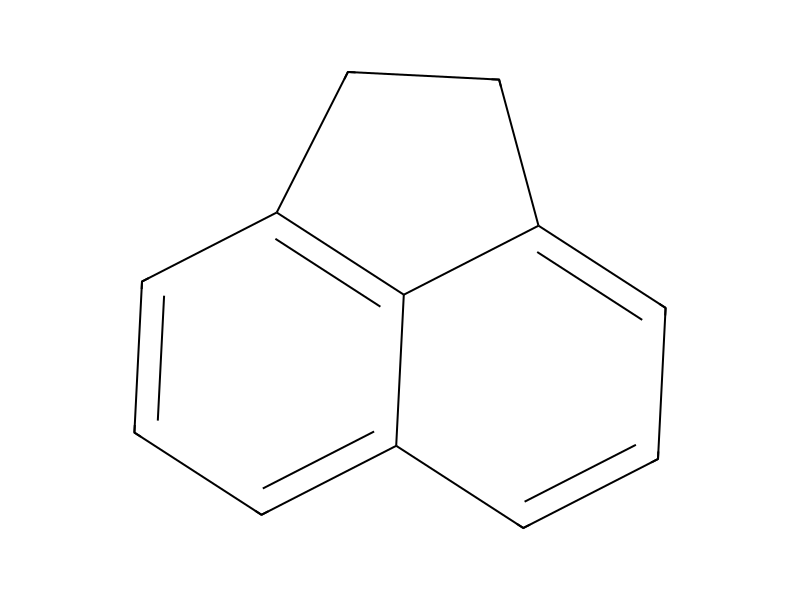
Acenaphthene

HCID 6734
New noteNew reactionRequest quotes
Print preview
Basic informationOverviewNames & identifiersPropertiesSafety & regulationChemistry & industryRelated reactionsCompound notes
Substructure searchFind similar structures

Basic information

CAS
83-32-9
Standard SMILES
c1cc2c3c(cccc3c1)CC2
InChIKey
CWRYPZZKDGJXCA-UHFFFAOYSA-N
Molecular formula
C12H10
Average molar mass
154.21 g/mol
Monoisotopic mass
154.07825032

Overview

Acenaphthene appears as white needles. Melting point 93.6 °C. Soluble in hot alcohol. Denser than water and insoluble in water. Hence sinks in water. May irritate skin and mucous membranes. Emits acrid smoke and irritating fumes when heated to decomposition. Derived from coal tar and used to make dyes, pharmaceuticals, insecticides, fungicides, and plastics.

Names & identifiers

Preferred name
Acenaphthene
IUPAC
1,2-dihydroacenaphthylene
English name
Acenaphthene
Molecular formula
C12H10
Molecular weight
154.21

Names & synonyms

ACENAPHTHENE83-32-91,2-Dihydroacenaphthylene1,8-Ethylenenaphthaleneperi-EthylenenaphthaleneNaphthyleneethyleneAcenaphthylene, 1,2-dihydro-Ethylenenaphthalene1,8-DihydroacenaphthaleneDTXSID3021774V8UT1GAC5YAI3-00128
Show more names
acenaphteneacenaphyleneNSC 7657AcenaphthcnAcenaptheneGrAcenaphthene RSACENAPHTHENE 99%Acenaphthene,99%
NSC-7657DTXCID201774CHEBI:22154RefChem:108751PERIETHYLENENAPHTHALENE1,8-DIHYDROACENAPHTHYLENE201-469-6acenapthene

Database identifiers

CAS
83-32-9
PubChem CID
6734
DTXSID
DTXSID3021774
ChEMBL
CHEMBL1797271
ChEBI
CHEBI:22154
UNII
V8UT1GAC5Y
EC Number
201-469-6

Properties

Computed structural properties

XLogP
3.9
Topological polar surface area
0 Ų
Hydrogen bond donors
0
Hydrogen bond acceptors
0
Rotatable bonds
0
Heavy atoms
12
Formal charge
0
Complexity
155

Experimental & physicochemical properties

Chemical ClassesSemi-Volatile Organic Compound (SVOC)
Polymers · 2 items

Other Classes -> Polycyclic Aromatic Hydrocarbons

Polycyclic aromatic hydrocarbon

SpringerMaterials Properties13C nuclear magnetic resonance spectrum
PesticidesPesticide -> EPA IRIS
LogP · 3 items

log Kow = 3.92

3.9/4.5

3.98

Density · 4 items

1.024 at 210 °F (NTP, 1992) - Denser than water; will sink

1.222 g/cu cm at 20 °C

1.2 g/cm³

1.2 @25 °C

Color/Form · 2 items

White needles

Orthorhombic bipyramidal needles from alcohol

Solubility · 6 items

less than 1 mg/mL at 68 °F (NTP, 1992)

In water, 3.90 mg/L at 25 °C

In water, 3.57-3.93 mg/L at 22.2 to 25.04 °C (range of 7 values)

1 gram dissolves in 31 mL alcohol, 56 mL methanol, 25 ml propanol, 2.5 mL chloroform, 5 mL benzene or toluene

Safety & regulation

Safety information is for reference only and does not replace the supplier’s Safety Data Sheet (SDS), applicable regulations, or professional assessment.

GHS classification

GHS Classification · 6 items

This chemical does not meet GHS hazard criteria for 2.4% (3 of 127) of reports.

Warning

H319 (83.5%): Causes serious eye irritation [Warning Serious eye damage/eye irritation]

P264+P265, P273, P280, P305+P351+P338, P337+P317, P391, and P501 (click each P-code to see the statement)

Aggregated GHS information provided per 127 reports by companies from 10 notifications to the ECHA C&L Inventory. Each notification may be associated with multiple companies.

Warning

Hazard information

Regulatory Information · 6 items

Chemical: Acenaphthylene, 1,2-dihydro-

Hazard Traits - Bioaccumulation; Carcinogenicity; Environmental Persistence; Hepatotoxicity and Digestive System Toxicity

Acenaphthylene, 1,2-dihydro- is listed on the EPA's Chemical Data Reporting (CDR) system. Manufacturers and importers of Acenaphthylene, 1,2-dihydro- are required to report information about their production and use of this chemical to the EPA under the Toxic Substances Control Act (TSCA). (40 eCFR Part 711)

REACH registered substance: Acenaphthene (EC: 201-469-6)

Restricted substance: Acenaphthene

Acenaphthylene, 1,2-dihydro-: Does not have an individual approval but may be used under an appropriate group standard

Other Safety InformationIMAP assessments - Acenaphthylene, 1,2-dihydro-: Environment tier I assessment
DOT LabelClass 9
Fire Hazards · 2 items

Flash point data for this chemical are not available. It is probably combustible. (NTP, 1992)

Combustible. Finely dispersed particles form explosive mixtures in air.

Fire Potential · 2 items

Chemistry & industry

Pharmacology

Biological Half-LifeThe half-life of acenaphthene in /the bluegill fish/ is less than 1 day.
Metabolism/Metabolites · 6 items

The filamentous fungus Cunninghamella elegans ATCC 36112 metabolized within 72 hr of incubation approximately 64% of the [1,8-(14)C]acenaphthene added. The radioactive metabolites were extracted with ethyl acetate and separated by thin-layer chromatography and reversed-phase high-performance liquid chromatography. Seven metabolites were identified by 1H nuclear magnetic resonance, UV, and mass spectral techniques as 6-hydroxyacenaphthenone (24.8%), 1,2-acenaphthenedione (19.9%), trans-1,2-dihydroxyacenaphthene (10.3%), 1,5-dihydroxyacenaphthene (2.7%), 1-acenaphthenol (2.4%), 1-acenaphthenone (2.1%), and cis-1,2-dihydroxyacenaphthene (1.8%). Parallel experiments with rat liver microsomes indicated that the major metabolite formed from acenaphthene by rat liver microsomes was 1-acenaphthenone. The fungal metabolism of acenaphthene was similar to bacterial and mammalian metabolism, since the primary site of enzymatic attack was on the two carbons of the five-member ring.

Metabolized to naphthalene-1,8-dicarboxylic acid in rats. /From table/

... Possibility of limited metabolism of acenaphthene to naphthalic acid and naphthalic anhydride.

A Beijerinckia species and a mutant strain, Beijerinckia species strain B8/36, were shown to oxidize the polycyclic aromatic hydrocarbons acenaphthene and acenaphthylene. Both organisms oxidized acenaphthene to the same spectrum of metabolites, which included 1-acenaphthenol, 1-acenaphtheneone, 1,2-acenaphthenediol, acenaphthenequinone, and a compound that was tentatively identified as 1,2-dihydroxyacenaphthylene. In contrast, acenaphthylene was oxidized to acenaphthenequinone and the compound tentatively identified as 1,2-dihydroxyacenaphthylene was also formed when the organism was incubated with synthetic cis-1,2-acenaphthenediol. A metabolite identified as cis-1,2-acenaphthenediol was formed from acenaphthylene by the mutant Beijerinckia species strain B8/36. Cell extracts prepared from the wild-type Beijerinckia strain contain a constitutive pyridine nucleotide-dependent dehydrogenase which can oxidize 1-acenaphthenol and 9-fluorenol. The results indicate that although acenaphthene and acenaphthylene are both oxidized to acenaphthenequinone, the pathways leading to the formation of this end product are different.

For more Metabolism/Metabolites (Complete) data for ACENAPHTHENE (7 total), please visit the HSDB record page.

Related reactions

21 records
New reaction record
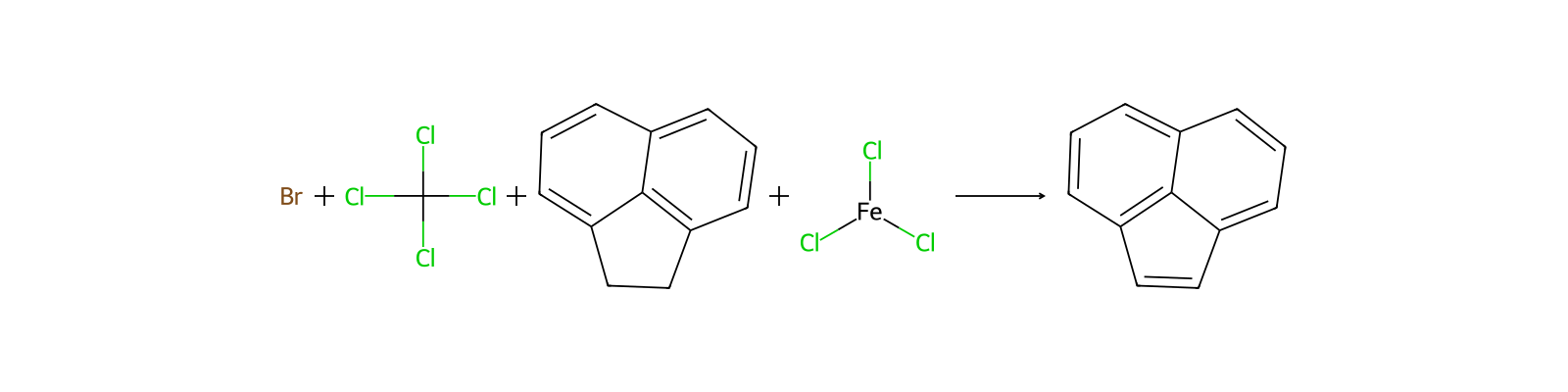
HRID 34479 reaction equation
HRID 34479As reactantuspto-grants-1988_08
HRID 34480 reaction equation
HRID 34480As reactantuspto-grants-1988_08
HRID 46612 reaction equation
HRID 46612As reactantuspto-grants-1979_11
HRID 267851 reaction equation
HRID 267851As reactantuspto-grants-1976_03
HRID 310190 reaction equation
HRID 310190As reactantTraining data from https://doi.org/10.1039/C8SC04228D (8/10)
HRID 436279 reaction equation
HRID 436279As reactantuspto-grants-1977_02
HRID 436466 reaction equation
HRID 436466As reactantuspto-grants-1977_02
HRID 441582 reaction equation
HRID 441582As reactantuspto-grants-1977_08
Page 1 of 3

Compound notes

Loading…

On this pageBasic informationOverviewNames & identifiersPropertiesSafety & regulationChemistry & industryRelated reactionsCompound notes
More actions
New noteNew reactionRequest quotes
Nikkaji
J3.533E

3.2 g/100 mL glacial acetic acid

Solubility in water, g/100ml at 25 °C: 0.0004

Flash Point · 2 items

125.0 °C (257.0 °F) - closed cup

135 °C o.c.

Boiling Point · 4 items

534 °F at 760 mmHg (NTP, 1992)

277.5 °C

279 °C

277.5 °C @760 [mm Hg]

Decomposition · 2 items

Hazardous decomposition products formed under fire conditions - Carbon oxides.

When heated to decomposition it emits acrid smoke and irritating vapors.

Melting Point · 4 items

203 °F (NTP, 1992)

93 °C

95 °C

95 °C

Physicochemical properties

Melting point
90 · 90-94 °C(lit.)
Boiling point
279 °C · 279 °C(lit.)
Density
1.06 · 1.06
vapor density
5.32 · 5.32 (vs air)
vapor pressure
10 mm · 10 mm Hg ( 131 °C)
refractive index
1.6048 · 1.6048
Flash point
135 °C · 135 °C
storage temp.
30 °C · Store below +30°C.
solubility
50 mg/mL, · chloroform: 50 mg/mL, clear
form
crystalline
color
brown-beige
Water Solubility
0.000347 g/100 · 0.000347 g/100 mL
Merck
14 · 14,28
BRN
386081 · 386081
Henry's Law Constant
3.47 · 3.47, 6.21, 10.8, 18.3, and 28.2 at 4.1, 11.0, 18.0, 25.0, and 31.0 °C, respectively (Bamford et al., 1998)
Dielectric constant
3 · 3.0
Stability
Stable. Incompatible with strong oxidizing agents.
InChI
1S/C12H10/c1-3-9-4-2-6-11-8-7-10(5-1)12(9)11/h1-6H,7-8H2
InChIKey
CWRYPZZKDGJXCA-UHFFFAOYSA-N
SMILES
C1Cc2cccc3cccc1c23
LogP
4.04 at · 4.04 at 30℃ and pH5-8
REACH Annex XVII Substances List
Acenaphthene (83-32-9)
CAS DataBase Reference
83 · 83-32-9(CAS DataBase Reference)
EWG's Food Scores
1 · 1
FDA UNII
8 UT1GAC5Y · V8UT1GAC5Y
IARC
3 · 3 (Vol. 92) 2010
NIST Chemistry Reference
Acenaphthene(83-32-9)
EPA Substance Registry System
Acenaphthene (83-32-9)
UNSPSC Code
77101502 · 77101502
NACRES
24 · NA.24
Symbol(GHS)
2 · GHS02,GHS09
Signal word
Warning
Hazard statements
410 · H410-H228
Precautionary statements
501 · P501-P273-P240-P210-P241-P280-P370+P378-P391
PPE
95 · dust mask type N95 (US), Eyeshields, Gloves
Hazard Codes
Xi,N,T,F,Xn
Risk Statements
36 · 36/37/38-50/53-39/23/24/25-23/24/25-11-52/53-67-65-38-51/53-20
Safety Statements
26 · 26-36/37/39-60-61-37/39-45-36/37-16-7-62-36-33-25-9
RIDADR
3077 · UN 3077 9/PG 3
WGK Germany
3 · 3
RTECS
1000000 · AB1000000
Autoignition Temperature
450 °C · >450 °C
TSCA
TSCA listed
HazardClass
9 · 9
PackingGroup
III
HS Code
29029080 · 29029080
Storage Class
11 · 11 - Combustible Solids
Hazard Classifications
1 Aquatic · Aquatic Acute 1Aquatic Chronic 1
Hazardous Substances Data
83 · 83-32-9(Hazardous Substances Data)
Toxicity
50 orally · LD50 orally in Rabbit: > 16000 mg/kg
REACH Registrations
Active
Limited Quantities
5 L · 5.0 L (1.3 gallons) (liquid) or 5.0 kg (11 lbs) (solid)
Excepted Quantities
Max Inner Pack (30g or 30ml) and Max Outer Pack (1Kg or 1L)

This chemical is a combustible solid.

Combustible.

Health HazardsSYMPTOMS: Symptoms of exposure to this compound may include irritation of the skin, eyes, mucous membranes and upper respiratory tract. If ingested, it can cause vomiting. Chronic exposure may result in kidney and liver damage.
Hazards SummaryIrritating to the skin and mucous membranes; May cause kidney and liver injury after chronic exposure; [CAMEO] Minimal Risk Level (oral dose for 15-364 days) = 0.6 mg/kg/day (hepatic); [ATSDR] See POLYCYCLIC AROMATIC HYDROCARBONS.
Reactive GroupHydrocarbons, Aromatic
UN ClassificationUN Hazard Class: 9; UN Pack Group: III
Special Reports · 5 items

USEPA; Ambient Water Quality Criteria Doc: Acenaphthene (Draft) (1980)

USEPA; Ambient Water Quality Criteria Doc: Polynuclear Aromatic Hydrocarbons (Draft) (1980)

Health & Welfare Canada; Polycyclic Aromatic Hydrocarbons (1979) Report No. 80-EHD-50

USEPA; Health Assessment Document: Polycyclic Organic Matter (1979) EPA-600/9-79-008

For more Special Reports (Complete) data for ACENAPHTHENE (9 total), please visit the HSDB record page.

OSHA StandardsPermissible Exposure Limit: Table Z-1 8-hr Time Weighted Avg: 0.2 mg/cu m. /Coal tar pitch volatiles (benzene soluble fraction), anthracene, BaP, phenanthrene, acridine, chrysene, pyrene/
Reactivity ProfileACENAPHTHENE is incompatible with strong oxidizing agents. Incompatible with ozone and chlorinating agents. Forms crystalline complexes with desoxycholic acid (NTP, 1992).

Safety & protection

Fire Fighting · 2 items

Excerpt from ERG Guide 171 [Substances (Low to Moderate Hazard)]:

Use water spray, dry powder, foam, carbon dioxide.

First Aid Measures · 4 items

Fresh air, rest.

Remove contaminated clothes. Rinse and then wash skin with water and soap.

First rinse with plenty of water for several minutes (remove contact lenses if easily possible), then refer for medical attention.

Rinse mouth.

First Aid · 1 item

EYES: First check the victim for contact lenses and remove if present. Flush victim's eyes with water or normal saline solution for 20 to 30 minutes while simultaneously calling a hospital or poison control center. Do not put any ointments, oils, or medication in the victim's eyes without specific instructions from a physician. IMMEDIATELY transport the victim after flushing eyes to a hospital even if no symptoms (such as redness or irritation) develop.

Safe StorageSeparated from strong oxidants. Provision to contain effluent from fire extinguishing. Store in an area without drain or sewer access.
Fire Fighting Procedures · 5 items

Suitable extinguishing media: Use water spray, alcohol-resistant foam, dry chemical, or carbon dioxide.

Advice for firefighters: Wear self-contained breathing apparatus for firefighting if necessary.

Use dry chemical, carbon dioxide, water spray, or alcohol foam extinguishers. ... If material or contaminated runoff enters waterways, notify downstream users of potentially contaminated waters. Notify local health and fire officials and pollution control agencies. From a secure, explosion-proof location, use water spray to cool exposed containers. If cooling streams are ineffective (venting sound increases in volume and pitch, tank discolors, or shows any signs of deforming), withdraw immediately to a secure position. ... The only respirators recommended for firefighting are self-contained breathing apparatuses that have full face-pieces and are operated in a pressure-demand or other positive-pressure mode.

Foam, dry chemical, and carbon dioxide. /Coal tar pitch volatiles/

/During firefighting wear/ self-contained breathing apparatus with a full facepiece operated in pressure-demand or other positive pressure mode. /Coal tar pitch volatiles/

Storage Conditions · 2 items

Keep container tightly closed in a dry and well-ventilated place. Storage class (TRGS 510): Non Combustible Solids.

Store in a secure poison location. ... Store in tightly closed containers in a cool, well-ventilated area. Sources of ignition, such as smoking and open flames, are prohibited where this chemical is used, handled, or stored in a manner that could create a potential for fire or explosion hazard.

Cleanup Methods · 4 items

ACCIDENTAL RELEASE MEASURES: Personal precautions, protective equipment and emergency procedures: Use personal protective equipment. Avoid dust formation. Avoid breathing vapors, mist or gas. Ensure adequate ventilation. Evacuate personnel to safe areas. Avoid breathing dust. Environmental precautions: Prevent further leakage or spillage if safe to do so. Do not let product enter drains. Discharge into the environment must be avoided. Methods and materials for containment and cleaning up: Pick up and arrange disposal without creating dust. Sweep up and shovel. Keep in suitable, closed containers for disposal.

Evacuate persons not wearing protective equipment from area of spill or leak until cleanup is complete. Remove all ignition sources. Collect powdered material in the most convenient and safe manner and deposit in sealed containers. Ventilate area after cleanup is complete. It may be necessary to contain and dispose of this chemical as a hazardous waste. If material or contaminated runoff enters waterways, notify downstream users of potentially contaminated waters. ... May be isolated using bentonite lined dam.

IARC describes laboratory decontamination and destruction methods for some polycyclic aromatic hydrocarbons in this publication. When dealing with compounds other than those listed, the efficiency of the methods should first be verified. Acenaphthene is not listed, but the methods may be applicable for the decontamination of its residues on glassware and petri dishes, for the clean-up of spills of liquid wastes, and for the clean-up of spills of the pure cmpd in solid state. /Polycyclic aromatic hydrocarbons/

... In surface waters, one-third of the total polycyclic aromatic hydrocarbons is bound to larger suspended particles, another one-third is bound to finely dispersed particles, and the remaining one-third is present in dissolved form. The particle-bound portion of polycyclic aromatic hydrocarbons can be removed by sedimentation, flocculation, and filtration processes. The remaining /material/ dissolved polycyclic aromatic hydrocarbons usually requires oxidation for partial removal and/or transformation. /Polynuclear aromatic hydrocarbons/

Nonfire Spill ResponseExcerpt from ERG Guide 171 [Substances (Low to Moderate Hazard)]:
Disposal Methods · 5 items

SRP: Recycle any unused portion of the material for its approved use or return it to the manufacturer or supplier. Ultimate disposal of the chemical must consider: the material's impact on air quality; potential migration in air, soil or water; effects on animal, aquatic and plant life; and conformance with environmental and public health regulations. If it is possible or reasonable use an alternative chemical product with less inherent propensity for occupational harm/injury/toxicity or environmental contamination.

SRP: Wastewater from contaminant suppression, cleaning of protective clothing/equipment, or contaminated sites should be contained and evaluated for subject chemical or decomposition product concentrations. Concentrations shall be lower than applicable environmental discharge or disposal criteria. Alternatively, pretreatment and/or discharge to a permitted wastewater treatment facility is acceptable only after review by the governing authority and assurance that "pass through" violations will not occur. Due consideration shall be given to remediation worker exposure (inhalation, dermal and ingestion) as well as fate during treatment, transfer and disposal. If it is not practicable to manage the chemical in this fashion, it must be evaluated in accordance with EPA 40 CFR Part 261, specifically Subpart B, in order to determine the appropriate local, state and federal requirements for disposal.

Product: Offer surplus and non-recyclable solutions to a licensed disposal company. Contact a licensed professional waste disposal service to dispose of this material. Dissolve or mix the material with a combustible solvent and burn in a chemical incinerator equipped with an afterburner and scrubber; Contaminated packaging: Dispose of as unused product.

Incineration or permanganate oxidation.

For more Disposal Methods (Complete) data for ACENAPHTHENE (7 total), please visit the HSDB record page.

Spillage Disposal · 1 item

Personal protection: particulate filter respirator adapted to the airborne concentration of the substance. Do NOT let this chemical enter the environment. Sweep spilled substance into covered containers. If appropriate, moisten first to prevent dusting. Carefully collect remainder. Then store and dispose of according to local regulations.

Preventive Measures · 5 items

ACCIDENTAL RELEASE MEASURES: Personal precautions, protective equipment and emergency procedures: Use personal protective equipment. Avoid dust formation. Avoid breathing vapors, mist or gas. Ensure adequate ventilation. Evacuate personnel to safe areas. Avoid breathing dust. Environmental precautions: Prevent further leakage or spillage if safe to do so. Do not let product enter drains. Discharge into the environment must be avoided.

Precautions for safe handling: Avoid contact with skin and eyes. Avoid formation of dust and aerosols. Further processing of solid materials may result in the formation of combustible dusts. The potential for combustible dust formation should be taken into consideration before additional processing occurs. Provide appropriate exhaust ventilation at places where dust is formed.

Appropriate engineering controls: Handle in accordance with good industrial hygiene and safety practice. Wash hands before breaks and at the end of workday.

Gloves must be inspected prior to use. Use proper glove removal technique (without touching glove's outer surface) to avoid skin contact with this product. Dispose of contaminated gloves after use in accordance with applicable laws and good laboratory practices. Wash and dry hands.

For more Preventive Measures (Complete) data for ACENAPHTHENE (10 total), please visit the HSDB record page.

Isolation and EvacuationExcerpt from ERG Guide 171 [Substances (Low to Moderate Hazard)]:

Toxicology

Toxicological InformationRanking: 112 (total points: 1097.2)
Body Burden · 1 item

Human milk samples collected from 39 women in Beijing, China in 2005-2006 contained a mean acenaphthene concentration of 0.845 ng/g fresh weight(1); placenta collected from 27 women contained a mean acenaphthene concentration of 0.824 ng/g fresh weight(1); umbilical cord blood collected from 30 women contained a mean acenaphthene concentration of 0.229 ng/g fresh weight(1). Adipose tissue collected from Korean women in 2007-2008 contained a mean acenaphthene concentration of 6.4 ng/g lipid weight(2). Blood plasma collected from 111 human donors in Hong Kong in 2008 contained mean acenaphthene levels of 54.6 and 54.4 ng/g lipid in females and males respectively(3).

TreatmentThere is no known antidote for PAHs. Exposure is usually handled with symptomatic treatment. (L10)
InteractionsPretreatment of rats with 20 mg/kg ip dose of acenaphthene prolonged by up to 50% the duration of paralysis induced with 90 mg/kg zoxazolamine 24 hr later.
Target OrgansHepatic
Health EffectsPAHs are carcinogens and have been associated with the increased risk of skin, respiratory tract, bladder, stomach, and kidney cancers. They may also cause reproductive effects and depress the immune system. (L10)
Ecotoxicity Values · 5 items

LC50; Species: Lepomis macrochirus (bluegill); Conditions: static bioassay; Concentration: 1,700 ug/L for 96 hr

LC50; Species: Lepomis macrochirus (Bluegill) weight 0.32-1.2 g; Conditions: freshwater, static, 21-23 °C, pH 6.5-7.9, hardness 32-48 mg/L CaCO3, alkalinity 28-34 mg/L CaCO3, dissolved oxygen 0.3-9.7 mg/L; Concentration: 7200 ug/L for 24 hr />/= 80% purity/

LC50; Species: Mysidopsis bahia (mysid shrimp); Conditions: static bioassay; Concentration: 970 ug/L for 96 hr

LC50; Species: Cyprinodon variegatus (sheepshead minnow); Conditions: static bioassay; Concentration: 2,230 ug/L for 96 hr

For more Ecotoxicity Values (Complete) data for ACENAPHTHENE (27 total), please visit the HSDB record page.

Environmental Fate · 3 items

TERRESTRIAL FATE: Based on a classification scheme(1), a Koc range of 2510 to 2.14X10+5 in soil(2,3), indicates that acenaphthene is expected to have slight to no mobility in soil(SRC). Volatilization of acenaphthene from moist soil surfaces is expected to be an important fate process(SRC) given a Henry's Law constant of 1.84X10⁻⁴ atm-cu m/mole(4). However, adsorption to soil is expected to attenuate volatilization(SRC). Acenaphthene is not expected to volatilize from dry soil surfaces(SRC) based upon a vapor pressure of 0.0022 mm Hg at 25 °C(5). The biodegradation half-life of acenaphthene in soil has been reported to range from less than 10 days(6) to over 100 days(7). The presence of acclimated microbes appears to be an important factor in the degradation rate(8). In addition, acenaphthene has been shown to biodegrade readily in acclimated soil at low concentrations (5 mg/kg), but not at high concentrations (500 mg/kg), perhaps due to toxicity to the microbes(9). Acenaphthene absorbs strongly at wavelengths >290 nm(10) and is expected to be susceptible to direct photolysis on soil surfaces exposed to sunlight(11). The photolysis of acenaphthene, sorbed on surfaces of needles of a spruce tree, had a half-life of 45 hours under sunlight irradiation(12).

AQUATIC FATE: Based on a classification scheme(1), a Koc range of 2510 to 2.14X10+5(2,3) indicates that acenaphthene is expected to adsorb to suspended solids and sediment(SRC). Volatilization from water surfaces is expected(4) based upon a Henry's Law constant of 1.84X10⁻⁴ atm-cu m/mole(5). Using this Henry's Law constant and an estimation method(4), volatilization half-lives for a model river and model lake are 9.6 hours and 6.7 days, respectively(SRC). However, volatilization from water surfaces is expected to be attenuated by adsorption to suspended solids and sediment in the water column. The estimated volatilization half-life from a model pond is on the order of 1 to 10 months if adsorption is considered(6). According to a classification scheme(7), an observed BCF range of 254-1270(8) suggests the potential for bioconcentration in aquatic organisms is high to very high, provided the compound is not metabolized by the organism(SRC). Polycyclic aromatic hydrocarbons (PAHs), including acenaphthene, may not bioconcentrate in aquatic organisms which contain microsomal oxidase, such as some fish, as this enzyme enables the rapid metabolism of certain polycyclic aromatic hydrocarbons(9). The presence of acclimated microbes appears to be an important factor in the degradation rate in water(10). Acenaphthene was shown to biodegrade readily using acclimated groundwater aquifer inoculum, but very slowly using unacclimated or sterilized materials(10). The biotransformation half-lives for 2 mg/L of acenaphthene in pond and lake water with decreasing amounts of suspended solids range from 20 hours to 24.8 days for zero suspended solids(11). Acenaphthene is not expected to undergo hydrolysis in the environment due to the lack of functional groups that hydrolyze under environmental conditions(4). Acenaphthene absorbs strongly at wavelengths >290 nm(12) and is expected to be susceptible to direct photolysis at water surfaces exposed to sunlight(13).

Food Survey Values · 2 items

Acenaphthene was identified as a volatile component of cassava(1), roasted filberts(2) and nectarines(3). Assorted types of lima, pinto, red kidney, black, navy and mung beans, soybeans, split peas and lentils were found to contain acenaphthene at concentrations ranging from 2.8 to 49.2 ppb(4). Seven of 25 samples of margarines, butter and vegetable oils contained acenaphthene at concentrations of 2.9, 0.29, 1.43, 0.22, 1.1, 45 and 0.50 ug/kg(5). Foods collected from markets in Huelva, Spain in 2001 contained acenaphthene levels of 0.353-0.700 ng/g fresh wt in several fish products(6). Levels of acenaphthene detected in olive pomace oil in Spain ranged from 0.45-1.10 ug/kg(7). The following concentrations of acenaphthene (in ug/kg fresh wt) were detected in samples collected in the Czech Republic in 2003): cucumber, 0.07-0.45; parsley, 0.66-3.64; tomato, <0.07-0.16; apple, 0.17-0.31(8). Maximum acenaphthene levels (in ng/g wet wt) were detected in the following food items collected in Hong Kong in 2007: coconut milk (1.57), chicken breast (1.99), white wine (1.13), red wine (1.17), edible oils (1.34-3.07), pistachio (2.89), various seeds and nuts (1.57-3.09)(9). Acenaphthene was detected in the smoke from frying canola oil, sunflower oil, soybean oil and in fumes from fried chicken legs(10). Acenaphthene was detected in emissions from the charbroiling and grilling of beef and chicken(11).

Acenaphthene was detected in the following Finish cereal products, sampled in 1985(1):[Table#4133]

Adverse EffectsOccupational hepatotoxin - Secondary hepatotoxins: the potential for toxic effect in the occupational setting is based on cases of poisoning by human ingestion or animal experimentation.
Exposure Routes · 2 items

The substance can be absorbed into the body by inhalation of its aerosol, through the skin and by ingestion.

Oral (L10) ; inhalation (L10)

Milk Concentrations · 1 item

ENVIRONMENTAL: Milk samples collected from farms in France near potential contamination sources in March 2000 contained mean acenaphthene concentrations of 0.3-1.0 ng/g milk fat(1). In a nationwide study of milk samples collected from 45 dairy farms in the US in 2000-2001, acenaphthene was not detected at a detection limit of 180 ng/L(2). Human milk samples collected from 39 women in Beijing, China in 2005-2006 contained a mean acenaphthene concentration of 0.845 ng/g fresh weight(3).

Regulatory information

CERCLA Reportable Quantities · 1 item

Persons in charge of vessels or facilities are required to notify the National Response Center (NRC) immediately, when there is a release of this designated hazardous substance, in an amount equal to or greater than its reportable quantity of 100 lb or 45.4 kg. The toll free number of the NRC is (800) 424-8802. The rule for determining when notification is required is stated in 40 CFR 302.4 (section IV.D.3.b).

Clean Water Act Requirements · 2 items

Toxic pollutant designated pursuant to section 307(a)(1) of the Federal Water Pollution Control Act and is subject to effluent limitations.

For the maximum protection of human health from the potential carcinogenic effects of exposure to polynuclear aromatic hydrocarbons through ingestion of contaminated water and contaminated aquatic organisms, the ambient water concentration should be zero, based on the nonthreshold assumption for this chemical. However, zero level may not be attainable at the present time. Therefore, the levels which may result in incremental increase of cancer risk over the lifetime are estimated at 1X10⁻⁵, 1X10⁻⁶, and 1X10⁻⁷. The corresponding recommended criteria are 28.0 ng/L, 2.8 ng/L, and 0.28 ng/L, respectively. If these estimates are made for consumption of aquatic organisms only, excluding consumption of water, the levels are 311.0 ng/L, 31.1 ng/L, and 3.11 ng/L, respectively. /Polynuclear aromatic hydrocarbons/.

State Drinking Water Guidelines(MN) MINNESOTA 400 ug/L

Safety data

PPE
dust mask type N95 (US), Eyeshields, Gloves
wgk
3
tsca
TSCA listed
rtecs
AB1000000
ridadr
UN 3077 9/PG 3
hs_code
29029080
Toxicity
LD50 orally in Rabbit: > 16000 mg/kg
risk_code
36/37/38-50/53-39/23/24/25-23/24/25-11-52/53-67-65-38-51/53-20
Signal word
Warning
Symbol(GHS)
GHS02,GHS09
hazard_code
Xi,N,T,F,Xn
safety_code
26-36/37/39-60-61-37/39-45-36/37-16-7-62-36-33-25-9
hazard_class
9
Storage Class
11 - Combustible Solids
packing_group
III
Hazard statements
H410-H228
Limited Quantities
5.0 L (1.3 gallons) (liquid) or 5.0 kg (11 lbs) (solid)
Excepted Quantities
Max Inner Pack (30g or 30ml) and Max Outer Pack (1Kg or 1L)
REACH Registrations
Active
Hazard Classifications
Aquatic Acute 1Aquatic Chronic 1
Autoignition Temperature
>450 °C
Precautionary statements
P501-P273-P240-P210-P241-P280-P370+P378-P391
Hazardous Substances Data
83-32-9(Hazardous Substances Data)

PAH metabolism occurs in all tissues, usually by cytochrome P-450 and its associated enzymes. PAHs are metabolized into reactive intermediates, which include epoxide intermediates, dihydrodiols, phenols, quinones, and their various combinations. The phenols, quinones, and dihydrodiols can all be conjugated to glucuronides and sulfate esters; the quinones also form glutathione conjugates. (L10)

Absorption, Distribution and ExcretionThe waxy surface of some plant leaves and fruits can concentrate polyaromatic hydrocarbons through surface adsorption. /Polynuclear aromatic hydrocarbons/

Uses & manufacturing

Uses · 5 items

Derived from coal tar and used as a chemical intermediate in the production of dyes, plastics, insecticides, fungicides, and pharmaceuticals; [CAMEO]

For acenaphthene (USEPA/OPP Pesticide Code: 442200) there are 0 labels match. /SRP: Not registered for current use in the U.S., but approved pesticide uses may change periodically and so federal, state and local authorities must be consulted for currently approved uses./

Dye intermediate; manufacturing plastics; insecticide; fungicide.

Pharmaceuticals

PAHs are released into the environment via the combustion of fossil fuels, coke oven emissions and vehicle exhausts, as well as naturally from forest fires and volcanic eruptions. PAHs from these sources may contaminate nearly water systems. They are also found in coal tar and charbroiled food. (L10)

U.S. Imports · 2 items

(1984) 6.49X10+7 g

(1986) 8.82X10+3 lb

U.S. Production2021: 14,748 lb
Methods of Manufacturing · 2 items

High-temperature coal tars contain on average 0.3% of acenaphthene. It is also formed during coal tar distillation through hydrogenation of acenaphthalene. Acenaphthene is concentrated to ca. 25% in the coal tar fraction boiling between 230 and 290 °C (wash oil) with about 7% recovery rate from continuous tar distillation. The crystallizable acenaphthene fraction (bp ca. 270-275 °C) is obtained from the wash oil by redistillation. Alternatively, it can be removed directly during primary tar distillation. Technical acenaphthene (95-99%) is produced by crystallization in agitated coolers and centrifuges or by continuous countercurrent crystallization. The pure compound is obtained by further distillation and recrystallization.

By passing ethylene and benzene or naphthalene through a red hot tube. ... By heating tetrahydroacenaphthene with sulfur to 180 °C. ... From acenaphthenone or acenaphthenequinone by high pressure hydrogenation in decalin with nickel at 180-240 °C. ... From acenaphthenone oxime.

Formulations/Preparations · 2 items

Component of dry tar. The avg percent weight for coke-oven tars and CVR (continuous vertical retort) tars is 0.96 in the United Kingdom, 0.3 in Federal Republic of Germany, and 1.05 in the USA (range 0.42-1.28). For low temp tars in the United Kingdom the avg percent weight is 0.19 and for lurgi tars the avg percent weight is 0.57. /From table/

Grade: Technical, 98%

General Manufacturing Information · 2 items

Acenaphthylene, 1,2-dihydro-: ACTIVE

PAHs are a group of chemicals that are formed during the incomplete burning of coal, oil, gas, wood, garbage, or other organic substances, such as tobacco and charbroiled meat. There are more than 100 different PAHs. PAHs generally occur as complex mixtures (for example, as part of combustion products such as soot), not as single compounds. PAHs usually occur naturally, but they can be manufactured as individual compounds for research purposes; however, not as the mixtures found in combustion products. ... Others are contained in asphalt used in road construction. They can also be found in substances such as crude oil, coal, coal tar pitch, creosote, and roofing tar. They are found throughout the environment in the air, water, and soil. They can occur in the air, either attached to dust particles or as solids in soil or sediment. /Polycyclic aromatic hydrocarbons/

Applications · 5 items

DescriptionAcenaphthene is a tricyclic aromatic hydrocarbon and crystalline solid at ambient temperature. Acenaphthene does not dissolve in water but is soluble in many organic solvents. Acenaphthene is a component of crude oil and a product of combustion. Acenaphthene occurs in coal tar produced during the high-temperature carbonisation or coking of coal. It is used as a dye intermediate in the manufacture of some plastics and as an insecticide and fungicide. Acenaphthene is a component of crude oil and a product of combustion which may be produced and released to the environment during natural fires. Emissions from petroleum refining, coal tar distillation, coal combustion, and diesel-fuelled engines are major contributors of acenaphthene to the environment. Acenaphthene is an environmental pollutant and has been detected in cigarette smoke, automobile exhausts, and urban air; in effluents from petrochemical, pesticide, and wood preservative industries; and in soils, groundwater, and surface waters at hazardous waste sites. This compound is one among a number of polycyclic aromatic hydrocarbons (PAHs) on U.S. EPA’s (Environmental Protection Agency) priority pollutant list.

UsesPolycyclic aromatic hydrocarbons as carcinogenic

UsesAcenaphthene occurs in petroleum bottoms and is used as a dye intermediate, insecticide, and fungicide and in manufacturing plastics.

UsesDye intermediate; manufacture of plastics; insecticide; fungicide.

General DescriptionWhite needles. Melting point 93.6°C. Soluble in hot alcohol. Denser than water and insoluble in water. Hence sinks in water. May irritate skin and mucous membranes. Emits acrid smoke and irritating fumes when heated to decomposition. Derived from coal tar and used to make dyes, pharmaceuticals, insecticides, fungicides, and plastics.

Upstream & downstream products

Upstream raw materials

COAL TARPolishing oil

Downstream products

1,4,5,8-Naphthalenetetracarboxylic acid1-Amino-8-naphthoic acidAcenaphthylene1,8-Naphthalic acidfluorescent whitening agent EFRAcenaphthenequinone1,8-Naphthalic anhydride4,5-Dichloronaphthalene-1,8-dicarboxylic anhydride5-Nitroacenaphthene4-Bromo-1,8-naphthalic anhydrideAcenaphthylene, 1,2-dihydro-1-methoxy-2a,3,4,5-Tetrahydroacenaphthene5-bromoacenaphthylene-1,2-dione3,9-perylenedicarboxylic acidDecacyclene1-Acenaphthenone
Additional notes · 3 items

DefinitionChEBI: A polycyclic aromatic hydrocarbon derived from naphthalene by the addition of an ethylene bridge connecting C-1 and C-8.

DefinitionA colorless crystalline derivative of naphthalene, used in producing some dyes.

Definitionacenaphthene: A colourless crystallinearomatic compound, C12H10;m.p. 95°C; b.p. 278°C. It is an intermediatein the production of somedyes.

ATMOSPHERIC FATE: According to a model of gas/particle partitioning of semivolatile organic compounds in the atmosphere(1), acenaphthene, which has a vapor pressure of 0.0022 mm Hg at 25 °C(2) is expected to exist solely as a vapor in the ambient atmosphere. However, gas/particle partitioning studies in chambers and outdoor monitoring have shown that acenaphthene can exist in both the vapor and particulate phases(3). Vapor-phase acenaphthene is degraded in the atmosphere by reaction with photochemically-produced hydroxyl radicals(SRC); the half-life for this reaction in air is estimated to be 3.9 hours(SRC), calculated from its rate constant of 9.89X10⁻¹¹ cu cm/molecule-sec at 25 °C(4). Vapor-phase acenaphthene is also degraded in the atmosphere by reaction with night-time nitrate radicals(SRC); the half-life for this reaction in air is estimated to be 1.9 hours(SRC), calculated from its rate constant of 4.16X10⁻¹³ cu cm/molecule-sec at 25 °C(4). Particulate-phase acenaphthene may be removed from the air by wet and dry deposition(SRC). Acenaphthene absorbs strongly at wavelengths >290 nm(5) and, therefore, is expected to be susceptible to direct photolysis by sunlight(SRC).