HomeMCPWorkbenchSkills
HomeWorkbenchNotificationsMe
llms.txt · MCP GuidePrivacy Policy · Terms of Service · Supportv1.8.0
  1. Home
  2. /Compound

1,2-Dimethyl-3-nitrobenzene

HCID 6739
New noteNew reactionRequest quotes
Print preview

Completing data — refresh the page later to see the latest

Basic informationOverviewNames & identifiersPropertiesSafety & regulationChemistry & industryRelated reactionsCompound notes
Substructure searchFind similar structures

Basic information

CAS
25168-04-1
Standard SMILES
Cc1cccc([N+](=O)[O-])c1C
InChIKey
FVHAWXWFPBPFOS-UHFFFAOYSA-N
Molecular formula
C8H9NO2
Average molar mass
151.16 g/mol
Monoisotopic mass
151.06332853

Overview

1,2-dimethyl-3-nitrobenzene is a yellow liquid. (NTP, 1992)

Names & identifiers

Preferred name
1,2-Dimethyl-3-nitrobenzene
IUPAC
1,2-dimethyl-3-nitrobenzene
English name
nitroxylene
Molecular formula
C8H9NO2
Molecular weight
151.164

Names & synonyms

3-Nitro-o-xylene1,2-DIMETHYL-3-NITROBENZENE83-41-02,3-Dimethylnitrobenzeneo-Xylene, 3-nitro-Benzene, 1,2-dimethyl-3-nitro-2,3-dimethyl-1-nitrobenzeneCCRIS 3117DTXSID7025132NSC 54023-nitro-o-xylolEINECS 201-474-3
Show more names
NA-1665NitroxylennitroxyleneDimethylnitrobenzene
49GNX4CY5WAI3-29558Dimethyl-3-nitrobenzene, 1,2-HSDB 8023NSC-5402DTXCID4051322,3-DIMETHYLNITROBENZENE [HSDB]RefChem:411761

Database identifiers

CAS
25168-04-1、83-41-0
PubChem CID
6739
DTXSID
DTXSID7025132
ChEMBL
CHEMBL1596825
UNII
49GNX4CY5W
EC Number
201-474-3、246-697-7
Nikkaji
J95.094G

Properties

Computed structural propertiesFilling in

XLogP
2.8
Topological polar surface area
45.8 Ų
Hydrogen bond donors
0
Hydrogen bond acceptors
2
Rotatable bonds
0
Heavy atoms
11
Formal charge
0
Complexity
153

Experimental & physicochemical properties

SpringerMaterials PropertiesBoiling point
LogP · 2 items

log Kow = 2.83

2.83

Density · 3 items

1.1402 at 68 °F (NTP, 1992) - Denser than water; will sink

1.1402 g/cu cm at 20 °C

1.1402 @ 20°C

Color/FormPale yellow oil
Solubility · 3 items

less than 1 mg/mL at 70 °F (NTP, 1992)

Soluble in most organic solvents

Soluble in ethanol and carbon tetrachloride

Flash Point225 °F (NTP, 1992)
Boiling Point · 3 items

473 °F at 760 mmHg (NTP, 1992)

240 °C

240 °C @760 [mm Hg]

Melting Point · 2 items

45 to 48 °F (NTP, 1992)

15 °C

Vapor Density

Safety & regulation

Safety information is for reference only and does not replace the supplier’s Safety Data Sheet (SDS), applicable regulations, or professional assessment.

GHS classification

GHS Classification · 4 items

This chemical does not meet GHS hazard criteria for 24.8% (38 of 153) of reports.

H411 (71.9%): Toxic to aquatic life with long lasting effects [Hazardous to the aquatic environment, long-term hazard]

P273, P391, and P501 (click each P-code to see the statement)

Aggregated GHS information provided per 153 reports by companies from 5 notifications to the ECHA C&L Inventory.

Hazard information

Regulatory Information · 2 items

Benzene, 1,2-dimethyl-3-nitro- is listed on the EPA's Chemical Data Reporting (CDR) system. Manufacturers and importers of Benzene, 1,2-dimethyl-3-nitro- are required to report information about their production and use of this chemical to the EPA under the Toxic Substances Control Act (TSCA). (40 eCFR Part 711)

Status: Active Update: 08-02-2018 https://echa.europa.eu/registration-dossier/-/registered-dossier/22190

DOT Label · 2 items

Poison

Poison

Fire Hazards · 2 items

This chemical is combustible. (NTP, 1992)

Excerpt from ERG Guide 152 [Substances - Toxic (Combustible)]:

Health Hazards · 2 items

SYMPTOMS: Symptoms of exposure to this compound may include irritation of the skin, eyes, mucous membranes and upper respiratory tract and cyanosis. Similar chemicals cause methemoglobinemia.

Excerpt from ERG Guide 152 [Substances - Toxic (Combustible)]:

Reactive Group · 2 items

Nitro, Nitroso, Nitrate, and Nitrite Compounds, Organic

Nitro, Nitroso, Nitrate, and Nitrite Compounds, Organic

TSCA Requirements

Chemistry & industry

Uses & manufacturing

Uses · 2 items

The sole outlet for nitroxylenes (such as 1,2-dimethyl-3-nitrobenzene) is via their reduction to the corresponding xylidines for use as starting materials for the production of agrochemicals and as intermediates for dyes and colorants.

Organic synthesis, gelatinizing accelerators for pyroxylin /Nitroxylene isomers/

U.S. Production · 4 items

2023: 250,000 - <550,000 lb

Benzene, 1,2-dimethyl-3-nitro- is listed as a High Production Volume (HPV) chemical (65FR81686). Chemicals listed as HPV were produced in or imported into the U.S. in >1 million pounds in 1990 and/or 1994. The HPV list is based on the 1990 Inventory Update Rule. (IUR) (40 CFR part 710 subpart B; 51FR21438).

Production volumes for non-confidential chemicals reported under the Inventory Update Rule. [Table#7967]

Production volume for non-confidential chemicals reported under the 2006 Inventory Update Rule. Chemical: Benzene, 1,2-dimethyl-3-nitro-. Aggregated National Production Volume: < 500,000 lbs.

Industry UsesSolvent
Methods of Manufacturing · 1 item

The mixture of /1,2-dimethyl-3-nitrobenzene and 1,2-dimethyl-4-nitrobenzene/ obtained from /nitration of/ o-xylene is ... difficult to separate because the ratio is nearly 1:1 and their boiling points are /close/. Initial fractionation by vacuum distillation is followed by a sweating process (dependent on melting point differences) to complete the purification.

General Manufacturing Information · 2 items

Pesticide, Fertilizer, and Other Agricultural Chemical Manufacturing

Benzene, 1,2-dimethyl-3-nitro-: ACTIVE

Applications

UsesOrganic synthesis, gelatinizing accelerators for pyroxylin.

General DescriptionYellow crystalline solids or liquids. Insoluble in water and combustible. Toxic by inhalation and skin absorption. Produces toxic oxides of nitrogen during combustion.

Related reactions

99 records
New reaction record
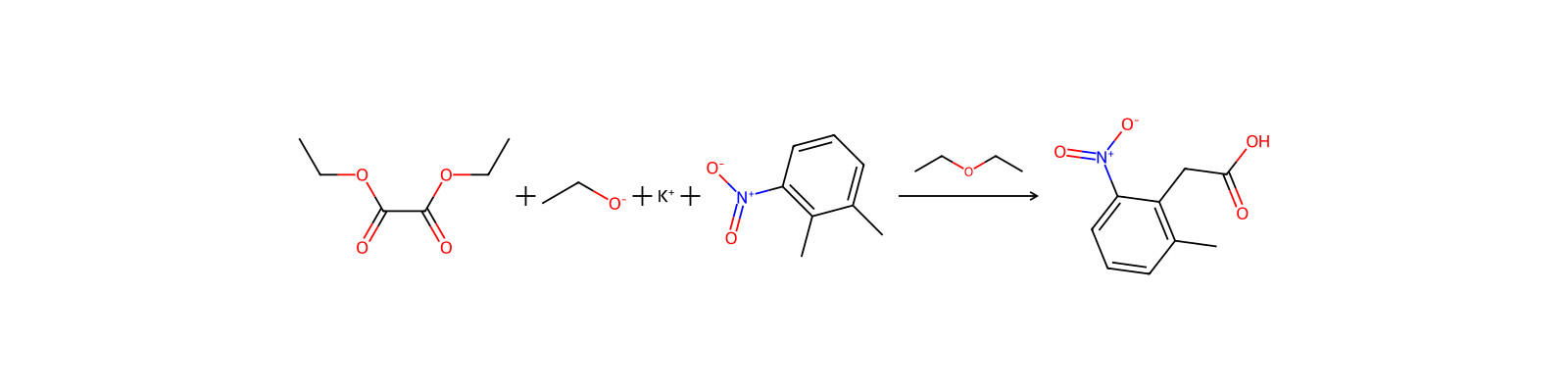
HRID 24306 reaction equation
HRID 24306As reactantuspto-grants-2005_02
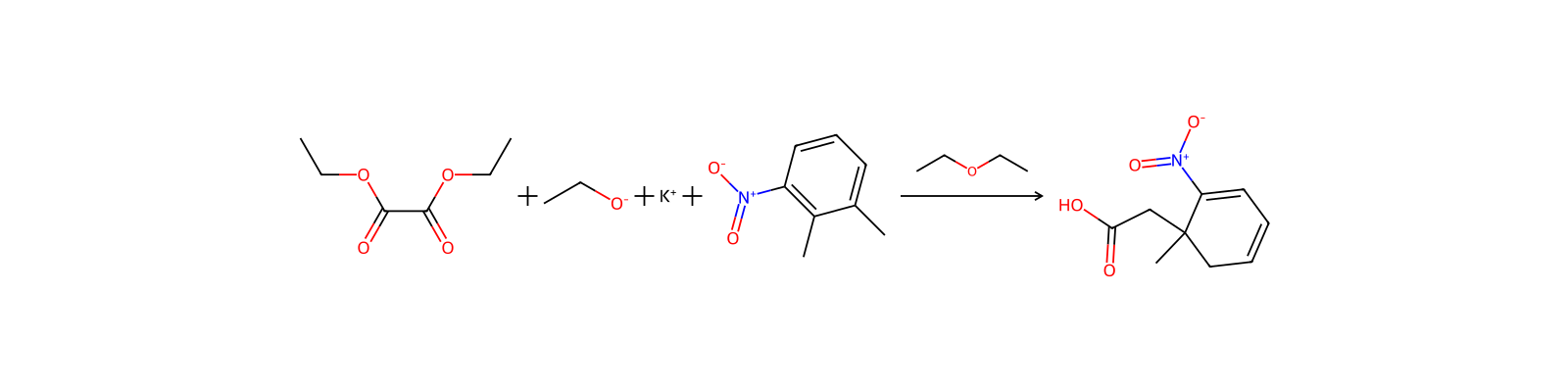
HRID 24503 reaction equation
HRID 24503As reactantuspto-grants-2005_02
HRID 49662 reaction equation
HRID 49662As reactantuspto-grants-2004_03
HRID 49663 reaction equation
HRID 49663As reactantuspto-grants-2004_03
HRID 49673 reaction equation
HRID 49673As reactantuspto-grants-2004_03
HRID 49674 reaction equation
HRID 49674As reactantuspto-grants-2004_03
HRID 49680 reaction equation
HRID 49680As reactantuspto-grants-2004_03
HRID 52161 reaction equation
HRID 52161As reactantuspto-grants-1997_04
Page 1 of 13

Compound notes

Loading…

On this pageBasic informationOverviewNames & identifiersPropertiesSafety & regulationChemistry & industryRelated reactionsCompound notes
More actions
New noteNew reactionRequest quotes
5.22 (NTP, 1992) - Heavier than air; will sink (Relative to Air)
Vapor Pressure0.0172 mm Hg at 25 °C /extrapolated/
Refractive IndexIndex of refraction: 1.5441 at 20 °C
Physical Description · 3 items

1,2-dimethyl-3-nitrobenzene is a yellow liquid. (NTP, 1992)

Nitroxylenes appears as yellow crystalline solids or liquids. Insoluble in water and combustible. Toxic by inhalation and skin absorption. Produces toxic oxides of nitrogen during combustion.

Liquid

Physicochemical properties

Melting point
2 °C · 2°C
Boiling point
273.17 °C · 273.17°C (rough estimate)
Density
1.2023 · 1.2023 (rough estimate)
refractive index
1.581 · 1.5810 (estimate)
color
Light-yellow liquid
InChI
InChI=1S/C8H9NO2/c1-6-4-3-5-8(7(6)2)9(10)11/h3-5H,1-2H3
InChIKey
FVHAWXWFPBPFOS-UHFFFAOYSA-N
SMILES
C1(C=CC=C(C)C=1C)[N+]([O-])=O
EPA Substance Registry System
ar-Nitroxylene (25168-04-1)
RIDADR
1665 · UN 1665 6.1/PG II (NITROXYLENES, LIQUID)
Toxicity
50 orl-rat: · LD50 orl-rat: 2440 mg/kg MarJV# 29MAR77
· 2 items

Section 8(a) of TSCA requires manufacturers of this chemical substance to report preliminary assessment information concerned with production, exposure, and use to EPA as cited in the preamble in 51 FR 41329. Effective date: 9-29-06; Reporting date: 11-28-06.

Pursuant to section 8(d) of TSCA, EPA promulgated a model Health and Safety Data Reporting Rule. The section 8(d) model rule requires manufacturers, importers, and processors of listed chemical substances and mixtures to submit to EPA copies and lists of unpublished health and safety studies. ??Chemical?? is included on this list. Effective date: 9-28-06; Sunset date: 11-28-06.

Reactivity AlertsExplosive
Reactivity Profile · 2 items

1,2-DIMETHYL-3-NITROBENZENE is incompatible with strong oxidizers and strong bases (NTP, 1992).

Aromatic nitro compounds, such as NITROXYLENES, range from slight to strong oxidizing agents. If mixed with reducing agents, including hydrides, sulfides and nitrides, they may begin a vigorous reaction that culminates in a detonation. The aromatic nitro compounds may explode in the presence of a base such as sodium hydroxide or potassium hydroxide even in the presence of water or organic solvents. The explosive tendencies of aromatic nitro compounds are increased by the presence of multiple nitro groups.

Air and Water Reactions · 2 items

Insoluble in water.

Flammable. Insoluble in water.

Hazard Classes and CategoriesAquatic Chronic 2 (71.9%)

Safety & protection

Fire Fighting · 2 items

Fires involving this material can be controlled with a dry chemical, carbon dioxide, or Halon extinguisher. A water spray may also be used. (NTP, 1992)

Excerpt from ERG Guide 152 [Substances - Toxic (Combustible)]:

First Aid · 2 items

EYES: First check the victim for contact lenses and remove if present. Flush victim's eyes with water or normal saline solution for 20 to 30 minutes while simultaneously calling a hospital or poison control center. Do not put any ointments, oils, or medication in the victim's eyes without specific instructions from a physician. IMMEDIATELY transport the victim after flushing eyes to a hospital even if no symptoms (such as redness or irritation) develop.

Excerpt from ERG Guide 152 [Substances - Toxic (Combustible)]:

Nonfire Spill Response · 2 items

SMALL SPILLS AND LEAKAGE: Should a spill occur while you are handling this chemical, FIRST REMOVE ALL SOURCES OF IGNITION, then you should dampen the solid spill material with 60-70% ethanol and transfer the dampened material to a suitable container. Use absorbent paper dampened with 60-70% ethanol to pick up any remaining material. Seal the absorbent paper, and any of your clothes, which may be contaminated, in a vapor-tight plastic bag for eventual disposal. Solvent wash all contaminated surfaces with 60-70% ethanol followed by washing with a soap and water solution. Do not reenter the contaminated area until the Safety Officer (or other responsible person) has verified that the area has been properly cleaned.

Excerpt from ERG Guide 152 [Substances - Toxic (Combustible)]:

Disposal Methods · 1 item

SRP: The most favorable course of action is to use an alternative chemical product with less inherent propensity for occupational harm/injury/toxicity or environmental contamination. Recycle any unused portion of the material for its approved use or return it to the manufacturer or supplier. Ultimate disposal of the chemical must consider: the material's impact on air quality; potential migration in soil or water; effects on animal and plant life; and conformance with environmental and public health regulations.

Isolation and Evacuation · 2 items

Excerpt from ERG Guide 152 [Substances - Toxic (Combustible)]:

Excerpt from ERG Guide 152 [Substances - Toxic (Combustible)]:

Protective Action Criteria (PAC) · 3 items

6.3 [mg/m3]

70 [mg/m3]

420 [mg/m3]

Personal Protective Equipment (PPE) · 2 items

RECOMMENDED RESPIRATOR: Where the neat test chemical is weighed and diluted, wear a NIOSH-approved half face respirator equipped with an organic vapor/acid gas cartridge (specific for organic vapors, HCl, acid gas and SO2) with a dust/mist filter. (NTP, 1992)

Excerpt from ERG Guide 152 [Substances - Toxic (Combustible)]:

Toxicology

Ecotoxicity Values · 4 items

EC50; Species: Chlorella pyrenoidosa (Green Algae) exponential growth phase, 2 X10+8 cells/mL; Conditions: freshwater, static, 25 °C, pH 6.6; Concentration: 6300 ug/L for 96 hr (95% confidence interval: 4100-9800 ug/L); Effect: population changes, general /formulation/

LC50; Species: Daphnia magna (Waterflea) age <24 hr; Conditions: freshwater, static, 20 °C, pH 8.2, hardness 250 mg/L CaCO3, dissolved oxygen >6.5 mg/L; Concentration: 4200 ug/L for 48 hr (95% confidence interval: 3200-5600 ug/L) /formulation/

LC50; Species: Daphnia magna (Waterflea) age <24 hr; Conditions: freshwater, static, 20 °C, pH 8.2, hardness 250 mg/L CaCO3, dissolved oxygen >6.5 mg/L; Concentration: 3800 ug/L for 21 days (95% confidence interval: 3600-4000 ug/L) /formulation/

LC50; Species: Poecilia reticulata (Guppy) age 3-4 wk; Conditions: freshwater, static, 25 °C, pH 8.2, hardness 250 mg/L CaCO3; Concentration: 6200 ug/L for 14 days /formulation/

Environmental Fate · 3 items

TERRESTRIAL FATE: Based on a classification scheme(1), an estimated Koc value of 606(SRC), determined from a structure estimation method(2), indicates that 1,2-dimethyl-3-nitrobenzene is expected to have low mobility in soil(SRC). Volatilization of 1,2-dimethyl-3-nitrobenzene from moist soil surfaces is expected to be an important fate process(SRC) given an estimated Henry's Law constant of 5.11X10⁻⁵ atm-cu m/mole(SRC), using a fragment constant estimation method(2). 1,2-Dimethyl-3-nitrobenzene is not expected to volatilize from dry soil surfaces(SRC) based upon an extrapolated vapor pressure of 0.0172 mm Hg at 25 °C(3). Utilizing the Japanese MITI test, 0% of the Theoretical BOD was reached in 4 weeks(4) indicating that biodegradation is not an important environmental fate process in soil. However, studies of analogous 2- and 4-methylnitrobenzene have shown that biodegradation of these compounds in acclimated media can be relatively fast with 98-100% degradation within a few days to a few weeks(5-7).

AQUATIC FATE: Based on a classification scheme(1), an estimated Koc value of 606(SRC), determined from a structure estimation method(2), indicates that 1,2-dimethyl-3-nitrobenzene is expected to adsorb to suspended solids and sediment(SRC). Volatilization from water surfaces is expected(3) based upon an estimated Henry's Law constant of 5.11X10⁻⁵ atm-cu m/mole(SRC), developed using a fragment constant estimation method(2). Using this Henry's Law constant and an estimation method(3), volatilization half-lives for a model river and model lake are 25 hours and 11 days, respectively(SRC). According to a classification scheme(4), a BCF of 724(5) suggests the potential for bioconcentration in aquatic organisms is high. Utilizing the Japanese MITI test, 0% of the Theoretical BOD was reached in 4 weeks(6) indicating that biodegradation is not an important environmental fate process in water. However, studies of analogous 2- and 4-methylnitrobenzene have shown that biodegradation of these compounds in acclimated media can be relatively fast with 98-100% degradation within a few days to a few weeks(7-9).

ATMOSPHERIC FATE: According to a model of gas/particle partitioning of semivolatile organic compounds in the atmosphere(1), 1,2-dimethyl-3-nitrobenzene, which has an extrapolated vapor pressure of 0.0172 mm Hg at 25 °C(2), is expected to exist solely as a vapor in the ambient atmosphere. Vapor-phase 1,2-dimethyl-3-nitrobenzene is degraded in the atmosphere by reaction with photochemically-produced hydroxyl radicals(SRC); the half-life for this reaction in air is estimated to be about 15 days(SRC), calculated from its rate constant of 1.05X10⁻¹² cu cm/molecule-sec at 25 °C(SRC), determined using a structure estimation method(3). By analogy to methylnitrobenzenes(4), 1,2-dimethyl-3-nitrobenzene is expected to be susceptible to direct photolysis in sunlight(SRC).

Soil Adsorption/Mobility · 1 item

Using a structure estimation method based on molecular connectivity indices(1), the Koc of 1,2-dimethyl-3-nitrobenzene can be estimated to be 606(SRC). According to a classification scheme(2), this estimated Koc value suggests that 1,2-dimethyl-3-nitrobenzene is expected to have low mobility in soil.

Artificial Pollution Sources · 1 item

1,2-Dimethyl-3-nitrobenzene's production and use as a starting material for the production of agrochemicals and as an intermediate for the production of dyes and colorants(1) may result in its release to the environment through various waste streams(SRC).

Environmental Biodegradation · 1 item

AEROBIC: 1,2-Dimethyl-3-nitrobenzene, present at 100 mg/L, reached 0% of its theoretical BOD in 4 weeks using an activated sludge inoculum at 30 mg/L in the Japanese MITI test (OECD TG 301C) that suggests the compound is not readily biodegradable(1). This Japanese MITI test yields similar results for 2-methylnitrobenzene and 4-methylnitrobenzene(1); however, other biodegradation screening tests have shown that biodegradation of these compounds in acclimated media (activated sludge, soil, water) can be relatively fast with 98-100% degradation within a few days to few weeks(2-4).

Environmental Bioconcentration · 1 item

A log BCF of 2.86 (BCF = 724) for 1,2-dimethyl-3-nitrobenzene was measured in guppies (Poecilla reticulata) during a 3-day static-flow test, measurement based on a fat-weight basis(1). According to a classification scheme(2), this log BCF suggests bioconcentration in aquatic organisms is high(SRC).

Volatilization from Water/Soil · 1 item

The Henry's Law constant for 1,2-dimethyl-3-nitrobenzene is estimated as 5.11X10⁻⁵ atm-cu m/mole(SRC) using a fragment constant estimation method(1). This Henry's Law constant indicates that 1,2-dimethyl-3-nitrobenzene is expected to volatilize from water surfaces(2). Based on this Henry's Law constant, the volatilization half-life from a model river (1 m deep, flowing 1 m/sec, wind velocity of 3 m/sec)(2) is estimated as 25 hours(SRC). The volatilization half-life from a model lake (1 m deep, flowing 0.05 m/sec, wind velocity of 0.5 m/sec)(2) is estimated as 11 days(SRC). 1,2-Dimethyl-3-nitrobenzene's Henry's Law constant indicates that some volatilization from moist soil surfaces may occur(SRC). 1,2-Dimethyl-3-nitrobenzene is not expected to volatilize from dry soil surfaces(SRC) based upon an extrapolated vapor pressure of 0.0172 mm Hg at 25 °C(3).

Non-Human Toxicity Excerpts · 4 items

/LABORATORY ANIMALS: Acute Exposure/ Exposure of rabbit skin to 3-nitro-1,2-dimethylbenzene leads to slight, transient inflammatory irritation. Similarly, the substance causes transient inflammatory effects on the conjunctiva and iris of the eye. The product has been evaluated as not irritating in accordance with EC classification criteria in both studies.

/LABORATORY ANIMALS: Subchronic or Prechronic Exposure/ On repeated administration in the diet of 0, 200, 1000 or 5000 ppm for 5 days or of 0, 100, 500 or 2500 ppm for 28 days (equivalent to 0, 20, 100 and 500 mg/kg body weight/day and 0, 10, 50 and 250 mg/kg body weight/day, respectively), reduced weight gain and reduced feed intake were found in both sexes at 5000 ppm in the range-finding study and at 2500 ppm in the main study. After administration for 5 days, the relative liver weight was dose-dependently increased in the males in all treated groups. No effects were found at post-mortem. Functional disturbances of the liver were found in males and females after administration of 2500 ppm for 4 weeks (decrease in total protein and effects on alanine aminotransferase activity and the albumin-globulin quotient). However, no effects on liver weight or histologically detectable damage to the liver were seen. The no toxic effect level derived from the 28-day study is 500 ppm (equivalent to ca. 50 mg/kg body weight/day).

/GENOTOXICITY/ 3-Nitro-1,2-dimethylbenzene is not mutagenic in the Salmonella/microsome test. In the chromosome aberration test in V79 cells in vitro, 3-nitro-1,2-dimethylbenzene induces structural chromosome aberrations.

/GENOTOXICITY/ Ames assay (preincubation) in Salmonella typhimurium TA97, TA98, TA100 and TA1535 without and with S-9 (rat liver, 10%, Aroclor 1254 induced ): positive.

Environmental Abiotic Degradation · 1 item

The rate constant for the vapor-phase reaction of 1,2-dimethyl-3-nitrobenzene with photochemically-produced hydroxyl radicals has been estimated as 1.05X10⁻¹² cu cm/molecule-sec at 25 °C(SRC) using a structure estimation method(1). This corresponds to an atmospheric half-life of about 15 days at an atmospheric concentration of 5X10+5 hydroxyl radicals per cu cm(1). 1,2-Dimethyl-3-nitrobenzene is not expected to undergo hydrolysis in the environment due to the lack of hydrolyzable functional groups(2). Methylnitrobenzenes have measurable quantum yields at 313 nm and therfore are susceptible to direct photolysis in sunlight(3). By analogy, 1,2-dimethyl-3-nitrobenzene is expected to be susceptible to direct photolysis(SRC).

Probable Routes of Human Exposure · 2 items

According to the 2006 TSCA Inventory Update Reporting data, the number of persons reasonably likely to be exposed in the industrial manufacturing, processing, and use of 1,2-dimethyl-3-nitrobenzene is 1 to 99; the data may be greatly underestimated(1).

Occupational exposure to 1,2-dimethyl-3-nitrobenzene may occur through dermal contact with this compound at workplaces where 1,2-dimethyl-3-nitrobenzene is produced or used. (SRC)

Environmental Fate/Exposure Summary · 1 item

1,2-Dimethyl-3-nitrobenzene's production and use as a starting material for the production of agrochemicals and as an intermediate for the production of dyes and colorants may result in its release to the environment through various waste streams. If released to air, an extrapolated vapor pressure of 0.0172 mm Hg at 25 °C indicates 1,2-dimethyl-3-nitrobenzene will exist solely as a vapor in the atmosphere. Vapor-phase 1,2-dimethyl-3-nitrobenzene will be degraded in the atmosphere by reaction with photochemically-produced hydroxyl radicals; the half-life for this reaction in air is estimated to be about 15 days. Methylnitrobenzenes have measurable quantum yields at 313 nm and therefore are susceptible to direct photolysis in sunlight. If released to soil, 1,2-dimethyl-3-nitrobenzene is expected to have low mobility based upon an estimated Koc of 606. Volatilization from moist soil surfaces is expected to be an important fate process based upon an estimated Henry's Law constant of 5.11X10⁻⁵ atm-cu m/mole. 1,2-Dimethyl-3-nitrobenzene is not expected to volatilize from dry soil surfaces based upon its vapor pressure. Utilizing the Japanese MITI test, 0% of the Theoretical BOD was reached in 4 weeks indicating that biodegradation is not an important environmental fate process in soil or water. However, studies of analogous 2- and 4-methylnitrobenzene have shown that biodegradation of these compounds in acclimated media can be relatively fast with 98-100% degradation within a few days to a few weeks. If released into water, 1,2-dimethyl-3-nitrobenzene is expected to adsorb to suspended solids and sediment based upon the estimated Koc. Volatilization from water surfaces is expected to be an important fate process based upon this compound's estimated Henry's Law constant. Estimated volatilization half-lives for a model river and model lake are 25 hours and 11 days, respectively. A BCF of 724 suggests bioconcentration in aquatic organisms is high. Hydrolysis is not expected to be an important environmental fate process since this compound lacks functional groups that hydrolyze under environmental conditions. Occupational exposure to 1,2-dimethyl-3-nitrobenzene may occur through dermal contact with this compound at workplaces where 1,2-dimethyl-3-nitrobenzene is produced or used. (SRC)

Antidote and Emergency Treatment · 3 items

/SRP:/ Immediate first aid: Ensure that adequate decontamination has been carried out. If patient is not breathing, start artificial respiration, preferably with a demand valve resuscitator, bag-valve-mask device, or pocket mask, as trained. Perform CPR if necessary. Immediately flush contaminated eyes with gently flowing water. Do not induce vomiting. If vomiting occurs, lean patient forward or place on the left side (head-down position, if possible) to maintain an open airway and prevent aspiration. Keep patient quiet and maintain normal body temperature. Obtain medical attention. /Poisons A and B/

/SRP:/ Basic treatment: Establish a patent airway (oropharyngeal or nasopharyngeal airway, if needed). Suction if necessary. Watch for signs of respiratory insufficiency and assist ventilations if needed. Administer oxygen by nonrebreather mask at 10 to 15 L/min. Monitor for pulmonary edema and treat if necessary ... . Monitor for shock and treat if necessary ... . Anticipate seizures and treat if necessary ... . For eye contamination, flush eyes immediately with water. Irrigate each eye continuously with 0.9% saline (NS) during transport ... . Do not use emetics. For ingestion, rinse mouth and administer 5 mL/kg up to 200 mL of water for dilution if the patient can swallow, has a strong gag reflex, and does not drool ... . Cover skin burns with dry sterile dressings after decontamination ... . /Poisons A and B/

/SRP:/ Advanced treatment: Consider orotracheal or nasotracheal intubation for airway control in the patient who is unconscious, has severe pulmonary edema, or is in severe respiratory distress. Positive-pressure ventilation techniques with a bag valve mask device may be beneficial. Consider drug therapy for pulmonary edema ... . Consider administering a beta agonist such as albuterol for severe bronchospasm ... . Monitor cardiac rhythm and treat arrhythmias as necessary ... . Start IV administration of D5W /SRP: "To keep open", minimal flow rate/. Use 0.9% saline (NS) or lactated Ringer's if signs of hypovolemia are present. For hypotension with signs of hypovolemia, administer fluid cautiously. Watch for signs of fluid overload ... . Treat seizures with diazepam or lorazepam ... . Use proparacaine hydrochloride to assist eye irrigation ... . /Poisons A and B/

Regulatory information

TSCA Requirements · 2 items

Section 8(a) of TSCA requires manufacturers of this chemical substance to report preliminary assessment information concerned with production, exposure, and use to EPA as cited in the preamble in 51 FR 41329. Effective date: 9-29-06; Reporting date: 11-28-06.

Pursuant to section 8(d) of TSCA, EPA promulgated a model Health and Safety Data Reporting Rule. The section 8(d) model rule requires manufacturers, importers, and processors of listed chemical substances and mixtures to submit to EPA copies and lists of unpublished health and safety studies. ??Chemical?? is included on this list. Effective date: 9-28-06; Sunset date: 11-28-06.

Safety data

ridadr
UN 3447 6.1/PG II (NITROXYLENES, SOLID)
Toxicity
LD50 orl-rat: 2440 mg/kg MarJV# 29MAR77

Additional notes

DefinitionThere are three isomers (2,4-; 3,4-; and 2,5-).