HomeMCPWorkbenchSkills
HomeWorkbenchNotificationsMe
llms.txt · MCP GuidePrivacy Policy · Terms of Service · Supportv1.8.3
  1. Home
  2. /Compound

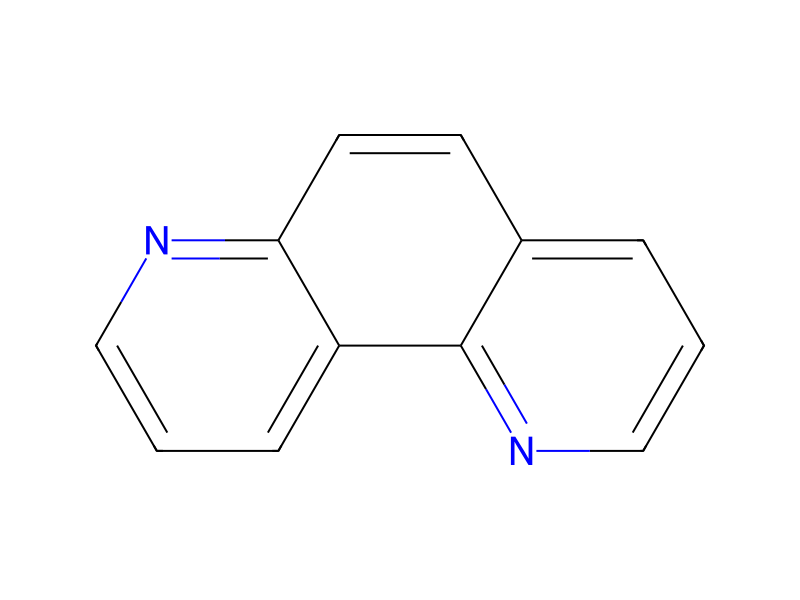
1,7-Phenanthroline

HCID 67473
New reaction
Print
Basic informationOverviewNames & identifiersPropertiesSafety & regulationChemistry & industryRelated reactionsCompound notes
Substructure searchFind similar structures

Basic information

CAS
12678-01-2
Standard SMILES
c1cnc2c(c1)ccc1ncccc12
InChIKey
OZKOMUDCMCEDTM-UHFFFAOYSA-N
Molecular formula
C12H8N2
Average molar mass
180.2 g/mol
Monoisotopic mass
180.06874826

Overview

1,7-phenanthroline is a phenanthroline.

Names & identifiers

Preferred name
1,7-Phenanthroline
IUPAC
1,7-phenanthroline
English name
1,7-PHENANTHROLINE
Molecular formula
C12H8N2
Molecular weight
180.21

Names & synonyms

1,7-Phenanthroline230-46-65Y778HQU2SDTXSID50870492NSC-35679CHEBI:36418RefChem:73719DTXCID70818210MFCD00004971MLS000738106NSC3567912678-01-2
Show more names
PHENANTHROLINENSC 35679AKOS 900614,10-Phenanthroline1,7-Phenanthroline 99%Pyrido[2,3-f]quinolinePyrido[2,3-f]quinoline1
SMR000393870pyridino[2,3-f]quinolineM-PHENANTHROLINEPhenanthrolines1,5-DIAZAPHENANTHRENEm-Phenanthrolin[1,7]phenanthrolineOpera_ID_785

Database identifiers

CAS
12678-01-2、230-46-6
PubChem CID
67473
DTXSID
DTXSID50870492
ChEMBL
CHEMBL1529707
ChEBI
CHEBI:36418
UNII
5Y778HQU2S
EC Number
625-267-6
Nikkaji
J151.373G

Properties

Computed structural properties

XLogP
2.5
Topological polar surface area
25.8 Ų
Hydrogen bond donors
0
Hydrogen bond acceptors
2
Rotatable bonds
0
Heavy atoms
14
Formal charge
0
Complexity
204

Experimental & physicochemical properties

PolymersOther Classes -> Polycyclic Aromatic Hydrocarbons
SpringerMaterials PropertiesAngular frequency
LogP1.93
Solubility>27 [ug/mL] (The mean of the results at pH 7.4)
Vapor Pressure0.0000326 [mmHg]
Physical DescriptionTan crystalline powder; [MSDSonline]

Physicochemical properties

Melting point
79 · 79-81 °C (lit.)
Boiling point
303.03 °C · 303.03°C (rough estimate)
Density
1.1836 · 1.1836 (rough estimate)
refractive index
1.52 · 1.5200 (estimate)
RTECS
8290000 · SF8290000
storage temp.
Sealed in dry,Room Temperature

Safety & regulation

Safety information is for reference only and does not replace the supplier’s Safety Data Sheet (SDS), applicable regulations, or professional assessment.

GHS classification

GHS Classification · 4 items

Danger

H301 (90.9%): Toxic if swallowed [Danger Acute toxicity, oral]

P264, P264+P265, P270, P273, P280, P301+P316, P305+P354+P338, P317, P321, P330, P391, P405, and P501 (click each P-code to see the statement)

Aggregated GHS information provided per 44 reports by companies from 4 notifications to the ECHA C&L Inventory. Each notification may be associated with multiple companies.

Hazard information

Hazards SummaryToxic by ingestion; An irritant; [MSDSonline] See POLYCYCLIC AROMATIC HYDROCARBONS.
Hazard Classes and CategoriesAcute Tox. 3 (90.9%)

Safety data

PPE
dust mask type N95 (US), Eyeshields, Faceshields, Gloves
wgk
3
ridadr
UN 2811 6.1/PG 3
hs_code
2933990099
risk_code
22-41-50/53-25
Signal word
Danger
Symbol(GHS)
GHS05,GHS06,GHS09
hazard_code
Xn,N,T
safety_code
26-36/39-61-60-45-39
hazard_class
6.1
Storage Class
6.1C - Combustible acute toxic Cat.3toxic compounds or compounds which causing chronic effects
packing_group
III

Chemistry & industry

Applications · 2 items

Uses1,7-Phenanthroline acts as an inhibitor of germination and growth of plants. it can be used to produce [1,7]phenanthroline-8-carbonitrile with hydrocyanic acid; potassium salt at temperature. It is also used as an intermediate and chemical research.

General Description1,7-Phenanthroline has inhibitory effect on germination and growth of plants. 1,7-Phenanthroline is an aza-analog of phenanthrene, was found to be mutagenic in the Ames test using Salmonella typhimurium TA100 in the presence of a rat liver S9 fraction. Supramolecular assemblies of 1,2,4,5-benzenetetracarboxylic acid with 1,7-phenanthroline (aza donor molecule) were investigated.

Upstream & downstream products

Upstream raw materials

3-Nitroaniline5-Aminoquinolinem-PhenylenediamineHydrochloric acid7-Nitro-quinolineGlycerol

Additional notes

DefinitionChEBI: 1,7-phenanthroline is a phenanthroline.

Related reactions

6 records
New reaction record
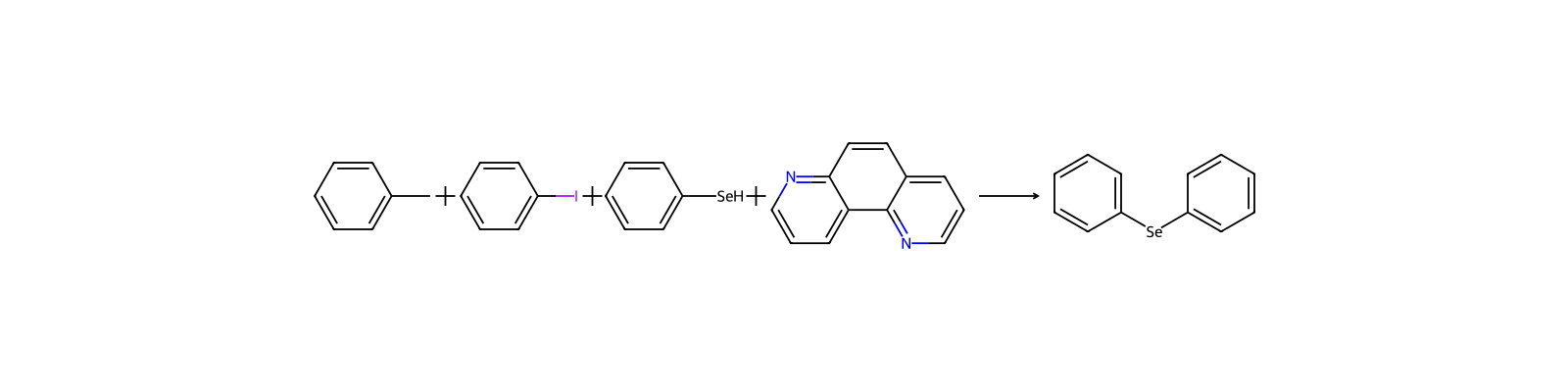
HRID 165082 reaction equation
HRID 165082As reactant
HRID 281140 reaction equation
HRID 281140As reactant
HRID 671805 reaction equation
HRID 671805As reactant
HRID 824174 reaction equation
HRID 824174As reactant
HRID 960892 reaction equation
HRID 960892As reactant
HRID 1541828 reaction equation
HRID 1541828As reactant

Compound notes

On this pageBasic informationOverviewNames & identifiersPropertiesSafety & regulationChemistry & industryRelated reactionsCompound notes
pka
1 · pK1:4.30(+1) (25°C)
form
Crystalline Powder
color
White to beige
Water Solubility
It is soluble in water, ethanol, ether and benzene.
Sensitive
Moisture Sensitive
InChI
1S/C12H8N2/c1-3-9-5-6-11-10(4-2-7-13-11)12(9)14-8-1/h1-8H
InChIKey
OZKOMUDCMCEDTM-UHFFFAOYSA-N
SMILES
c1cnc2c(c1)ccc3ncccc23
CAS DataBase Reference
230 · 230-46-6(CAS DataBase Reference)
EWG's Food Scores
1 · 1
FDA UNII
5 Y778HQU2S · 5Y778HQU2S
UNSPSC Code
12352100 · 12352100
NACRES
22 · NA.22
Symbol(GHS)
5 · GHS05,GHS06,GHS09
Signal word
Danger
Hazard statements
301 · H301-H318-H410
Precautionary statements
273 · P273-P280-P301+P310+P330-P305+P351+P338+P310
PPE
95 · dust mask type N95 (US), Eyeshields, Faceshields, Gloves
Hazard Codes
Xn,N,T
Risk Statements
22 · 22-41-50/53-25
Safety Statements
26 · 26-36/39-61-60-45-39
RIDADR
2811 · UN 2811 6.1/PG 3
WGK Germany
3 · 3
HazardClass
6.1 · 6.1
PackingGroup
III
HS Code
2933990099 · 2933990099
Storage Class
6.1 C · 6.1C - Combustible acute toxic Cat.3toxic compounds or compounds which causing chronic effects
Hazard Classifications
3 OralAquatic · Acute Tox. 3 OralAquatic Acute 1Aquatic Chronic 1Eye Dam. 1
Hazard statements
H301-H318-H410
Hazard Classifications
Acute Tox. 3 OralAquatic Acute 1Aquatic Chronic 1Eye Dam. 1
Precautionary statements
P273-P280-P301+P310+P330-P305+P351+P338+P310