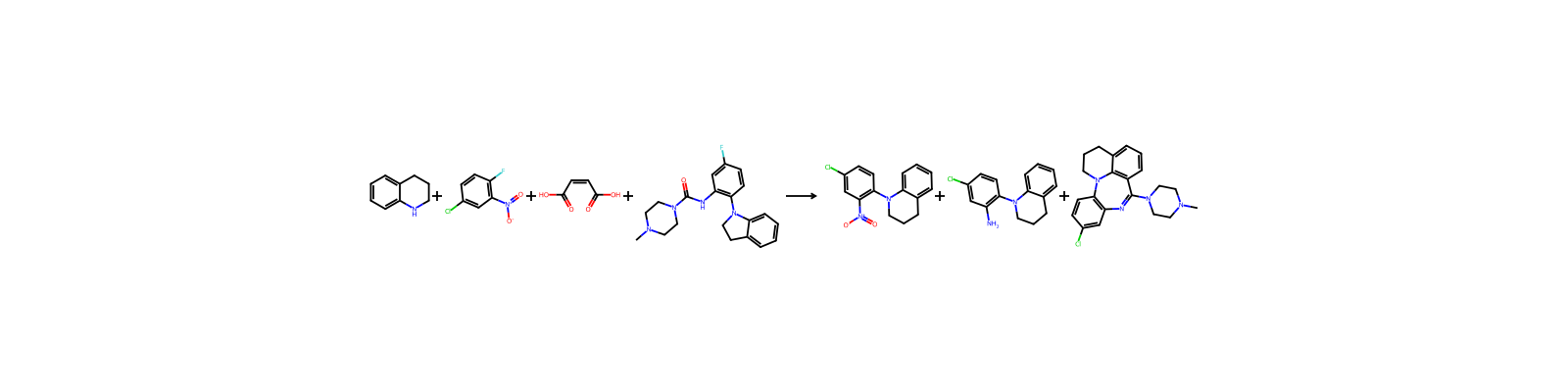

Basic information
- Standard SMILES
O=[N+]([O-])c1cc(Cl)ccc1F- InChIKey
DIAWBHLTWNWYGR-UHFFFAOYSA-N- Molecular formula
- C6H3ClFNO2
- Average molar mass
- 175.54 g/mol
- Monoisotopic mass
- 174.9836342
Names & identifiers
- Preferred name
- 4-Chloro-1-fluoro-2-nitrobenzene
- IUPAC
- 4-chloro-1-fluoro-2-nitrobenzene
- English name
- 5-Chloro-2-fluoronitrobenzene
- Molecular formula
- C6H3ClFNO2
- Molecular weight
- 175.54
Names & synonyms
5-chloro-2-fluoronitrobenzene4-Chloro-1-fluoro-2-nitrobenzene2-fluoro-5-chloronitrobenzeneBenzene, 4-chloro-1-fluoro-2-nitro-1-CHLORO-4-FLUORO-3-NITROBENZENEMAM88XP8XPEINECS 206-457-4DTXSID201880561-FLUORO-4-CHLORO-2-NITROBENZENE3-CHLORO-6-FLUORO-1-NITROBENZENE2-FLUORO-5-CHLORO-1-NITROBENZENERefChem:98296
Show more names
5-Chloro-2-fluoronit5-chloro-2-fluoronitrobenzenen4-CHLORO-2-NITRO FLUORO BENZENE1-Nitro-2-fluoro-5-chlorobenzene1-Fluoro-2-nitro-4-chlorobenzene5-Chloro-2-fluoronitrobenzene 97%
DTXCID50110547345-18-64-chloro-1-fluoro-2-nitro-benzeneMFCD00069418SCHEMBL3063755-chloro-2-fluoro nitrobenzeneSCHEMBL17145919CS-W019164
Database identifiers
- CAS
345-18-6- PubChem CID
- 67660
- DTXSID
DTXSID20188056- UNII
- MAM88XP8XP
- EC Number
- 206-457-4
- Nikkaji
- J193.795B
Properties
Computed structural properties
- XLogP
- 2.4
- Topological polar surface area
- 45.8 Ų
- Hydrogen bond donors
- 0
- Hydrogen bond acceptors
- 3
- Rotatable bonds
- 0
- Heavy atoms
- 11
- Formal charge
- 0
- Complexity
- 161
Physicochemical properties
- Melting point
- 8.3 °C · 8.3 °C
- Boiling point
- 236 °C · 236 °C
- Density
- 1.49 g/ml · 1.49g/ml
- refractive index
- 1.549 · 1.5490-1.5530
- Flash point
- 97 °C · 97 °C
- storage temp.
- Sealed in dry,Room Temperature
- form
- clear liquid
- color
- Light yellow to Yellow to Orange
- Specific Gravity
- 1.48 · 1.48
- CAS DataBase Reference
- 345 · 345-18-6(CAS DataBase Reference)
- FDA UNII
- 88 XP8XP · MAM88XP8XP
- Symbol(GHS)
- 7 · GHS07
- Signal word
- Warning
- Hazard statements
- 315 · H315-H319
- Precautionary statements
- 264 · P264-P280-P302+P352+P332+P313+P362+P364-P305+P351+P338+P337+P313
- Hazard Codes
- Xi,C
- Risk Statements
- 20 · 20/21/22-36/37/38-34
- Safety Statements
- 36 · 36/37/39-45
- RIDADR
- 3261 · UN 3261 8 / PGII
- WGK Germany
- 3 · 3
- Hazard Note
- Irritant
- HS Code
- 2904990090 · 2904990090
Safety & regulation
GHS classification
GHS Classification
Danger
H302 (33.3%): Harmful if swallowed [Warning Acute toxicity, oral];H314 (33.3%): Causes severe skin burns and eye damage [Danger Skin corrosion/irritation];H315 (66.7%): Causes skin irritation [Warning Skin corrosion/irritation];H319 (66.7%): Causes serious eye irritation [Warning Serious eye damage/eye irritation]
P260, P264, P264+P265, P270, P280, P301+P317, P301+P330+P331, P302+P352, P302+P361+P354, P304+P340, P305+P351+P338, P305+P354+P338, P316, P321, P330, P332+P317, P337+P317, P362+P364, P363, P405, and P501 (click each P-code to see the statement)
Aggregated GHS information provided per 3 reports by companies from 2 notifications to the ECHA C&L Inventory. Each notification may be associated with multiple companies.;Information may vary between notifications depending on impurities, additives, and other factors. The percentage value in parenthesis indicates the notified classification ratio from companies that provide hazard codes. Only hazard codes with percentage values above 10% are shown. For more detailed information, please visit ECHA C&L website.
Hazard information
Hazard Classes and CategoriesAcute Tox. 4 (33.3%);Skin Corr. 1B (33.3%);Skin Irrit. 2 (66.7%);Eye Irrit. 2 (66.7%)
Safety data
- wgk
- 3
- ridadr
- UN 3261 8 / PGII
- hs_code
- 2904990090
- risk_code
- 20/21/22-36/37/38-34
- Signal word
- Warning
- Symbol(GHS)
- GHS07
- hazard_code
- Xi,C
- hazard_note
- Irritant
- safety_code
- 36/37/39-45
- Hazard statements
- H315-H319
- Precautionary statements
- P264-P280-P302+P352+P332+P313+P362+P364-P305+P351+P338+P337+P313
Chemistry & industry
Applications
Uses5-Chloro-2-fluoronitrobenzene is an organic synthetic reagent or pharmaceutical intermediate component. It can be used in the synthesis of aniline intermediates of ureidoolefins, and the amino and hydroxyl groups at the 4-position of these aniline intermediates are useful in the further preparation of macrocyclic urea kinase inhibitors.
Upstream & downstream products
Downstream products
Suppliers50 total
梯希爱(上海)化成工业发展有限公司021-67121386 · [email protected]
衢州润东化工有限公司0570-8789886 18892685668 · [email protected]
上海策嵘生物科技有限公司[email protected]
合肥翰刚医药科技有限公司+8618062405514 · [email protected]
苏州启航生物科技有限公司18151111370 · [email protected]
温州共赢化学有限公司+86-0086-577-64498589 +86-15355981851 · [email protected]
Baoji Guokang Healthchem co.,ltd+8615604608665 15604608665 · [email protected]
Dayang Chem (Hangzhou) Co.,Ltd.+86-0571-88938639 17705817739 · [email protected]
上海弘顺生物科技有限公司15901914505 · [email protected]
韶远科技(上海)有限公司021-50795510 4000665055 · [email protected]
Syntechem Co.,Ltd[email protected]
河北秒变生物科技有限公司17733850068
上海迈瑞尔生化科技有限公司4006356688 18621169109 · [email protected]
武汉易泰科技有限公司上海分公司18930552037 · [email protected]
安耐吉化学&3A(安徽泽升科技股份有限公司)400-0056266 · [email protected]
武汉凯威斯科技有限公司86-027-67849912 · [email protected]
Allfluoro Pharmaceutical Company Limited+86-400-0216110 +86-15958047586 · [email protected]
常州安轩化工有限公司13912302692 · [email protected]
北京亿思研科技开发中心010-56645598 13366904824 · [email protected]
上海瀚鸿科技股份有限公司021-54306202 13764082696 · [email protected]
上海相辉医药科技有限公司13761987713 · [email protected]
上海景颜化工科技有限公司13817811078 · [email protected]
嘉兴市艾森化工有限公司0573-85285100 18627885956 · [email protected]
上海隆盛化工有限公司58099637 13585536065 · [email protected]
Zhejiang J&C Biological Technology Co.,Limited+1-2135480471 · [email protected]
杭州东帆化学有限公司86-0571-85151182
天津希恩思生化科技有限公司400 638 7771 · [email protected]
武汉海正工贸发展有限公司027-8866 0053/88660577/88660578
南京诺利斯医药科技有限公司13901585132 · [email protected]
TCI AMERICA800-4238616 · [email protected]
TOKYO CHEMICAL INDUSTRY CO., LTD.03-36680489 · [email protected]
TCI Europe320-37350700 · [email protected]
越林试剂021-62960152 · [email protected]
安徽科迪达化工有限公司0554-2106669 · [email protected]
上海毕得医药科技股份有限公司400-164-7117 18317119277 · [email protected]
上海石洋化工有限公司021-56795766 · [email protected]
成都零六生物科技有限公司400-1166-196 13458535857 · [email protected]
天津安浩生物科技有限公司[email protected]
杭州杰恒化工有限公司0571-87396432 · [email protected]
上海洽凡生化科技有限公司+86-021-61654350 · [email protected]
上海嵩爰化工科技有限公司010-1234567 18521000990 · [email protected]
北京欣赛维化学科技有限公司010-56218822 13717722232 · [email protected]
江苏艾康生物医药研发有限公司025-66028182 17714375163 · [email protected]
上海凯赛化工有限公司021-33516722 13701817765 · [email protected]
上海孚一生物科技有限公司+86 (21) 61124340
北京华扬致成科技有限公司13716033033 · [email protected]
上海容立化学科技有限公司021-69992220 13701886816 · [email protected]
Accela ChemBio Inc.+1(858) 699-3322 · [email protected]
诺尔凯立科技有限公司86-(0)21-31261262 373522135 · [email protected]
成都瑞欧克科技有限公司028-64353063 · [email protected]
Related reactions
38 records





Linked notes
Loading…