2,3-Dichloro-5,6-dicyano-1,4-benzoquinone
Completing data — refresh the page later to see the latest

Basic information
- CAS
84-58-2- Standard SMILES
N#CC1=C(C#N)C(=O)C(Cl)=C(Cl)C1=O- InChIKey
HZNVUJQVZSTENZ-UHFFFAOYSA-N- Molecular formula
- C8Cl2N2O2
- Average molar mass
- 227 g/mol
- Monoisotopic mass
- 225.9336826
Overview
request from searcher
Names & identifiers
- Preferred name
- 2,3-Dichloro-5,6-dicyano-1,4-benzoquinone
- IUPAC
- 4,5-dichloro-3,6-dioxocyclohexa-1,4-diene-1,2-dicarbonitrile
- English name
- 2,3-Dichloro-5,6-dicyano-1,4-benzoquinone
- Molecular formula
- C8Cl2N2O2
- Molecular weight
- 227
Names & synonyms
84-58-22,3-Dichloro-5,6-dicyano-1,4-benzoquinoneDichlorodicyanobenzoquinone2,3-Dichloro-5,6-dicyano-p-benzoquinone2,3-Dichloro-5,6-dicyanobenzoquinoneDichlorodicyano-p-benzoquinone1,4-CYCLOHEXADIENE-1,2-DICARBONITRILE, 4,5-DICHLORO-3,6-DIOXO-2,3-Dichloro-5,6-dicyanoquinone4,5-Dichloro-3,6-dioxo-1,4-cyclohexadiene-1,2-dicarbonitrile2,3-Dichloro-5,6-dicyano-p-quinone2,3-Dicyano-5,6-dichlorobenzoquinone2,3-Dicyano-5,6-dichloro-1,4-benzoquinone
Show more names
DDQ2,3-dicyano-5,6-dichloro-p-benzoquinone4,5-dichloro-3,6-dioxocyclohexa-1,4-diene-1,2-dicarbonitrile1,2-Dichloro-4,5-Dicyanobenzoquinone2,3-Dicyano-5,6-dichlorobenzoquinone2,3-dichloro-5,6-dicyano-4-benzoquinone
5,6-Dichloro-2,3-dicyano-p-benzoquinone5,6-Dicyano-2,3-dichloro-p-benzoquinone1H5KD39UH7NSC-401087RefChem:1330572,3-DDQDTXCID10818133201-542-2
Database identifiers
- CAS
84-58-2- PubChem CID
- 6775
- DTXSID
DTXSID7052577- ChEMBL
CHEMBL3759231- UNII
- 1H5KD39UH7
- EC Number
- 201-542-2
- Nikkaji
- J4.898D、J510.000C
Properties
Computed structural propertiesFilling in
- XLogP
- 1.6
- Topological polar surface area
- 81.7 Ų
- Hydrogen bond donors
- 0
- Hydrogen bond acceptors
- 4
- Rotatable bonds
- 0
- Heavy atoms
- 14
- Formal charge
- 0
- Complexity
- 464
Experimental & physicochemical properties
Chemical ClassesNitrogen Compounds -> Other Aromatics (Nitrogen)
SpringerMaterials PropertiesNuclear quadrupole resonance spectroscopy
Physical DescriptionYellow to orange solid; [Merck Index] Dark yellow powder; [Alfa Aesar MSDS]
Physicochemical properties
- Melting point
- 210 · 210-215 °C (dec.)(lit.)
- Boiling point
- 301.8 · 301.8±42.0 °C(Predicted)
- Density
- 1.75 · 1.7500 (estimate)
- storage temp.
- 30 °C · Store below +30°C.
- solubility
- Soluble in benzene, methanol, acetic acid and dioxane.Slightly soluble in chloroform,, dichloromethane.
- form
- Crystalline Powder or Crystals
- color
- Yellow to orange
- Water Solubility
- reacts
- Sensitive
- Moisture Sensitive
- Merck
- 14 · 14,3063
- BRN
- 747939 · 747939
- InChI
- 1S/C8Cl2N2O2/c9-5-6(10)8(14)4(2-12)3(1-11)7(5)13
- InChIKey
- HZNVUJQVZSTENZ-UHFFFAOYSA-N
- SMILES
- ClC1=C(Cl)C(=O)C(C#N)=C(C#N)C1=O
- CAS DataBase Reference
- 84 · 84-58-2(CAS DataBase Reference)
- EWG's Food Scores
- 1 · 1
- FDA UNII
- 1 H5KD39UH7 · 1H5KD39UH7
- NIST Chemistry Reference
- 1 · 1,4-Cyclohexadiene-1,2-dicarbonitrile, 4,5-dichloro-3,6-dioxo-(84-58-2)
- EPA Substance Registry System
- 1 · 1,4-Cyclohexadiene-1,2-dicarbonitrile, 4,5-dichloro-3,6-dioxo- (84-58-2)
- UNSPSC Code
- 12352117 · 12352117
- NACRES
- 22 · NA.22
- Symbol(GHS)
- 6 · GHS06
- Signal word
- Danger
- Hazard statements
- 301 · H301+H311+H331-H315-H319
- Precautionary statements
- 501 · P501-P261-P270-P271-P264-P280-P337+P313-P305+P351+P338-P361+P364-P332+P313-P301+P310+P330-P302+P352+P312-P304+P340+P311-P403+P233-P405
- PPE
- 2 · Eyeshields, Faceshields, Gloves, type P2 (EN 143) respirator cartridges
- Hazard Codes
- T
- Risk Statements
- 25 · 25-29-41-37/38-20/21-23/24/25
- Safety Statements
- 22 · 22-24/25-37-45-36/37-26-36/37/39
- RIDADR
- 3439 · UN 3439 6.1/PG 3
- WGK Germany
- 3 · 3
- RTECS
- 4825000 · GU4825000
- F
- 21 · 21
- TSCA
- TSCA listed
- HazardClass
- 6.1 · 6.1
- PackingGroup
- II
- HS Code
- 29269095 · 29269095
- Storage Class
- 6.1 C · 6.1C - Combustible acute toxic Cat.3toxic compounds or compounds which causing chronic effects
- Hazard Classifications
- 3 Oral · Acute Tox. 3 Oral
- REACH Registrations
- Active
- Limited Quantities
- 5 kg · 5.0 kg (11 lbs) (solid)
- Excepted Quantities
- Max Inner Pack (30g or 30ml) and Max Outer Pack (1Kg or 1L)
Safety & regulation
Safety information is for reference only and does not replace the supplier’s Safety Data Sheet (SDS), applicable regulations, or professional assessment.
GHS classification
GHS Classification
Danger
H301 (100%): Toxic if swallowed [Danger Acute toxicity, oral]
P261, P264, P264+P265, P270, P272, P280, P301+P316, P302+P352, P305+P351+P338, P321, P330, P333+P317, P337+P317, P362+P364, P405, and P501 (click each P-code to see the statement)
Aggregated GHS information provided per 77 reports by companies from 11 notifications to the ECHA C&L Inventory. Each notification may be associated with multiple companies.
Hazard information
Regulatory Information
Chemical: 1,4-Cyclohexadiene-1,2-dicarbonitrile, 4,5-dichloro-3,6-dioxo-
Status: Active Update: 01-03-2023 https://echa.europa.eu/registration-dossier/-/registered-dossier/21337
2,3-Dichloro-5,6-dicyano-p-benzoquinone: Does not have an individual approval but may be used under an appropriate group standard
Hazards Summary
Intraperitoneal LD50 (mouse) = 31 mg/kg; Intravenous LD50 (mouse) = 13 mg/kg; [RTECS] Decomposed by water; [Merck Index] Reacts with water evolving toxic gases; An irritant; Toxic by ingestion; [Alfa Aesar MSDS] See Hydroquinone. See NITRILES.
Hazard Classes and CategoriesAcute Tox. 3 (100%)
Safety data
- F
- 21
- PPE
- Eyeshields, Faceshields, Gloves, type P2 (EN 143) respirator cartridges
- wgk
- 3
- tsca
- TSCA listed
- rtecs
- GU4825000
- ridadr
- UN 3439 6.1/PG 3
- hs_code
- 29269095
- risk_code
- 25-29-41-37/38-20/21-23/24/25
- Signal word
- Danger
- Symbol(GHS)
- GHS06
- hazard_code
- T
- safety_code
- 22-24/25-37-45-36/37-26-36/37/39
- hazard_class
- 6.1
- Storage Class
- 6.1C - Combustible acute toxic Cat.3toxic compounds or compounds which causing chronic effects
- packing_group
- II
- Hazard statements
- H301+H311+H331-H315-H319
- Limited Quantities
- 5.0 kg (11 lbs) (solid)
- Excepted Quantities
- Max Inner Pack (30g or 30ml) and Max Outer Pack (1Kg or 1L)
- REACH Registrations
- Active
- Hazard Classifications
- Acute Tox. 3 Oral
- Precautionary statements
- P501-P261-P270-P271-P264-P280-P337+P313-P305+P351+P338-P361+P364-P332+P313-P301+P310+P330-P302+P352+P312-P304+P340+P311-P403+P233-P405
Chemistry & industry
Uses & manufacturing
UsesUsed in steroid synthesis (oxidizing agent); [Merck Index]
General Manufacturing Information1,4-Cyclohexadiene-1,2-dicarbonitrile, 4,5-dichloro-3,6-dioxo-: ACTIVE
Applications
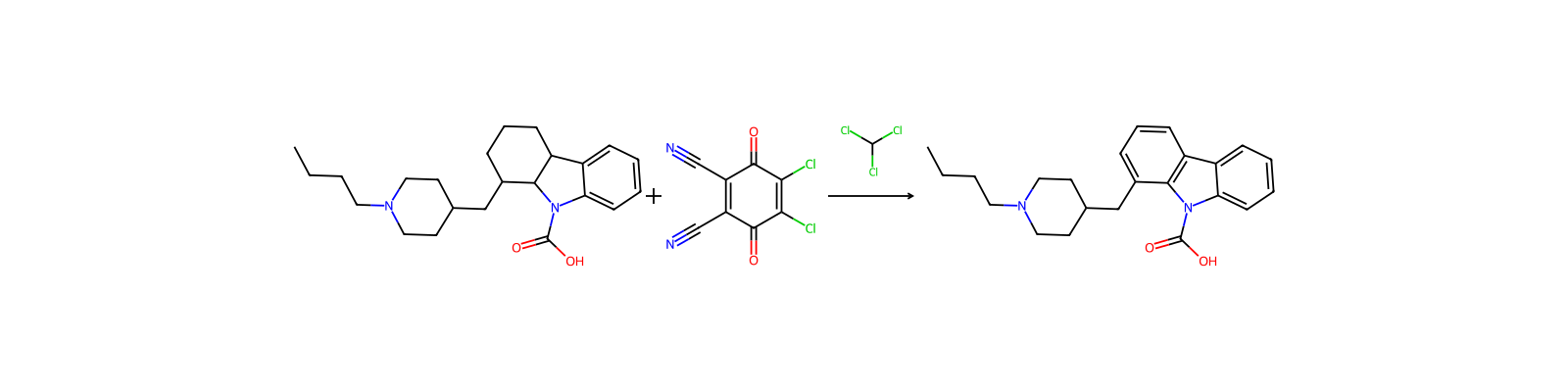
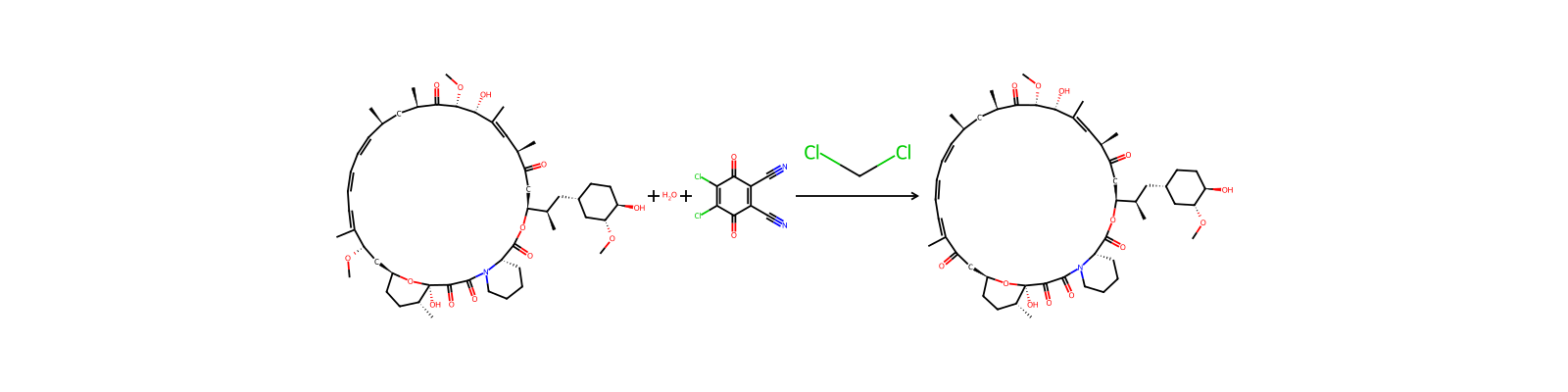
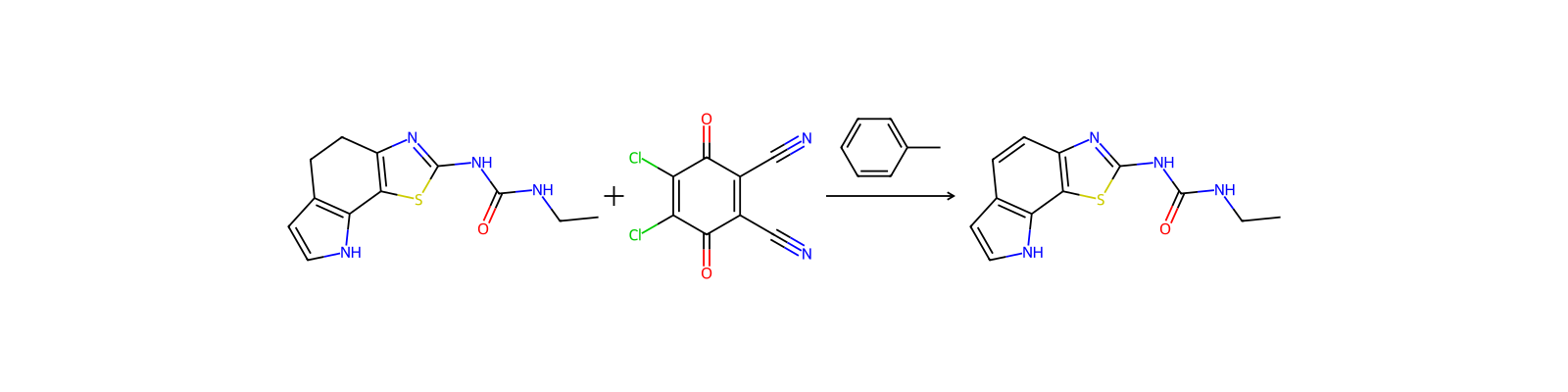
Description2,3-Dichloro-5,6-dicyano-1,4-benzoquinone (DDQ) has a variety of applications. DDQ is a deprotection agent for ketals, acetals, and thioacetals. It is a useful electron transfer reagent for synthesis of quinolones and an oxidizing agent used to synthesize steroids. Additionally, DDQ is used with Ph3P to synthesize 1,2-benzisoxazoles.
UsesAn oxidizing agent, especially in steroid synthesis.2,3-Dichloro-5,6-dicyano-1,4-benzoquinone is used as a reagent for oxidative couplings and cyclization reactions and dehydrogenation of alcohols, phenols and steroid ketones. It is also used in the synthesis of 1,2-benzisoxazoles. It is a useful electron-transfer reagent for synthesis of quinolines from imines and alkynes or alkenes.
Preparation methods
PreparationThe first synthesis of 2,3-Dichloro-5,6-dicyano-1,4-benzoquinone (DDQ) was described by J.Thiele and F.Guntber in 1906. However, no interest was shown in the compound until Linstead and co-workers discovered its extraordinary potency as a dehydrogenating agent. Its oxidation potential is greater than that of any other known quinone.2,3-Dichloro-5,6-Dicyanobenzoquinone (DDQ). A New Preparation
Upstream & downstream products
Upstream raw materials
Downstream products
Related reactions
1,314 records



Compound notes
Loading…