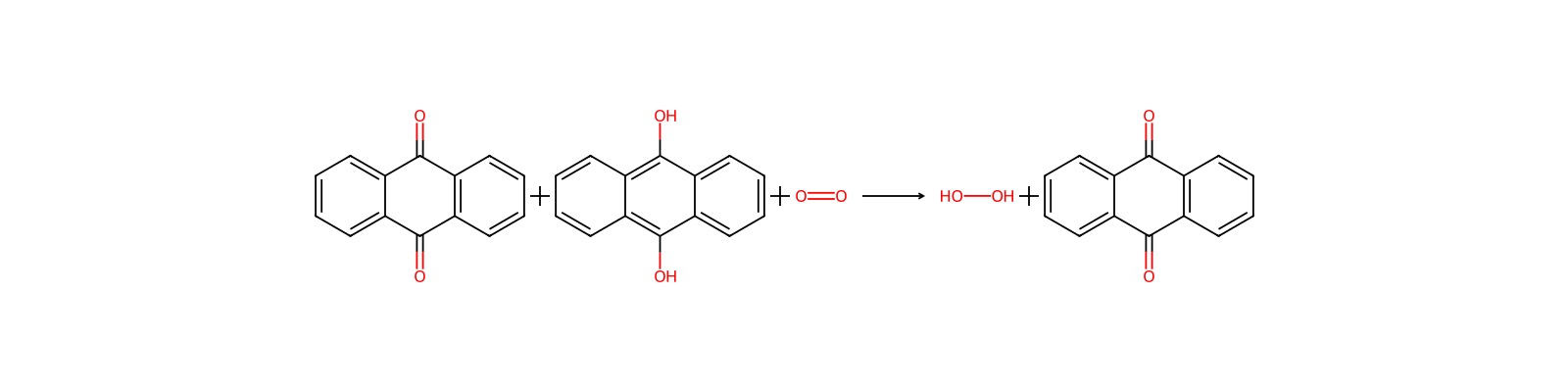
Anthraquinone
Completing data — refresh the page later to see the latest
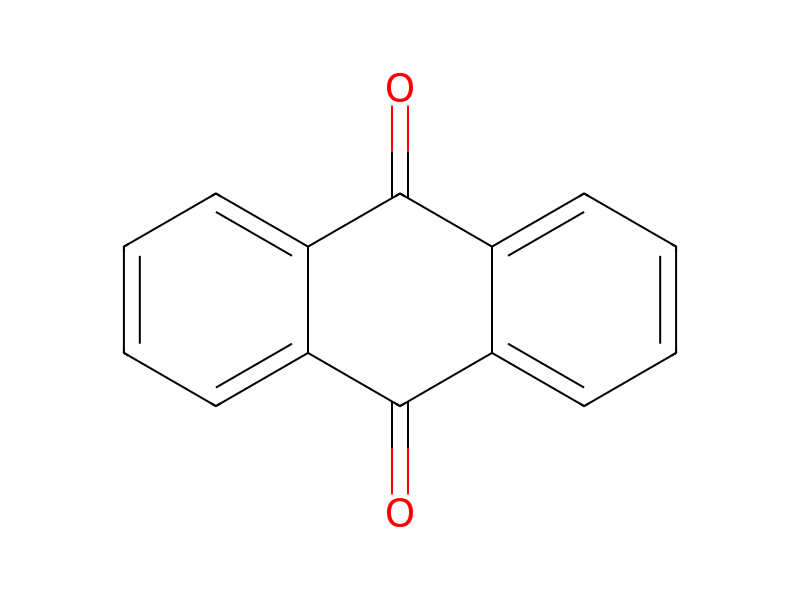
Basic information
- CAS
84-65-1- Standard SMILES
O=C1c2ccccc2C(=O)c2ccccc21- InChIKey
RZVHIXYEVGDQDX-UHFFFAOYSA-N- Molecular formula
- C14H8O2
- Average molar mass
- 208.21 g/mol
- Monoisotopic mass
- 208.0524295
Overview
Anthraquinone can cause cancer according to The National Toxicology Program.
Names & identifiers
- Preferred name
- Anthraquinone
- IUPAC
- anthracene-9,10-dione
- English name
- Anthraquinone
- Molecular formula
- C14H8O2
- Molecular weight
- 208.21
Names & synonyms
ANTHRAQUINONE84-65-1anthracene-9,10-dione9,10-Anthraquinone9,10-AnthracenedioneAnthradioneHoeliteMorkit9,10-DioxoanthraceneCorbitAnthrapel9,10-Anthrachinon
Show more names
AQAnthracenedioneAnthrachinon9,10-anthracenequinone
DTXSID3020095AvipelKawasaki saqAnthracene, 9,10-dihydro-9,10-dioxo-030MS0JBDOEPA Pesticide Chemical Code 122701FLIGHT CONTROLCHEBI:40448
Database identifiers
- CAS
84-65-1- PubChem CID
- 6780
- DTXSID
DTXSID3020095- ChEMBL
CHEMBL55659- ChEBI
CHEBI:40448- UNII
- 030MS0JBDO
- EC Number
- 201-549-0
- Nikkaji
- J294A
Properties
Computed structural propertiesFilling in
- XLogP
- 3.4
- Topological polar surface area
- 34.1 Ų
- Hydrogen bond donors
- 0
- Hydrogen bond acceptors
- 2
- Rotatable bonds
- 0
- Heavy atoms
- 16
- Formal charge
- 0
- Complexity
- 261
Experimental & physicochemical properties
Chemical Classes
Other Classes -> Aromatic Ketones
Dye
Semi-Volatile Organic Compound (SVOC) and(or) Waste-water effluent contaminant
SpringerMaterials Properties13C nuclear magnetic resonance spectrum
Pesticides
Repellants
Active substance -> EU Pesticides database: Not approved
Pesticide (Anthraquinone) -> USDA PDB
LogP
log Kow = 3.39
3.39
3.28
OdorAromatic odor (technical)
Density
1.438 at 68 °F (NTP, 1992) - Denser than water; will sink
1.42-1.44 at 20 °C/4 °C
1.4 g/cm³
1.42-1.44 @ 20°C
Color/Form
Light yellow, slender monoclinic prisms by sublimation in vacuo. Almost colorless, orthorhombic, bipyramidal crystals from sulfuric acid and water.
Yellow rhombic needles from alcohol, benzene
Yellow-green crystals
Solubility
less than 1 mg/mL at 73 °F (NTP, 1992)
0.44 g/100 g alc at 25 °C; 2.25 g/100 g boiling alc; 0.11 g/100 g ether at 25 °C; 0.61 g/100 g chloroform at 20 °C; 0.26 g/100 g benzene at 20 °C; 0.30 g/100 g toluene at 25 °C
SOL IN CONCN SULFURIC ACID
Soluble in acetone
In water, 1.353 mg/L at 25 °C
Solubility in water: very poor
Flash Point
365 °F (NTP, 1992)
185 °C
365 °F (185 °C) (Closed cup)
185 °C c.c.
Boiling Point
714 to 718 °F at 760 mmHg (NTP, 1992)
377 °C at 760 mm Hg
380 °C
376.9 °C @760 [mm Hg]
DecompositionWhen heated to decomposition it emits acrid smoke and irritating fumes.
Melting Point
547 °F (sublimes) (NTP, 1992)
286 °C
Liquid Molar Volume = 0.193625 cu m/kmol; IG Heat of Formation = -9.52X10+7 J/kmol; Heat Fusion at Melting Point = 3.2552X10+7 J/kmol
286 °C
286 °C
Physicochemical properties
- Melting point
- 284 · 284-286 °C (lit.)
- Boiling point
- 379 · 379-381 °C (lit.)
- Density
- 1.438 · 1.438
- bulk density
- 600 kg/m3 · 600kg/m3
- vapor density
- 7.16 · 7.16 (vs air)
- vapor pressure
- 1 mm · 1 mm Hg ( 190 °C)
- refractive index
- 1.5681 · 1.5681 (estimate)
- Flash point
- 365 °F · 365 °F
- storage temp.
- no restrictions.
- solubility
- 0.00007 g/l · 0.00007g/l
- form
- Powder
- color
- Yellow-green to khaki to tan
- Water Solubility
- 0.1 g/100 · <0.1 g/100 mL at 23 ºC
- Merck
- 14 · 14,687
- BRN
- 390030 · 390030
- Henry's Law Constant
- 4.2 · 4.2×102 mol/(m3Pa) at 25℃, Duchowicz et al. (2020)
- Stability
- Stable. Incompatible with strong oxidizing agents. Combustible.
- Major Application
- food and beveragespharmaceutical
- InChI
- 1S/C14H8O2/c15-13-9-5-1-2-6-10(9)14(16)12-8-4-3-7-11(12)13/h1-8H
- InChIKey
- RZVHIXYEVGDQDX-UHFFFAOYSA-N
- SMILES
- O=C1c2ccccc2C(=O)c3ccccc13
- LogP
- 3.39 · 3.39-3.4 at 30℃
- Toxicology and Carcinogenesis
- Toxicology and Carcinogenesis Studies of Anthraquinone (CASRN 84-65-1) in F344/N Rats and B6C3F1 Mice (Feed Studies)
- FDA 21 CFR
- 176.17 · 176.170
- Indirect Additives used in Food Contact Substances
- 9 · 9,10-ANTHRAQUINONE
- CAS DataBase Reference
- 84 · 84-65-1(CAS DataBase Reference)
- EWG's Food Scores
- 2 · 2
- NCI Dictionary of Cancer Terms
- anthracenedione; anthraquinone
- FDA UNII
- 30 MS0JBDO · 030MS0JBDO
- Proposition 65 List
- Anthraquinone
- IARC
- 2 B · 2B (Vol. 101) 2013
- NIST Chemistry Reference
- 9 · 9,10-Anthraquinone(84-65-1)
- EPA Substance Registry System
- Anthraquinone (84-65-1)
- UNSPSC Code
- 41116107 · 41116107
- NACRES
- 24 · NA.24
- Symbol(GHS)
- 7 · GHS07,GHS08
- Signal word
- Danger
- Hazard statements
- 317 · H317-H350
- Precautionary statements
- 202 · P202-P261-P272-P280-P302+P352-P308+P313
- PPE
- 95 · dust mask type N95 (US), Eyeshields, Faceshields, Gloves
- Hazard Codes
- Xi
- Risk Statements
- 43 · 43-36/37/38
- Safety Statements
- 36 · 36/37-37/39-26-24
- RIDADR
- 3077 · 3077
- WGK Germany
- 1 · 1
- RTECS
- 4725000 · CB4725000
- Autoignition Temperature
- 650 °C · 650 °C
- TSCA
- TSCA listed
- HS Code
- 2914 · 2914 61 00
- HazardClass
- 9 · 9
- PackingGroup
- III
- Storage Class
- 6.1 C · 6.1C - Combustible acute toxic Cat.3toxic compounds or compounds which causing chronic effects
- Hazard Classifications
- 1 BSkin · Carc. 1BSkin Sens. 1
- Hazardous Substances Data
- 84 · 84-65-1(Hazardous Substances Data)
- Toxicity
- 50 orally · LD50 orally in Rabbit: > 5000 mg/kg
- REACH Registrations
- Active
Safety & regulation
Safety information is for reference only and does not replace the supplier’s Safety Data Sheet (SDS), applicable regulations, or professional assessment.
GHS classification
GHS Classification
Danger
H350: May cause cancer [Danger Carcinogenicity]
P203, P280, P318, P405, and P501 (click each P-code to see the statement)
This chemical does not meet GHS hazard criteria for 4.1% (10 of 242) of reports.
Danger
H317 (80.6%): May cause an allergic skin reaction [Warning Sensitization, Skin]
Hazard information
Regulatory Information
Chemical: 9,10-Anthracenedione
Hazard Traits - Carcinogenicity
9,10-Anthracenedione is listed on the EPA's Chemical Data Reporting (CDR) system. Manufacturers and importers of 9,10-Anthracenedione are required to report information about their production and use of this chemical to the EPA under the Toxic Substances Control Act (TSCA). (40 eCFR Part 711)
Anthraquinone is listed in the dataset of EPA Human Health Benchmarks for Pesticides under the Safe Drinking Water Act (40 eCFR 141)
2008/986
Status: Active Update: 10-01-2023 https://echa.europa.eu/registration-dossier/-/registered-dossier/2211
Other Safety InformationIMAP assessments - 9,10-Anthracenedione: Human health tier II assessment
Fire Hazards
This chemical is combustible. (NTP, 1992)
Combustible.
Fire PotentialConbustible when exposed to heat or flame.
Health HazardsSYMPTOMS: Symptoms following exposure to this compound may include skin and eye irritation, allergic skin reaction and skin sensitization. It may cause discoloration of the urine.
Hazards Summary
May cause skin irritation and sensitization; [Merck Index] Toxic by ingestion; Found in certain plants, e.g., Rhamnus berries; A skin irritant; [HSDB] An irritant and possible skin sensitizer; [CAMEO] An irritant; [ICSC] No results for 84-65-1[EC/RN Number] AND dermatitis, allergic contact[mesh]; [PubMed] Allergic dermatitis reported; [RTECS] Antraquuinone, insoluble in water and lipids, is biologically inert. [Ullmann] An irritant; [MSDSonline]
Reactive GroupHydrocarbons, Aromatic
Special Reports
ZWAVING JH; RECENT DEVELOPMENTS IN THE ANALYSIS OF ANTHRAQUINONE DERIVATIVES; PHARMACOLOGY 20(SUPPL 1) 65 (1980). A REVIEW & DISCUSSION ON RECENT DEVELOPMENTS IN THE ANALYSIS OF ANTHRAQUINONE DERIVATIVES.
FRIEDMANN CA; STRUCTURE-ACTIVITY RELATIONSHIPS OF ANTHRAQUINONES IN SOME PATHOLOGICAL CONDITIONS; PHARMACOLOGY 20(SUPPL 1) 113 (1980). A REVIEW ON THE STRUCTURE-ACTIVITY RELATIONSHIPS OF ANTHRAQUINONES IN SOME PATHOLOGICAL CONDITIONS.
ANTON R ET AL; PHARMACOLOGY 20 (SUPPL 1): 104 (1980). A REVIEW & DISCUSSION ON THE THERAPEUTIC USE OF NATURAL ANTHRAQUINONE FOR OTHER THAN LAXATIVE ACTIONS.
TSCA Requirements
Pursuant to section 8(d) of TSCA, EPA promulgated a model Health and Safety Data Reporting Rule. The section 8(d) model rule requires manufacturers, importers, and processors of listed chemical substances and mixtures to submit to EPA copies and lists of unpublished health and safety studies. Anthraquinone is included on this list.
Manufacturers and processors of anthraquinone are required to conduct specific chemical tests as required under TSCA section 4.
Reactivity ProfileANTHRAQUINONE is incompatible with strong oxidizing agents. (NTP, 1992)
Atmospheric Standards
This action promulgates standards of performance for equipment leaks of Volatile Organic Compounds (VOC) in the Synthetic Organic Chemical Manufacturing Industry (SOCMI). The intended effect of these standards is to require all newly constructed, modified, and reconstructed SOCMI process units to use the best demonstrated system of continuous emission reduction for equipment leaks of VOC, considering costs, non air quality health and environmental impact and energy requirements. Anthraquinone is produced, as an intermediate or a final product, by process units covered under this subpart.
Chemical DangersDecomposes on burning. This produces toxic fumes.
Safety & protection
Fire Fighting
Fires involving this compound should be controlled using a dr chemical, carbon dioxide or Halon extinguisher. A water spray can also be use. (NTP, 1992)
Use water spray, powder, foam, carbon dioxide.
First Aid Measures
Fresh air, rest.
Rinse and then wash skin with water and soap.
First rinse with plenty of water for several minutes (remove contact lenses if easily possible), then refer for medical attention.
Rinse mouth.
First Aid
EYES: First check the victim for contact lenses and remove if present. Flush victim's eyes with water or normal saline solution for 20 to 30 minutes while simultaneously calling a hospital or poison control center. Do not put any ointments, oils, or medication in the victim's eyes without specific instructions from a physician. IMMEDIATELY transport the victim after flushing eyes to a hospital even if no symptoms (such as redness or irritation) develop.
Safe StorageStore in an area without drain or sewer access.
Fire Fighting ProceduresTo fight fire use water, foam, carbon dioxide, water spray or mist, dry chemical.
Nonfire Spill Response
SMALL SPILLS AND LEAKAGE: Should a spill occur while you are handling this chemical, FIRST REMOVE ALL SOURCES OF IGNITION, then you should dampen the solid spill material with 60-70% ethanol and transfer the dampened material to a suitable container. Use absorbent paper dampened with 60-70% ethanol to pick up any remaining material. Seal the absorbent paper, and any of your clothes, which may be contaminated, in a vapor-tight plastic bag for eventual disposal. Solvent wash all contaminated surfaces with 60-70% ethanol followed by washing with a soap and water solution. Do not reenter the contaminated area until the Safety Officer (or other responsible person) has verified that the area has been properly cleaned.
Disposal Methods
SRP: The most favorable course of action is to use an alternative chemical product with less inherent propensity for occupational exposure or environmental contamination. Recycle any unused portion of the material for its approved use or return it to the manufacturer or supplier. Ultimate disposal of the chemical must consider: the material's impact on air quality; potential migration in soil or water; effects on animal, aquatic, and plant life; and conformance with environmental and public health regulations.
Spillage DisposalPersonal protection: particulate filter respirator adapted to the airborne concentration of the substance. Do NOT let this chemical enter the environment. Sweep spilled substance into covered containers.
Preventive Measures
SRP: The scientific literature for the use of contact lenses in industry is conflicting. The benefit or detrimental effects of wearing contact lenses depend not only upon the substance, but also on factors including the form of the substance, characteristics and duration of the exposure, the uses of other eye protection equipment, and the hygiene of the lenses. However, there may be individual substances whose irritating or corrosive properties are such that the wearing of contact lenses would be harmful to the eye. In those specific cases, contact lenses should not be worn. In any event, the usual eye protection equipment should be worn even when contact lenses are in place.
Eye PreventionWear safety goggles.
Fire PreventionNO open flames.
Skin PreventionProtective gloves.
Toxicology
Interactions
Anthraquinone seems to inhibit the function of certain enzymes in the S-9 mix (rat liver homogenate) by which 3-amino-1-methyl-5H-pyrido(2,3-b)indol, 2-acetylaminofluorene and benzo(a)pyrene are activated. Ina mutation assay (according to Ames with some modification) anthraquinone decreased markedly the mutagenicities of the mutagens mentioned above (test strains: S.typhimurium TA 98, TA 100; assay with metabolic activation).
Ecotoxicity Values
LC50 Lepomis macrochirus (Bluegill) >5 mg/L/24 hr; Static
LC50 Pimephales promelas (Fathead minnow) 2,650 mg/L/96 hr /Conditions of bioassay not specified in source examined/
EC50 Lemna gibba (Duckweed; growth inhibition) 1.5 mg/L/7 days; renewal, under photosynthetically active radiation
EC50 Lemna gibba (Duckweed; growth inhibition) 1.5 mg/L/7 days; renewal, under simulated solar radiation
EC50 Lemna gibba (Duckweed; growth inhibition) 1.5 mg/L/7 days; renewal, after photomodification
Environmental Fate
TERRESTRIAL FATE: Based on a classification scheme(1), Koc values of 2,755-17,416, determined in five European reference soils(2), indicates that anthraquinone is expected to have slight mobility or be immobile in soil(SRC). Volatilization of anthraquinone from moist soil surfaces is not expected to be an important fate process(SRC) given an estimated Henry's Law constant of 2.35X10⁻⁸ atm-cu m/mole(SRC), based upon its vapor pressure, 1.16X10⁻⁷ mm Hg(3), and water solubility, 1.35 mg/L(4). Anthraquinone is not expected to volatilize from dry soil surfaces(SRC) based upon its vapor pressure. Direct photolysis is possible on sunlit solid surfaces(5). Biodegradation of anthraquinone is expected to be a major fate process for this compound in soil; 68% of added anthraquinone was biodegraded by a mixed soil population within 12 weeks(6). A mixed bacterial population, isolated from a coal-tar contaminated soil, biodegraded anthraquinone even faster with only 6.5% of the initial concentration of anthraquinone remaining after 3 days(7). A BOD/ThOD of 54% and a CO2/ThCO2 of 41% were measured in a biodegradation study using a garden soil inoculum and a 58-day incubation period(8). Rapid degradation, apparently due to microbial activity, has been reported for different soils with half-lives of 7-10 days(5).
AQUATIC FATE: Based on a classification scheme(1), Koc values of 2755-17416, determined in five European reference soils(2), indicate that anthraquinone is expected to adsorb to suspended solids and sediment(SRC). Volatilization from water surfaces is not expected(3) based upon an estimated Henry's Law constant of 2.35X10⁻⁸ atm-cu m/mole(SRC) derived from its vapor pressure, 1.16X10⁻⁷ mm Hg(4), and water solubility, 1.35 mg/L(5). According to a classification scheme(6), an estimated BCF of 12(SRC), from its log Kow of 3.39(7) and a regression-derived equation(8), suggests the potential for bioconcentration in aquatic organisms is low(SRC). Anthraquinone is stable to aqueous environmental hydrolysis, but sensitive to light with a reported direct photolysis half-life of about 9 minutes in aqueous solution(9).
AQUATIC FATE: Biodegradation of anthraquinone in the water column is expected to be a major fate process. Over a three day period, 82% of the added anthraquinone (at 10 mg/L) was degraded by river water, 91% was degraded by sea water(1). Biodegradation using mixed cultures from seawater degraded anthraquinone 50% over 10 days; metabolite concentration was low but included mainly benzoic and phthalic acids(2). Mixed bacterial populations from groundwater were able to completely degrade anthraquinone within 5 days(3). From 50-100% degradation has been reported using activated sludge as an inoculum and a three week incubation period(4-9).
ATMOSPHERIC FATE: According to a model of gas/particle partitioning of semivolatile organic compounds in the atmosphere(1), anthraquinone, which has a vapor pressure of 1.16X10⁻⁷ mm Hg at 25 °C(2), will exist in both the vapor and particulate phases in the ambient atmosphere. Vapor-phase anthraquinone is degraded in the atmosphere by reaction with photochemically-produced hydroxyl radicals(SRC); the half-life for this reaction in air is estimated to be about 11 days(SRC), calculated from its rate constant of 1.5X10⁻¹² cu cm/molecule-sec at 25 °C(SRC) that was derived using a structure estimation method(3). Anthraquinone absorbs at wavelengths >290nm(4) and therefore may be susceptible to direct photolysis by sunlight(SRC). Anthraquinone is sensitive to light in aqueous solution with a reported half-life of about 9 minutes(6) which suggests direct photolysis in air may be important(SRC). Particulate-phase anthraquinone may be removed from the air by wet or dry deposition(SRC); anthraquinone has been detected in rain water from several storm events(5).
Adverse EffectsIARC Carcinogen - Class 3: Chemicals are not classifiable by the International Agency for Research on Cancer.
Plant Concentrations2 of 6 samples of mosses collected near a chemical factory in Czechoslovakia and 3 of 6 samples of needles from the same area contained anthraquinone; (mosses = 1756.8 to 4054.1 ng/g; needles = 459.5 to 1918.9 ng/g)(1).
Animal Concentrations2 of 5 earthworm samples collected near a chemical factory in Czechoslovakia contained anthraquinone; (concentrations = 473 to 4715.9 ng/g)(1).
Signs and Symptoms
Cough.
Pain. Redness.
Ongoing Test Status
The following link will take the user to the National Toxicology Program (NTP) Test Agent Search Results page, which tabulates all of the "Standard Toxicology & Carcinogenesis Studies", "Developmental Studies", and "Genetic Toxicity Studies" performed with this chemical. Clicking on the "Testing Status" link will take the user to the status (i.e., in review, in progress, in preparation, on test, completed, etc.) and results of all the studies that the NTP has done on this chemical. [http://ntp-apps.niehs.nih.gov/ntp_tox/index.cfm?fuseaction=ntpsearch.searchresults&searchterm=84-65-1]
Effluent Concentrations
Anthraquinone was emitted at concns of 24.3 and 4.4 ug/km, resepectively, during particulate emission tests (simulating urban driving conditions) of tailpipes of non-catalyst (average of 1965 Mercury Monterey, 1969 Ford Mustang, 1970 Buick Skylark, 1972 Chevrolet Caprice, 1974 Ford Pinto, and 1976 Volkswagen Beetle) and catalyst cars (average of 1977 Chevrolet Vega, 1980 Honda Civic 150, 1980 Honda 1500, 1980 Toyota Corolla, Datsun 200 SX, 1983 Chevrolet Malibu CL, and 1983 Dodge Omni), and at a concn of 23.5 ug/km from tailpipes of heavy-duty diesel trucks (average of a 1987 GMC truck, two-axle, and a 1987 Ford Dump truck, three-axle)(1). Particulate samples obtained from an automobile using a diesel engine contained anthraquinone at unreported concns(2). Diesel emission particulates from a Volkswagen Rabbit contained anthraquinone(3). Particulate emissions from a representative small aircraft gas turbine engine contained detectable quantities of anthraquinone in 5 of 8 different sampling conditions (concns of 0.06-58.49 ng/cu m; detection limit = 0.01 ug)(4). Organic extracts of emissions from burning cereal straw contained anthraquinone at 995 ug/kg fuel(5). Particulate samples from the exhaust of a flame retention head residential oil burner combusting No. 2 fuel oil contained anthraquinone(6).
Anthraquinone was detected in 2 of 4 extracts of MM5 air sampling trains from 4 different municipal waste incinerators (concentration = 2.9-9.0 ug/ml)(1). Flyash extracts from municipal incinerators contained anthraquinone in 3 of 5 sites(2). Anthraquinone was identified in the flyash of an Ontario municipal incinerator at unreported concentrations(3). Anthraquinone was not detected in tire wear particles and was present at concentrations of 0.31 and 0.41 ug/g in brake lining particles and road dust particles, respectively(4).
Anthraquinone was detected in leachate (concentration = 0.7 ug/l) from central Texas lignite under conditions meant to replicate rainfall leaching of coal piles(1). Tap water (pH = 9) exposed to test panels coated with a commercial coal tar contained anthraquinone(2). Anthraquinone was detected in pulping liquors from processes using this compound as a catalyst for the delignification of wood; in black liquors n=14, concentration = 3.0-170 mg/L; in alkaline pulping liquors n = 6, concentration = 0.5-11.5 mg/L; in wash liquors n = 5, concentration = 0.13-0.75; in filtrates from bleaching n = 5, concentration = 0.04-0.66(3). Anthraquinone was detected at concentrations of 49-110 ppb in the raw wastewater of a dye manufacturing plant; it was not detected in the final effluent of the same plant(4). Anthraquinone was detected in 235 samples obtained from superfund sites; data were compiled from CLP Analytical Results Database(5).
Anthraquinone was detected in particulate emissions collected from the tailpipes of diesel and gasoline vehicles at conc of 1.3 to 130 ug/g (extract mass) in Japan(1). An anthraquinone conc of 2.8 ug/cu m was detected in smoke particulate matter collected from a controlled burn of forest litter in the Amazon(2).
ICSC Environmental DataThe substance is harmful to aquatic organisms. The substance may cause long-term effects in the aquatic environment.
Soil Adsorption/Mobility
Using an HPLC screening technique and five European reference soils, Koc values ranging from 2,755 to 17,416 were determined for anthraquinone(1). According to a suggested classification scheme(2), these Koc values suggest that anthraquinone has slight mobility or is immobile in soil(SRC). Laboratory trials with BBA soils did not reveal any leaching potential(3). Results of a 23-day soil column leaching study have shown that anthraquinone has the potential to reach ground water under recharge conditions similar to those in arid and semi-arid climates(4).
Atmospheric Concentrations
SOURCE DOMINATED: Anthraquinone was detected in one of eight air samples (concentration = 44.5 ng/cu m) near a chemical factory in Czechoslovakia(1). Air samples from a freeway tunnel in Japan contained a conc of 52 ug/g (extract mass)(2). Anthraquinone was detected in air samples collected in the potroom of an aluminum reduction plant at a concentration of 297 ng/cu m(3).
URBAN/SUBURBAN: Organic extracts from airborne particulate matter collected in Barcelona, Spain contained anthraquinone at 9, not detected, 26, and 21 pg/cu m during the spring, summer, fall, and winter, respectively(1). Atmospheric aerosol samples were collected in Barcelona; anthraquinone was present in the summer sample at 82 pg/cu m and in the winter sample at 75 pg/cu m(2). Anthraquinone was detected in airborne particulate matter in Duisburg, Germany from February to April, 1982 (concentration = 0.22-1.89 ng/cu m(3). Ambient air levels of anthraquinone in Toronto, Ontario were reported as 0.9 to 1.3 pg/cu m(4). 2 of 7 sites in the US sampled for ambient air particulates (Upland, CA; Lake Charles, LA) contained anthraquinone at unreported concentrations(5). Mean gas and particulate-phase concentrations of anthraquinone were measured in Portland, OR during February and April, 1984 and February and April, 1985 (gas concentration = 2.5 ng/cu m; particulate concn = 0.59 ng/cu m)(6). Urban air particles from St. Louis, MO contained anthraquinone at unreported concentrations(7). An anthraquinone concentration of 0.3 ng/cu m was detected in ambient air samples collected from Los Angeles, CA during a smog episode on Sept 8, 1993(8). Atmospheric particulate samples collected from 12 sites in southern California in 1995 contained anthraquinone concentrations of 0.011 to 0.218 ng/cu m(9).
RURAL/REMOTE: Airborne particulate matter sampled near Chacaltaya, Bolivia (remote location) and Antwerp, Belgium (urban location) contained anthraquinone in 6 of 6 samples (Bolivia, n = 2, concentration = 0.064-0.065 ug/1000 cu m; Belgium, n = 4, concentration = 0.57-1.0 ug/1000 cu m; detection limit = 0.02 ug/1000 cu m)(1). An anthraquinone concentration of 2.8 ug/g (total weight mass) was reported for a Japanese rural air sample(2).
Regulatory information
TSCA Requirements
Pursuant to section 8(d) of TSCA, EPA promulgated a model Health and Safety Data Reporting Rule. The section 8(d) model rule requires manufacturers, importers, and processors of listed chemical substances and mixtures to submit to EPA copies and lists of unpublished health and safety studies. Anthraquinone is included on this list.
Manufacturers and processors of anthraquinone are required to conduct specific chemical tests as required under TSCA section 4.
Atmospheric Standards
This action promulgates standards of performance for equipment leaks of Volatile Organic Compounds (VOC) in the Synthetic Organic Chemical Manufacturing Industry (SOCMI). The intended effect of these standards is to require all newly constructed, modified, and reconstructed SOCMI process units to use the best demonstrated system of continuous emission reduction for equipment leaks of VOC, considering costs, non air quality health and environmental impact and energy requirements. Anthraquinone is produced, as an intermediate or a final product, by process units covered under this subpart.
Safety data
- PPE
- dust mask type N95 (US), Eyeshields, Faceshields, Gloves
- wgk
- 1
- tsca
- TSCA listed
- rtecs
- CB4725000
- ridadr
- 3077
- hs_code
- 2914 61 00
- Toxicity
- LD50 orally in Rabbit: > 5000 mg/kg
- risk_code
- 43-36/37/38
- Signal word
- Danger
- Symbol(GHS)
- GHS07,GHS08
- hazard_code
- Xi
- safety_code
- 36/37-37/39-26-24
- hazard_class
- 9
- Storage Class
- 6.1C - Combustible acute toxic Cat.3toxic compounds or compounds which causing chronic effects
- packing_group
- III
- Hazard statements
- H317-H350
- REACH Registrations
- Active
- Hazard Classifications
- Carc. 1BSkin Sens. 1
- Autoignition Temperature
- 650 °C
- Precautionary statements
- P202-P261-P272-P280-P302+P352-P308+P313
- Hazardous Substances Data
- 84-65-1(Hazardous Substances Data)
Chemistry & industry
Pharmacology
Mechanism of Action
The quinones are alpha-beta-unsaturated ketones and react with sulfhydryl (-SH) groups. This reaction has been suggested as the critical biochemical lesion involving the -SH groups of enzymes such as amylase and carboxylase which are inhibited by quinones. ... Overall /fungicidal/ mechanism may involve binding of enzyme to quinone nucleus by substitution or addition at the double bond, oxidative reaction with -SH group, and change in redox potential. /Quinones/
Metabolism/Metabolites
Yields anthrone, 9,10-dihydroxyanthracene, and 2-hydroxyanthraquinone in rats. /from table/
Quinones (ie, 6,12-dione) have been shown to undergo oxidation-reduction cycles involving quinone, hydroquinone, and molecular oxygen, resulting in the formation of oxygen radicals and semiquinone radicals. /Quinones/
Anthraquinone (labelled with 14C in the 9,10-positions) was administered orally in a dose of 5 mg/kg bw to male rats and the urine and the feces of the animals were collected until 48 hr after administration: the elimination ratio (renal: fecal) amounted to about 1:1.6. The main elimination product in feces, anthraquinone amounted to minimum 40% of the totally recovered radioactivity (in the excreta and the carcass 48 hr after administration), non conjugated 2-hydroxy-anthraquinone as a minor fecal metabolite was found in approximately 4%. Urine contained as main biotransformation product (approximately 20% of the totally recovered radioactivity) conjugated 2-hydroxy-anthraquinone, unchanged anthraquinone amounted to about 1% in the urine.
In a study of the metabolism of anthraquinone, rats were maintained for 4 days on a diet containing 5% of anthraquinone, the urines being collected daily. The following urinary metabolites were detectable: 2-hydroxyanthraquinone and its sulphuric ester, conjugates of 9-hydroxy-, 9,10-dihydroxy- and 2,9,10-thrihydroxyanthracene and anthrone.
A metabolism study was conducted using male Fischer 344 rats in which they were fed formulations of 4 lots of anthraquinone, produced by three different synthetic routes, with concentrations of 938, 3750 and 7500 ppm and a control diet containing no anthraquinone in irradiated NTP 2000 feed for seven consecutive days. One of the lots had been previously used to conduct subchronic and chronic rodent toxicity studies in feed. Ten animals were used per group. The formulations were prepared using anthraquinone with particle sizes smaller than 80 mesh and consistent in distribution for each lot. All animals were placed in individual metabolism cages following dosing and urine was collected for 24 hours. The urine of all animals from each group was pooled. The purpose of this study was to evaluate any difference in absorption and metabolism of the anthraquinone. A high performance liquid chromatographic method with ultraviolet absorbance detection (HPLC/UV) was developed to analyze the urine samples for 1- and 2-hydroxyanthraquinone, metabolites of anthraquinone. The method consisted of extracting 2 mL of urine with three 2-mL aliquots of ethyl acetate, combining them, evaporating, and reconstituting in 25% water:75% acetonitrile. The reconstituted extracts were analyzed using a C18 reverse-phase column, a mobile phase starting at 75% water:25% acetonitrile, remaining there for 5 minutes and then going to 25%water:75% acetonitrile over 20 minutes with a linear gradient, and a detection wavelength of 260 nm. This method was validated and found to have acceptable linearity, specificity, sensitivity, accuracy, precision, recovery, and ruggedness. Analysis of the samples found that the metabolic profiles and concentrations were consistent for each source of anthraquinone at a given dose level. 1- and 2-hydroxyanthraquinone and anthraquinone were found in all samples from the dosed animals. Within a given sample the concentrations of 2-hydroanthraquinone and anthraquinone were similar and the concentration of 1-hydroxyanthraquinone was approximately 2% of the other two.
Absorption, Distribution and Excretion
Following a single oral administration of anthraquinone (labelled with 14C in the 9,10-positions) at dose levels of 0.1, 1.0, 3.0 mg/kg bw (male rats) or of 1.0 mg/kg bw (females rats), the radioactivity resulting from anthraquinone was nearly completely absorbed, the absorption commencing after a short lag period of about 2-3 minutes. After dosing male or female rats with 1.0 mg/kg bw, the absorption could not be described by a unique half-life. Following administration of 0.1 mg/kg bw to males, the absorption period was best characterized by a half-life of roughly 40 minutes, the maximum plasma level of P=0.75 was reached after 2.5 hr. Following oral administration of 1.0 mg/kg bw to males of females, the plasma concentration peaked after 5 hr (P=0.46) and 12 hr (P=0.43), respectively. The radioactivity was slowly eliminated form the body: 2 days after oral intubation on average about 5% of the administered dose could be measured in the body excluding the GI tract, within 2 days after oral administration <0.01% of the recovered radioactivity were excreted with the expired air. Within the test interval of 2 days about 95% of the retrieved radioactivity were excreted with urine and feces after oral administration, the ratio of the amounts excreted via both routes was about 1.6 (feces:urine). At sacrifice of the male rats 48 hr after administration of 1.0 mg/kg bw, a relative concentration of P=0.052 was determined in the body excluding the GI tract. In the kidney and in the liver these values were about 7 times higher and in the brain they were about 10 times lower as compared with the sum of all organs tissues. At sacrifice of the females a relative concentration of P=0.063 was determined in the body excluding the GI tract and in the kidney and in the liver these vales were about 8 times higher and in the fat and in the brain the relative concentrations were 4 times and 8 times, respectively, lower (results representing the sum of the unchanged substance and its labelled metabolites. P=relative concentration=activity measured/grams of plasma: activity administered/grams of bw).
/In animals/ elimination is quick; almost 96% is excreted within 48 hr in the urine and feces.
Uses & manufacturing
Uses
Used as a chemical intermediate for dyes and pigments, an additive in Kraft pulp processing, a catalyst in vegetable oil processing, an accelerant in nickel electroplating, an additive in tire manufacturing, and a bird repellent; [HSDB]
Electroplating [Category: Plate]
For anthraquinone (USEPA/OPP Pesticide Code: 122701) ACTIVE products with label matches. /SRP: Registered for use in the U.S. but approved pesticide uses may change periodically and so federal, state and local authorities must be consulted for currently approved uses./
Chem intermediate for vat dyes, acid dyes, mordant dyes, disperse dyes, solvent dyes, and for pigments
Anthraquinone serves as the basis for the production of a large number of acid and base dyes, vat dyes, disperse dyes, and reactive dyes.
As an additive in the soda and kraft chemical alkaline pulping processes in the paper pulping industry.
U.S. Imports
(1972) 3X10+7 GRAMS (PRINCPL CUSTMS DISTS)
(1975) 1.03X10+8 GRAMS (PRINCPL CUSTMS DISTS)
813,322 pounds (in 1983)
U.S. Production
2023: 1,636,495 lb
This chemical is listed as a High Production Volume (HPV) (65FR81686). Chemicals listed as HPV were produced in or imported into the U.S. in >1 million pounds in 1990 and/or 1994. The HPV list is based on the 1990 Inventory Update Rule. (IUR) (40 CFR part 710 subpart B; 51FR21438).
(1972) PROBABLY GREATER THAN 4.54X10+5 GRAMS
(1975) GREATER THAN 4.54X10+5 GRAMS
(1986) >500 thousand-1 million pounds
For more U.S. Production (Complete) data for ANTHRAQUINONE (8 total), please visit the HSDB record page.
Consumption PatternsEssentially 100% as a chemical intermediate for the manufacture of dyes (1976)
Consumer UsesOxidizing agent
Industry UsesChemical reaction regulator
Methods of Manufacturing
Through the oxidation of naphthalene to naphthaquinone, which is condensed with butadiene to yield tetrahydroanthraquinone; this is dehydrogenated to produce anthraquinone.
Industrial preperation from phthalic anhydride and benzene: From anthracene with vanadium pentoxide, sodium chlorate, glacial acetic, and sulfuric acids.
Anthracene + nitric acid, concentrated (nitric acid oxidation process); o-Benzoylbenzoic acid (acid-catalyzed condensation)
Styrene is dimerized in the liquid phase to 1-methyl-3-phenylindane, utilizing phosphoric acid as catalyst, followed by catalytic vapor phase oxidation to anthraquinone.
For more Methods of Manufacturing (Complete) data for ANTHRAQUINONE (6 total), please visit the HSDB record page.
Formulations/Preparations
Grades: sublimed; 30% paste (sold on 100% basis); electrical 99.5%.
Anthraquinone cathartics all contain characteristic derivatives which are present in the free state ...or in glycosidic combination with glucose, arabinose, or rhamnose. Major active constituents ... /include/ anthraquinone ...
As seed dressings: 25% wp or in conjunction with other seed protectants.
Seed treatments (DS, FS, WP)
For more Formulations/Preparations (Complete) data for ANTHRAQUINONE (6 total), please visit the HSDB record page.
Household ProductsInformation on 6 consumer products that contain Anthraquinone in the following categories is provided:
General Manufacturing Information
Paper Manufacturing
9,10-Anthracenedione: ACTIVE
BASIC PRODUCERS: BAYER AG (WEST GERMANY) (CORBIT*, MORKIT*)
Anthraquinone dye. A dye whose molecular structure is based on anthraquinone. ... C.I. numbers from 58000 to 72999. These are acid or mordant dyes when OH or HSO3 groups respectively are present. Those anthraquinone dyes that can be reduced to alkaline sol leuco (vat) derivative that has affinity for fibers, & which can be reoxidized to the dye, are known as anthraquinone vat dyes. They are largely used on cotton, rayon, & silk, & have excellent properties of color and fastness. /Anthraquinone dye/
... Disperse dyes (used for acetate, rayon & synthetic fibers) ... disperse colors may be anthraquinone ... dyes...
Fungicidal activity is found in variety of quinones in general order 1,4-naphthoquinone greater than phenanthroquinone greater than p-benzoquinone greater than anthraquinone.
Applications
DescriptionAnthraquinone is a combustible, light yellowto green crystalline solid. Molecular weight= 208.23;Boiling point= 380℃; Melting/Freezing point= 286℃(sublimes); Flash point= 185℃ (cc). NFPA 704 M HazardIdentification (based on NFPA-704 M Rating System):Health 0, Flammability 1, Reactivity 0. Very slightly solublein water; solubility=,13 mg/L at 22℃.
OccurrenceAnthraquinones naturally occur in some plants (eg. aloe, senna, rhubarb, and Cascara buckthorn), fungi, lichens, and insects, where they serve as a basic skeleton for their pigments. Natural anthraquinone derivatives tend to have laxative effects.
UsesAnthraquinone is used in paper industry as a catalyst to increase the pulp production yield and to improves the fiber strength through reduction reaction of cellulose to carboxylic acid. It is also used as a precursor for dye formation.
General DescriptionAnthraquinone is a polycyclic aromatic hydrocarbon derived from anthracene or phthalic anhydride. Anthraquinone is used in the manufacture of dyes, in the textile and pulp industries, and as a bird repellant.
Preparation methods
PreparationAnthraquinone is obtained by oxidation of anthracene using sodium dichromate plus sulfuric acid, and is purified by dissolving in concentrated sulfuric acid at 130 °C and pouring into boiling water, whereupon anthraquinone separates as pure solid, and is recovered by filtration. Further purification may be accomplished by sublimation or crystallization from nitrobenzene, aniline or tetrachloroethane.
Upstream & downstream products
Upstream raw materials
Downstream products
Additional notes
DefinitionChEBI: Anthraquinone is an anthraquinone that is anthracene in which positions 9 and 10 have been oxidised to carbonyls. It is a colorless crystalline quinone used in producing dyestuffs such as alizarin.
Related reactions
202 records



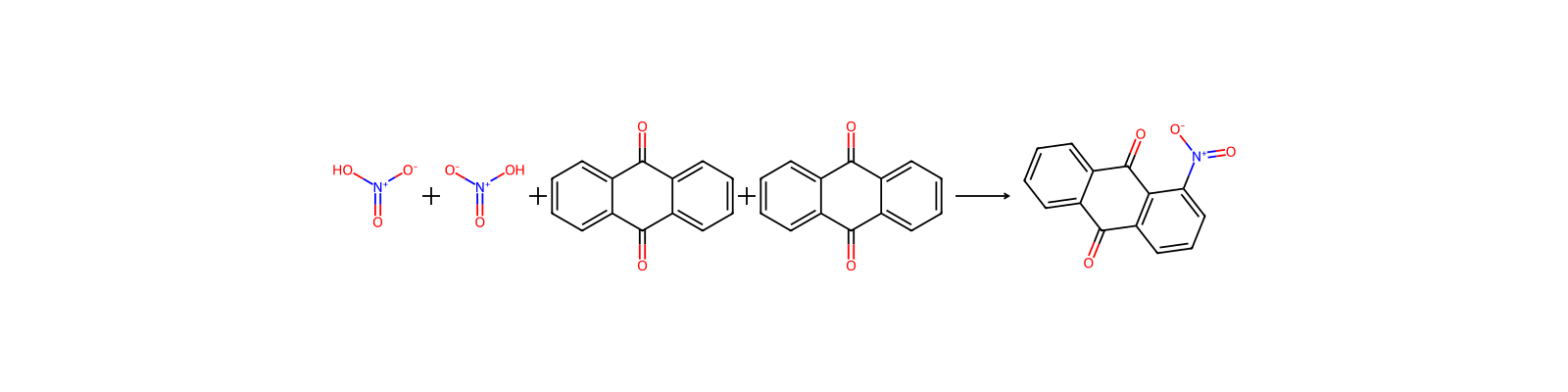
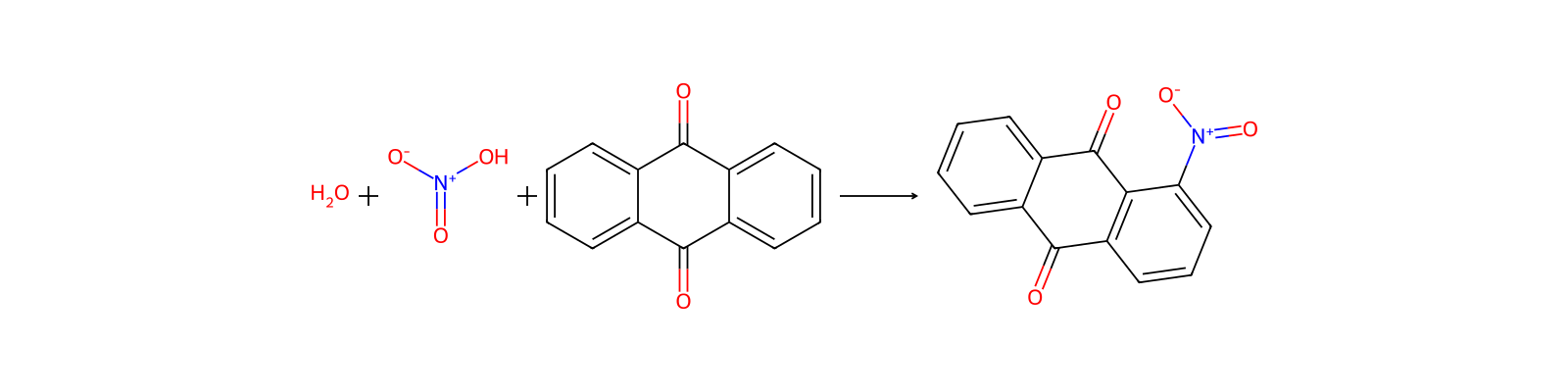
Compound notes
Loading…