Physical DescriptionSolid; [Merck Index] White crystalline powder; [Alfa Aesar MSDS]
Physicochemical properties
Melting point
117 · 117-122 °C(lit.)
Boiling point
288.83 °C · 288.83°C (rough estimate)
Density
1.303 g/mL · 1.303 g/mL at 25 °C
vapor pressure
0.006 · 0.006-0.012Pa at 20-25℃
refractive index
20 · n20/D1.434
storage temp.
2 · 2-8°C
solubility
Soluble in dimethylformamide.
pka
2.9 · 2.90±0.10(Predicted)
form
Crystalline Powder
color
White to light cream
PH Range
7.7 at · 7.7 at 50 g/l
Safety & regulation
Safety information is for reference only and does not replace the supplier’s Safety Data Sheet (SDS), applicable regulations, or professional assessment.
GHS classification
GHS Classification · 5 items
This chemical does not meet GHS hazard criteria for 0.4% (1 of 233) of reports.
Danger
H302 (84.1%): Harmful if swallowed [Warning Acute toxicity, oral]
P203, P260, P264, P264+P265, P270, P280, P301+P317, P301+P330+P331, P302+P352, P302+P361+P354, P304+P340, P305+P351+P338, P305+P354+P338, P316, P317, P318, P321, P330, P332+P317, P337+P317, P362+P364, P363, P405, and P501 (click each P-code to see the statement)
Aggregated GHS information provided per 233 reports by companies from 28 notifications to the ECHA C&L Inventory. Each notification may be associated with multiple companies.
1,1'-Carbonyldiimidazole: Does not have an individual approval but may be used under an appropriate group standard
Hazards SummaryHydrolyzed by water evolving carbon dioxide; [Merck Index] Causes burns; Inhalation may cause corrosive injuries to upper respiratory tract and lungs; Harmful by ingestion; [Alfa Aesar MSDS]
Hazard Classes and CategoriesAcute Tox. 4 (84.1%)
Toxicology
Adverse EffectsDermatotoxin - Skin burns.
Safety data
F
10-21
wgk
Chemistry & industry
Uses & manufacturing
UsesUsed to make peptides; [Merck Index]
General Manufacturing InformationMethanone, di-1H-imidazol-1-yl-: ACTIVE
Applications · 2 items
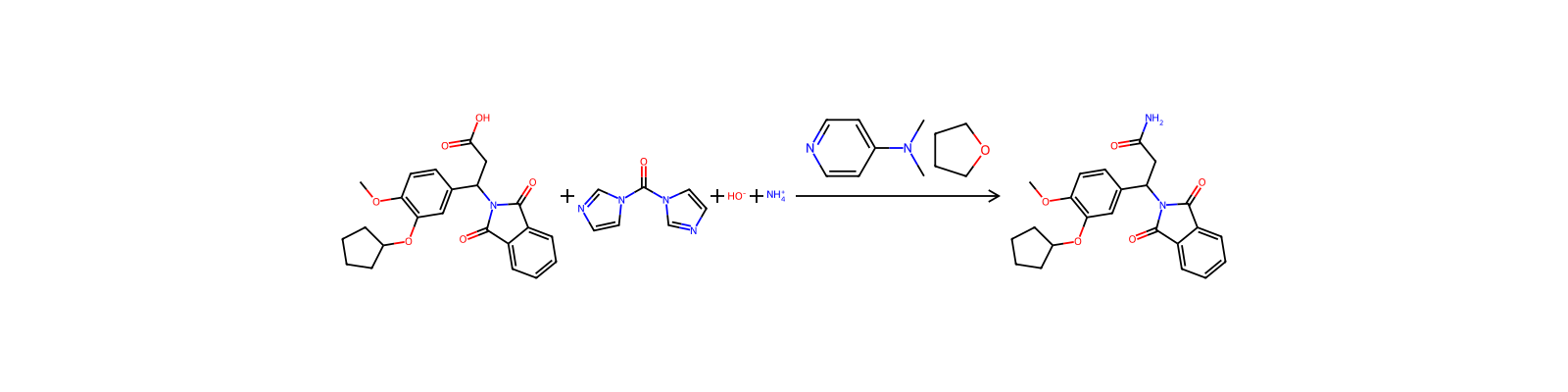
UsesCDI, also known as 1,1'-carbonyldiimidazole, is a commonly used peptide coupling reagent in the synthesis of peptides and nucleoside triphosphates. It usually contains approximately 10% imidazole and reacts rapidly with carboxylic acids to produce acyl imidazoles. Later, it readily reacts with amines to create amides. In addition, CDI is useful in converting alcohols and amines into a range of chemical compounds, including carbamates, esters, and ureas.
General Description1,1′-Carbonyldiimidazole (N,N′-carbonyldiimidazole) is a versatile peptide-forming reagent.
Preparation methods · 1 item
Preparation1,1'-Carbonyldiimidazole has been prepared by the reaction of imidazole and phosgene in anhydrous benzene and anhydrous tetrahydrofuran. It has also been obtained by the reaction of 1-(trimethylsilyl)imidazole and phosgene in anhydrous benzene, but that method offers no advantages that justify the more extensive preparative effort required.DOI: 10.15227/orgsyn.048.0044