

Basic information
- CAS
598-54-9- Standard SMILES
CC(=O)[O-].[Cu+]- InChIKey
RFKZUAOAYVHBOY-UHFFFAOYSA-M- Molecular formula
- C2H3CuO2
- Average molar mass
- 122.59 g/mol
- Monoisotopic mass
- 121.94290184
Names & identifiers
- Preferred name
- Cuprous acetate
- IUPAC
- copper(1+) acetate
- English name
- COPPER(I) ACETATE
- Molecular formula
- C2H4CuO2
- Molecular weight
- 123.6
Names & synonyms
Copper(I) acetateCuprous acetateCopper(1+) acetatecopper monoacetateAcetic acid, copper(1+) salt9U3N93LMZBDTXSID0060511EINECS 209-938-7Acetic acid copper(1+) salt (1:1)Acetic acid, copper(1+) salt (1:1)CUPROUS ACETATE [MI]COPPER ACETATE (CUOAC)
Show more names
CuOAc224-051-5aceticacid,copperCopper(I)Acetate>Copper(I)acetate,99%Copper(I)acetate 99%Copper(I) acetate,90%
RefChem:580050DTXCID9042704598-54-9copper(1+);acetatecopper (I) acetatecopper (1) acetateC2H3CuO2UNII-9U3N93LMZB
Database identifiers
- CAS
598-54-9- PubChem CID
- 69023
- DTXSID
DTXSID0060511- UNII
- 9U3N93LMZB
- EC Number
- 209-938-7
- Nikkaji
- J6.792J
Properties
Computed structural properties
- Topological polar surface area
- 40.1 Ų
- Hydrogen bond donors
- 0
- Hydrogen bond acceptors
- 2
- Rotatable bonds
- 0
- Heavy atoms
- 5
- Formal charge
- 0
- Complexity
- 25.5
Physicochemical properties
- Melting point
- 250 °C · 250 °C (dec.)(lit.)
- Boiling point
- 6 · decomposes if strongly heated [MER06]
- storage temp.
- Keep in dark place,Inert atmosphere,Room temperature
- solubility
- 2 O · reacts with H2O
- form
- Powder
- color
- White to slightly yellow
- Water Solubility
- 2 O · rapidly hydrolyzed by H2O to form yellow Cu2O [MER06]
- Sensitive
- moisture sensitive
- Merck
- 14 · 14,2658
- InChI
- InChI=1S/C2H4O2.Cu/c1-2(3)4;/h1H3,(H,3,4);
- InChIKey
- RFKZUAOAYVHBOY-UHFFFAOYSA-M
- SMILES
- C(=O)(O)C.[Cu]
- CAS DataBase Reference
- 598 · 598-54-9(CAS DataBase Reference)
- FDA UNII
- 9 U3N93LMZB · 9U3N93LMZB
- EPA Substance Registry System
- Acetic acid, copper(1+) salt (598-54-9)
- UNSPSC Code
- 12352103 · 12352103
- NACRES
- 23 · NA.23
- Symbol(GHS)
- 7 · GHS07
- Signal word
- Warning
- Hazard statements
- 315 · H315-H319-H335
- Precautionary statements
- 264 · P264-P280-P302+P352+P332+P313+P362+P364-P305+P351+P338+P337+P313-P261-P305+P351+P338
- PPE
- 95 · dust mask type N95 (US), Eyeshields, Gloves
- Hazard Codes
- Xi
- Risk Statements
- 36 · 36/37/38
- Safety Statements
- 26 · 26-37/39
- WGK Germany
- 3 · 3
- TSCA
- TSCA listed
- HS Code
- 29152900 · 29152900
- Storage Class
- 11 · 11 - Combustible Solids
Safety & regulation
GHS classification
GHS Classification
Warning
H315 (100%): Causes skin irritation [Warning Skin corrosion/irritation]
P261, P264, P264+P265, P271, P280, P302+P352, P304+P340, P305+P351+P338, P319, P321, P332+P317, P337+P317, P362+P364, P403+P233, P405, and P501 (click each P-code to see the statement)
Aggregated GHS information provided per 42 reports by companies from 4 notifications to the ECHA C&L Inventory. Each notification may be associated with multiple companies.
Hazard information
Regulatory InformationChemical: Acetic acid, copper(1+) salt
Other Safety InformationIMAP assessments - Acetic acid, copper(1+) salt: Human health tier I assessment
Hazard Classes and CategoriesSkin Irrit. 2 (100%)
Safety data
- PPE
- dust mask type N95 (US), Eyeshields, Gloves
- wgk
- 3
- tsca
- TSCA listed
- hs_code
- 29152900
- risk_code
- 36/37/38
- Signal word
- Warning
- Symbol(GHS)
- GHS07
- hazard_code
- Xi
- safety_code
- 26-37/39
- Storage Class
- 11 - Combustible Solids
- Hazard statements
- H315-H319-H335
- Precautionary statements
- P264-P280-P302+P352+P332+P313+P362+P364-P305+P351+P338+P337+P313-P261-P305+P351+P338
Chemistry & industry
Uses & manufacturing
General Manufacturing InformationAcetic acid, copper(1+) salt (1:1): ACTIVE
Applications
UsesCopper acetate(CuOAc) was used as a starting material for the preparation of copper nanoparticles and CuAlO2 p-type nanostructured semiconductors.
Preparation methods
PreparationCopper(I) acetate, CuC2H3O2, [598-54-9], MW 122.6, is produced by reducing an ammonia solution of copper(II) acetate. On acidification, white crystals of copper(I) acetate precipitate. The crystalline material is stable when exposed to dry air but decomposes on exposure to moisture in air. Ammonia solutions of copper(I) acetate are used to absorb olefins.
Suppliers98 total
梯希爱(上海)化成工业发展有限公司021-67121386 · [email protected]
阿诺西(上海)生物技术有限公司400-1107768 15058188853 · [email protected]
湖北永阔科技有限公司027-59223108 15972152991 · [email protected]
上海阿拉丁生化科技股份有限公司400-6206333 13167063860 · [email protected]
湖南韵邦生物科技股份有限公司85561037 15386497078 · [email protected]
湖北万得化工有限公司15377098680 15377098680 · [email protected]
毕佳索(上海毕得医药科技股份有限公司)400-6005915 · [email protected]
天津瑞德法莫科技有限公司13821803402 · [email protected]
杭州品高化工有限公司0571-87658025 · [email protected]
INTATRADE GmbH+49 3493/605464 · [email protected]
江苏星科元信息科技有限公司400-605-7200 15335295587
爱斯特(成都)生物制药股份有限公司+86-28-85122536 85324413 · [email protected]
Dayang Chem (Hangzhou) Co.,Ltd.+86-0571-88938639 17705817739 · [email protected]
Aladdin Scientific[email protected]
上海迈瑞尔生化科技有限公司4006356688 18621169109 · [email protected]
上海颖心实验室设备有限公司021-59178156 17002132182 · [email protected]
安耐吉化学&3A(安徽泽升科技股份有限公司)400-0056266 · [email protected]
上海瀚鸿科技股份有限公司021-54306202 13764082696 · [email protected]
湖北广奥生物科技有限公司027-02702759223056 18162699093 · [email protected]
上海平创化工科技有限公司15001988657 15802146997
武汉丰泰威远科技有限公司+86-27-8746-5837 +86-18627785180 · [email protected]
武汉丰泰威远科技有限公司027-87465837 19945049750 · [email protected]
湖北成海化工有限公司027-59220433 18327245847 · [email protected]
山东西亚化学有限公司13355009207 13355009207 · [email protected]
Hunan russell chemicals technology co ltd731-88557738 13739093081 · [email protected]
天津希恩思生化科技有限公司400 638 7771 · [email protected]
ZHEJIANG JIUZHOU CHEM CO., LTD+86-0576225566889 +86-13454675544 · [email protected];[email protected];[email protected]
康姆芘法思(上海)生物科技有限公司021-65232103 17602124823 · [email protected]
赛默飞世尔科技(中国)有限公司800-810-5118 · [email protected]
江苏艾康生物医药研发有限公司025-66113011 13913916777 · [email protected]
上海健超生物科技有限公司150-2103-5486 18017383231 · [email protected]
TCI AMERICA800-4238616 · [email protected]
TOKYO CHEMICAL INDUSTRY CO., LTD.03-36680489 · [email protected]
TCI Europe320-37350700 · [email protected]
成都零六生物科技有限公司400-1166-196 13458535857 · [email protected]
上海鑫圭生物科技有限公司15121041756 · [email protected]
上海麦克林生化科技股份有限公司15221275939 15221275939 · [email protected]
Sigma-Aldrich西格玛奥德里奇(上海)贸易有限公司021-61415566 800-8193336 · [email protected]
盘锦研峰科技有限公司400-106-2016 17800804092 · [email protected]
盘锦研峰科技有限公司400-1062016 18612996721 · [email protected]
九鼎化学(上海)科技有限公司4009209199 · [email protected]
Henan Alfa Chemical Co., Ltd+8618339805032 · [email protected]
广东翁江化学试剂有限公司0751-2815987 13927875076 · [email protected]
西安美川生物科技有限公司029-89275612 +8618991951683 · [email protected]
武汉欣扬瑞和化学科技有限公司13720181483 13720181483 · [email protected]
R&D Scientific Inc.+1-2266000236 · [email protected]
韶关新润合生物科技有限公司19022763608 19022763608 · [email protected]
南京艾比克斯生化科技有限公司025-87193546 18652950785 · [email protected]
北京华威锐科化工科技有限公司89508211 18501085097 · [email protected]
上海源叶生物科技有限公司13636370518 · [email protected]
Related reactions
35 records


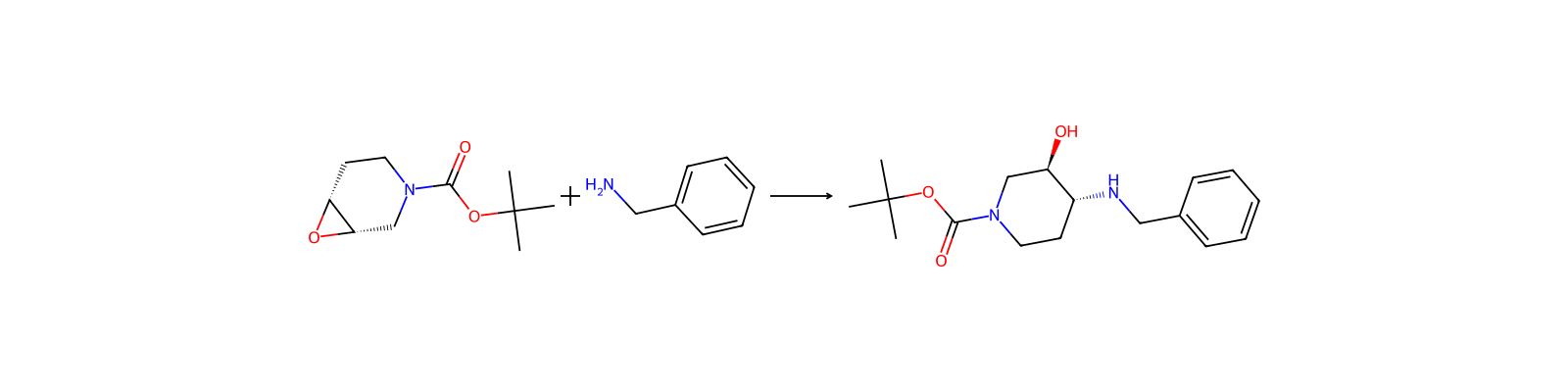
Compound notes
Loading…