
Isobutyrophenone
Completing data — refresh the page later to see the latest
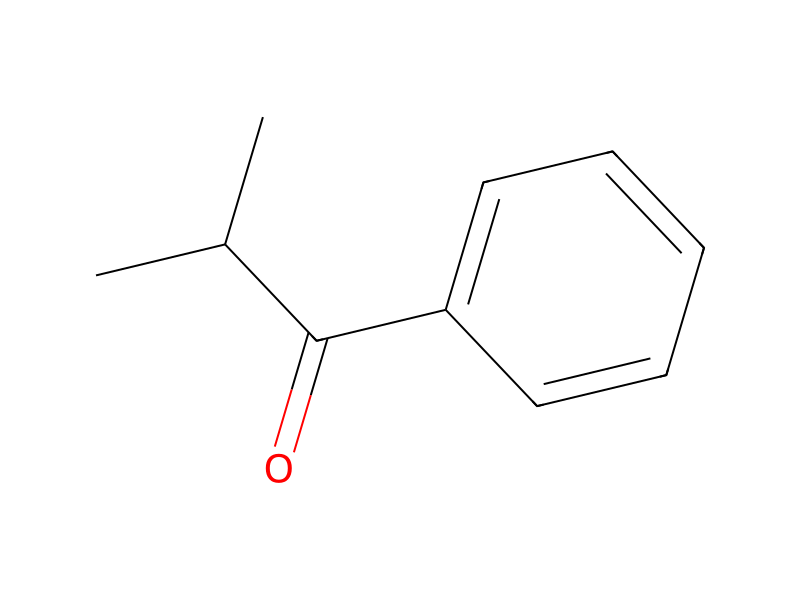
Basic information
- CAS
611-70-1- Standard SMILES
CC(C)C(=O)c1ccccc1- InChIKey
BSMGLVDZZMBWQB-UHFFFAOYSA-N- Molecular formula
- C10H12O
- Average molar mass
- 148.2 g/mol
- Monoisotopic mass
- 148.088815
Names & identifiers
- Preferred name
- Isobutyrophenone
- IUPAC
- 2-methyl-1-phenylpropan-1-one
- English name
- Isobutyrophenone
- Molecular formula
- C10H12O
- Molecular weight
- 148.2
Names & synonyms
Isobutyrophenone611-70-12-methyl-1-phenylpropan-1-oneIsopropyl phenyl ketone1-Propanone, 2-methyl-1-phenyl-Isopropyl phenyl ketonUNII-8L53972NTZDTXSID6048202iso-ButyrophenoneEINECS 210-275-01-PHENYL-2-METHYL-1-PROPANONEAI3-11204
Show more names
2-MethylpropiophenoneisobutyrophenonPHENYL ISOPROPYL KETONEISOBUTROPHENONEsobutyrophenonelsobutyrophenoneISOBUTYRYLBENZENE
8L53972NTZNSC 6552NSC-6552DTXCID4028177EC 210-275-02-METHYL-1-PHENYLPROPANONERefChem:1491242040-14-4
Database identifiers
- CAS
611-70-1- PubChem CID
- 69144
- DTXSID
DTXSID6048202- ChEMBL
CHEMBL3187314- UNII
- 8L53972NTZ
- EC Number
- 210-275-0
- Nikkaji
- J47.812A
Properties
Computed structural propertiesFilling in
- XLogP
- 2.7
- Topological polar surface area
- 17.1 Ų
- Hydrogen bond donors
- 0
- Hydrogen bond acceptors
- 1
- Rotatable bonds
- 2
- Heavy atoms
- 11
- Formal charge
- 0
- Complexity
- 132
Experimental & physicochemical properties
SpringerMaterials Properties13C nuclear magnetic resonance spectrum
LogP2.59
Physicochemical properties
- Melting point
- 1 °C · 1 °C
- Boiling point
- 215 °C · 215 °C
- Density
- 0.98 · 0.98
- vapor pressure
- 1 mm · 1 mm Hg ( 50 °C)
- refractive index
- 1.52 · 1.52
- Flash point
- 84 °C · 84 °C
- storage temp.
- Sealed in dry,Room Temperature
- solubility
- Chloroform (Sparingly), Methanol (Slightly)
- form
- clear liquid
- color
- Colorless to Light yellow
- Water Solubility
- immiscible
- BRN
- 774499 · 774499
Safety & regulation
Safety information is for reference only and does not replace the supplier’s Safety Data Sheet (SDS), applicable regulations, or professional assessment.
GHS classification
GHS Classification
This chemical does not meet GHS hazard criteria for 70.4% (107 of 152) of all reports.
Warning
H315 (28.9%): Causes skin irritation [Warning Skin corrosion/irritation]
P261, P264, P264+P265, P271, P280, P302+P352, P304+P340, P305+P351+P338, P319, P321, P332+P317, P337+P317, P362+P364, P403+P233, P405, and P501 (click each P-code to see the statement)
Aggregated GHS information provided per 152 reports by companies from 6 notifications to the ECHA C&L Inventory. Each notification may be associated with multiple companies.
Hazard information
Regulatory Information
Status: Active Update: 18-11-2019 https://echa.europa.eu/registration-dossier/-/registered-dossier/1890
1-Propanone, 2-methyl-1-phenyl-: Does not have an individual approval but may be used under an appropriate group standard
Hazard Classes and CategoriesSkin Irrit. 2 (28.9%)
Safety data
- PPE
- Eyeshields, Gloves, type ABEK (EN14387) respirator filter
- wgk
- 3
- tsca
- TSCA listed
- hs_code
- 2914399090
- risk_code
- 36/37/38
- Signal word
- Warning
- Symbol(GHS)
- GHS07
- hazard_code
- Xi
- safety_code
- 26-36
- Storage Class
- 10 - Combustible liquids
Chemistry & industry
Uses & manufacturing
General Manufacturing Information1-Propanone, 2-methyl-1-phenyl-: ACTIVE
Applications
UsesIsobutyrophenone is used as an internal standard in the determination of hydroxyzine hydrochloride and benzyl alcohol in injection solutions. It is also used in the preparation of alpha-hydroxyisobutyrophenone. Isobutyrophenone is employed as photosensitizer intermediate. It can react with bromoacetic acid ethyl ester to get 3-hydroxy-4-methyl-3-phenyl-valeric acid ethyl ester.
Preparation methods
PreparationIsobutyrophenone synthesis: Benzene underwent a Friedel–Crafts acylation with isobutyryl chloride to synthesize isobutyrophenone. The reaction was performed using excess benzene as a replacement for a typical solvent and heat to reflux (88 °C) for a period of 3 hours. Any unreacted benzene was recovered after the reaction during the distillation process. A 66 % yield of isobutyrophenone was obtained from the solar synthesis, compared to a 44 % yield from an in-lab, electrical heating analysis.
Upstream & downstream products
Upstream raw materials
Downstream products
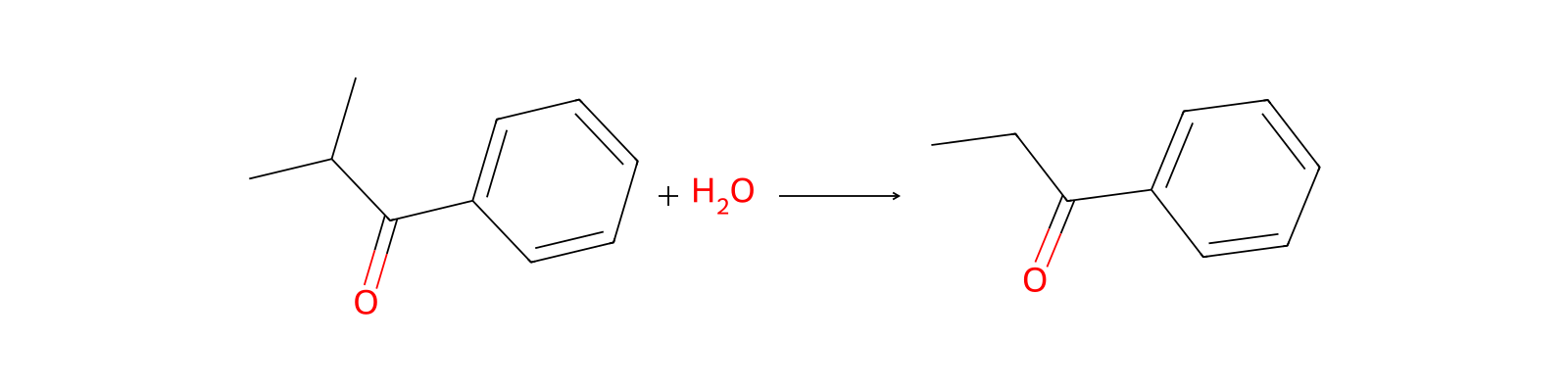
Related reactions
41 records



Compound notes
Loading…