
Basic information
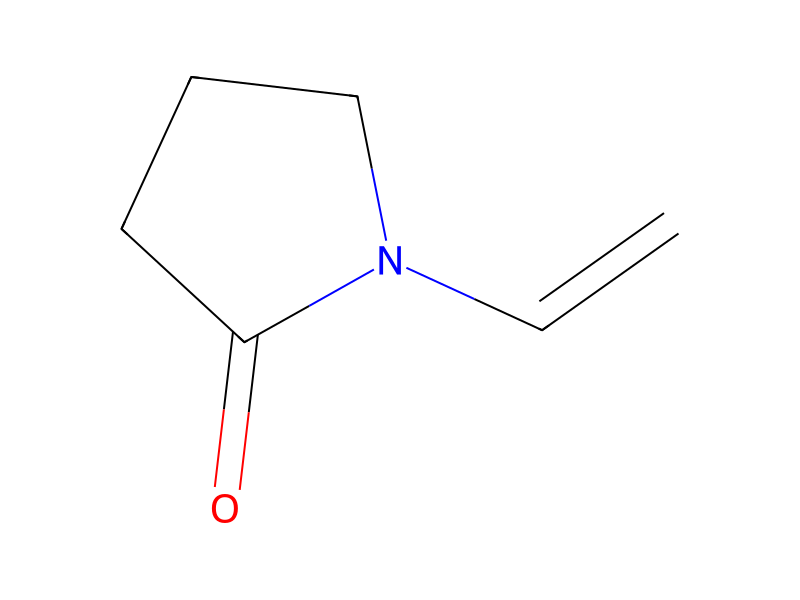
- Standard SMILES
C=CN1CCCC1=O- InChIKey
WHNWPMSKXPGLAX-UHFFFAOYSA-N- Molecular formula
- C6H9NO
- Average molar mass
- 111.14 g/mol
- Monoisotopic mass
- 111.06841391
Overview
N-Vinyl-2-pyrrolidone is a member of pyrrolidin-2-ones.
Names & identifiers
- Preferred name
- N-vinyl-2-pyrrolidone
- IUPAC
- 1-ethenylpyrrolidin-2-one
- English name
- Crospovidone
- Molecular formula
- C6H9NO
- Molecular weight
- 111.14176
Names & synonyms
88-12-0N-VINYL-2-PYRROLIDONE1-Vinyl-2-pyrrolidone1-Vinyl-2-pyrrolidinoneVinylpyrrolidone1-ethenylpyrrolidin-2-one2-Pyrrolidinone, 1-ethenyl-VinylbutyrolactamVinylpyrrolidinone1-Vinylpyrrolidinone1-Ethenyl-2-pyrrolidinoneDTXSID2021440
Show more names
PVPPPOLYVINYLPOLYPYRROLIDONEPLASDONEPolyplasdonePOLYVINYLPYRROLIDONE K 90K-30POLYVIDONEPOLYVIDONUMInsoluble PVPCROSPOVIDONE Type A
DTXCID101440RefChem:1092137201-800-41-vinylpyrrolidin-2-oneN-VinylpyrrolidoneN-Vinyl-2-pyrrolidinoneN-Vinylpyrrolidinone25249-54-1
Database identifiers
- CAS
25249-54-1、88-12-0、9003-39-8、88-12-0; 9003-39-8 (homopolymer)- PubChem CID
- 6917
- DTXSID
DTXSID2021440- ChEMBL
CHEMBL1878943- ChEBI
CHEBI:82551- UNII
- 76H9G81541
- EC Number
- 201-800-4
- Nikkaji
- J36.503C
Properties
Computed structural properties
- XLogP
- 0.4
- Topological polar surface area
- 20.3 Ų
- Hydrogen bond donors
- 0
- Hydrogen bond acceptors
- 1
- Rotatable bonds
- 1
- Heavy atoms
- 8
- Formal charge
- 0
- Complexity
- 120
Experimental & physicochemical properties
DrugsPharmaceuticals
PolymersPlastics & Rubber -> Other Monomers
CosmeticsEmulsion stabilizing; Antistatic; Binding; Film forming; Hair fixing
SpringerMaterials PropertiesChemical shift
LogP
log Kow = 0.37
0.4
Food AdditivesPROCESSING AID, SURFACE-FINISHING AGENT -> FDA Substance added to food
Density
1.04 @ 24 °C/4 °C
Relative density (water = 1): 1.04
1..04
1.04 @25 °C
Viscosity
2.07 cps @ 25 °C
2.07 cP at 25 °C
Color/FormClear to light straw colored liquid
Solubility
Soluble in water and many organic solvents
In water, 5.2X10+4 mg/L @ 25 °C /Estimated/
Solubility in water: very good
Flash Point
95 °C
100.5 °C (213 °F) open cup
95 °C closed cup
93 °C
199.4 °F
Boiling Point
96 °C @ 14 mm Hg; 193 °C @ 400 mm Hg
at 1.3kPa: 90-93 °C
194 °F
Physicochemical properties
- Melting point
- 165 °C · ~165 °C (dec.)(lit.)
- form
- powder
- color
- White to off-white
- Water Solubility
- Insoluble in water, acid and alkaline.
- InChI
- InChI=1S/C6H9NO/c1-2-7-5-3-4-6(7)8/h2H,1,3-5H2
- InChIKey
- WHNWPMSKXPGLAX-UHFFFAOYSA-N
- SMILES
- N1(C=C)CCCC1=O
- FDA 21 CFR
- 173.5 · 173.50
- CAS DataBase Reference
- 25249 · 25249-54-1
- EWG's Food Scores
- 1 · 1
- Cosmetics Info
- PVP
- UNSPSC Code
- 12352100 · 12352100
- NACRES
- 23 · NA.23
- Safety Statements
- 22 · 22-24/25
- WGK Germany
- 1 · 1
- RTECS
- 8370000 · TR8370000
- HS Code
- 39059900 · 39059900
- Storage Class
- 11 · 11 - Combustible Solids
Safety & regulation
GHS classification
GHS Classification
Danger
H302: Harmful if swallowed [Warning Acute toxicity, oral]
P203, P260, P261, P264, P264+P265, P270, P271, P280, P301+P317, P302+P352, P304+P340, P305+P354+P338, P317, P318, P319, P321, P330, P362+P364, P403+P233, P405, and P501 (click each P-code to see the statement)
This chemical does not meet GHS hazard criteria for 0.1% (1 of 963) of reports.
Danger
H302 (97.2%): Harmful if swallowed [Warning Acute toxicity, oral]
Hazard information
Regulatory Information
Chemical: Poly[1-(2-oxo-1-pyrrolidinyl)-1,2-ethanediyl]
Chemical: 2-Pyrrolidinone, 1-ethenyl-
2-Pyrrolidinone, 1-ethenyl- is listed on the EPA's Chemical Data Reporting (CDR) system. Manufacturers and importers of 2-Pyrrolidinone, 1-ethenyl- are required to report information about their production and use of this chemical to the EPA under the Toxic Substances Control Act (TSCA). (40 eCFR Part 711)
Status: Active Update: 26-04-2023 https://echa.europa.eu/registration-dossier/-/registered-dossier/15035
Polyvinylpyrrolidone: Does not have an individual approval but may be used under an appropriate group standard
Vinylpyrrolidone: Does not have an individual approval but may be used under an appropriate group standard
Other Safety Information
PEC / SN / Other assessments - N-vinyl-2-pyrrolidone (NVP): Health and Environment
IMAP assessments - Poly[1-(2-oxo-1-pyrrolidinyl)-1,2-ethanediyl]: Human health tier I assessment
Fire HazardsCombustible.
Hazards Summary
No health effects found in a study of 94 production workers; Animal studies show evidence of liver damage in acute and chronic studies; [ACGIH] An eye and respiratory tract irritant; May cause liver injury; [ICSC] See N-Methyl-2-pyrrolidone.
EC ClassificationSymbol: Xn; R: 20/21/22-37-40-41-48/20; S: 26-36/37/39; Note: D
Special Reports
European Union/European Chemicals Bureau; Risk Assessment Report: 1-Vinyl-2-pyrrolidone (88-12-0) V39 (2003).
NICNAS; Priority existing chemical assessment report on N-vinyl-2-pyrrolidone (NVP) 11: 134 (2000)
Chemical DangersThe substance may polymerize in the presence of air due to warming, under the influence of light and acids. Decomposes on burning. This produces toxic and corrosive gases of nitrogen oxides.
Hazard Classes and Categories
Acute Tox. 4 (97.2%)
Carcinogenicity - category 2
Acute toxicity (Oral) - Category 4
Acute toxicity (Oral) - Category 4
Acute toxicity (Oral) - Category 4
Carc. 2
Explosive Limits and Potential
Explosion limits in air: 1.4-10.0 Vol. %
Explosive limits , vol% in air: 1.4-10
Hazardous Reactivities and Incompatibilities
Heat develops during polymerization when mixed with acids.
Can react vigorously with oxidizing materials...
Safety & protection
Fire FightingUse water spray, powder, foam, carbon dioxide.
First Aid Measures
Fresh air, rest. Refer for medical attention.
Remove contaminated clothes. Rinse and then wash skin with water and soap.
First rinse with plenty of water for several minutes (remove contact lenses if easily possible), then refer for medical attention.
Rinse mouth. Give one or two glasses of water to drink. Refer for medical attention .
Safe StorageSeparated from strong acids. Keep in the dark. Cool. Store only if stabilized.
Exposure Control and Personal Protection0.01 [ppm]
Fire Fighting ProceduresTo fight fire use alcohol foam, carbon dioxide or dry chemical.
Disposal Methods
SRP: The most favorable course of action is to use an alternative chemical product with less inherent propensity for occupational exposure or environmental contamination. Recycle any unused portion of the material for its approved use or return it to the manufacturer or supplier. Ultimate disposal of the chemical must consider: the material's impact on air quality; potential migration in soil or water; effects on animal, aquatic, and plant life; and conformance with environmental and public health regulations.
Spillage Disposal
Personal protection: filter respirator for organic gases and vapours adapted to the airborne concentration of the substance. Ventilation. Collect leaking and spilled liquid in sealable containers as far as possible. Absorb remaining liquid in sand or inert absorbent. Then store and dispose of according to local regulations.
Eye PreventionWear safety goggles or eye protection in combination with breathing protection.
Fire PreventionNO open flames.
Inhalation RiskA harmful contamination of the air will be reached quickly on evaporation of this substance at 20 °C.
Skin PreventionProtective gloves.
Exposure PreventionSTRICT HYGIENE!
Toxicology
Ecotoxicity Values
LC50 Salmo gairdneri/ renamed Oncorhyncus mykiss (Rainbow trout) 913 mg/L/96 hr; static
LC50 Salmo gairdneri/ renamed Oncorhyncus mykiss (Rainbow trout) 976 mg/L/72 hr; static
EC50 Daphnia magna (immobilization) 130 mg/L/24 hr; 45 mg/L/48 hr /Conditions of bioassay not specified in source examined/
EC50 Scenedesmus subscpicatus (Algae; biomass) 780 mg/L/72 hr /Conditions of bioassay not specified in source examined/
EC50 Scenedesmus subscpicatus (Algae; growth rate) >1000 mg/L/72 hr /Conditions of bioassay not specified in source examined/
Adverse EffectsOccupational hepatotoxin - Secondary hepatotoxins: the potential for toxic effect in the occupational setting is based on cases of poisoning by human ingestion or animal experimentation.
Exposure RoutesThe substance can be absorbed into the body by inhalation, through the skin and by ingestion.
Ecotoxicity Excerpts
/AQUATIC SPECIES/ Four groups of five animals /(Daphnia magna)/ were used at each dose level of 0.7, 1.6, 3.8, 8.0, 17.9, 40.0, 89.4, 200.0, 447.0 and 1,000 mg/L. Only one control group was used. An EC50 of 45.04 mg/L and a NOEC of 3.6 mg/L after 48 hours were derived from the results. An EC100 of 447 mg/L after 48 hours was also reported.
Signs and Symptoms
Cough. Sore throat.
Redness. Pain. Severe deep burns.
Abdominal pain. Diarrhoea. Nausea. Vomiting.
Human Toxicity Excerpts
/HUMAN EXPOSURE STUDIES/ Only one study has been conducted to examine the health of N-VP production workers, a cross-sectional morbidity study. The study included comprehensive medical examinations of the majority of the workforce and no signs of ill health related to N-VP exposure were identified. However, the actual levels of N-VP to which the workforce was exposed are unclear.
/OTHER TOXICITY INFORMATION/ In liver biopsies from people who had received polyvinyl pyrrolidone iv, basophilic globular deposits were observed in Kupffer cells, occasionally accompanied by mild inflammation. Thesaurismosis (a foam-cell storage phenomenon characterized by swollen cells with reticulated nuclei loaded with vacuoles or deposits of polyvinyl pyrrolidone) has been observed after inhalation of hair sprays containing polyvinyl pyrrolidone and may be accompanied by pulmonary fibrosis and pneumonia. /Polyvinyl pyrrolidone/
Carcinogen Classification
N-Vinyl-2-pyrrolidone
Group 3: Not classifiable as to its carcinogenicity to humans
Volume 19: (1979) Some Monomers, Plastics and Synthetic Elastomers, and Acrolein
1999
1998
Non-Human Toxicity Excerpts
/LABORATORY ANIMALS: Acute Exposure/ A 4-hr LC50 value of 3,070 mg/cu m (3.07 mg/L) has been obtained from a study in which groups of 10 male and 10 female Sprague-Dawley rats were exposed head only to aerosols of around 800, 2,000, 2,800, 5,200 or 5,600 mg/cu m N-VP (purity >99%, stabilized with 10 ppm Kerobit, particle size not stated). Following exposure, rats were observed for 14 days and underwent gross necropsy at the end of the study. Deaths occurred in all but the lowest dose group within 2-4 days of exposure, and clinical signs of toxicity including increased respiration rates, ataxia, /CNS depression/, bloodshot eyes and nasal secretions were observed in all dose groups. Necropsy revealed changes in decedents only. In the lungs, isolated areas of edema were recorded; in the heart, acute hyperemic obstruction and acute dilation of the fore chambers occurred; the liver had a sandy grey appearance; multiple bloody ulcerations were apparent in the stomach and blood was apparent in intestinal contents suggesting irritation of the gastrointestinal tract. There was also some discoloration of the kidneys. No details on the severity of these changes were provided. No deaths occurred in earlier studies in which cats, rabbits, guinea pigs, rats and mice or rats alone were exposed for 6 or 8 hr to air saturated with N-VP vapor. Signs of toxicity during exposure were limited to salivation and nasal secretion, and at necropsy, slight irritation of the mucous membranes was occasionally observed. Based on the reported vapor pressure of 0.12 hPa, the saturated vapor concentration would be 0.6 mg/L (600 mg/cu m).
/LABORATORY ANIMALS: Acute Exposure/ A dermal LD50 value of 560 mg/kg has been estimated from a study in which groups of 5 rabbits were given 200, 375, 800, 1,000 or 2,000 mg/kg on intact skin. The conditions of exposure were not stated. Deaths occurred in all but the lowest dose group within 5 days of dosing and all animals in the top two groups died. No information on local skin effects or systemic toxicity was provided.
/LABORATORY ANIMALS: Acute Exposure/ Results from a study in the rat indicated that the dermal LD50 value for this species lay between 1,043 and 4,127 mg/kg. Groups of 2 male and 2 female CFY rats were given 0, 668, 1,043, 4,127 or 10,430 mg/kg N-VP over an area approximately 10% of body surface under an occlusive dressing for 24 hr. There was no evidence of irritation at the site of application. Deaths occurred in all but the low dose group within three days of dosing and non-specific signs of toxicity were seen in all rats given 1,043 mg/kg or more. Signs of toxicity in the lowest dose group were limited to slight diarrhea in the two males. Autopsy of decedents revealed congestion of the lungs, pallor of the liver, kidneys and spleen and injection of the blood vessels into the subcutaneous tissue at the site of application. Body weight gains of treated rats were reduced during the first week of observation but were normal during the second week. No abnormalities were seen in survivors at necropsy.
/LABORATORY ANIMALS: Acute Exposure/ The effects of single oral gavage doses of N-VP ... in aqueous solution have also been studied in guinea pigs, cats and rabbits. One out of a group of 4 guinea pigs given 520 mg/kg, died. All animals showed a lack of appetite, apathy, slight atony and one developed enteritis after 3 days. Groups of 3 rabbits received 417 or 1,043 mg/kg. No deaths occurred. At both dose levels, slight weight loss and lack of appetite were recorded. Groups of two cats received 100, 210 or 520 mg/kg N-VP. One top dose cat died 3 days after dosing. Salivation and emesis were apparent at all dose levels, accompanied by a lack of appetite, slight weight loss and loss of balance at the top dose level, which persisted until the surviving cat was sacrificed 28 days post exposure.
For more Non-Human Toxicity Excerpts (Complete) data for 2-PYRROLIDINONE,1-ETHENYL- (38 total), please visit the HSDB record page.
Evidence for Carcinogenicity
Evaluation: No epidemiological data relevant to the carcinogenicity of N-vinyl-2-pyrrolidone ... were available. There is limited evidence for the carcinogenicity of N-vinyl-2-pyrrolidone in experimental animals. Overall evaluation N-Vinyl-2-pyrrolidone is not classifiable as to its carcinogenicity to humans (Group 3).
A3; Confirmed animal carcinogen with unknown relevance to humans.
Toxicity DataLC50 (rat) = 3,200 mg/m3/4h
Non-Human Toxicity Values
LD50 Rat oral 1470 mg/kg
LD50 Rabbit dermal 560 mg/kg
LD50 Mouse oral about 940 mg/kg bw
LC50 Rat inhalation 3.07 mg/L/4 hr
For more Non-Human Toxicity Values (Complete) data for 2-PYRROLIDINONE,1-ETHENYL- (9 total), please visit the HSDB record page.
Safety data
- wgk
- 1
- rtecs
- TR8370000
- hs_code
- 39059900
- safety_code
- 22-24/25
- Storage Class
- 11 - Combustible Solids
Chemistry & industry
Pharmacology
Biological Half-Life
The disposition of N-[14C]-vinyl-2-pyrrolidone has been studied in male Sprague-Dawley rats following a single iv injection. The plasma half-life was 1.9 hr.
...The hydrolysis of /N-vinylpyrrolidone/ (N-VP) at 37 °C and pHs ranging from 1.2-7.2 /was studied/. ...The rate of hydrolysis was inversely related to pH such that at a pH of 1.2 the half-life of N-VP in aqueous solution was only around 1.5 min; at pHs ranging from 2.2-2.5, half-lives of 20-40 min were observed; at a pH of 3.5, the half-life had risen to over 6 hr and at a pH of 7.2, N-VP was stable in aqueous solution for at least 24 hr.
/N-Vinylpyrrolidone/ (N-VP) in aqueous solution was also administered by naso-gastric tube to 3 fasted dogs at successive dose levels of 5, 10 and 20 mg/kg and non-fasted dogs (fasted overnight then allowed a meal 30 min before dosing) at 20 mg/kg. ...Elimination from plasma followed an exponential pattern, with half-lives ranging between 0.3 and 0.6 hr, and was independent of dose.
...Anesthetized rats were given 14C(vinyl)-N-VP in aqueous solution via the jugular vein. ... Elimination from the blood followed a biphasic pattern and half-lives for the slow phase of around 1.5-1.9 hr were calculated. These half-life values are somewhat higher than those calculated in the previous oral and other iv studies.
Metabolism/Metabolites
...The hydrolysis of /N-vinylpyrrolidone/ (N-VP) at 37 °C and pHs ranging from 1.2-7.2 /was studied/. ...The major hydrolysis products, accounting for around 95% of hydrolysed N-VP, were identified as 2-pyrrolidone and acetaldehyde (in hydrated form) with acetaldehyde-hemihydrate accounting for the remaining 5%.
The ability of N-VP to bind to plasma proteins or microsomal proteins in vitro has been briefly investigated. At most, 12% of N-VP or its metabolites were bound to proteins, lending further weight to the conclusion that N-VP is not metabolized to an alkylating species.
Absorption, Distribution and Excretion
The disposition of N-[14C]-vinyl-2-pyrrolidone has been studied in male Sprague-Dawley rats following a single iv injection. ...Up to 6 hr after dosing, the highest tissue concentrations of radioactivity were found in the liver and small intestines. By that time, about 19% of the dose had been excreted in bile, yet, by 12 hr, only about 0.4% had been excreted in feces while about 75% had been excreted in urine. Thus, there appeared to be substantial enterohepatic recirculation of biliary metabolites. Very small quantities of the administered material were excreted unchanged. In a single rat, 12% of the urinary radioactivity was present as acetic acid. Other metabolites were not identified.
Following ingestion /1-vinyl-2-pyrrolidinone/ is mainly distributed in the liver and small intestine. It is partially excreted in the urine in an acetate form, but it is mostly (88%) combined with water-soluble acid compounds. Following iv injection, 14C-1-vinyl-2-pyrrolidinone was cleared from the blood with a half-life of about 2 hr. Unchanged /1-vinyl-2-pyrrolidinone/ accounted for <0.6% of the dose administered.
The disposition of N-[14C-vinyl]-2-pyrrolidinone was studied in male Sprague-Dawley rats following a single iv injection. Plasma levels of the intact compound dropped rapidly within the first 6 hours after dosing... . Urinary excretion by 12 hours represented 74.9% of a 5 microCi dose while 18.7% was excreted into the bile by 6 hours. 14C-activity attributed to the intact compound was found to be <0.59% of the dose in the urine and <0.46% in the bile. Tissue distribution studies showed that the liver and small intestines and contents contained the highest accumulation of 14C-activity up to 6 hours after administration of N-[14C-vinyl]-2-pyrrolidinone. Urine analyses performed for metabolite elucidation indicated that 12% of the radioactivity dosed was incorporated into acetate and the major remaining portion in species which appeared to be water soluble acidic compounds.
The toxic effects of vinylpyrrolidone /and/ vinylacetate (VP-VA) were examined in rats. Female Wistar-rats, under ether narcosis, were given endotracheally 0.5 mL of a standard solution of VP-VA (10 g in 15 mL of physiological sodium-chloride solution). Other rats received up to 7 times the 2 mL standard solution daily under the skin of the back; between 1.1 and 45.0 g/kg VP-VA were injected. The animals were sacrificed between 1 and 365 days following the application of the VP-VA solution. Tissues were stained and examined by electron microscopy. One to 2 days after endotracheal injection, the alveoli were closely packed with macrophages. Four to 6 months after the last injection, there was still VP-VA in the lungs with the attendent macrophages. Animals killed 1 yr after the last injection showed no VP-VA in the lungs. After sc injection, most of the VP-VA was stored in the spleen. There were occasional, large macrophages found in the interstitial tissue of the lung. During the 1 yr period of observation, there was no evidence of tumors or systemic disease. ...
For more Absorption, Distribution and Excretion (Complete) data for 2-PYRROLIDINONE,1-ETHENYL- (11 total), please visit the HSDB record page.
Uses & manufacturing
Uses
Used as a monomer in the production of polyvinyl pyrrolidone; also used in the production of other polymers and organic chemicals; [ACGIH]
Using Disinfectants or Biocides [Category: Clean]
Used to manufacture water-soluble and insoluble forms of polyvinyl pyrrolidone for pharmaceutical and cosmetic industries and to make copolymers with other monomers intended for use in contact with food. ...Used in cast films adherent to glass, metals, plastics.
Solvent for resins, co-monomer for polymerization, binder in cosmetic and pharmaceutical preparations.
...About 10-15% of the monomer is used in the pharmaceutical industry for the production of PVP-iodine complex used as a disinfectant. It is also used as a reactive solvent of UV-curable resins for the production of printing inks and paints as paper and textile auxiliaries, and as an additive in the cosmetics industry.
... Precursor and intermediate for process auxiliaries and additives. The main areas of use are the production of polyvinylpyrrolidone and copolymers, the preferred comonomers being vinyl acetate and methyl acrylate.
U.S. Production2023: 55,000,000 - <70,000,000 lb
Consumer UsesAdhesion/cohesion promoter
Industry UsesMonomers
Methods of Manufacturing
Industrially, NVP is produced by reacting 2-pyrrolidone with acetylene in high-pressure autoclaves at 130-160 °C and pressures of up to 2.6 MPa. Vinylation proceeds in the liquid phase and is catalyzed by 2-pyrrolidone-potassium, which is obtained by dissolving 1-5% potassium hydroxide (the water formed is removed by distillation in vacuo) or potassium in 2-pyrrolidone. To avoid the danger of explosions acetylene-nitrogen mixtures are used instead of acetylene. The crude product obtained by continuous or batch production is purified by vacuum distillation.
Formulations/Preparations
A typical commercial product has the following composition: NVP content, minimum 99 weight percent; 2-pyrrolidone, maximum 0.2 weight percent; water, maximum 0.1 weight percent; color index (freshly filled, APHA), 40 maximum; stabilizers: 10 ppm N,N'-bis(1-methylpropyl)-1,4-benzenediamine or 0.1 weight percent sodium hydroxide.
Polyquaternium-11 is a copolymer of vinylpyrrolidone and dimethylamine ethylmethacrylate, partially quaternized with diethyl sulfate....Industry specifications for Polyquaternium-11 allow residual vinylpyrrolidone to a maximum concentration of 1.0%. ...The principal use of Polyquaternium-11 in cosmetic products is in hair care preparations.
Polyvinylpyrrolidone/Vinyl Acetate Copolymer (PVP/VA Copolymer) is the copolymer of vinyl pyrrolidone (VP) and vinyl acetate (VA) monomers. The copolymers vary in their ratio of VP to VA and range from 70:30 to 30:70 VP to VA.
Household ProductsInformation on 179 consumer products that contain Polyvinylpyrrolidone (PVP) in the following categories is provided:
Use ClassificationCosmetics -> Emulsion stabilizing; Antistatic; Binding; Film forming; Hair fixing
General Manufacturing Information
Printing Ink Manufacturing
2-Pyrrolidinone, 1-ethenyl-: ACTIVE
PVP/VA Copolymer is used in tablet coating, spray bandages, protective masks, spray or rub-on gloves, plant leaf sprays, shoe polishes, and film production; it is also used as a dye medium in adhesive sticks and in the synthesis of peptides.
Applications
UsesPVP (polyvinylpyrrolidone) is a chemical ingredient that, depending on the formulatory requirement, can act as a binder, viscosity controller, emulsion stabilizer, or film former. Its benefits include water and wear resistance, pigment dispersion, a non-greasy feel, and improved stick integrity. PVP is commonly found in waterproof sunscreens, mascaras, and lipsticks in order to improve their wear.
UsesPolyvinylpyrrolidone (PVP) has been used as a clarifying agent in the food industry.
UsesPolyvinylpyrrolidone is used in coatings, printing ink, rubber, glass, leather, cosmetics, soaps, plastics, in paper making and as a stabilizer. It acts as a disintegrant in pharmaceutical tablets and as a fining to extract impurities. It is used to remove polyphenols in beer.
Suppliers50 total
国药集团化学试剂有限公司86-21-63210123 · [email protected]
梯希爱(上海)化成工业发展有限公司021-67121386 · [email protected]
衢州润东化工有限公司0570-8789886 18892685668 · [email protected]
上海阿拉丁生化科技股份有限公司400-6206333 13167063860 · [email protected]
武汉问津化学科技有限公司13517196568 · [email protected]
韶远科技(上海)有限公司021-50795510 4000665055 · [email protected]
科瑞迪化学400-821-5857 021-64326257 · [email protected]
Syntechem Co.,Ltd[email protected]
上海迈瑞尔生化科技有限公司4006356688 18621169109 · [email protected]
天津中信凯泰化工有限公司022-66880623 · [email protected]
安耐吉化学&3A(安徽泽升科技股份有限公司)400-0056266 · [email protected]
上海瀚鸿科技股份有限公司021-54306202 13764082696 · [email protected]
上海柯维化学技术有限公司021-64609169 18901607656 · [email protected]
合肥天健化工有限公司551-65418679 15856988503;15837135945 · [email protected]
武汉丰泰威远科技有限公司027-87465837 19945049750 · [email protected]
孝感深远化工有限公司15527621225; 15527621225 · [email protected]
山东铭耀化工有限公司13287741688
山东西亚化学有限公司13355009207 13355009207 · [email protected]
玛雅试剂+86 (573) 82222445 (0)18006601000 452520369 · [email protected]
四川库利南科技有限公司400-1166-196 18981987031 · [email protected]
上海耐士化工科技有限公司400-188-0725 +86 21 34310725 13611771617
天津希恩思生化科技有限公司400 638 7771 · [email protected]
斯百全化学(上海)有限公司021-021-021-67601398-809-809-809 15221380277 · [email protected]
艾科试剂4008-755-333 18080918076 · [email protected]
上海思域化工科技有限公司86-21-34053660 · [email protected]
赛默飞世尔科技(中国)有限公司800-810-5118 · [email protected]
北京伊诺凯科技有限公司400-810-7969 010-59572699 · [email protected]
上海遐瑞医药科技有限公司+86 21 61551611
上海健超生物科技有限公司150-2103-5486 18017383231 · [email protected]
TOKYO CHEMICAL INDUSTRY CO., LTD.03-36680489 · [email protected]
上海贤鼎生物科技有限公司4009209199 · [email protected]
深圳振强药物研发有限公司0755-66853366 13670046396 · [email protected]
上海卓锐化工有限公司021-69180038
深圳康特腾科技有限公司86-0755-86635001 · [email protected]
南京杜莱生物技术有限公司025-84699383-8003;025-846993838003-8003 18013301590 · [email protected]
上海汇凯化学科技有限公司021-61995394 18916691159 · [email protected]
北京环宇世纪化学科技有限公司hysj_bj.com
上海将来实业股份有限公司400-0066400 13621662912 · [email protected]
上海将来实业股份有限公司021-61552785 · [email protected]
HBCChem, Inc.+1-510-219-6317 · [email protected]
日照力德士化工有限公司010-51268198 · [email protected]
郑州鸿晟医药科技有限公司0371-0371-13526885213 15637198702 · [email protected]
美岚实业(上海)有限公司021-58958189 · [email protected]
上海爱蝶实业有限公司021-58957966 18930537195 · [email protected]
成都零六生物科技有限公司400-1166-196 13458535857 · [email protected]
广拓化学(上海)有限公司021-60899189-8001 18918189673 · [email protected]
上海御略医药科技有限公司021-60345187 13671753212 · [email protected]
上海麦克林生化科技股份有限公司15221275939 15221275939 · [email protected]
滁州德威化学技术有限公司0550-3593607 · [email protected]
杭州杰恒化工有限公司0571-87396432 · [email protected]
Additional notes
DefinitionChEBI: N-Vinyl-2-pyrrolidone is a member of pyrrolidin-2-ones.
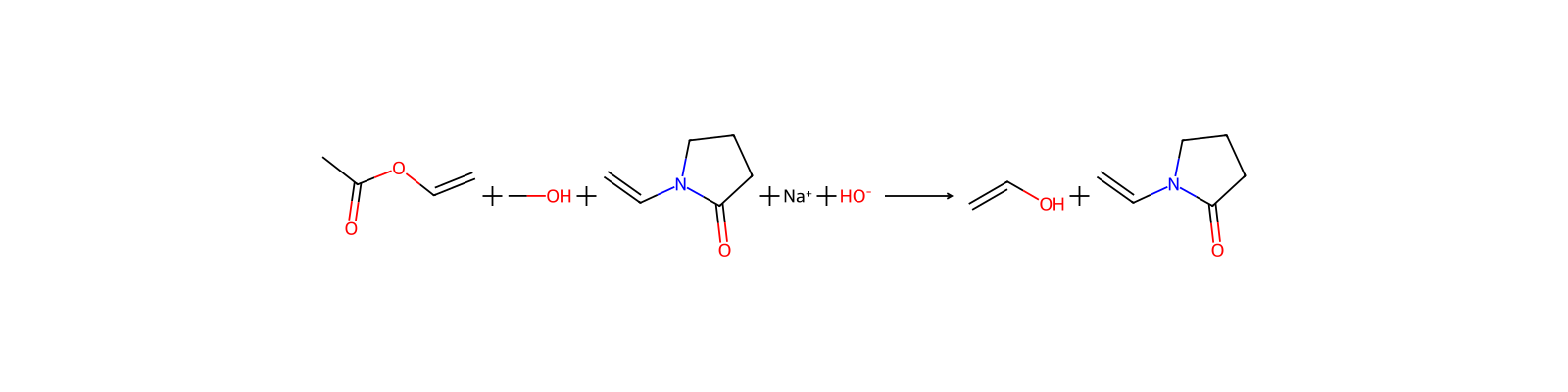
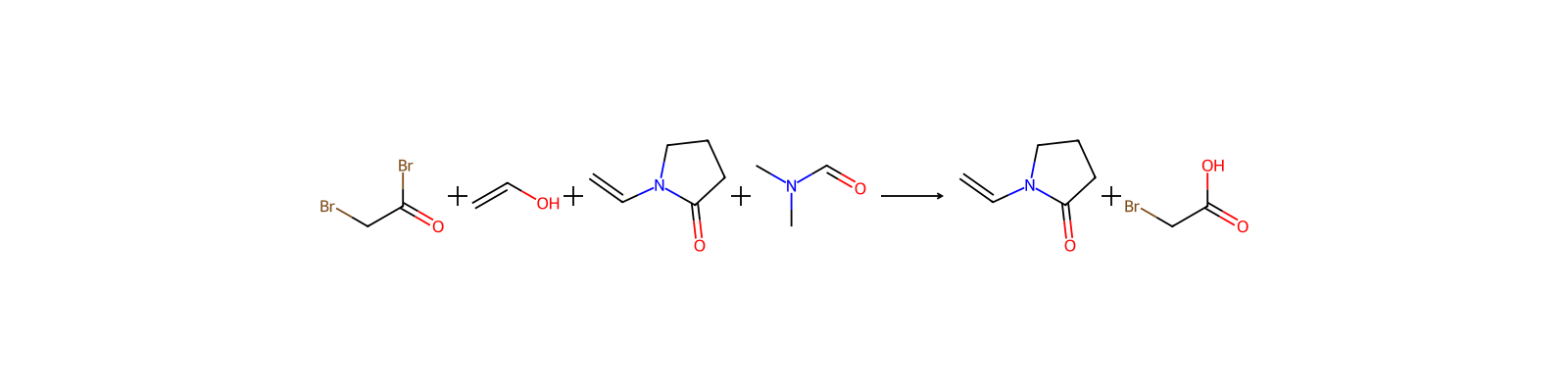
Related reactions
211 records



Linked notes
Loading…