

Basic information
- CAS
81846-19-7- Standard SMILES
CCCCC[C@H](O)CC[C@@H]1[C@H]2Cc3cccc(OCC(=O)O)c3C[C@H]2C[C@H]1O- InChIKey
PAJMKGZZBBTTOY-ZFORQUDYSA-N- Molecular formula
- C23H34O5
- Average molar mass
- 390.5 g/mol
- Monoisotopic mass
- 390.24062419
Overview
Treprostinil is a carboxylic acid and a carbotricyclic compound. It has a role as a cardiovascular drug, a vasodilator agent, an antihypertensive agent, a platelet aggregation inhibitor, a vitamin K antagonist and a human blood serum metabolite.
Names & identifiers
- Preferred name
- Treprostinil
- IUPAC
- 2-[[(1R,2R,3aS,9aS)-2-hydroxy-1-[(3S)-3-hydroxyoctyl]-2,3,3a,4,9,9a-hexahydro-1H-cyclopenta[g]naphthalen-5-yl]oxy]acetic acid
- English name
- Treprostinil
- Molecular formula
- C23H34O5
- Molecular weight
- 390.51
Names & synonyms
Treprostinil81846-19-7UniprostRumodolinTyvasoUT-15LRX-15treprostinilo15AU81treprostinilumTyvaso dpiRUM6K67ESG
Show more names
REMODULIN2-(((1R,2R,3aS,9aS)-2-hydroxy-1-((S)-3-hydroxyoctyl)-2,3,3a,4,9,9a-hexahydro-1H-cyclopenta[b]naphthalen-5-yl)oxy)acetic acidOrenitramTreprostinil-13C2-d1LRX 15BW 15AUU 6284015AU-81
15-AU-81CHEBI:50861L-606DTXSID901021654((1R,2R,3aS,9aS)-2-hydroxy-1-((3S)-3-hydroxyoctyl)-2,3,3a,4,9,9a-hexahydro-1H-cylopent(b)naphthalen-5-yl)oxy)acetate2-{[(1R,2R,3aS,9aS)-2-hydroxy-1-[(3S)-3-hydroxyoctyl]-1H,2H,3H,3aH,4H,9H,9aH-cyclopenta[b]naphthalen-5-yl]oxy}acetic acid({(1R,2R,3aS,9aS)-2-hydroxy-1-[(3S)-3-hydroxyoctyl]-2,3,3a,4,9,9a-hexahydro-1H-cyclopenta[b]naphthalen-5-yl}oxy)acetic acidAcetic acid, ((2,3,3a,4,9,9a-hexahydro-2-hydroxy-1-(3-hydroxyoctyl)-1H-benz(f)inden-5-yl)oxy)-, (1R-(1alpha(S*),2beta,3aalpha,9aalpha))-
Database identifiers
- CAS
81846-19-7- PubChem CID
- 6918140
- DTXSID
Properties
Computed structural properties
- XLogP
- 4.5
- Topological polar surface area
- 87 Ų
- Hydrogen bond donors
- 3
- Hydrogen bond acceptors
- 5
- Rotatable bonds
- 10
- Heavy atoms
- 28
- Formal charge
- 0
- Complexity
- 495
Experimental & physicochemical properties
Drugs
Pharmaceuticals -> Antihypertensives
Pharmaceuticals -> Listed in ZINC15
LogP4.1
Solubility7.31e-03 g/L
Human Drugs
Breast Feeding; Lactation; Milk, Human; Antihypertensive Agents; Cardiovascular Agents; Prostaglandins; Vasodilator Agents
FDA approved drugs -> Active ingredient
EMA approved medicines: Human medicine (Orphan designations)
FDA approved drugs -> Active ingredient
Endocrine DisruptorsPotential endocrine disrupting compound
Melting Point90-100°C
Physical DescriptionSolid
Physicochemical properties
- Melting point
- 121 · 121-123°
Safety & regulation
Safety information is for reference only and does not replace the supplier’s Safety Data Sheet (SDS), applicable regulations, or professional assessment.
GHS classification
GHS Classification
Danger
H301 (100%): Toxic if swallowed [Danger Acute toxicity, oral]
P203, P260, P261, P262, P264, P264+P265, P270, P271, P280, P301+P316, P302+P352, P304+P340, P305+P351+P338, P316, P318, P319, P321, P330, P332+P317, P337+P317, P361+P364, P362+P364, P403+P233, P405, and P501 (click each P-code to see the statement)
Aggregated GHS information provided per 2 reports by companies from 2 notifications to the ECHA C&L Inventory. Each notification may be associated with multiple companies.
Hazard information
Hazard Classes and CategoriesAcute Tox. 3 (100%)
Toxicology
Adverse EffectsLocal adverse effects are the most common side effects related to either the SQ or inhaled routes of administration:
Toxicity Summary
Researchers did encounter treprostinil overdose during the trials, which presented with signs and symptoms of vasodilatation such as flushing, hypotension, and headache. It can also result from pump dysfunction, accidental bolus administration, or prescribing the wrong dose. These symptoms are self-limited and will be resolved by temporarily discontinuing the medication or reducing the dosage.
Effects During Pregnancy and Lactation◉ Summary of Use during Lactation
Safety data
- wgk
- WGK 3
- Signal word
- Danger
Chemistry & industry
Pharmacology
ATC Code
B - Blood and blood forming organs
QB - Blood and blood forming organs
Protein BindingAt _in vitro_ concentrations ranging from 330 to 10,000 μg/L, the human plasma protein binding of treprostinil is approximately 91%. This concentration is above what is considered to be clinically relevant.
Pharmacodynamics
As an analogue of prostacyclin, treprostinil promotes the vasodilation of pulmonary and systemic arterial vascular beds and the inhibition of platelet aggregation. In animals, the vasodilatory effects of treprostinil lead to a reduction of right and left ventricular afterload and an increase in cardiac output and stroke volume. Treprostinil also causes a dose-related negative inotropic and lusitropic effect, and no major effects on cardiac conduction have been detected. Short-lasting effects on QTc were detected in healthy volunteers (n=240) given inhaled single doses of 54 and 84 μg of treprostinil. These effects dissipated rapidly as treprostinil concentrations lowered. When given subcutaneously or intravenously, treprostinil has the potential to reach higher concentrations. The effect of oral treprostinil on QTc has not been evaluated. Due to its ability to inhibit platelet aggregation, treprostinil can increase the risk of bleeding, and patients with low systemic arterial pressure taking treprostinil may experience symptomatic hypotension. The abrupt withdrawal of treprostinil or drastic changes in dose may worsen the symptoms of pulmonary arterial hypertension (PAH). The inhalation of treprostinil can also cause bronchospasms in patients with asthma, chronic obstructive pulmonary disease (COPD), or bronchial hyperreactivity. When given intravenously, treprostinil can lead to infusion complications and increase the risk of bloodstream infections.
Mechanism of Action
Treprostinil is a stable analogue of prostacyclin, a prostaglandin that acts as an anti-thrombotic agent and a potent vasodilator. Prostacyclin analogues are useful in the treatment of pulmonary arterial hypertension (PAH), a disease characterized by abnormally high blood pressure in the arteries between the heart and lungs. PAH leads to right heart failure due to the remodelling of pulmonary arteries, and patients with this condition have a poor prognosis. Treprostinil binds and activates the prostacyclin receptor, the prostaglandin D2 receptor 1, and the prostaglandin E2 receptor 2. The activation of these receptors leads to the elevation of intracellular cyclic adenosine monophosphate (cAMP) levels, which consequently promotes the opening of calcium-activated potassium channels that lead to cell hyperpolarization. This mechanism promotes the direct vasodilation of pulmonary and systemic arterial vascular beds and the inhibition of platelet aggregation. In addition to its direct vasodilatory effects, treprostinil inhibits inflammatory pathways.
Related reactions
36 records

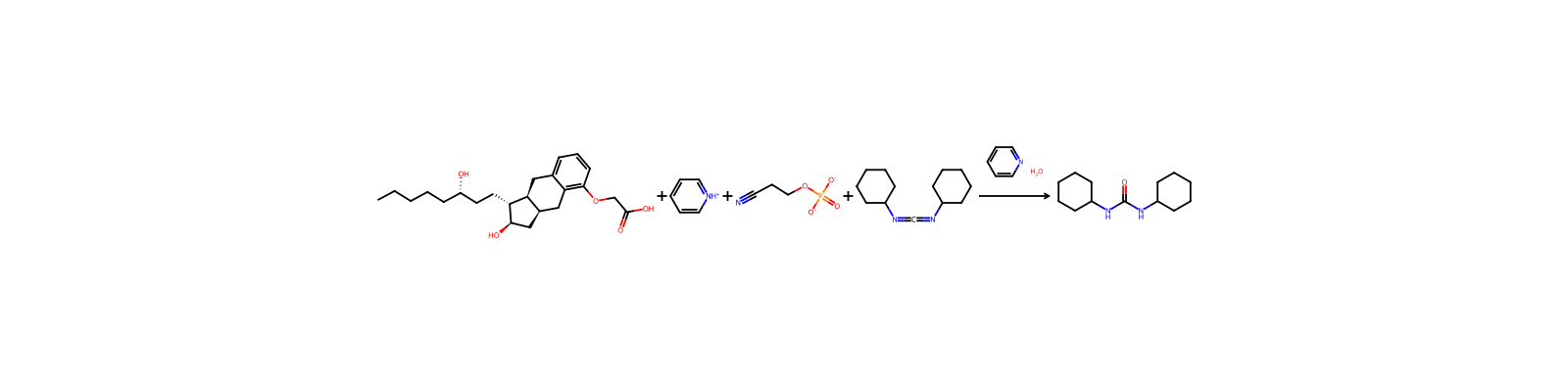
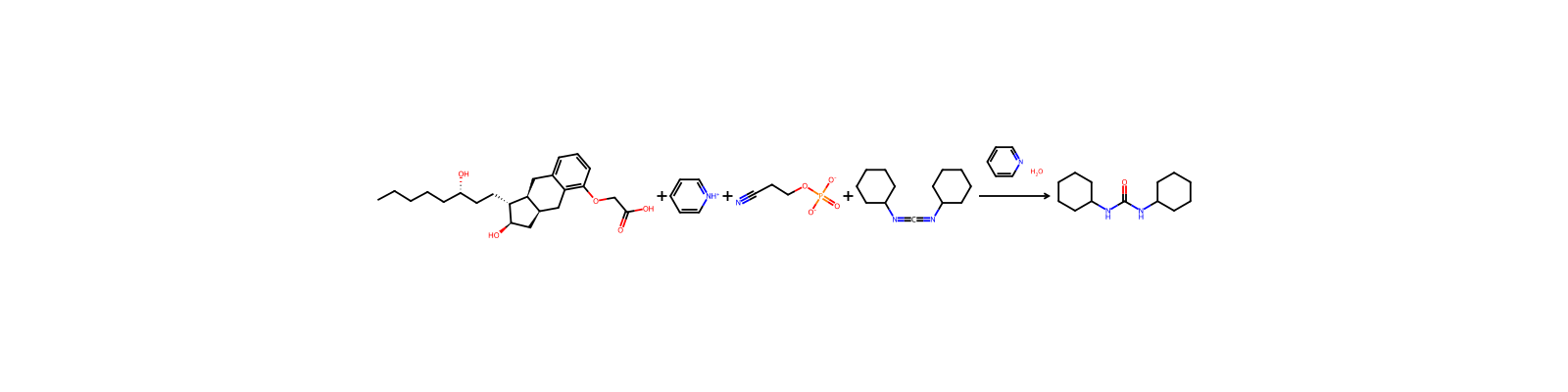


Compound notes
Loading…