
Basic information
- Standard SMILES
Clc1ncccc1Br- InChIKey
HDYNIWBNWMFBDO-UHFFFAOYSA-N- Molecular formula
- C5H3BrClN
- Average molar mass
- 192.44 g/mol
- Monoisotopic mass
- 190.91373888
Names & identifiers
- Preferred name
- 3-Bromo-2-chloropyridine
- IUPAC
- 3-bromo-2-chloropyridine
- English name
- 3-Bromo-2-chloropyridine
- Molecular formula
- C5H3BrClN
- Molecular weight
- 192.44
Names & synonyms
3-Bromo-2-chloropyridine52200-48-3HDYNIWBNWMFBDO-UHFFFAOYSA-DTXSID40351220RefChem:93118DTXCID90302287629-254-6InChI=1/C5H3BrClN/c6-4-2-1-3-8-5(4)7/h1-3H2-Chloro-3-bromopyridine3-Bromo-2-chlorolpyridineMFCD002340073-bromo-2-chloro-pyridine
Show more names
3-Bromo-2-chLTIMTEC-BB SBB003618OTAVA-BB BB7110952626-Bromo-2-chloropyridinebromo-3 chloro-2 pyridinePyridine, 3-bromo-2-chloro-5-Bromo-3-nitro-3-pyridinol
CL0158AC-7016SY004419EN300-54306BCP26359HDYNIWBNWMFBDO-UHFSCHEMBL122934SCHEMBL229172
Database identifiers
- CAS
52200-48-3- PubChem CID
- 693324
- DTXSID
DTXSID40351220- EC Number
- 629-254-6
- Nikkaji
- J1.272.612K
Properties
Computed structural properties
- XLogP
- 2.2
- Topological polar surface area
- 12.9 Ų
- Hydrogen bond donors
- 0
- Hydrogen bond acceptors
- 1
- Rotatable bonds
- 0
- Heavy atoms
- 8
- Formal charge
- 0
- Complexity
- 78.8
Physicochemical properties
- Melting point
- 54 · 54-57 °C (lit.)
- Boiling point
- 97 °C · 97 °C / 10mmHg
- Density
- 1.7783 · 1.7783 (rough estimate)
- refractive index
- 1.54 · 1.5400 (estimate)
- storage temp.
- Inert atmosphere,Room Temperature
- pka
- -0.63 · -0.63±0.10(Predicted)
- form
- Crystalline Powder, Crystals or Flakes or Solid
- color
- White to yellow
- BRN
- 109812 · 109812
- InChI
- InChI=1S/C5H3BrClN/c6-4-2-1-3-8-5(4)7/h1-3H
- InChIKey
- HDYNIWBNWMFBDO-UHFFFAOYSA-N
- SMILES
- C1(Cl)=NC=CC=C1Br
- CAS DataBase Reference
- 52200 · 52200-48-3(CAS DataBase Reference)
- UNSPSC Code
- 12352100 · 12352100
- NACRES
- 22 · NA.22
- Symbol(GHS)
- 7 · GHS07
- Signal word
- Warning
- Hazard statements
- 315 · H315-H319-H335
- Precautionary statements
- 261 · P261-P264-P271-P280-P302+P352-P305+P351+P338
- target organs
- Respiratory system
- PPE
- 95 · dust mask type N95 (US), Eyeshields, Gloves
- Hazard Codes
- Xi
- Risk Statements
- 36 · 36/37/38
- Safety Statements
- 26 · 26-36-37/39-36/37/39
- WGK Germany
- 3 · 3
- HazardClass
- IRRITANT
- HS Code
- 29339900 · 29339900
- Storage Class
- 11 · 11 - Combustible Solids
- Hazard Classifications
- 2 Skin · Eye Irrit. 2Skin Irrit. 2STOT SE 3
Safety & regulation
GHS classification
GHS Classification
Warning
H302 (10.9%): Harmful if swallowed [Warning Acute toxicity, oral]
P261, P264, P264+P265, P270, P271, P280, P301+P317, P302+P352, P304+P340, P305+P351+P338, P317, P319, P321, P330, P332+P317, P337+P317, P362+P364, P403+P233, P405, and P501 (click each P-code to see the statement)
Aggregated GHS information provided per 46 reports by companies from 5 notifications to the ECHA C&L Inventory. Each notification may be associated with multiple companies.
Hazard information
Hazard Classes and CategoriesSkin Irrit. 2 (100%)
Safety data
- PPE
- dust mask type N95 (US), Eyeshields, Gloves
- wgk
- 3
- hs_code
- 29339900
- risk_code
- 36/37/38
- Signal word
- Warning
- Symbol(GHS)
- GHS07
- hazard_code
- Xi
- safety_code
- 26-36-37/39-36/37/39
- hazard_class
- IRRITANT
- Storage Class
- 11 - Combustible Solids
- target organs
- Respiratory system
- Hazard statements
- H315-H319-H335
- Hazard Classifications
- Eye Irrit. 2Skin Irrit. 2STOT SE 3
- Precautionary statements
- P261-P264-P271-P280-P302+P352-P305+P351+P338
Chemistry & industry
Applications
Uses3-Bromo-2-chloropyridine may be used to synthesize:acetylenic dipyridone3-ethynyl-2-(phenylmethoxy)-pyridinenemertellineortho-chlorodiheteroarylamine4 or 2-chloro-N-(2,3,7-trimethylbenzo[b]thien-6-yl)pyridin-3-amine
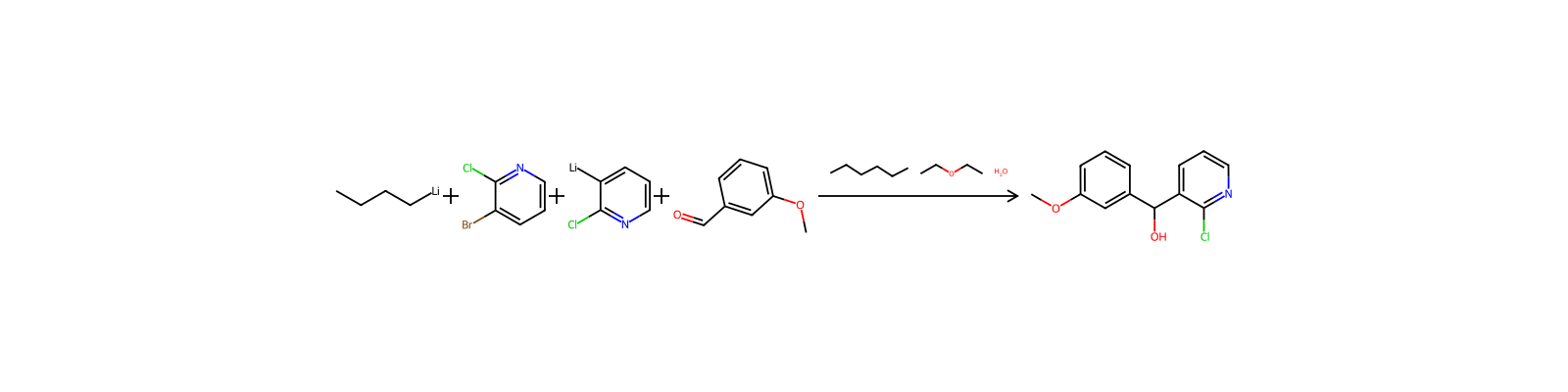
General Description3-Bromo-2-chloropyridine can be synthesized from 3-amino-2-chloropyridine or 2-chloro-3-pyridinamine.
Upstream & downstream products
Upstream raw materials
Downstream products
Suppliers50 total
梯希爱(上海)化成工业发展有限公司021-67121386 · [email protected]
上海阿拉丁生化科技股份有限公司400-6206333 13167063860 · [email protected]
INTATRADE GmbH+49 3493/605464 · [email protected]
T&W GROUP021-61551611 13296011611 · [email protected]
爱斯特(成都)生物制药股份有限公司+86-28-85122536 85324413 · [email protected]
韶远科技(上海)有限公司021-50795510 4000665055 · [email protected]
科瑞迪化学400-821-5857 021-64326257 · [email protected]
上海迈瑞尔生化科技有限公司4006356688 18621169109 · [email protected]
北京华威锐科化工有限公司0757-86329057 18934348241 · [email protected]
河北松辰医药科技有限公司0319-5801333-8008 15630992918 · [email protected]
宁波亿诺化学品有限公司86-574-27787657 · [email protected]
阿法埃莎(中国)化学有限公司400-6106006 · [email protected]
太原市瑞和丰科贸有限公司+86 351 7031519 · [email protected]
安耐吉化学&3A(安徽泽升科技股份有限公司)400-0056266 · [email protected]
石家庄斯迪亚诺精细化工有限公司0311-89250318 13582355795 · [email protected]
常州安轩化工有限公司13912302692 · [email protected]
阜新四维卤化物有限公司0418-2260776 · [email protected]
上海瀚鸿科技股份有限公司021-54306202 13764082696 · [email protected]
上海景颜化工科技有限公司13817811078 · [email protected]
嘉兴市艾森化工有限公司0573-85285100 18627885956 · [email protected]
Pure Chemistry Scientific Inc.001-857-928-2050 or 1-888-588-9418 · [email protected]
上海隆盛化工有限公司58099637 13585536065 · [email protected]
上海攀鸿化工科技有限公司021-56491756 13512199871 · [email protected]
杭州东帆化学有限公司86-0571-85151182
天津希恩思生化科技有限公司400 638 7771 · [email protected]
南京维奥化工有限公司Please Send Email 18652950785 · [email protected]
百盛HK进出口有限公司+86-18068513926
天津津御达化工科技有限公司022-58013646 13011382049 · [email protected]
上海思域化工科技有限公司86-21-34053660 · [email protected]
苏州思变化学技术有限公司0512-65617459 18915409046 · [email protected]
赛默飞世尔科技(中国)有限公司800-810-5118 · [email protected]
南京诺利斯医药科技有限公司13901585132 · [email protected]
TCI AMERICA800-4238616 · [email protected]
TOKYO CHEMICAL INDUSTRY CO., LTD.03-36680489 · [email protected]
TCI Europe320-37350700 · [email protected]
上海贤鼎生物科技有限公司4009209199 · [email protected]
深圳康特腾科技有限公司86-0755-86635001 · [email protected]
Shanghai Witofly Chemical Co.,Ltd[email protected]
越林试剂021-62960152 · [email protected]
上海睿升化工科技有限公司+86-021-50935922
Clearsynth Labs Limited+91-22-26355700 · [email protected]
天津卡普希科技有限公司022-66211079 13212288319 · [email protected]
杭州迈世腾药物科技有限公司0571-82896630 18969958410 · [email protected]
苏州爱玛特生物科技有限公司0512-56316828 4008675858 · [email protected]
北京环宇世纪化学科技有限公司hysj_bj.com
上海湄水化工科技有限公司021-60549325 18616193163
上海将来实业股份有限公司400-0066400 13621662912 · [email protected]
上海将来实业股份有限公司021-61552785 · [email protected]
安徽科迪达化工有限公司0554-2106669 · [email protected]
上海悠宁资源化学科技有限公司021-50454025 18930054025
Related reactions
86 records


Linked notes
Loading…