
Basic information
- Standard SMILES
O=[N+]([O-])c1cc(Cl)ccc1Cl- InChIKey
RZKKOBGFCAHLCZ-UHFFFAOYSA-N- Molecular formula
- C6H3Cl2NO2
- Average molar mass
- 192 g/mol
- Monoisotopic mass
- 190.9540837
Names & identifiers
- Preferred name
- 2,5-Dichloronitrobenzene
- IUPAC
- 1,4-dichloro-2-nitrobenzene
- English name
- 2,5-Dichloronitrobenzene
- Molecular formula
- C6H3Cl2NO2
- Molecular weight
- 192
Names & synonyms
1,4-Dichloro-2-nitrobenzene2,5-DICHLORONITROBENZENE89-61-2Benzene, 1,4-dichloro-2-nitro-1-Nitro-2,5-dichlorobenzene2,5-DichlornitrobenzenDTXSID7052602IY18G50FF4DTXCID1031175RefChem:73231201-923-3Nitro-p-dichlorobenzene
Show more names
2,5-DICHLORO-4-NITROBENZENE2.5-Dichloroni2,5-Dichlornitrobenzol2,5-DICHLORONITROBENZOL2,5-dichlornitrobenzeneDomperidone Impurity 10
Benzene, 2,5-dichloronitro-1,4-Dichloro-2-nitro-benzeneNSC 406125MFCD00007074NSC-6294NSC-406125Benzene,5-dichloronitro-WLN: WNR CG EG
Database identifiers
- CAS
89-61-2- PubChem CID
- 6977
- DTXSID
DTXSID7052602- ChEMBL
CHEMBL354761- UNII
- IY18G50FF4
- EC Number
- 201-923-3
- Nikkaji
- J3.548C
Properties
Computed structural properties
- XLogP
- 2.9
- Topological polar surface area
- 45.8 Ų
- Hydrogen bond donors
- 0
- Hydrogen bond acceptors
- 2
- Rotatable bonds
- 0
- Heavy atoms
- 11
- Formal charge
- 0
- Complexity
- 159
Experimental & physicochemical properties
pHpH = 6.9 (80 mg/L water) at 20 °C
LogP
log Kow = 3.09
2.93
Density
1.669 at 22 °C
Density: 1.479 g/cu cm at 75 °C
1.67 g/cm³
Relative density of the vapour/air-mixture at 20 °C (air = 1): 1.00
Color/FormPlates or prisms from alcohol, plates from ethyl acetate
Solubility
In water, 95 mg/L at 25 °C
In water, 92.1 mg/L at 20 °C
Soluble in ethanol, ether, benzene, carbon disulfide; slightly soluble in carbon tetrachloride
Solubility in water, g/100ml at 20 °C: 0.01 (very slightly soluble)
Flash Point135 °C
Boiling Point
267 °C
261 °C
DecompositionWhen heated to decomposition it emits very toxic fumes of /hydrogen chloride and nitrogen oxides/.
Melting Point
56 °C
55 °C
Vapor DensityRelative vapor density (air = 1): 6.6
Vapor Pressure
0.00505 [mmHg]
0.00383 mm Hg at 25 °C
Vapor pressure, Pa at 25 °C: 0.5
Surface Tension6.6 (Air = 1)
Physicochemical properties
- Melting point
- 52 · 52-54 °C(lit.)
- Boiling point
- 267 °C · 267 °C
- Density
- 1 · 1,442 g/cm3
- vapor density
- 6.6 · 6.6 (vs air)
- vapor pressure
- 0.1 mm · <0.1 mm Hg ( 25 °C)
- refractive index
- 1.439 · 1.4390 (estimate)
- Flash point
- 230 °F · >230 °F
- storage temp.
- 30 °C · Store below +30°C.
- solubility
- 0.083 g/l · 0.083g/l
- form
- solid
- color
- Pale Yellow
- explosive limit
- 2.4 · 2.4-8.5%(V)
- Water Solubility
- Soluble in water, ethanol, ether, benzene, carbon disulfide. Slightly soluble in carbon tetrachloride.
- BRN
- 778109 · 778109
- Henry's Law Constant
- 8.2 · 8.2×10-1 mol/(m3Pa) at 25℃, Altschuh et al. (1999)
- InChI
- 1S/C6H3Cl2NO2/c7-4-1-2-5(8)6(3-4)9(10)11/h1-3H
- InChIKey
- RZKKOBGFCAHLCZ-UHFFFAOYSA-N
- SMILES
- [O-][N+](=O)c1cc(Cl)ccc1Cl
- LogP
- 2.87 at · 2.87 at 25℃
- CAS DataBase Reference
- 89 · 89-61-2(CAS DataBase Reference)
- FDA UNII
- 18 G50FF4 · IY18G50FF4
- Proposition 65 List
- 1 · 1,4-Dichloro-2-Nitrobenzene
- IARC
- 2 B · 2B (Vol. 65, 123) 2020
- NIST Chemistry Reference
- 1 · Benzene, 1,4-dichloro-2-nitro-(89-61-2)
- EPA Substance Registry System
- 2 · 2,5-Dichloronitrobenzene (89-61-2)
- UNSPSC Code
- 41116107 · 41116107
- NACRES
- 22 · NA.22
- Symbol(GHS)
- 7 · GHS07,GHS09
- Signal word
- Warning
- Hazard statements
- 302 · H302-H411
- Precautionary statements
- 273 · P273-P301+P312+P330
- PPE
- 95 · dust mask type N95 (US), Eyeshields, Gloves
- Hazard Codes
- Xn,N
- Risk Statements
- 22 · 22-36-51/53
- Safety Statements
- 26 · 26-60
- RIDADR
- 3077 · UN 3077 9/PG 3
- WGK Germany
- 2 · 2
- RTECS
- 5260000 · CZ5260000
- TSCA
- TSCA listed
- HazardClass
- 9 · 9
- PackingGroup
- III
- HS Code
- 29049085 · 29049085
- Storage Class
- 11 · 11 - Combustible Solids
- Hazard Classifications
- 4 OralAquatic · Acute Tox. 4 OralAquatic Chronic 2
- Hazardous Substances Data
- 89 · 89-61-2(Hazardous Substances Data)
- REACH Registrations
- Active
Safety & regulation
GHS classification
GHS Classification
Danger
H350: May cause cancer [Danger Carcinogenicity]
P203, P280, P318, P405, and P501 (click each P-code to see the statement)
This chemical does not meet GHS hazard criteria for 1.1% (1 of 94) of reports.
Hazard information
Regulatory Information
Chemical: Benzene, 1,4-dichloro-2-nitro-
Hazard Traits - Carcinogenicity;Authoritative List - EC Annex VI CMRs - Cat. 1B; IARC Carcinogens - 2B; Prop 65;Report - regardless of intended function of ingredient in the product
TP - indicates a substance that is the subject of a proposed TSCA section 4 test rule.
Status: Active Update: 28-06-2019 https://echa.europa.eu/registration-dossier/-/registered-dossier/17548
1,4-Dichloro-2-nitrobenzene: Does not have an individual approval but may be used under an appropriate group standard
Other Safety InformationEvaluation - Benzene, 1,4-dichloro-2-nitro- (2,5-dichloronitrobenzene)
Fire HazardsCombustible. Gives off irritating or toxic fumes (or gases) in a fire.
Hazards Summary
No listed effects of short-term or long-term exposure (health effects have not been fully investigated); [ICSC] Can possibly induce methemoglobinemia; Can be absorbed through skin; Not a skin or eye irritant in rabbits; Not sensitizing in guinea pig maximization tests; No mortalities in rats exposed by inhalation to 47.6 mg/m3 for 7 hours; Increased liver weight (accompanied by hepatocellular hypertrophy), damage to the forestomach, increased bilirubin levels, and adverse male reproductive effects (depressed spermatogenesis) observed in 28-day oral study of rats; Cyanosis and methemoglobin formation observed in cats; [IUCLID] A mild skin and strong eye irritant; May induce methemoglobinemia; Harmful by ingestion and skin absorption; [Sigma-Aldrich MSDS] See 3,4-Dichloronitrobenzene.
UN ClassificationUN Hazard Class: 6.1; UN Pack Group: II
Chemical DangersDecomposes on heating. This produces toxic and corrosive fumes including hydrogen chloride (see ICSC 0163) and nitrogen oxides (see ICSC 0282). Reacts with strong oxidants and bases.
Packaging and LabellingDo not transport with food and feedstuffs.
Hazard Classes and Categories
Acute Tox. 4 (98.9%);Skin Sens. 1 (43.6%);Eye Irrit. 2 (93.6%);Muta. 2 (46.8%);Aquatic Chronic 2 (53.2%);Aquatic Chronic 3 (42.6%)
Acute toxicity (ingestion) - category 4;Eye irritation - category 2;Specific target organ toxicity (repeated exposure) - category 2;Carcinogenicity - category 1B
Acute toxicity (Oral) - Category 4;Carcinogenicity - Category 2;Reproductive toxicity - Category 2;Specific target organ toxicity - Single exposure - Category 1 (blood system), Category 3 (narcotic effects);Specific target organ toxicity - Repeated exposure - Category 1 (blood system), Category 2 (nervous system, liver, kidney);Hazardous to the aquatic environment (Acute) - Category 1;Hazardous to the aquatic environment (Long-term) - Category 1
Acute toxicity (Oral) - Category 4;Skin corrosion/irritation - Category 3;Serious eye damage/eye irritation - Category 2A;Skin sensitization - Category 1;Reproductive toxicity - Category 2;Specific target organ toxicity - Single exposure - Category 1 (blood system), Category 3 (narcotic effects);Specific target organ toxicity - Repeated exposure - Category 1 (blood system), Category 2 (nervous system, liver, testis);Hazardous to the aquatic environment (Acute) - Category 1;Hazardous to the aquatic environment (Long-term) - Category 1
Carcinogenicity - Category 1B
Carcinogenicity - Category 1B
Explosive Limits and PotentialExplosive limits , vol% in air: 2.4-8.5
Skin, Eye, and Respiratory Irritations
A skin and eye irritant.
1,4-Dichloro-2-nitrobenzene is mildly irritating to eyes and non-irritating to skin.
Safety & protection
Fire FightingUse water spray, dry powder, foam, carbon dioxide.
First Aid Measures
Fresh air, rest.
Rinse and then wash skin with water and soap. Refer for medical attention .
Rinse with plenty of water (remove contact lenses if easily possible).
Rinse mouth. Refer for medical attention .
Safe StorageSeparated from bases, strong oxidants and food and feedstuffs. Store in an area without drain or sewer access. Provision to contain effluent from fire extinguishing.
Disposal Methods
SRP: The most favorable course of action is to use an alternative chemical product with less inherent propensity for occupational harm/injury/toxicity or environmental contamination. Recycle any unused portion of the material for its approved use or return it to the manufacturer or supplier. Ultimate disposal of the chemical must consider: the material's impact on air quality; potential migration in soil or water; effects on animal and plant life; and conformance with environmental and public health regulations.
Spillage Disposal
Personal protection: particulate filter respirator adapted to the airborne concentration of the substance, protective clothing, protective gloves and face shield. Do NOT let this chemical enter the environment. Sweep spilled substance into sealable containers. If appropriate, moisten first to prevent dusting. Carefully collect remainder. Then store and dispose of according to local regulations.
Preventive Measures
SRP: The scientific literature for the use of contact lenses by industrial workers is inconsistent. The benefits or detrimental effects of wearing contact lenses depend not only upon the substance, but also on factors including the form of the substance, characteristics and duration of the exposure, the uses of other eye protection equipment, and the hygiene of the lenses. However, there may be individual substances whose irritating or corrosive properties are such that the wearing of contact lenses would be harmful to the eye. In those specific cases, contact lenses should not be worn. In any event, the usual eye protection equipment should be worn even when contact lenses are in place.
Eye PreventionWear safety spectacles.
Fire PreventionNO open flames.
Inhalation RiskA harmful concentration of airborne particles can be reached quickly when dispersed, especially if powdered.
Skin PreventionProtective gloves.
Exposure PreventionPREVENT DISPERSION OF DUST! STRICT HYGIENE!
Ingestion PreventionDo not eat, drink, or smoke during work.
Toxicology
Ecotoxicity Values
EC50; Species: Chlorella pyrenoidosa (Green Algae) exponential growth phase, 2 X10+8 cells/mL; Conditions: freshwater, static, 25 °C, pH 6.6; Concentration: 2100 ug/L for 96 hr (95% confidence interval: 1500-2800 ug/L); Effect: growth, general />98% purity formulation/
LC50; Species: Daphnia magna (Water Flea) age <24 hr; Conditions: freshwater, static, 20 °C, pH 8.2, hardness 250 mg/L CaCO3. dissolved oxygen >6.5 mg/L; Concentration: 11000 ug/L for 48 hr (95% confidence interval: 5600-18000 ug/L) />98% purity formulation/
LC50; Species: Daphnia magna (Water Flea) age <24 hr; Conditions: freshwater, static, 20 °C, pH 8.2, hardness 250 mg/L CaCO3. dissolved oxygen >6.5 mg/L; Concentration: 3800 ug/L for 21 days (95% confidence interval: 3600-4000 ug/L) />98% purity formulation/
LC50; Species: Poecilia reticulata (Guppy) age 3-4 weeks; Conditions: freshwater, static, 25 °C, pH 8.2, hardness 250 mg/L CaCO3; Concentration: 4900 ug/L for 14 days />98% purity formulation/
For more Ecotoxicity Values (Complete) data for 1,4-Dichloro-2-nitrobenzene (6 total), please visit the HSDB record page.
Environmental Fate
TERRESTRIAL FATE: Based on a classification scheme(1), an estimated Koc value of 590(SRC), determined from a structure estimation method(2), indicates that 1,4-dichloro-2-nitrobenzene is expected to have low mobility in soil(SRC). Volatilization of 1,4-dichloro-2-nitrobenzene from moist soil surfaces is expected to be an important fate process(SRC) given a Henry's Law constant of 1.5X10⁻⁵ atm-cu m/mole(3). 1,4-Dichloro-2-nitrobenzene is not expected to volatilize from dry soil surfaces(SRC) based upon a vapor pressure of 0.00383 mm Hg at 25 °C(4). 1,4-Dichloro-2-nitrobenzene absorbs UV light above 290 nm and will photodegrade in sunlight(4). Utilizing the Japanese MITI test, 4% of the theoretical BOD was reached in four weeks(5) indicating that biodegradation is not an important environmental fate process in soil(SRC).
AQUATIC FATE: Based on a classification scheme(1), an estimated Koc value of 590(SRC), determined from a structure estimation method(2), indicates that 1,4-dichloro-2-nitrobenzene is expected to adsorb to suspended solids and sediment(SRC). Volatilization from water surfaces is expected(3) based upon a Henry's Law constant of 1.5X10⁻⁵ atm-cu m/mole at 25 °C(4). Using this Henry's Law constant and an estimation method(3), volatilization half-lives for a model river and model lake are 4.4 and 36 days, respectively(SRC). According to a classification scheme(5), observed BCF values of 18-118, measured in carp and rainbow trout(6,7), suggests the potential for bioconcentration in aquatic organisms is low to moderate(SRC). 1,4-Dichloro-2-nitrobenzene has an epilson of 0.00126 at 300 nm in aqueous solution(8) which indicates the compound may be susceptible to direct photolysis(SRC); an approximated quantum yield of 0.01 can be used to estimate a half-life of 34 days in a model sunlit body of water with a 500 cm depth(2). In an aqueous hydrolysis test (OECD Test guideline 111), benzene, 1,4-dichloro-2-nitro was stable to abiotic hydroylsis at pHs 4, 7 and 9 at 25 °C(8). Utilizing the Japanese MITI test, 4% of the theoretical BOD was reached in four weeks(6) indicating that biodegradation is not an important environmental fate process in water(SRC).
ATMOSPHERIC FATE: According to a model of gas/particle partitioning of semivolatile organic compounds in the atmosphere(1), 1,4-dichloro-2-nitrobenzene, which has a vapor pressure of 0.00383 mm Hg at 25 °C(2), expected to exist solely as a vapor in the ambient atmosphere. Vapor-phase 1,4-dichloro-2-nitrobenzene is degraded in the atmosphere by reaction with photochemically-produced hydroxyl radicals(SRC); the half-life for this reaction in air is estimated to be 320 days(SRC), calculated from its rate constant of 5X10-14 cu cm/molecule-sec at 25 °C(SRC) that was derived using a structure estimation method(3). 1,4-Dichloro-2-nitrobenzene absorbs UV light above 290 nm and therefore is photodegraded in sunlight(2).
Adverse Effects
Occupational hepatotoxin - Secondary hepatotoxins: the potential for toxic effect in the occupational setting is based on cases of poisoning by human ingestion or animal experimentation.;Methemoglobinemia - The presence of increased methemoglobin in the blood; the compound is classified as secondary toxic effect;IARC Carcinogen - Class 3: Chemicals are not classifiable by the International Agency for Research on Cancer.
Exposure RoutesThe substance can be absorbed into the body by ingestion and through the skin.
Average Daily IntakeFor indirect exposure to 1,4-dichloro-2-nitrobenzene via the environment, the daily intake through drinking water is estimated to be 2.6X10⁻⁵ mg/kg/day and through fish is calculated as 1.2X10⁻³ mg/kg/day(1).
Ecotoxicity Excerpts
/AQUATIC SPECIES/ Following the exposure of algae (Chlorella pyrenoidosa) for 96 hours to 2.1 mg/L, 50% inhibition of growth has been observed... For water fleas (Daphnia magna), 48-hr EC50 value (immobilization) amounts to 11 mg/L and the 21-day EC50 value to 3.8 mg/L. In a semi-static 21-day reproduction test the lowest concentrations at which the population growth rate and mean length of the animals significantly (p<0.01) decreased were 1.8 mg/L and 3.2 mg/L respectively. For fish (Leuciscus idus), the value of acute toxicity (96-hr LC50) in an open system under semi-static conditions is 6.3 mg/L and the corresponding value (48-hr LC50) in a closed system under static conditions is 4.5 mg/L. The lowest 96-hr LC0 was 3.15 mg/L. In the prolonged fish toxicity test under semi-static conditions a 14 day LC50 value of 4.9 mg/L has been found for Poecilia reticulata.
/PLANTS/ 1,4-Dichloro-2-nitrobenzene at concentrations > 42.2 mg/L is phytotoxic (6-day EC50; reduction in fresh weight) to higher plants (seedlings of cucumber and bean).
Animal Concentrations1,4-Dichloro-2-nitrobenzene was detected in zebra mussels (Dreissena polymorpha) collected from the Rhine-Meuse delta in 1994 at concentrations of 0.021-0.030 mg/kg wet weight(1).
Signs and Symptoms
Cough.
Redness.
ICSC Environmental DataThe substance is toxic to aquatic organisms. The substance may cause long-term effects in the aquatic environment. It is strongly advised not to let the chemical enter into the environment.
Soil Adsorption/Mobility
Using a structure estimation method based on molecular connectivity indices(1), the Koc of 1,4-dichloro-2-nitrobenzene can be estimated to be 590(SRC). According to a classification scheme(2), this estimated Koc value suggests that 1,4-dichloro-2-nitrobenzene is expected to have low mobility in soil. 1,4-Dichloro-2-nitrobenzene did not leach in column leachate tests designed to assess leaching potential from wastes in landfill sites(3).
Human Toxicity Excerpts
/OTHER TOXICITY INFORMATION/ 1,4-Dichloro-2-nitrobenzene is mildly irritating to eyes and non-irritating to skin. When tested in animals the product has been proved to be a non-sensitizer; however, there are indications of skin sensitization in man.
Artificial Pollution Sources1,4-Dichloro-2-nitrobenzene's production and use in the manufacture of dyestuff intermediates, pesticides and UV absorbents(1,2) may result in its release to the environment through various waste streams(SRC).
Regulatory information
Regulatory Information
Chemical: Benzene, 1,4-dichloro-2-nitro-
Hazard Traits - Carcinogenicity;Authoritative List - EC Annex VI CMRs - Cat. 1B; IARC Carcinogens - 2B; Prop 65;Report - regardless of intended function of ingredient in the product
TP - indicates a substance that is the subject of a proposed TSCA section 4 test rule.
Status: Active Update: 28-06-2019 https://echa.europa.eu/registration-dossier/-/registered-dossier/17548
1,4-Dichloro-2-nitrobenzene: Does not have an individual approval but may be used under an appropriate group standard
Safety data
- PPE
- dust mask type N95 (US), Eyeshields, Gloves
- wgk
- 2
- tsca
- TSCA listed
- rtecs
- CZ5260000
- ridadr
- UN 3077 9/PG 3
- hs_code
- 29049085
- risk_code
- 22-36-51/53
- Signal word
- Warning
- Symbol(GHS)
- GHS07,GHS09
- hazard_code
- Xn,N
- safety_code
- 26-60
- hazard_class
- 9
- Storage Class
- 11 - Combustible Solids
- packing_group
- III
- Hazard statements
- H302-H411
- REACH Registrations
- Active
- Hazard Classifications
- Acute Tox. 4 OralAquatic Chronic 2
- Precautionary statements
- P273-P301+P312+P330
- Hazardous Substances Data
- 89-61-2(Hazardous Substances Data)
Chemistry & industry
Pharmacology
Biological Half-LifeFollowing oral intake the biological half-life in fish is less than 3 days.
Metabolism/Metabolites
1,4-Dichloro-2-nitrobenzene is readily absorbed after oral administration or dermal application. The substance is metabolized to a number of products. Following oral application chiefly 2,5-dichloroaniline, the mercapturic acid derivative N-acetyl-S-(4-chloro-2-nitrophenyl)-L-cysteine as well as glucuronic and sulfuric acid conjugates of 4-amino-2,5-dichlorophenol were identified in urine.
Absorption, Distribution and Excretion1,4-Dichloro-2-nitrobenzene is readily absorbed after oral administration or dermal application.
Uses & manufacturing
Uses
Used as an intermediate in the chemical industry; [IUCLID] Used to make pigments, pesticides, and UV absorbents; [HSDB]
Used extensively in the manufacture of dyestuff intermediates
Used as an intermediate for pigments, pesticides and UV absorbents in closed systems
U.S. ProductionProduction volumes for non-confidential chemicals reported under the Inventory Update Rule. [Table#7968]
Methods of ManufacturingNitration of 1,4-dichlorobenzene with mixed acid at 35-65 °C results in a 98% yield of essentially pure 1,4-dichloro-2-nitrobenzene.
General Manufacturing InformationBenzene, 1,4-dichloro-2-nitro-: ACTIVE
Applications
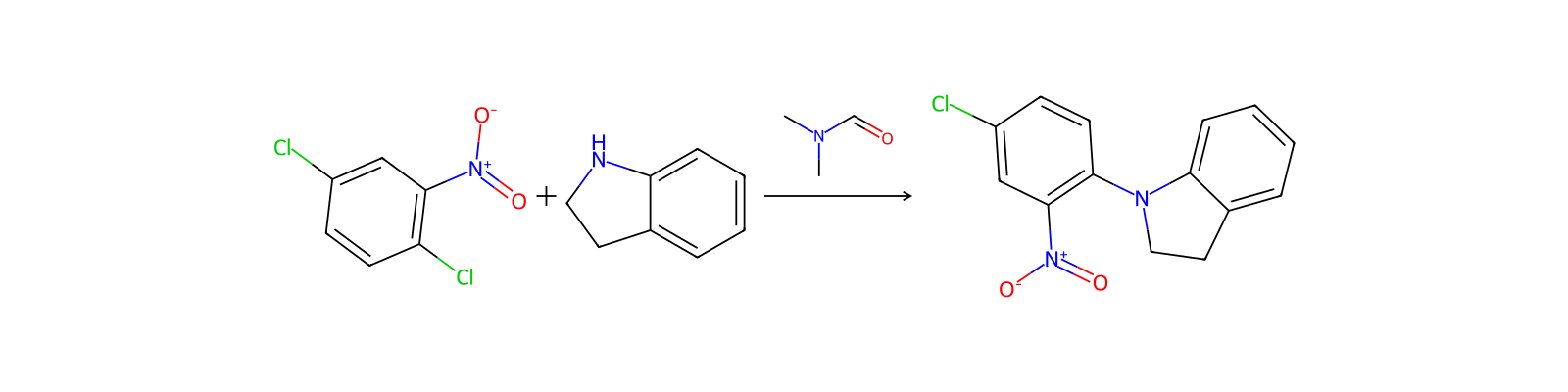
Uses2,5-Dichloronitrobenzene is a reagent used in the synthesis of antitrypanosomal, antileishmanial and antimalarial agents. Also it is used in the synthesis of lysophosphatidic acid acyltransferase-β inhibitors.
Upstream & downstream products
Upstream raw materials
Downstream products
Suppliers37 total
BEIJING SJAR TECHNOLOGY DEVELOPMENT CO., LTD.+86-18600796368 · [email protected]
艾吉析科技(上海)有限公司17717235263 · [email protected]
上海莉凯化工技术有限公司16628776521 · [email protected]
河北永泰供应链管理有限公司15130657697 15130657697 · [email protected]
武汉欣扬瑞和化学科技有限公司153-07155313 15307155313 · [email protected]
Alchemie Shanghai Co.,Ltd.+86-15921545397 · [email protected]
武汉欣扬瑞和化学科技有限公司18171205315; 18171205315 · [email protected]
杭州鼎燕化工有限公司13588754826 13588754826 · [email protected]
南通合润生物科技有限公司18362409333 · [email protected]
北京京土恒盛化工科技有限公司00-13911456598 13911456598 · [email protected]
上海麦克林生化科技股份有限公司15221275939 15221275939 · [email protected]
梯尔希(南京)药物研发有限公司18012923235 · [email protected]
天津荣燊化工有限公司18317763565; 18317763565 · [email protected]
艾吉析科技(上海)有限公司17721401538;17717235263 17721401538 · [email protected]
上海阿拉丁生化科技股份有限公司6206333 13167063860 · [email protected]
陕西缔都医药化工有限公司+86-29-81139210 +86-17392587031 · [email protected]
舟山广兴化学有限公司15698059122 15698059122 · [email protected]
上海巍涛化工有限公司02150630626 17717886015 · [email protected]
成都康巴斯生物科技有限公司18582381569 · [email protected]
迪印(上海)实业有限公司15921545397 · [email protected]
毕升化学(上海)有限公司19852830193 19852830193 · [email protected]
北京迈瑞达科技有限公司010-82387566 · [email protected]
武汉裕清嘉衡药业有限公司027-83855389 13545340383 · [email protected]
XIAMEN AMITY INDUSTRY AND TRADE CO., LTD.+8618950047208 · [email protected]
湖北中隆康盛精细化工有限公司027-027-83850178 18162590268 · [email protected]
SUZHOU SENFEIDA CHEMICAL CO.,LTD+86-0512-83500002 +86-15195660023 · [email protected]
上海先臣化工有限公司+86-021-64606569 +86-18049800532 · [email protected]
上海宝杨宝欣生物科技有限公司021-56698539 19921169802 · [email protected]
湖北奕化新材料科技有限公司17754433341 18086038039
常州运隆化工新材料有限公司18967392038 · [email protected]
腾鸿(山东)新材料有限公司1555-2555846 18265060865 · [email protected]
CD Chemical Group Limited+86-13651442114 · [email protected]
杭州药睿易成生物医药有限公司18072846723 · [email protected]
邹平创新药业有限公司13561560789
陕西缔都化学有限公司17691182729 17392216275 · [email protected]
邹平铭远进出口贸易有限公司+86-0543-2240078 +8618364991597 · [email protected]
北京时嘉科技发展有限公司18600796368
Related reactions
153 records


Linked notes
Loading…