
Dimethylbarbituric acid
Completing data — refresh the page later to see the latest

Basic information
- CAS
769-42-6- Standard SMILES
CN1C(=O)CC(=O)N(C)C1=O- InChIKey
VVSASNKOFCZVES-UHFFFAOYSA-N- Molecular formula
- C6H8N2O3
- Average molar mass
- 156.14 g/mol
- Monoisotopic mass
- 156.05349212
Names & identifiers
- Preferred name
- Dimethylbarbituric acid
- IUPAC
- 1,3-dimethyl-1,3-diazinane-2,4,6-trione
- English name
- 1,3-Dimethylbarbituric acid
- Molecular formula
- C6H8N2O3
- Molecular weight
- 156.14
Names & synonyms
1,3-Dimethylbarbituric acid769-42-62,4,6(1H,3H,5H)-Pyrimidinetrione, 1,3-dimethyl-1,3-Dimethyl-2,4,6(1H,3H,5H)-pyrimidinetrioneNSC-61918DTXSID00611158ZWY29H946RefChem:414691DTXCID8047927212-211-7Dimethylbarbituric acid1,3-dimethyl-1,3-diazinane-2,4,6-trione
Show more names
1,3-Dimethylbarbituric1,3-Dimethylhexahydropyrimidine-2,4,6-trione1,3-DiMethyl-6(1HAKOS B029702
1,3-dimethylpyrimidine-2,4,6(1H,3H,5H)-trioneN,N'-Dimethylbarbituric acidUrapidil Impurity 6Barbituric acid, 1,3-dimethyl-1,3-Dimethyl barbituric acidMFCD000066751,3-Dimethyl-2,4,6(1H,3H,5H)pyrimidinetrioneF0777-1614
Database identifiers
- CAS
769-42-6- PubChem CID
- 69860
- DTXSID
DTXSID0061115- UNII
- 8ZWY29H946
- EC Number
- 212-211-7
- Nikkaji
- J135.896K
Properties
Computed structural propertiesFilling in
- XLogP
- -0.8
- Topological polar surface area
- 57.7 Ų
- Hydrogen bond donors
- 0
- Hydrogen bond acceptors
- 3
- Rotatable bonds
- 0
- Heavy atoms
- 11
- Formal charge
- 0
- Complexity
- 214
Experimental & physicochemical properties
DrugsDEA NFLIS-Drug Category -> Depressants and Tranquilizers
Physicochemical properties
- Melting point
- 121 · 121-123 °C (lit.) 121-123 °C
- Boiling point
- 228.1 · 228.1±23.0 °C(Predicted)
- Density
- 1.322 · 1.322±0.06 g/cm3(Predicted)
- bulk density
- 500 kg/m3 · 500kg/m3
- storage temp.
- -20 °C · -20°C Freezer
- solubility
- 0.5 g/10 · hot water: soluble0.5g/10 mL, clear, colorless to faintly yellow
- form
- Crystalline Powder
- pka
- 1 · pK1:4.68(+1) (25°C)
- color
- White/cream/pale yellow
- PH
- 2.5 · 2.5 (20°C, 100g/L in H2O, slurry)
- Water Solubility
- Soluble in water.
- BRN
- 139810 · 139810
- InChI
- 1S/C6H8N2O3/c1-7-4(9)3-5(10)8(2)6(7)11/h3H2,1-2H3
- InChIKey
- VVSASNKOFCZVES-UHFFFAOYSA-N
- SMILES
- CN1C(=O)CC(=O)N(C)C1=O
- CAS DataBase Reference
- 769 · 769-42-6(CAS DataBase Reference)
- NIST Chemistry Reference
- 1 · 1,3-Dimethylbarbituric acid(769-42-6)
- EPA Substance Registry System
- 2 · 2,4,6(1H,3H,5H)-Pyrimidinetrione, 1,3-dimethyl- (769-42-6)
- UNSPSC Code
- 12352115 · 12352115
- NACRES
- 22 · NA.22
- Symbol(GHS)
- 5 · GHS05,GHS07
- Signal word
- Danger
- Hazard statements
- 302 · H302-H318
- Precautionary statements
- 264 · P264-P270-P280-P301+P312-P305+P351+P338-P501
- PPE
- 95 · dust mask type N95 (US), Eyeshields, Gloves
- Hazard Codes
- Xn
- Risk Statements
- 22 · 22-41
- Safety Statements
- 26 · 26-36/39
- WGK Germany
- 3 · 3
- TSCA
- TSCA listed
- HS Code
- 29339900 · 29339900
- Storage Class
- 11 · 11 - Combustible Solids
- Hazard Classifications
- 4 OralEye · Acute Tox. 4 OralEye Dam. 1
Safety & regulation
Safety information is for reference only and does not replace the supplier’s Safety Data Sheet (SDS), applicable regulations, or professional assessment.
GHS classification
GHS Classification
Danger
H302 (100%): Harmful if swallowed [Warning Acute toxicity, oral]
P264, P264+P265, P270, P280, P301+P317, P305+P354+P338, P317, P330, and P501 (click each P-code to see the statement)
Aggregated GHS information provided per 51 reports by companies from 2 notifications to the ECHA C&L Inventory. Each notification may be associated with multiple companies.
Hazard information
Regulatory Information2,4,6(1H,3H,5H)-Pyrimidinetrione, 1,3-dimethyl-: Does not have an individual approval but may be used under an appropriate group standard
Hazard Classes and CategoriesAcute Tox. 4 (100%)
Safety data
- PPE
- dust mask type N95 (US), Eyeshields, Gloves
- wgk
- 3
- tsca
- TSCA listed
- hs_code
- 29339900
- risk_code
- 22-41
- Signal word
- Danger
- Symbol(GHS)
- GHS05,GHS07
- hazard_code
- Xn
- safety_code
- 26-36/39
- Storage Class
- 11 - Combustible Solids
- Hazard statements
- H302-H318
- Hazard Classifications
- Acute Tox. 4 OralEye Dam. 1
- Precautionary statements
- P264-P270-P280-P301+P312-P305+P351+P338-P501
Chemistry & industry
Uses & manufacturing
General Manufacturing Information2,4,6(1H,3H,5H)-Pyrimidinetrione, 1,3-dimethyl-: ACTIVE
Applications
Uses1,3-Dimethylbarbituric acid is used as a catalyst in the Knoevenagel condensation of a series of aromatic aldehydes. It is also used in the synthesis of 5-aryl-6-(alkyl- or aryl-amino)-1,3-dimethylfuro [2,3-d]pyrimidine derivatives and enantioselective synthesis of isochromene pyrimidinedione derivatives.
Uses1,3-Dimethyl Barbituric Acid (Urapidil Impurity 4) is a derivative of Barbituric acid. All of the barbituric acid derivatives which have been reported to have pronounced hypnotic activity are disubstituted in the 5-position.
General Description1,3-Dimethylbarbituric acid (1,3-Dimethyl-2,4,6(1H,3H,5H)-pyrimidinetrione) is an active methylene compound. It undergoes hollow Pd6 water-soluble cage, [{(tmen)Pd}6(timb)4](NO3)12 (tmen= N,N,N′,N′-tetramethylethylenediamine, timb=1,3,5-tris(1-imidazolyl)benzene)-catalyzed Knoevenagel condensation reaction with pyrene-1-carboxaldehyde. It undergoes self-sorted Pd7 molecular boat having an internal nanocavity (catalyst)-assisted Knoevenagel condensation reaction with various aromatic aldehydes. It has been synthesized by reacting 1,3-dimethylurea, malonic acid and acetic anhydride in acetic acid. It is widely used for the synthesis of various synthetic intermediates and heterocyclic compounds.
Preparation methods
Preparation1.1 mol of dimethyl malonate and 1.0 mol of 1,3-dimethylurea were added to a reactor, along with 900 g of n-butanol solvent, 900 g of toluene, and 58 g of sodium ethoxide catalyst. The mixture was stirred and heated to 90–110 °C, then refluxed for 10 hours. After the reaction was complete, the reactants were cooled, and a solid precipitated. The solid was dissolved in water, and the pH was adjusted to 1–2 with hydrochloric acid. After cooling, crystals precipitated, and the crude product was filtered to obtain 132 g. Recrystallization yielded 119 g of 1,3-dimethylbarbituric acid with a melting point of 121.4–123.2 °C, a yield of 76%, and a purity of 99.7%.
Upstream & downstream products
Downstream products
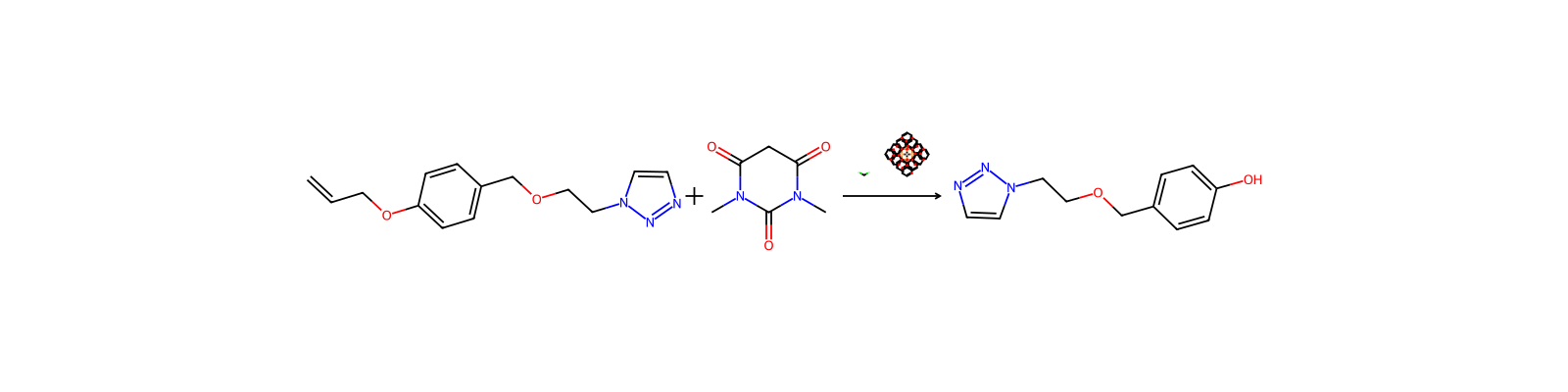
Related reactions
171 records


Compound notes
Loading…