HomeMCPWorkbenchSkills
HomeWorkbenchNotificationsMe
llms.txt · MCP GuidePrivacy Policy · Terms of Service · Supportv1.8.3
  1. Home
  2. /Compound

Diphenylphosphine

HCID 70017
New reaction
Print
Basic informationNames & identifiersPropertiesSafety & regulationChemistry & industryRelated reactionsCompound notes
Substructure searchFind similar structures

Basic information

CAS
829-85-6
Standard SMILES
c1ccc(Pc2ccccc2)cc1
InChIKey
GPAYUJZHTULNBE-UHFFFAOYSA-N
Molecular formula
C12H11P
Average molar mass
186.19 g/mol
Monoisotopic mass
186.05983698

Names & identifiers

Preferred name
Diphenylphosphine
IUPAC
diphenylphosphane
English name
Diphenylphosphine
Molecular formula
C12H11P
Molecular weight
186.19

Names & synonyms

Diphenylphosphine829-85-6Phosphine, diphenyl-F9B5T7O7ZYEINECS 212-591-4NSC-152123DIPHENYLPHOSPHINE [MI]DTXSID50232076NSC 152123RefChem:588939DTXCID50154567212-591-4
Show more names
Diphenylphosphin98% Ph2PHAURORA KA-1107Diphenyl phospinePHOSPHINE, DIPHENYLDPP/DIPHENYLPHOSPHIN
diphenylphosphaneHPPH2PH2PHMFCD00003040C12H11PUNII-F9B5T7O7ZYdiphenylphospinediphenyl-phosphane

Database identifiers

CAS
829-85-6
PubChem CID
70017
DTXSID
DTXSID50232076
UNII
F9B5T7O7ZY
EC Number
212-591-4
Nikkaji
J99.507J

Properties

Computed structural properties

XLogP
3
Topological polar surface area
0 Ų
Hydrogen bond donors
0
Hydrogen bond acceptors
0
Rotatable bonds
2
Heavy atoms
13
Formal charge
0
Complexity
116

Experimental & physicochemical properties

Chemical ClassesOther Classes -> Phosphorus Compounds
SpringerMaterials Properties31P nuclear magnetic resonance spectrum
Physical DescriptionClear liquid with strong unpleasant odor; [Merck Index] Clear light yellow liquid; [Sigma-Aldrich MSDS]

Physicochemical properties

Melting point
-14.5 °C · -14.5 °C
Boiling point
280 °C · 280 °C (536 °F; 553 K)
Density
1.07 g/cm3, · 1.07 g/cm3, liquid
vapor pressure
2 mm · 2 mm Hg ( 110 °C)
refractive index
20 · n20/D 1.625(lit.)
Flash point
-18 °C · -18°C (Hexane)
storage temp.
2 · 2-8°C
solubility
Chloroform
form
liquid
pka
0.03 · diphenylphosphine is weakly basic. The pKa of the protonated derivative is 0.03.
Specific Gravity
0.68 · 0.68
color
colorless
Water Solubility
Miscible with ethanol, ether, benzene, concentrated hydrochloric acid. Immiscible with water.
Sensitive
Air & Moisture Sensitive
Hydrolytic Sensitivity
8 · 8: reacts rapidly with moisture, water, protic solvents
BRN
742504 · 742504
InChIKey
GPAYUJZHTULNBE-UHFFFAOYSA-N
CAS DataBase Reference
829 · 829-85-6(CAS DataBase Reference)
FDA UNII
9 B5T7O7ZY · F9B5T7O7ZY
NIST Chemistry Reference
Phosphine, diphenyl-(829-85-6)
Comptox DTXSID
50232076 · DTXSID50232076
Symbol(GHS)
2 · GHS02,GHS07
Signal word
Danger
Hazard statements
250 · H250-H315-H319-H335
Precautionary statements
210 · P210-P222-P231+P232-P302+P352-P305+P351+P338-P370+P378
Hazard Codes
F,Xi
Risk Statements
17 · 17-36/37/38
Safety Statements
26 · 26-36
RIDADR
2845 · UN 2845 4.2/PG 1
WGK Germany
3 · 3
F
8 · 8-10-13-23
HazardClass
4.2 · 4.2
PackingGroup
I
HS Code
2931900090 · 2931900090
REACH Registrations
Active
Limited Quantities
0.5 L · 0.5 L (0.1 gallon)
Excepted Quantities
Max Inner Pack (30g or 30ml) and Max Outer Pack (300g or 300ml)

Safety & regulation

Safety information is for reference only and does not replace the supplier’s Safety Data Sheet (SDS), applicable regulations, or professional assessment.

GHS classification

GHS Classification · 4 items

Danger

H250 (100%): Catches fire spontaneously if exposed to air [Danger Pyrophoric liquids]

P210, P222, P231, P233, P261, P264, P264+P265, P271, P280, P302+P335+P334, P302+P352, P304+P340, P305+P351+P338, P319, P321, P332+P317, P337+P317, P362+P364, P370+P378, P403+P233, P405, and P501 (click each P-code to see the statement)

Aggregated GHS information provided per 50 reports by companies from 9 notifications to the ECHA C&L Inventory. Each notification may be associated with multiple companies.

Hazard information

Regulatory InformationStatus: Active Update: 15-03-2021 https://echa.europa.eu/registration-dossier/-/registered-dossier/28173
Hazards SummaryPyrophoric and irritating; [Merck Index] Pyrophoric; Reacts violently with water; A skin and strong eye irritant; [Sigma-Aldrich MSDS] See Triphenylphosphine and Phenylphosphine.
Hazard Classes and CategoriesPyr. Liq. 1 (100%)

Safety data

F
8-10-13-23
wgk
3
ridadr
UN 2845 4.2/PG 1
hs_code
2931900090
risk_code
17-36/37/38
Signal word
Danger
Symbol(GHS)
GHS02,GHS07
hazard_code
F,Xi
safety_code
26-36
hazard_class
4.2
packing_group
I
Hazard statements
H250-H315-H319-H335
Limited Quantities
0.5 L (0.1 gallon)
Excepted Quantities
Max Inner Pack (30g or 30ml) and Max Outer Pack (300g or 300ml)
REACH Registrations
Active
Precautionary statements
P210-P222-P231+P232-P302+P352-P305+P351+P338-P370+P378

Chemistry & industry

Uses & manufacturing

UsesUsed as a reagent in synthetic organic chemistry; [Merck Index]
Applications · 4 items

UsesIt can be used the intermediates of organic, catalysts.

Usessuzuki reaction

UsesDiphenylphosphine is used in the synthesis of aminophosphines for application as catalysts. It is also used in the preparation of chiral palladacycles with N-heterocyclic carbene ligands as catalysts.

UsesDiphenylphosphine acts as an intermediate in the preparation of diphenylphosphide derivatives, phosphonium salts, phosphine ligands and Wittig-Horner reagents. The presence of hydrogen atom bonded to phosphorus undergoes Michael-like addition to activated alkenes. It is involved in the preparation of 1,2-bis(diphenylphosphino)ethane and (phenyl-(phenylmethyl)phosphoryl)benzene. Further, it is used in the synthesis of aminophosphines and chiral palladacycles with N-heterocyclic carbene ligands as catalysts.

Preparation methods

PreparationDiphenylphosphine can be prepared from triphenylphosphine by reduction to lithium diphenylphosphide, which can be protonated to give the title compound:PPh3 + 2 Li → LiPPh2 + LiPhLiPPh2 + H2O → Ph2PH + LiOH

Upstream & downstream products

Upstream raw materials

HexaneChlorodiphenylphosphineTetrahydrofuranEthyl acetateLithium Aluminum HydrideTriphenylphosphineLithium

Downstream products

complex">the BINAP-Rh^ complexDiphenyl-2-pyridylphosphineBis(diphenylphosphino)methane1,4-Bis(diphenylphosphino)butane(R)-(+)-2,2'-Bis(diphenylphosphino)-1,1'-binaphthyl1.1'-Binaphthyl-2.2'-diphemyl phosphine[1,3-Bis(diphenylphosphino)propane]nickel(II) chloride1,3-Bis(diphenylphosphino)propane1,2-Bis(diphenylphosphino)ethane nickel(II) chloride1,2-Bis(diphenylphosphino)ethaneSULFENTRAZONEPhenylphosphine9H-fluoren-9-one 9H-fluoren-9-ylidenehydrazone2-(Diphenylphosphino)-biphenyl2-Diphenylphosphinobenzaldehyde1,1-Bis(diphenylphosphino)ethylene

Related reactions

257 records
New reaction record
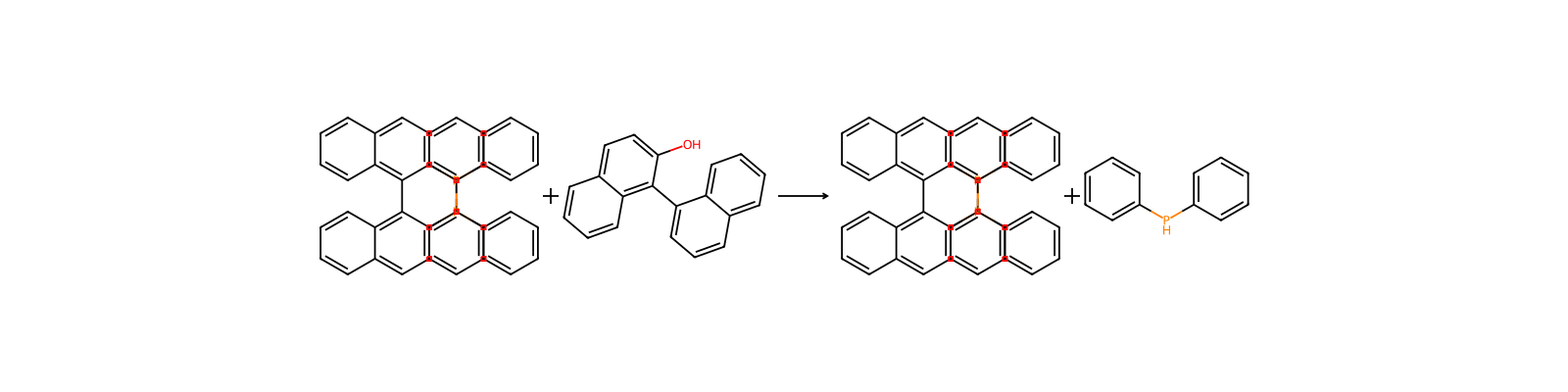
HRID 4761 reaction equation
HRID 4761As reactant
HRID 40425 reaction equation
HRID 40425As reactant
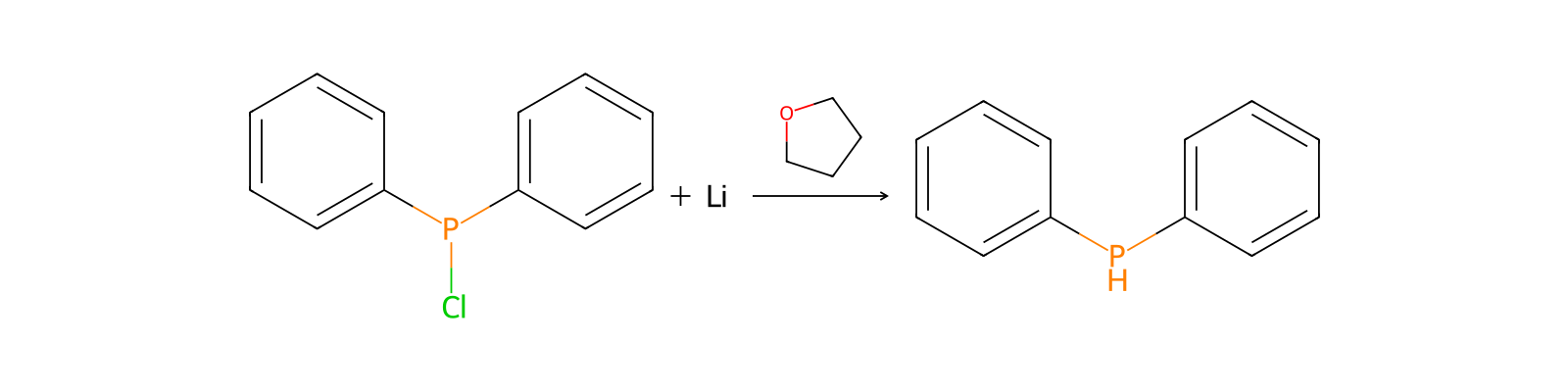
HRID 50150 reaction equation
HRID 50150As product
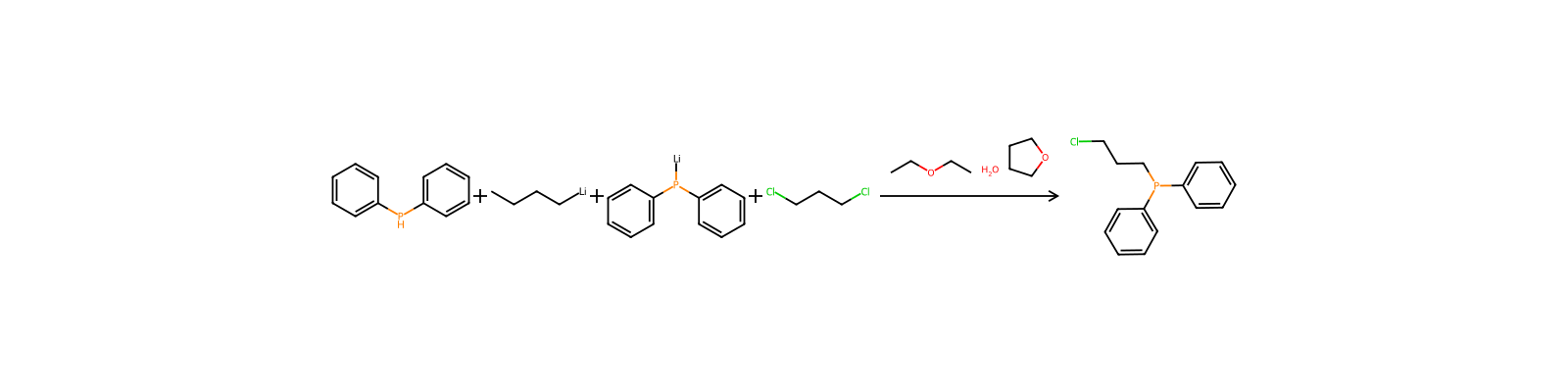
HRID 57383 reaction equation
HRID 57383As reactant
HRID 101630 reaction equation
HRID 101630As reactant
HRID 105169 reaction equation
HRID 105169As reactant
HRID 121133 reaction equation
HRID 121133As reactant
HRID 128064 reaction equation
HRID 128064As product
PreviousPage 1 of 33

Compound notes

On this pageBasic informationNames & identifiersPropertiesSafety & regulationChemistry & industryRelated reactionsCompound notes