HomeMCPWorkbenchSkills
HomeWorkbenchNotificationsMe
llms.txt · MCP GuidePrivacy Policy · Terms of Service · Supportv1.8.3
  1. Home
  2. /Compound

2-Chloroacrylonitrile

HCID 70198
New reaction
Print
Basic informationOverviewNames & identifiersPropertiesSafety & regulationChemistry & industryRelated reactionsCompound notes
Substructure searchFind similar structures

Basic information

CAS
920-37-6
Standard SMILES
C=C(Cl)C#N
InChIKey
OYUNTGBISCIYPW-UHFFFAOYSA-N
Molecular formula
C3H2ClN
Average molar mass
87.51 g/mol
Monoisotopic mass
86.98757674

Overview

2-chloroacrylonitrile appears as a liquid. Boiling point 190-192 °F (88-89 °C). Density 1.096 g / cm3. Flash point 44 °F. Highly toxic.

Names & identifiers

Preferred name
2-Chloroacrylonitrile
IUPAC
2-chloroprop-2-enenitrile
English name
2-Chloroacrylonitrile
Molecular formula
C3H2ClN
Molecular weight
87.51

Names & synonyms

2-Chloroacrylonitrile920-37-6Chloroacrylonitrile2-Propenenitrile, 2-chloro-2-Chloro-2-propenenitrileAcrylonitrile, 2-chloro-alpha-Chloroacrylonitrile2-chloropropenenitrile1-Chloro-1-cyanoethene1-Cyanovinyl chloride1-Cyano-1-chloroethene1-Chloro-1-cyanoethylene
Show more names
2-Chloroacrylonitrile ,99%oroacryLNSC 5117142-PROPENONITRLLE2-CHLORACRYLONITRIL2-chloropylenitrile2-chloroacrylnitrile2-CHLOROCYANOETHYLENE
FFJ1QHD154NSC-511714DTXSID6052613RefChem:86441DTXCID0031186213-055-22-chloroprop-2-enenitrile.alpha.-Chloroacrylonitrile

Database identifiers

CAS
920-37-6
PubChem CID
70198
DTXSID
DTXSID6052613
UNII
FFJ1QHD154
EC Number
213-055-2
Nikkaji
J55.139B

Properties

Computed structural properties

XLogP
1.4
Topological polar surface area
23.8 Ų
Hydrogen bond donors
0
Hydrogen bond acceptors
1
Rotatable bonds
0
Heavy atoms
5
Formal charge
0
Complexity
86.3

Experimental & physicochemical properties

Chemical ClassesNitrogen Compounds -> Nitriles
SpringerMaterials PropertiesSchoenflies notation
Flash Point · 2 items

44 °F (NTP, 1992)

44 °F

Boiling Point190 to 192 °F at 760 mmHg (NTP, 1992)
Melting Point-85 °F (NTP, 1992)
Physical Description · 2 items

2-chloroacrylonitrile appears as a liquid. Boiling point 190-192 °F (88-89 °C). Density 1.096 g / cm3. Flash point 44 °F. Highly toxic.

Highly toxic liquid with boiling point of 88-89 deg C; [CAMEO]

Physicochemical properties

Melting point
65 °C · −65 °C(lit.)
Boiling point
87 °C · 87 °C
Density
1.1 · 1.10
refractive index

Safety & regulation

Safety information is for reference only and does not replace the supplier’s Safety Data Sheet (SDS), applicable regulations, or professional assessment.

GHS classification

GHS Classification · 4 items

Danger

H225 (100%): Highly Flammable liquid and vapor [Danger Flammable liquids]

P203, P210, P233, P240, P241, P242, P243, P260, P262, P264, P270, P271, P273, P280, P284, P301+P316, P301+P330+P331, P302+P352, P302+P361+P354, P303+P361+P353, P304+P340, P305+P354+P338, P316, P318, P320, P321, P330, P342+P316, P361+P364, P363, P370+P378, P391, P403, P403+P233, P403+P235, P405, and P501 (click each P-code to see the statement)

Aggregated GHS information provided per 46 reports by companies from 6 notifications to the ECHA C&L Inventory. Each notification may be associated with multiple companies.

Hazard information

Regulatory InformationChemical: 2-Propenenitrile, 2-chloro-
DOT LabelFlammable Liquid
Fire HazardsExcerpt from ERG Guide 128 [Flammable Liquids (Water-Immiscible)]:
Health HazardsExcerpt from ERG Guide 128 [Flammable Liquids (Water-Immiscible)]:
Hazards SummaryHighly toxic; [Quick CPC] Polymerizable and highly flammable; [CAMEO] Lachrymator and skin irritant; Possible skin sensitizer; May be metabolized to cyanide; [MSDSonline]
Reactive GroupHalogenated Organic Compounds
Reactivity AlertsHighly Flammable
Reactivity Profile2-CHLOROACRYLONITRILE readily polymerizes, and copolymerizes with other unsaturated monomers (NTP, 1992).

Chemistry & industry

Uses & manufacturing

General Manufacturing Information2-Propenenitrile, 2-chloro-: ACTIVE
Applications · 3 items

UsesCommon reagent in cycloaddition reactions.1,2

Uses2-Chloroacrylonitrile (cas# 920-37-6) is a compound useful in organic synthesis.

General DescriptionA liquid. Boiling point 190-192°F (88-89°C). Density 1.096 g / cm3. Flash point 44°F. Highly toxic.

Upstream & downstream products

Upstream raw materials

Four-necked flaskPolymerization inhibitorPorcelain ring packing

Downstream products

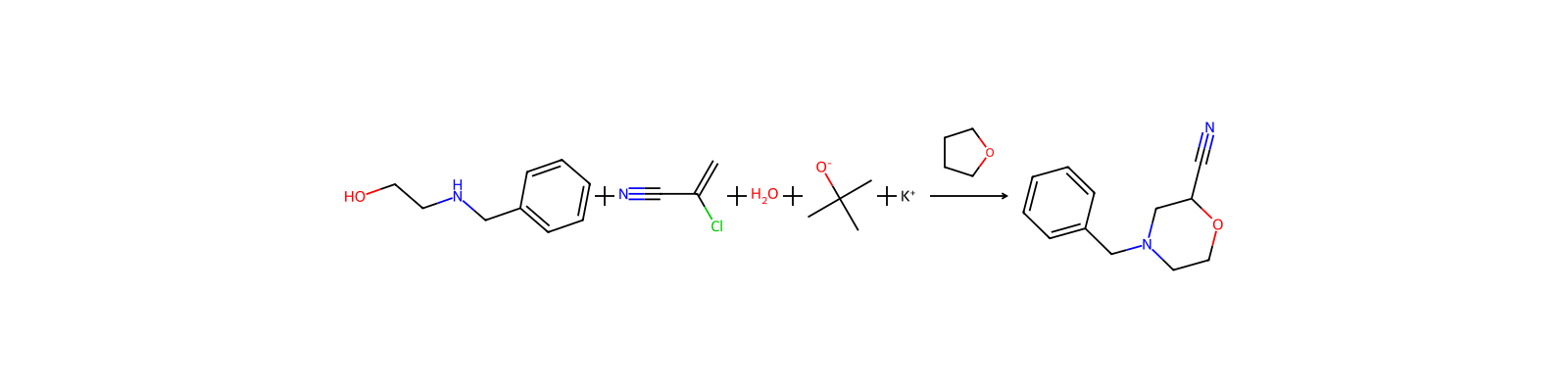
4-Benzyl-morpholine-2-carboxylic acidThieno[3,2-d]pyrimidin-4(3H)-one5-Butylpyridine-2-carbonitrileEthyl 3-aminothiophene-2-carboxylateFusaric acid2-CyanopiperazineMethyl 3-chlorothiophene-2-carboxylate

Related reactions

157 records
New reaction record
HRID 20540 reaction equation
HRID 20540As reactant
HRID 30312 reaction equation
HRID 30312As reactant
HRID 30313 reaction equation
HRID 30313As reactant
HRID 34759 reaction equation
HRID 34759As reactant
HRID 72598 reaction equation
HRID 72598As reactant
HRID 93085 reaction equation
HRID 93085As reactant
HRID 129647 reaction equation
HRID 129647As reactant
HRID 131183 reaction equation
HRID 131183As reactant
PreviousPage 1 of 20

Compound notes

On this pageBasic informationOverviewNames & identifiersPropertiesSafety & regulationChemistry & industryRelated reactionsCompound notes
1.43 · 1.43
Flash point
8 °C · 8 °C
storage temp.
2 · Inert atmosphere,2-8°C
solubility
Chloroform, Ethyl Acetate, Methanol (Very Slightly)
form
clear liquid
color
Colorless to Light yellow
BRN
773744 · 773744
InChI
InChI=1S/C3H2ClN/c1-3(4)2-5/h1H2
InChIKey
OYUNTGBISCIYPW-UHFFFAOYSA-N
SMILES
C(#N)C(Cl)=C
CAS DataBase Reference
920 · 920-37-6(CAS DataBase Reference)
EWG's Food Scores
1 · 1
FDA UNII
1 QHD154 · FFJ1QHD154
NIST Chemistry Reference
2 · 2-Propenenitrile, 2-chloro-(920-37-6)
EPA Substance Registry System
2 · 2-Chloroacrylonitrile (920-37-6)
Symbol(GHS)
2 · GHS02,GHS05,GHS06,GHS08,GHS09
Signal word
Danger
Hazard statements
225 · H225-H300+H330-H311-H314-H334-H350-H400
Precautionary statements
210 · P210-P273-P280-P303+P361+P353-P304+P340+P310-P305+P351+P338
Hazard Codes
F,T+,T,N
Risk Statements
45 · 45-24-26/28-34-43-50-40-36/37/38-28-23/24-11
Safety Statements
53 · 53-26-36/37/39-45-61-28A-16-1-28
RIDADR
3383 · UN 3383 6.1/PG 1
WGK Germany
3 · 3
RTECS
5525000 · AT5525000
Hazard Note
Flammable/Very Toxic
TSCA
TSCA listed
HazardClass
3.1 · 3.1
PackingGroup
II
HS Code
2926909090 · 2926909090
Excepted Quantities
Forbidden
Air and Water ReactionsHighly flammable.
Hazard Classes and CategoriesFlam. Liq. 2 (100%)

Safety & protection

Fire FightingFires involving this compound can be controlled with a dry chemical, carbon dioxide, foam, or Halon extinguisher. (NTP, 1992)
First Aid · 1 item

EYES: First check the victim for contact lenses and remove if present. Flush victim's eyes with water or normal saline solution for 20 to 30 minutes while simultaneously calling a hospital or poison control center. Do not put any ointments, oils, or medication in the victim's eyes without specific instructions from a physician. IMMEDIATELY transport the victim after flushing eyes to a hospital even if no symptoms (such as redness or irritation) develop.

Nonfire Spill ResponseSTORAGE PRECAUTIONS: You should store this material in a refrigerator. (NTP, 1992)
Isolation and EvacuationExcerpt from ERG Guide 128 [Flammable Liquids (Water-Immiscible)]:
Personal Protective Equipment (PPE)MINIMUM PROTECTIVE CLOTHING: If Tyvek-type disposable protective clothing is not worn during handling of this chemical, wear disposable Tyvek-type sleeves taped to your gloves.

Toxicology

Adverse EffectsOther Poison - Chemical Asphyxiant
Toxicity DataLC50 (mice) = 105 mg/m3/2h

Safety data

wgk
3
tsca
TSCA listed
rtecs
AT5525000
ridadr
UN 3383 6.1/PG 1
hs_code
2926909090
risk_code
45-24-26/28-34-43-50-40-36/37/38-28-23/24-11
Signal word
Danger
Symbol(GHS)
GHS02,GHS05,GHS06,GHS08,GHS09
hazard_code
F,T+,T,N
hazard_note
Flammable/Very Toxic
safety_code
53-26-36/37/39-45-61-28A-16-1-28
hazard_class
3.1
packing_group
II
Hazard statements
H225-H300+H330-H311-H314-H334-H350-H400
Excepted Quantities
Forbidden
Precautionary statements
P210-P273-P280-P303+P361+P353-P304+P340+P310-P305+P351+P338
Pentafluorothiophenol
4-Chlorothieno[3,2-d]pyrimidine