

Basic information
- CAS
939-97-9- Standard SMILES
CC(C)(C)c1ccc(C=O)cc1- InChIKey
OTXINXDGSUFPNU-UHFFFAOYSA-N- Molecular formula
- C11H14O
- Average molar mass
- 162.23 g/mol
- Monoisotopic mass
- 162.10446507
Names & identifiers
- Preferred name
- 4-tert-Butylbenzaldehyde
- IUPAC
- 4-tert-butylbenzaldehyde
- English name
- 4-tert-Butylbenzaldehyde
- Molecular formula
- C11H14O
- Molecular weight
- 162.23
Names & synonyms
4-tert-Butylbenzaldehyde939-97-9Benzaldehyde, 4-(1,1-dimethylethyl)-p-tert-Butylbenzaldehydep-t-Butylbenzaldehyde4-t-butyl benzaldehydeBenzaldehyde, p-tert-butyl-DTXSID6027343QXF0QY85034-(1,1-dimethylethyl)benzaldehydeEINECS 213-367-9para-tert-butylbenzaldehyde
Show more names
AKOS BBS-00003171TIMTEC-BB SBB0085644-tert-Butylbenzaldetert-ButylbenzaldehydLABOTEST-BB LT00689343p-tert.ButylbenzaldehydP-TERT-BUTYL BENZALDEHYDE
AI3-37199DTXCID707343EC 213-367-9RefChem:5268584-T-BUTYL BENZALDEHYDE [INCI]213-367-9InChI=1/C11H14O/c1-11(2,3)10-6-4-9(8-12)5-7-10/h4-8H,1-3H4-(tert-Butyl)benzaldehyde
Database identifiers
- CAS
939-97-9- PubChem CID
- 70324
- DTXSID
DTXSID6027343- ChEMBL
CHEMBL242962- ChEBI
CHEBI:232598- UNII
- QXF0QY8503
- EC Number
- 213-367-9
- Nikkaji
- J298.539J
Properties
Computed structural properties
- XLogP
- 3.1
- Topological polar surface area
- 17.1 Ų
- Hydrogen bond donors
- 0
- Hydrogen bond acceptors
- 1
- Rotatable bonds
- 2
- Heavy atoms
- 12
- Formal charge
- 0
- Complexity
- 147
Physicochemical properties
- Melting point
- 245 · 245-246 °C
- Boiling point
- 130 °C25 · 130 °C25 mm Hg(lit.)
- Density
- 0.97 g/mL · 0.97 g/mL at 25 °C(lit.)
- refractive index
- 20 · n20/D 1.53(lit.)
- Flash point
- 214 °F · 214 °F
- storage temp.
- 2 · Keep in dark place,Inert atmosphere,2-8°C
- form
- Liquid
- color
- Clear colorless to yellow
- explosive limit
- 1.3 · 1.3-5.6%(V)
- Water Solubility
- Soluble in water.
- Sensitive
- Air & Light Sensitive
- BRN
- 1906461 · 1906461
- Cosmetics Ingredients Functions
- FRAGRANCE
- InChI
- 1S/C11H14O/c1-11(2,3)10-6-4-9(8-12)5-7-10/h4-8H,1-3H3
- InChIKey
- OTXINXDGSUFPNU-UHFFFAOYSA-N
- SMILES
- [H]C(=O)c1ccc(cc1)C(C)(C)C
- LogP
- 3.33 · 3.330 (est)
- CAS DataBase Reference
- 939 · 939-97-9(CAS DataBase Reference)
- EWG's Food Scores
- 1 · 1
- FDA UNII
- 0 QY8503 · QXF0QY8503
- EPA Substance Registry System
- p-tert-Butylbenzaldehyde (939-97-9)
- UNSPSC Code
- 12352100 · 12352100
- NACRES
- 22 · NA.22
- Symbol(GHS)
- 6 · GHS06,GHS08,GHS09
- Signal word
- Danger
- Hazard statements
- 301 · H301-H317-H361fd-H400
- Precautionary statements
- 202 · P202-P261-P273-P280-P301+P310-P302+P352
- PPE
- Eyeshields, Faceshields, Gloves, type ABEK (EN14387) respirator filter
- Hazard Codes
- Xn,N,Xi
- Risk Statements
- 22 · 22-43-50/53
- Safety Statements
- 36 · 36/37-60-61
- RIDADR
- 3082 · UN 3082 9/PG 3
- WGK Germany
- 2 · 2
- F
- 8 · 8-9-23
- Hazard Note
- Irritant
- TSCA
- TSCA listed
- HazardClass
- 9 · 9
- PackingGroup
- III
- HS Code
- 29122990 · 29122990
- Storage Class
- 6.1 C · 6.1C - Combustible acute toxic Cat.3toxic compounds or compounds which causing chronic effects
- Hazard Classifications
- 3 OralAquatic · Acute Tox. 3 OralAquatic Acute 1Repr. 2Skin Sens. 1
- REACH Registrations
- Active
Safety & regulation
GHS classification
GHS Classification
Danger
H301 (68.8%): Toxic if swallowed [Danger Acute toxicity, oral];H302 (30.5%): Harmful if swallowed [Warning Acute toxicity, oral];H317 (71.4%): May cause an allergic skin reaction [Warning Sensitization, Skin];H334 (24.7%): May cause allergy or asthma symptoms or breathing difficulties if inhaled [Danger Sensitization, respiratory];H361 (68.2%): Suspected of damaging fertility or the unborn child [Warning Reproductive toxicity];H400 (98.7%): Very toxic to aquatic life [Warning Hazardous to the aquatic environment, acute hazard];H410 (30.5%): Very toxic to aquatic life with long lasting effects [Warning Hazardous to the aquatic environment, long-term hazard]
P203, P233, P260, P261, P264, P270, P271, P272, P273, P280, P284, P301+P316, P301+P317, P302+P352, P304+P340, P318, P321, P330, P333+P317, P342+P316, P362+P364, P391, P403, P405, and P501 (click each P-code to see the statement)
Aggregated GHS information provided per 154 reports by companies from 9 notifications to the ECHA C&L Inventory. Each notification may be associated with multiple companies.;Information may vary between notifications depending on impurities, additives, and other factors. The percentage value in parenthesis indicates the notified classification ratio from companies that provide hazard codes. Only hazard codes with percentage values above 10% are shown. For more detailed information, please visit ECHA C&L website.
Hazard information
Regulatory Information
Chemical: Benzaldehyde, 4-(1,1-dimethylethyl)-
Status: Active Update: 16-09-2010 https://echa.europa.eu/registration-dossier/-/registered-dossier/10941;Status: Active Update: 14-08-2013 https://echa.europa.eu/registration-dossier/-/registered-dossier/7170
Hazard Classes and CategoriesAcute Tox. 3 (68.8%);Acute Tox. 4 (30.5%);Skin Sens. 1 (71.4%);Resp. Sens. 1 (24.7%);Repr. 2 (68.2%);Aquatic Acute 1 (98.7%);Aquatic Chronic 1 (30.5%)
Regulatory information
Regulatory Information
Chemical: Benzaldehyde, 4-(1,1-dimethylethyl)-
Status: Active Update: 16-09-2010 https://echa.europa.eu/registration-dossier/-/registered-dossier/10941;Status: Active Update: 14-08-2013 https://echa.europa.eu/registration-dossier/-/registered-dossier/7170
Safety data
- F
- 8-9-23
- PPE
- Eyeshields, Faceshields, Gloves, type ABEK (EN14387) respirator filter
- wgk
- 2
- tsca
- TSCA listed
- ridadr
- UN 3082 9/PG 3
- hs_code
- 29122990
- risk_code
- 22-43-50/53
- Signal word
- Danger
- Symbol(GHS)
- GHS06,GHS08,GHS09
- hazard_code
- Xn,N,Xi
- hazard_note
- Irritant
- safety_code
- 36/37-60-61
- hazard_class
- 9
- Storage Class
- 6.1C - Combustible acute toxic Cat.3toxic compounds or compounds which causing chronic effects
- packing_group
- III
- Hazard statements
- H301-H317-H361fd-H400
- REACH Registrations
- Active
- Hazard Classifications
- Acute Tox. 3 OralAquatic Acute 1Repr. 2Skin Sens. 1
- Precautionary statements
- P202-P261-P273-P280-P301+P310-P302+P352
Chemistry & industry
Uses & manufacturing
General Manufacturing InformationBenzaldehyde, 4-(1,1-dimethylethyl)-: ACTIVE
Applications
UsesUsed for preparing isoxazolyl penicillin derivatives. 4-tert-Butylbenzaldehyde is suitable for use in a kinetic study to evaluate the kinetic constants (KI) for inhibition of mushroom tyrosinase by 4-substituted benzaldehydes. It is also an important intermediate for the synthesis of medicines, dyes, flavor and fragrance compounds.
Uses4-tert-Butylbenzaldehyde is suitable for use in a kinetic study to evaluate the kinetic constants (KI) for inhibition of mushroom tyrosinase by 4-substituted benzaldehydes.
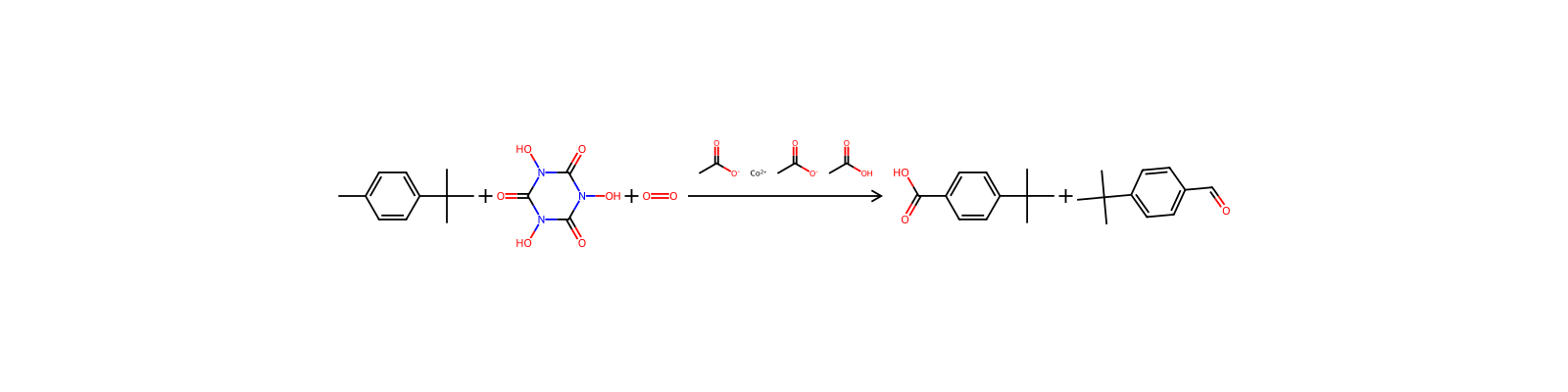
General Description4-tert-Butylbenzaldehyde is an important intermediate for the synthesis of medicines, dyes, flavor and fragrance compounds. It is reported to be formed during the partial oxidation of 4-tert-butyltoluene by hydrogen peroxide in glacial acetic acid, catalyzed by bromide ions in combination with cobalt(II) acetate or cerium(III) acetate. Schiff base reaction between 4-tert-butylaniline and 4-tert-butylbenzaldehyde in ethanol has been carried out on-chip in the matrix assisted laser desorption ionization (MALDI) chamber, the formed imine was detected in real time.
Upstream & downstream products
Upstream raw materials
Downstream products
Suppliers100 total
梯希爱(上海)化成工业发展有限公司021-67121386 · [email protected]
衢州润东化工有限公司0570-8789886 18892685668 · [email protected]
上海阿拉丁生化科技股份有限公司400-6206333 13167063860 · [email protected]
河北创海生物科技有限公司+86-86-13131129325 · [email protected]
Baoji Guokang Healthchem co.,ltd+8615604608665 15604608665 · [email protected]
Dayang Chem (Hangzhou) Co.,Ltd.+86-0571-88938639 17705817739 · [email protected]
Hebei Yanxi Chemical Co., Ltd.+86-17531190177 · [email protected]
上海迈瑞尔生化科技有限公司4006356688 18621169109 · [email protected]
阿法埃莎(中国)化学有限公司400-6106006 · [email protected]
安耐吉化学&3A(安徽泽升科技股份有限公司)400-0056266 · [email protected]
上海瀚鸿科技股份有限公司021-54306202 13764082696 · [email protected]
上海景颜化工科技有限公司13817811078 · [email protected]
嘉兴市艾森化工有限公司0573-85285100 18627885956 · [email protected]
Pure Chemistry Scientific Inc.001-857-928-2050 or 1-888-588-9418 · [email protected]
山东西亚化学有限公司13355009207 13355009207 · [email protected]
玛雅试剂+86 (573) 82222445 (0)18006601000 452520369 · [email protected]
四川库利南科技有限公司400-1166-196 18981987031 · [email protected]
天津希恩思生化科技有限公司400 638 7771 · [email protected]
常州创视电子科技有限公司+86 (519) 8829-2061 · [email protected]
河南多贝化工有限公司0370-2785118 17550508557 · [email protected]
艾科试剂4008-755-333 18080918076 · [email protected]
上海思域化工科技有限公司86-21-34053660 · [email protected]
赛默飞世尔科技(中国)有限公司800-810-5118 · [email protected]
江苏艾康生物医药研发有限公司025-66113011 13913916777 · [email protected]
TCI AMERICA800-4238616 · [email protected]
TOKYO CHEMICAL INDUSTRY CO., LTD.03-36680489 · [email protected]
TCI Europe320-37350700 · [email protected]
卡迪亚医药科技有限公司0371-86615086 18203638366 0371-86159066 13526786601
深圳康特腾科技有限公司86-0755-86635001 · [email protected]
上海睿升化工科技有限公司+86-021-50935922
无锡中坤生化科技有限公司+86 0510-85629785
北京环宇世纪化学科技有限公司hysj_bj.com
上海湄水化工科技有限公司021-60549325 18616193163
上海将来实业股份有限公司021-61552785 · [email protected]
安徽科迪达化工有限公司0554-2106669 · [email protected]
HBCChem, Inc.+1-510-219-6317 · [email protected]
日照力德士化工有限公司010-51268198 · [email protected]
郑州阿尔法化工有限公司0371-53732842 15981811963 · [email protected]
美岚实业(上海)有限公司021-58958189 · [email protected]
上海爱蝶实业有限公司021-58957966 18930537195 · [email protected]
广拓化学(上海)有限公司021-60899189-8001 18918189673 · [email protected]
雷丁试剂0510-85629785 18013409632 · [email protected]
湖南华腾制药有限公司400-8592883 · [email protected]
上海麦克林生化科技股份有限公司15221275939 15221275939 · [email protected]
上海孚一生物科技有限公司+86 (21) 61124340
湖北巨胜科技有限公司027-59599241 18871490274 · [email protected]
池州凯隆进出口贸易有限公司[email protected]
Sigma-Aldrich西格玛奥德里奇(上海)贸易有限公司021-61415566 800-8193336 · [email protected]
郑州科豫隆化工产品有限公司17319789407 17319789407 · [email protected]
九鼎化学(上海)科技有限公司4009209199 · [email protected]
Related reactions
187 records




Compound notes
Loading…