

Basic information
- CAS
141134-24-9- Standard SMILES
O=C(CBr)c1ccc(OC(F)F)cc1- InChIKey
JMUKUVDYZQDUSP-UHFFFAOYSA-N- Molecular formula
- C9H7BrF2O2
- Average molar mass
- 265.05 g/mol
- Monoisotopic mass
- 263.95975
Names & identifiers
- Preferred name
- 2-Bromo-1-(4-(difluoromethoxy)phenyl)ethan-1-one
- IUPAC
- 2-bromo-1-[4-(difluoromethoxy)phenyl]ethanone
- English name
- 4-(Difluoromethoxy)phenacyl bromide
- Molecular formula
- C9H7BrF2O2
- Molecular weight
- 265.05
Names & synonyms
141134-24-92-bromo-1-[4-(difluoromethoxy)phenyl]ethan-1-oneDTXSID603515602-bromo-1-(4-(difluoromethoxy)phenyl)ethan-1-oneRefChem:256820DTXCID90302626670-823-32-Bromo-1-(4-(difluoromethoxy)phenyl)ethanone4-(difluoromethoxy)phenacyl bromide2-bromo-1-[4-(difluoromethoxy)phenyl]ethanone2-Bromo-4'-(difluoromethoxy)acetophenoneMFCD00052200
Show more names
4-(Difluoromethoxy)phenacylbromide98%4-(Difluoromethoxy)phenacyl bromide 98%2-Bromo-4\'-(difluoromethoxy)acetophenone1-(4-difluoromethoxyphenyl)-2-bromoethan-1-oneEthanone, 2-bromo-1-[4-(difluoromethoxy)phenyl]-2-Bromo-1-[4-(difluoromethoxy)phenyl]ethan-1-one,97%
Ethanone,2-bromo-1-[4-(difluoromethoxy)phenyl]-SCHEMBL18563024-difluoromethoxyphenacyl bromide4-difluoromethoxylphenacyl bromideYQF1424SBB1028722-bromo-4'-difluoromethoxyacetophenoneAKOS001116769
Database identifiers
- CAS
141134-24-9- PubChem CID
- 703496
- DTXSID
DTXSID60351560- EC Number
- 670-823-3
- Nikkaji
- J1.806.741B
Properties
Computed structural properties
- XLogP
- 3.3
- Topological polar surface area
- 26.3 Ų
- Hydrogen bond donors
- 0
- Hydrogen bond acceptors
- 4
- Rotatable bonds
- 4
- Heavy atoms
- 14
- Formal charge
- 0
- Complexity
- 191
Physicochemical properties
- Melting point
- 66 · 66-68°C
- Boiling point
- 301.9 · 301.9±37.0 °C(Predicted)
- Density
- 1.564 · 1.564±0.06 g/cm3(Predicted)
- form
- crystals
- color
- Clear to white, tiny
- Sensitive
- Moisture Sensitive/Lachrymatory
- InChI
- 1S/C9H7BrF2O2/c10-5-8(13)6-1-3-7(4-2-6)14-9(11)12/h1-4,9H,5H2
- InChIKey
- JMUKUVDYZQDUSP-UHFFFAOYSA-N
- SMILES
- FC(F)Oc1ccc(cc1)C(=O)CBr
- CAS DataBase Reference
- 141134 · 141134-24-9(CAS DataBase Reference)
- UNSPSC Code
- 12352200 · 12352200
- Symbol(GHS)
- 7 · GHS07
- Signal word
- Warning
- Hazard statements
- 319 · H319
- Precautionary statements
- 305 · P305+P351+P338
- Hazard Codes
- C,T,Xi
- Risk Statements
- 34 · 34-36/37/38-36
- Safety Statements
- 26 · 26-36/37/39
- RIDADR
- 1759 · 1759
- WGK Germany
- 3 · 3
- Hazard Note
- Toxic/Corrosive/Lachrymatory/Moisture Sensitive
- HazardClass
- IRRITANT
- HS Code
- 2914790090 · 2914790090
- Storage Class
- 13 · 13 - Non Combustible Solids
- Hazard Classifications
- 2 · Eye Irrit. 2
Safety & regulation
GHS classification
GHS Classification
Danger
H302 (50%): Harmful if swallowed [Warning Acute toxicity, oral];H312 (50%): Harmful in contact with skin [Warning Acute toxicity, dermal];H314 (50%): Causes severe skin burns and eye damage [Danger Skin corrosion/irritation];H315 (50%): Causes skin irritation [Warning Skin corrosion/irritation];H319 (50%): Causes serious eye irritation [Warning Serious eye damage/eye irritation];H332 (50%): Harmful if inhaled [Warning Acute toxicity, inhalation];H335 (75%): May cause respiratory irritation [Warning Specific target organ toxicity, single exposure; Respiratory tract irritation]
P260, P261, P264, P264+P265, P270, P271, P280, P301+P317, P301+P330+P331, P302+P352, P302+P361+P354, P304+P340, P305+P351+P338, P305+P354+P338, P316, P317, P319, P321, P330, P332+P317, P337+P317, P362+P364, P363, P403+P233, P405, and P501 (click each P-code to see the statement)
Aggregated GHS information provided per 4 reports by companies from 4 notifications to the ECHA C&L Inventory. Each notification may be associated with multiple companies.;Information may vary between notifications depending on impurities, additives, and other factors. The percentage value in parenthesis indicates the notified classification ratio from companies that provide hazard codes. Only hazard codes with percentage values above 10% are shown. For more detailed information, please visit ECHA C&L website.
Hazard information
Hazard Classes and CategoriesAcute Tox. 4 (50%);Acute Tox. 4 (50%);Skin Corr. 1B (50%);Skin Irrit. 2 (50%);Eye Irrit. 2 (50%);Acute Tox. 4 (50%);STOT SE 3 (75%)
Safety data
- wgk
- 3
- ridadr
- 1759
- hs_code
- 2914790090
- risk_code
- 34-36/37/38-36
- Signal word
- Warning
- Symbol(GHS)
- GHS07
- hazard_code
- C,T,Xi
- hazard_note
- Toxic/Corrosive/Lachrymatory/Moisture Sensitive
- safety_code
- 26-36/37/39
- hazard_class
- IRRITANT
- Storage Class
- 13 - Non Combustible Solids
- Hazard statements
- H319
- Hazard Classifications
- Eye Irrit. 2
- Precautionary statements
- P305+P351+P338
Chemistry & industry
Suppliers26 total
Career Henan Chemica Co+86-0371-86658258 +86-13203830695 · [email protected]
Aladdin Scientific[email protected]
Syntechem Co.,Ltd[email protected]
上海迈瑞尔生化科技有限公司4006356688 18621169109 · [email protected]
武汉凯威斯科技有限公司86-027-67849912 · [email protected]
Aceschem Inc.+1-817863-6948 +1-(817)863-6948 · [email protected]
广东元丰化学试剂有限公司0751-2829979 13376591640 · [email protected]
赛默飞世尔科技(中国)有限公司800-810-5118 · [email protected]
上海遐瑞医药科技有限公司+86 21 61551611
Clearsynth Labs Limited+91-22-26355700 · [email protected]
上海安米克化学品有限公司微信 17321281695 18019252918 · [email protected]
九鼎化学(上海)科技有限公司4009209199 · [email protected]
广东翁江化学试剂有限公司0751-2815987 13927875076 · [email protected]
江苏艾康生物医药研发有限公司025-66061636 19370895928 · [email protected]
厦门盈融达化工有限公司+86-0592-6210733 · [email protected]
武汉爱默尔特科技有限公司027-888-4366503 13986279625 · [email protected]
Alchem Pharmtech,Inc.8485655694 · [email protected]
广东元丰化学试剂有限公司0751-2829979 13318584237 · [email protected]
武汉凯威斯科技有限公司027-67849912 · [email protected]
Coresyn Pharmatech Co., Ltd.+86-571-86626709 +86-18157142896 · [email protected]
济南思考化学有限公司0531-0000 · [email protected]
重庆卡兰医药有限公司[email protected]
北京百灵威科技有限公司18210857532 18210857532 · [email protected]
DAYANG CHEM (HANGZHOU) CO.,LTD+86-88938639 +86-17705817739 · [email protected]
北京海特乐思克科技有限公司15210893940; 15116916250 · [email protected]
上海信旗医药科技有限公司+86-21-54098501 · [email protected]
Related reactions
11 records
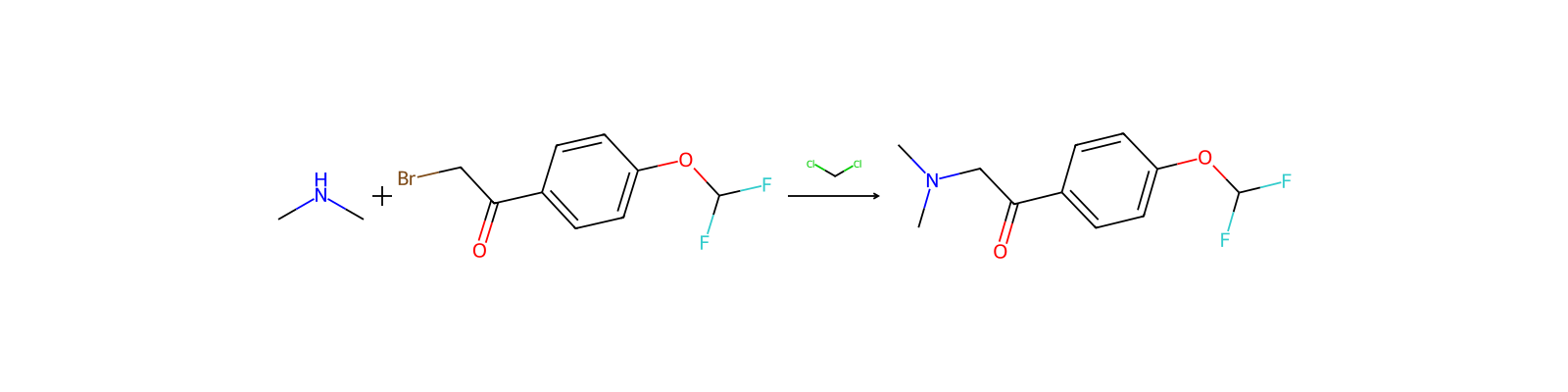


Compound notes
Loading…