
Ethyl 4-piperidinecarboxylate
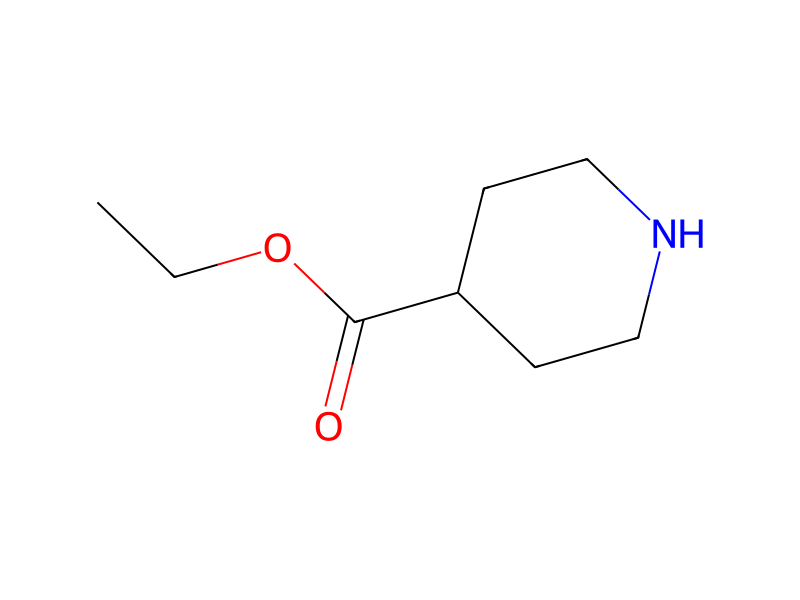
Basic information
- CAS
1126-09-6- Standard SMILES
CCOC(=O)C1CCNCC1- InChIKey
RUJPPJYDHHAEEK-UHFFFAOYSA-N- Molecular formula
- C8H15NO2
- Average molar mass
- 157.21 g/mol
- Monoisotopic mass
- 157.11027872
Names & identifiers
- Preferred name
- Ethyl 4-piperidinecarboxylate
- IUPAC
- ethyl piperidine-4-carboxylate
- English name
- Ethyl 4-piperidinecarboxylate
- Molecular formula
- C8H15NO2
- Molecular weight
- 157.21
Names & synonyms
Ethyl piperidine-4-carboxylate1126-09-6Ethyl 4-piperidinecarboxylateEthyl isonipecotate4-CarbethoxypiperidineEINECS 214-416-7DTXSID90150109NSC 93792RefChem:138794DTXCID9072600214-416-7RUJPPJYDHHAEEK-UHFFFAOYSA-N
Show more names
Ethyl isonipcotinate4-piperidinecarboxylateH-Nip-OEtH-DL-Inp-OEtAKOS MSC-0737RARECHEM AH CK 0180
Piperidine-4-carboxylic acid ethyl esterMFCD000060034-Piperidinecarboxylic acid, ethyl esterIsonipecotic Acid Ethyl Esterethylpiperidine-4-carboxylate4-Carboethoxypiperidine4-Piperidinecarboxylic Acid Ethyl EsterEthylisonipecotate
Database identifiers
- CAS
1126-09-6- PubChem CID
- 70770
- DTXSID
DTXSID90150109- ChEMBL
CHEMBL2251608- UNII
- DZ369E63UB
- EC Number
- 214-416-7
- Nikkaji
- J27.969B
Properties
Computed structural properties
- XLogP
- 0.5
- Topological polar surface area
- 38.3 Ų
- Hydrogen bond donors
- 1
- Hydrogen bond acceptors
- 3
- Rotatable bonds
- 3
- Heavy atoms
- 11
- Formal charge
- 0
- Complexity
- 130
Experimental & physicochemical properties
SpringerMaterials PropertiesDielectric constant
Physicochemical properties
- Boiling point
- 204 °C · 204 °C(lit.)
- Density
- 1.02 g/mL · 1.02 g/mL at 25 °C(lit.)
- vapor pressure
- 39.4 Pa · 39.4Pa at 25℃
- refractive index
- 20 · n20/D 1.459(lit.)
- Flash point
- 176 °F · 176 °F
- storage temp.
- Keep in dark place,Inert atmosphere,Room temperature
- form
- Liquid
- pka
- 9.83 · 9.83±0.10(Predicted)
- color
- Clear colorless to slightly brown
- Water Solubility
- miscible
- BRN
- 118419 · 118419
- InChI
- InChI=1S/C8H15NO2/c1-2-11-8(10)7-3-5-9-6-4-7/h7,9H,2-6H2,1H3
- InChIKey
Safety & regulation
Safety information is for reference only and does not replace the supplier’s Safety Data Sheet (SDS), applicable regulations, or professional assessment.
GHS classification
GHS Classification
Warning
H315 (100%): Causes skin irritation [Warning Skin corrosion/irritation]
P261, P264, P264+P265, P271, P280, P302+P352, P304+P340, P305+P351+P338, P319, P321, P332+P317, P337+P317, P362+P364, P403+P233, P405, and P501 (click each P-code to see the statement)
Aggregated GHS information provided per 22 reports by companies from 12 notifications to the ECHA C&L Inventory. Each notification may be associated with multiple companies.
Hazard information
Regulatory Information
Status: Active Update: 19-12-2019 https://echa.europa.eu/registration-dossier/-/registered-dossier/19718
Ethyl 4-piperidinecarboxylate: Does not have an individual approval but may be used under an appropriate group standard
Hazard Classes and CategoriesSkin Irrit. 2 (100%)
Safety data
- wgk
- 3
- ridadr
- UN2735
- hs_code
- 29333999
- risk_code
- 34-36/37/38
- Signal word
- Warning
- Symbol(GHS)
- GHS07
- hazard_code
- C,Xi
- hazard_note
- Irritant
- safety_code
- 23-24/25-36-26
- Hazard statements
- H227-H315-H319-H335
- REACH Registrations
- Active
Chemistry & industry
Applications
UsesReactant for synthesis of:• ;SMN protein modulators1• ;β-aryl and β-amino-substituted aliphatic esters by rhodium catalyzed tandem double bond migration/conjugate addition2• ;Nitroethylenediamines by nucleophilic ring opening of nitroimidazolidinone3• ;RhoA inhibitors for cardiovascular disease therapy4• ;Saccharin derived Mannich bases as antimicrobials and antioxidants5Reactant for one-pot reductive amination and Suzuki-Miyaura cross coupling of formyl aryl and heteroaryl MIDA boronates6
UsesReactant for synthesis of SMN protein modulators and β-aryl and β-amino-substituted aliphatic esters by rhodium catalyzed tandem double bond migration/conjugate addition.
UsesIt is used as a reactant for synthesis of SMN protein modulators, β-aryl and β-amino-substituted aliphatic esters by rhodium catalyzed tandem double bond migration/conjugate addition, nitroethylenediamines by nucleophilic ring opening of nitroimidazolidinone. It is also involved in the reactions of RhoA inhibitors for cardiovascular disease therapy and saccharin derived Mannich bases as antimicrobials and antioxidants. It is employed as a reactant for one-pot reductive amination and Suzuki-Miyaura cross coupling of formyl aryl and heteroaryl MIDA boronates.
Upstream & downstream products
Upstream raw materials
Downstream products
Related reactions
715 records

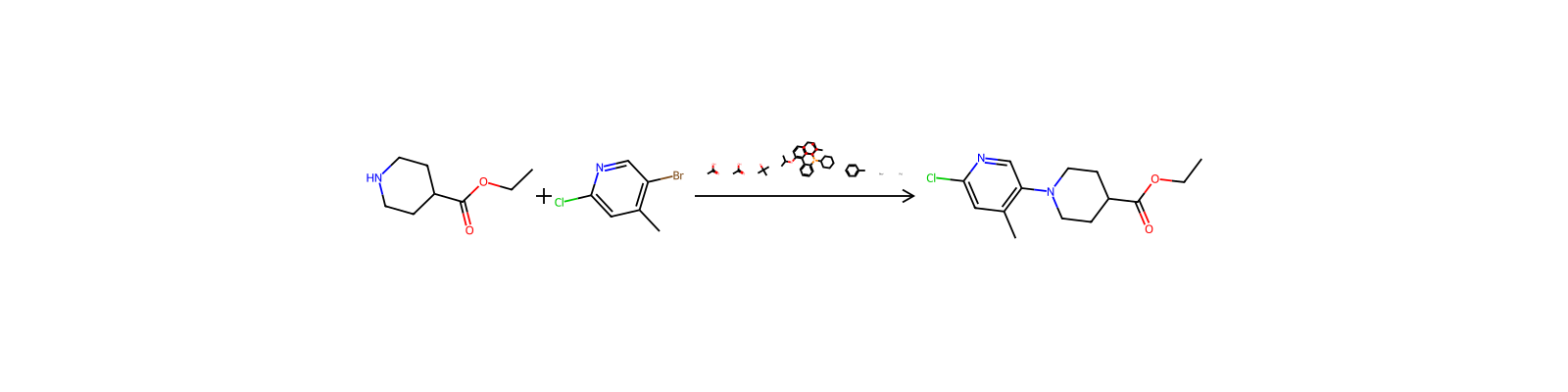

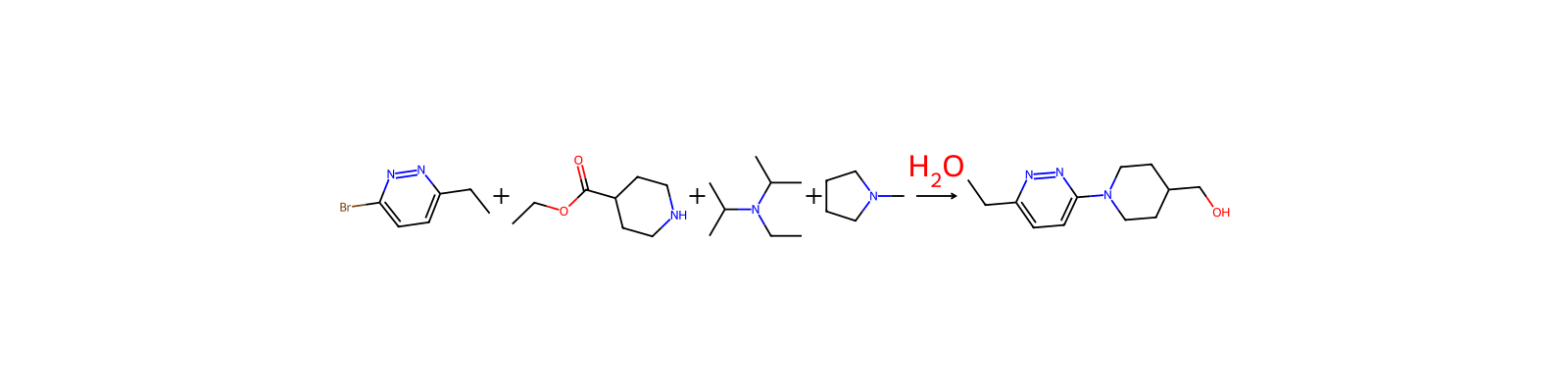

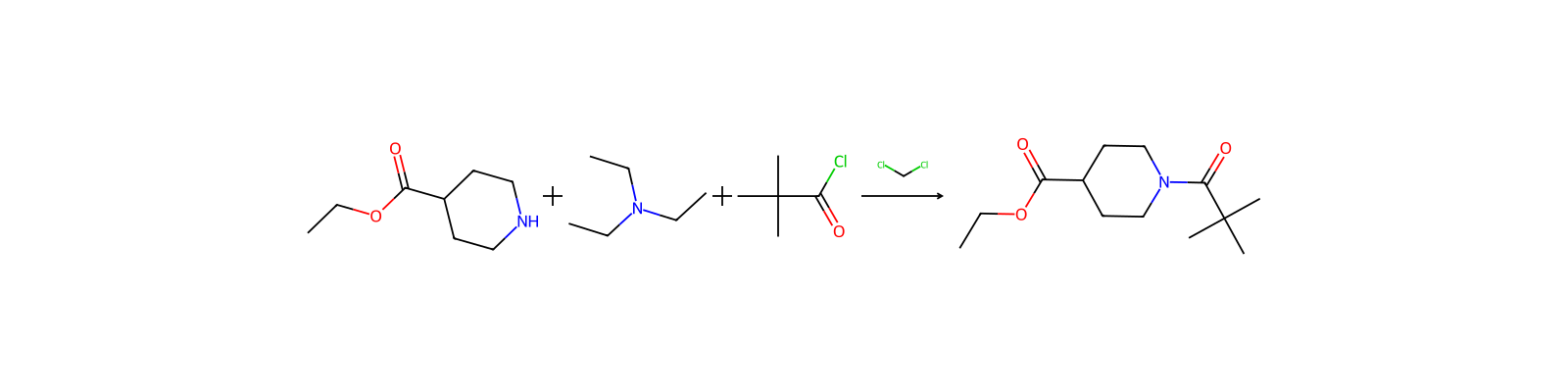
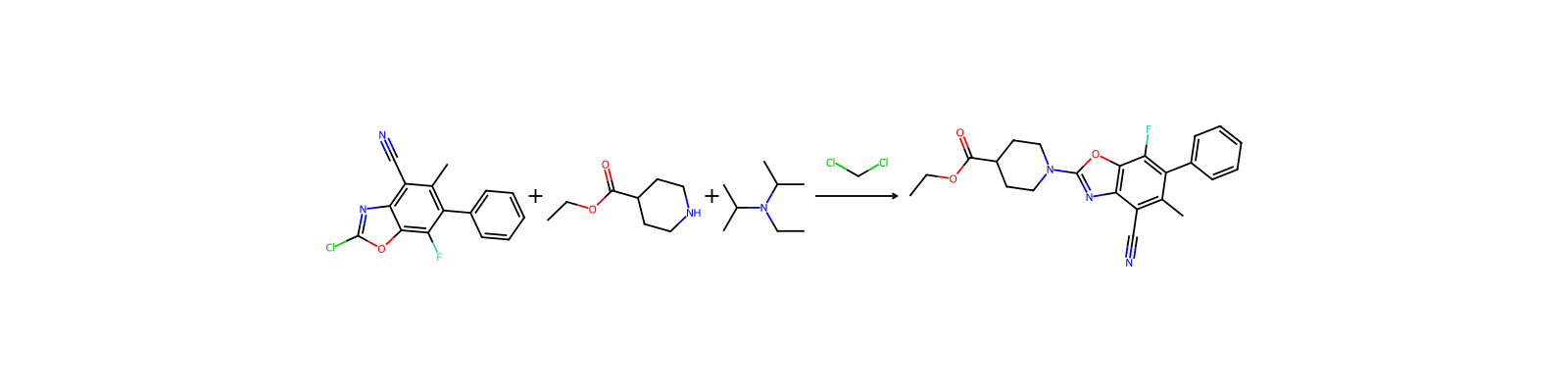
Compound notes
Loading…