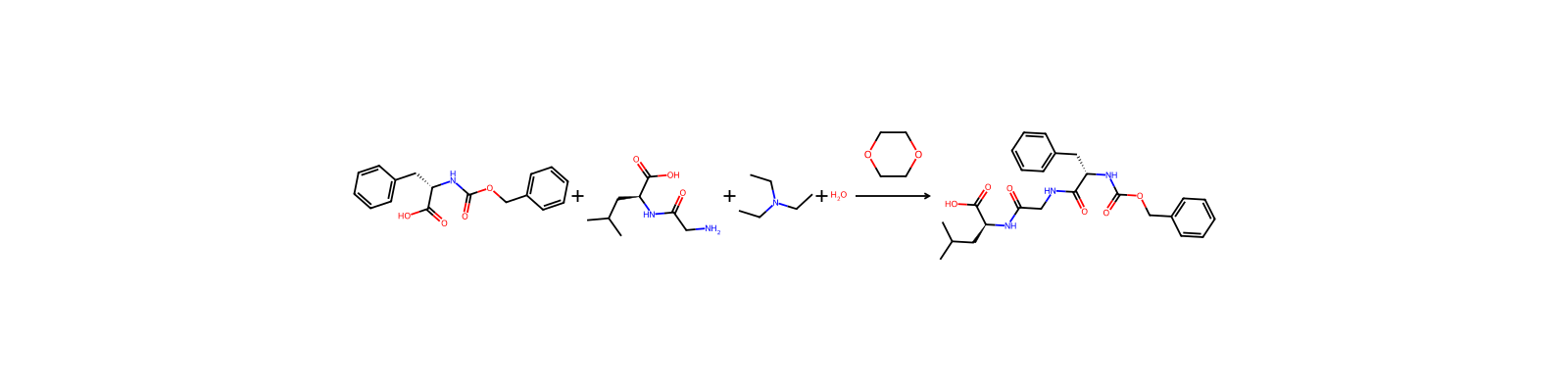
HRID 25694As reactant

1161-13-3O=C(N[C@@H](Cc1ccccc1)C(=O)O)OCc1ccccc1RRONHWAVOYADJL-HNNXBMFYSA-NRN given refers to (L-Phe)-isomer
1161-13-3DTXSID30151276CHEMBL66143Safety information is for reference only and does not replace the supplier’s Safety Data Sheet (SDS), applicable regulations, or professional assessment.
This chemical does not meet GHS hazard criteria for 33.3% (1 of 3) of reports.
Danger
H315 (33.3%): Causes skin irritation [Warning Skin corrosion/irritation]
P233, P260, P261, P264, P264+P265, P271, P280, P284, P302+P352, P304+P340, P305+P351+P338, P319, P321, P332+P317, P337+P317, P342+P316, P362+P364, P403, P403+P233, P405, and P501 (click each P-code to see the statement)
Aggregated GHS information provided per 3 reports by companies from 3 notifications to the ECHA C&L Inventory. Each notification may be associated with multiple companies.
UsesInhibitor of thermolysin
UsesN-(Carbobenzyloxy)-L-phenylalanine is used in the synthesis of neurokinin antagonists. Furthermore it is used in the preparation of Co(II), Zn(II), and Cd(II) complexes with N-benzyloxycarbonyl-S-phenylalanine that displays antimicrobial activity against common strains of bacteria.
UsesN-Cbz-L-Phenylalanine is used in the synthesis of neurokinin antagonists. Furthermore it is used in the preparation of Co(II), Zn(II), and Cd(II) complexes with N-benzyloxycarbonyl-S-phen ylalanine that displays antimicrobial activity against common strains of bacteria.