
4-Bromobiphenyl

Basic information
- CAS
92-66-0- Standard SMILES
Brc1ccc(-c2ccccc2)cc1- InChIKey
PKJBWOWQJHHAHG-UHFFFAOYSA-N- Molecular formula
- C12H9Br
- Average molar mass
- 233.1 g/mol
- Monoisotopic mass
- 231.98876
Overview
4-bromobiphenyl appears as colorless crystals. Insoluble in water. (NTP, 1992)
Names & identifiers
- Preferred name
- 4-Bromobiphenyl
- IUPAC
- 1-bromo-4-phenylbenzene
- English name
- 4-Bromobiphenyl
- Molecular formula
- C12H9Br
- Molecular weight
- 233.1
Names & synonyms
4-BROMOBIPHENYL92-66-04-Bromo-1,1'-biphenylp-Bromobiphenyl1-bromo-4-phenylbenzene4-Bromodiphenylp-Bromodiphenyl4-Biphenyl bromide1,1'-Biphenyl, 4-bromo-p-PhenylbromobenzeneBiphenyl, 4-bromo-4-Biphenylyl bromide
Show more names
pbb 3The broMine biphenyl1,1’-(biphenyl,-bromo-4-BROMOBIPHENYL PESTANAL, 250 MG4-Br-BPPBB NO 3
p-Biphenylyl bromidep-Phenylphenyl bromide(4-Bromophenyl)benzeneDTXSID4024640OE77OKH5BLNSC-406933DTXCID804640RefChem:98187
Database identifiers
- CAS
92-66-0- PubChem CID
- 7101
- DTXSID
DTXSID4024640- ChEMBL
CHEMBL1399688- UNII
- OE77OKH5BL
- EC Number
- 202-176-6
- Nikkaji
- J95.604J
Properties
Computed structural properties
- XLogP
- 4.7
- Topological polar surface area
- 0 Ų
- Hydrogen bond donors
- 0
- Hydrogen bond acceptors
- 0
- Rotatable bonds
- 1
- Heavy atoms
- 13
- Formal charge
- 0
- Complexity
- 141
Experimental & physicochemical properties
PolymersOther Classes -> Halogenated Polyaromatics
SpringerMaterials Properties13C nuclear magnetic resonance spectrum
LogP4.96
Density0.9327 (NTP, 1992) - Less dense than water; will float
SolubilityInsoluble (NTP, 1992)
Flash Point290 °F (NTP, 1992)
Boiling Point590 °F at 760 mmHg (NTP, 1992)
Melting Point196.2 °F (NTP, 1992)
Physical Description
4-bromobiphenyl appears as colorless crystals. Insoluble in water. (NTP, 1992)
Colorless solid; [CAMEO] White crystalline solid; [Sigma-Aldrich MSDS]
Collision Cross Section136.7 Ų [M]+ [CCS Type: TIMS, Method: calibration with PAHs]
Safety & regulation
Safety information is for reference only and does not replace the supplier’s Safety Data Sheet (SDS), applicable regulations, or professional assessment.
GHS classification
GHS Classification
This chemical does not meet GHS hazard criteria for 4% (2 of 50) of reports.
Danger
H302 (92%): Harmful if swallowed [Warning Acute toxicity, oral]
P261, P264, P264+P265, P270, P271, P273, P280, P301+P317, P302+P352, P304+P340, P305+P354+P338, P317, P319, P321, P330, P332+P317, P362+P364, P391, P403+P233, P405, and P501 (click each P-code to see the statement)
Aggregated GHS information provided per 50 reports by companies from 11 notifications to the ECHA C&L Inventory. Each notification may be associated with multiple companies.
Hazard information
Regulatory Information
Regulation (EC) No 178/2002 (amended)
S - indicates a substance that is identified in a final Significant New Use Rule.
REACH registered substance: 4-bromobiphenyl (EC: 202-176-6)
Restricted substance: 4-bromobiphenyl
DOT LabelClass 9
Fire HazardsThis chemical is combustible. (NTP, 1992)
Health HazardsExcerpt from ERG Guide 171 [Substances (Low to Moderate Hazard)]:
Hazards SummaryAn irritant that may cause serious eye injury; Harmful by ingestion; [Sigma-Aldrich MSDS] See Polybrominated biphenyls.
Reactive GroupAryl Halides
Reactivity Profile4-BROMOBIPHENYL may be sensitive to light. This compound can react with oxidizing materials. (NTP, 1992)
Air and Water Reactions
Chemistry & industry
Pharmacology
Metabolism/Metabolites
PBBs can be absorbed via oral, inhalation, and dermal routes. Due to their lipophilic nature, PBBs, especially the highly brominated congeners, tend to accumulate in lipid-rich tissues such as the liver, adipose, skin, and breast milk. Certain PBB compounds are metabolized by the microsomal monooxygenase system catalyzed by cytochrome P-450 of the type induced by phenobarbital. The rate of metabolism may depends on the bromine substitution pattern. PBB congeners of low bromine content are transformed into hydroxylated derivatives that are predominately eliminated in the urine. Highly brominated congeners are either retained or excreted unchanged in the feces. (L628)
Uses & manufacturing
Uses
Used in chemical synthesis; [NTP]
PBBs can be used as flame retardants and may be added to the plastics used to make products like computer monitors, televisions, textiles, and plastic foams to make them difficult to burn. However, the use of PBBs is banned or restricted in most areas due to their toxicity and persistence in the environment. (L628, L629)
General Manufacturing Information1,1'-Biphenyl, 4-bromo-: ACTIVE
Applications
Uses4-Bromobiphenyl is used as halogenated hydrocarbon and Intermediates of Liquid Crystals. It is also used in used in the synthesis of 4-biphenylthiolate.
Uses4-Bromobiphenyl is used as a reagent in the synthesis of spirooxindole derivatives for use as AMPK activators. It is also used as a reagent in the preparation of indenoindole derivatives as organic electroluminescent device materials.
General DescriptionColorless crystals. Insoluble in water.
Upstream & downstream products
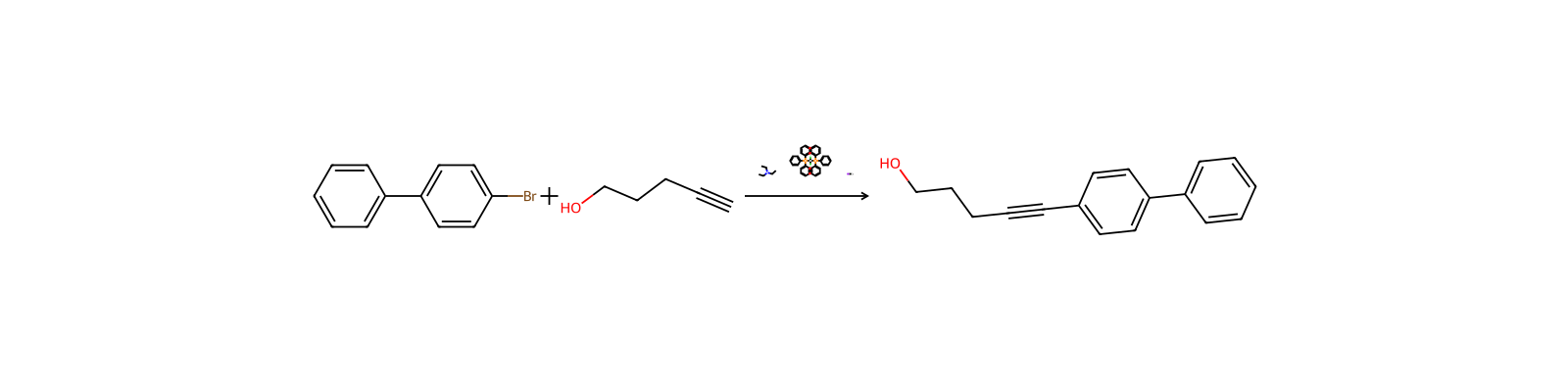
Related reactions
132 records


Compound notes
Loading…