HomeMCPWorkbenchSkills
HomeWorkbenchNotificationsMe
llms.txt · MCP GuidePrivacy Policy · Terms of Service · Supportv1.8.0
  1. Home
  2. /Compound

Phenothiazine

HCID 7108
New noteNew reactionRequest quotes
Print preview

Completing data — refresh the page later to see the latest

Basic informationOverviewNames & identifiersPropertiesSafety & regulationChemistry & industryRelated reactionsCompound notes
Substructure searchFind similar structures

Basic information

CAS
92-84-2
Standard SMILES
c1ccc2c(c1)Nc1ccccc1S2
InChIKey
WJFKNYWRSNBZNX-UHFFFAOYSA-N
Molecular formula
C12H9NS
Average molar mass
199.27 g/mol
Monoisotopic mass
199.04557046

Overview

Phenothiazine is a light green to steel-blue powder. Acquires a greenish-brown tint under exposure to sunlight. (NTP, 1992)

Names & identifiers

Preferred name
Phenothiazine
IUPAC
10H-phenothiazine
English name
Phenothiazine
Molecular formula
C12H9NS
Molecular weight
199.27

Names & synonyms

PHENOTHIAZINE10H-Phenothiazine92-84-2ThiodiphenylamineDibenzothiazineContavermNemazineDibenzo-1,4-thiazinePhenthiazineFenovermPhenosanFeeno
Show more names
XL-50ent38BivermENT 38OrimonReconox
HelmetinaPadopheneSouframinePhenoxurAgrazineAntivermFentiazinLethelmin

Database identifiers

CAS
92-84-2
PubChem CID
7108
DTXSID
DTXSID5021126
ChEMBL
CHEMBL828
ChEBI
CHEBI:37931
UNII
GS9EX7QNU6
EC Number
202-196-5
Nikkaji
J3.932B

Properties

Computed structural propertiesFilling in

XLogP
4.2
Topological polar surface area
37.3 Ų
Hydrogen bond donors
1
Hydrogen bond acceptors
2
Rotatable bonds
0
Heavy atoms
14
Formal charge
0
Complexity
186

Experimental & physicochemical properties

Chemical ClassesOther Uses -> Pharmaceuticals
SpringerMaterials PropertiesBand gap energy
LogP · 3 items

log Kow = 4.15

4.15

3.97

OdorSLIGHT ODOR
TasteTASTELESS
Density1.34 g/cm³
Color/Form · 4 items

YELLOW, RHOMBIC LEAFLETS OR DIAMOND-SHAPED PLATES FROM TOLUENE OR BUTANOL

YELLOW PRISMS FROM ALCOHOL

GRAYISH-GREEN TO GREENISH YELLOW POWDER, GRANULES OR FLAKES

Grayish-green to greenish-yellow solid. [insecticide]

Solubility · 6 items

less than 1 mg/mL at 68 °F (NTP, 1992)

FREELY SOL IN BENZENE; SOL IN ETHER & IN HOT ACETIC ACID; SLIGHTLY SOL IN ALCOHOL & IN MINERAL OILS; PRACTICALLY INSOL IN PETROLEUM ETHER, CHLOROFORM

VERY SOL IN ACETONE

Water solubilty = 1.59 mg/l at 25 °C

Safety & regulation

Safety information is for reference only and does not replace the supplier’s Safety Data Sheet (SDS), applicable regulations, or professional assessment.

GHS classification

GHS Classification · 6 items

This chemical does not meet GHS hazard criteria for 0.7% (24 of 3466) of reports.

Warning

H302 (94.2%): Harmful if swallowed [Warning Acute toxicity, oral]

P260, P261, P264, P270, P272, P273, P280, P301+P317, P302+P352, P319, P321, P330, P333+P317, P362+P364, P391, and P501 (click each P-code to see the statement)

Aggregated GHS information provided per 3466 reports by companies from 53 notifications to the ECHA C&L Inventory. Each notification may be associated with multiple companies.

Warning

Hazard information

Regulatory Information · 4 items

Chemical: 10H-Phenothiazine

10H-Phenothiazine is listed on the EPA's Chemical Data Reporting (CDR) system. Manufacturers and importers of 10H-Phenothiazine are required to report information about their production and use of this chemical to the EPA under the Toxic Substances Control Act (TSCA). (40 eCFR Part 711)

REACH registered substance: Phenothiazine (EC: 202-196-5)

Phenothiazine: Does not have an individual approval but may be used under an appropriate group standard

Fire Hazards · 2 items

Flash point data for this chemical are not available, but it is probably combustible. (NTP, 1992)

Combustible. Gives off irritating or toxic fumes (or gases) in a fire.

Fire PotentialALTHOUGH PHENOTHIAZINE OXIDIZES FAIRLY EASILY WHEN IT IS EXPOSED TO AIR, RISK OF FIRE IS NOT HIGH.
Health HazardsExcerpt from NIOSH Pocket Guide for Phenothiazine:
Hazards SummaryA cause of photoallergic contact dermatitis; [ICSC] Phenothiazine may cause liver injury when taken by mouth as a drug. [ACGIH]

Chemistry & industry

Pharmacology

Metabolism/Metabolites · 4 items

SOME PHENOTHIAZINE IS CONVERTED WITHIN GUT TO SOL DERIV, MAINLY PHENOTHIAZINE SULFATE...

YIELDS 3-HYDROXYPHENOTHIAZINE IN DOGS. /FROM TABLE/

THE ANTHELMINTIC, PHENOTHIAZINE, WAS OXIDIZED TO SULFOXIDE BY ENZYMES OF THE PROGLOTTIDS OF THE CESTODE, MONIEZIA EXPANSA & CYTOSOL OF INTESTINAL EPITHELIAL CELLS OF THE NEMATODE ASCARIS SUUM. ENZYMES IN THESE TISSUES ALSO DECR SULFOXIDES TO THIOETHERS IN ABSENCE OF O.

RAT, MOUSE, & GERBIL EXCRETED THE MAJORITY OF PHENOTHIAZINE IN CONJUGATED FORM. THE RAT, MOUSE, & GERBIL PRODUCED LEUCOPHENOTHIAZONE SULFATE AS MAJOR METABOLITE, RELYING MORE ON C-OXIDATION PATHS THAN THE HAMSTER WHICH EXCRETED LARGE AMT OF PHENOTHIAZINE N-GLUCURONIDE.

MeSH Pharmacological ClassificationSubstances that are destructive to protozoans.
Absorption, Distribution and Excretion · 5 items

BECAUSE OF ITS LOW SOLUBILITY, RATE OF ITS ABSORPTION FROM GI TRACT IS DEPENDENT ON PARTICLE SIZE. MICRONIZED FORM OF DRUG IS ABSORBED RAPIDLY.

...ABOUT 30-50% OF ORAL DOSE PASSES THROUGH ALIMENTARY TRACT UNCHANGED. SOME PHENOTHIAZINE IS CONVERTED WITHIN GUT TO SOL DERIV...WHICH ARE ABSORBED INTO PORTAL VENOUS SYSTEM. ...DERIV ARE SECRETED IN URINE & ARE RESPONSIBLE FOR ITS RED COLOR WHEN EXPOSED TO AIR. THEY ALSO APPEAR IN BILE & IN MILK OF LACTATING ANIMALS. URINARY & FECAL EXCRETION OF PHENOTHIAZINE OR ITS DERIV ACCOUNTS FOR 80% OF ORAL DOSE IN SHEEP; FATE OF REMAINING 20% IS UNKNOWN.

URINARY & FECAL EXCRETION OF PHENOTHIAZINE OR ITS DERIV ACCOUNTS FOR 80% OF ORAL DOSE IN SHEEP; FATE OF REMAINING 20% IS UNKNOWN.

ABSORBED BY SKIN.

... Phenothiazine was readily absorbed from the alimentary tract, with the free drug and reddish oxidation products appearing in the urine.

Uses & manufacturing

Uses · 6 items

Used to manufacture veterinary anthelmintics and other pharmaceuticals; [Merck Index, #7252]

MFR OF DYES; PARENT CMPD FOR CHLORPROMAZINE & RELATED ANTIPSYCHOTIC DRUGS; POLYMERIZATION INHIBITOR; ANTIOXIDANT

Related reactions

288 records
New reaction record
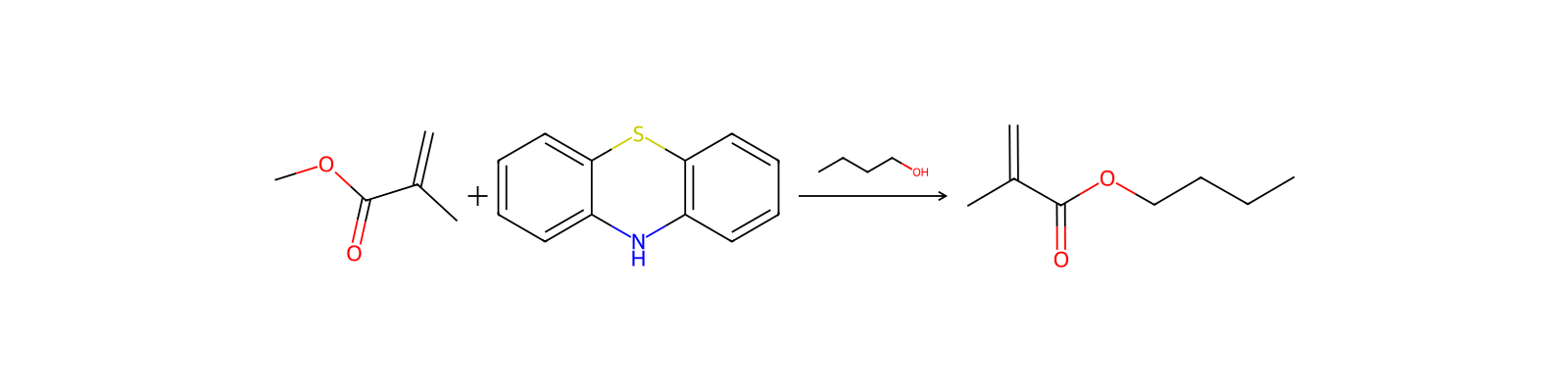
HRID 3067 reaction equation
HRID 3067As catalystuspto-grants-1998_03
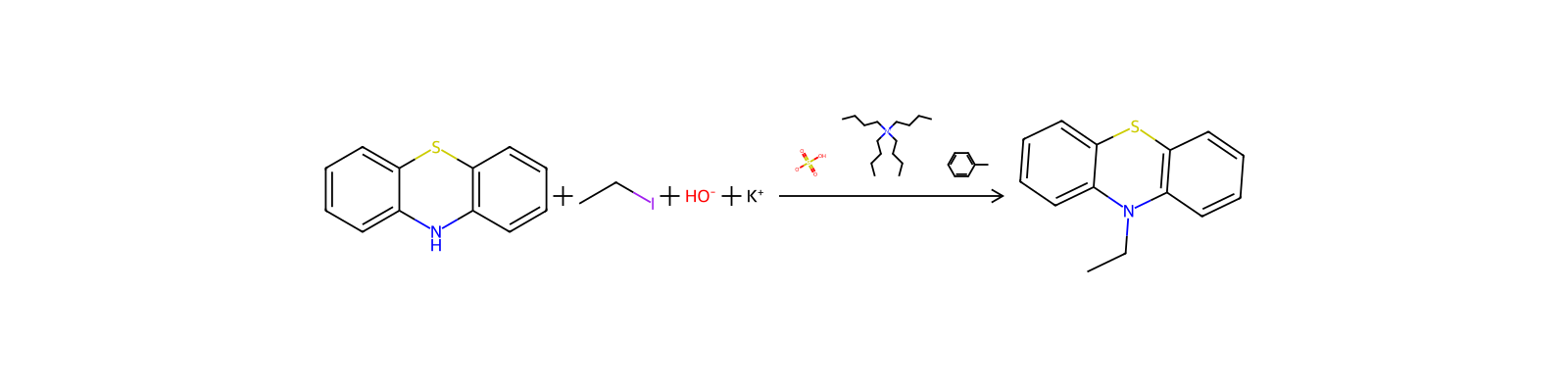
HRID 3069 reaction equation
HRID 3069As catalystuspto-grants-1998_03
HRID 3072 reaction equation
HRID 3072As reactantuspto-grants-1998_03
HRID 4894 reaction equation
HRID 4894As reactantuspto-grants-1993_09
HRID 4895 reaction equation
HRID 4895As reactantuspto-grants-1993_09
HRID 5244 reaction equation
HRID 5244As reactantuspto-grants-1993_09
HRID 6577 reaction equation
HRID 6577As reactantuspto-grants-2006_08
HRID 10121 reaction equation
HRID 10121As reactantuspto-grants-2006_08
Page 1 of 36

Compound notes

Loading…

On this pageBasic informationOverviewNames & identifiersPropertiesSafety & regulationChemistry & industryRelated reactionsCompound notes
More actions
New noteNew reactionRequest quotes

Solubility in water: none

Insoluble

Flash Point202 °C
Animal DrugsFDA approved animal drugs -> Active ingredient
Boiling Point · 5 items

700 °F at 760 mmHg (NTP, 1992)

371 °C @ 760 MM HG

371 °C

700 °F

700 °F

Melting Point · 5 items

365.9 to 366.6 °F (NTP, 1992)

185.1 °C

185.1 °C

365 °F

365 °F

Physicochemical properties

Melting point
184 °C · 184 °C
Boiling point
371 °C · 371 °C(lit.)
Density
1.362 · 1.362
bulk density
650 kg/m3 · 650kg/m3
vapor pressure
0.0000647 Pa · 0.0000647 Pa (20 °C)
refractive index
1.6353 · 1.6353
Flash point
202 °C · 202°C
storage temp.
30 °C · Store below +30°C.
solubility
0.127 mg/l · 0.127mg/l
form
Prills or Beads
pka
2.52 · pKa 2.52 (Uncertain)
color
Yellow
PH
6 · 6 (10g/l, H2O, 20℃)(aqueous suspension)
Water Solubility
2 mg/L · 2 mg/L (25 ºC)
Sensitive
Light Sensitive
Merck
14 · 14,7252
BRN
143237 · 143237
Henry's Law Constant
1 · 1.0×102 mol/(m3Pa) at 25℃, Abraham and Jr. (2019)
Exposure limits
5 mg/m3 · ACGIH: TWA 5 mg/m3 (Skin)NIOSH: TWA 5 mg/m3
Stability
Stable. Combustible. Incompatible with strong oxidizing agents, strong acids. May discolour upon exposure to light.
Major Application
cleaning productsclinicalcosmeticsfood and beveragesforensics and toxicologypersonal carepharmaceutical (small molecule)
InChI
1S/C12H9NS/c1-3-7-11-9(5-1)13-10-6-2-4-8-12(10)14-11/h1-8,13H
InChIKey
WJFKNYWRSNBZNX-UHFFFAOYSA-N
SMILES
N1c2ccccc2Sc3ccccc13
LogP
3.78 at · 3.78 at 25℃
Indirect Additives used in Food Contact Substances
PHENOTHIAZINE
CAS DataBase Reference
92 · 92-84-2(CAS DataBase Reference)
FDA 21 CFR
175.105 · 175.105; 176.170; 176.180;177.2600
EWG's Food Scores
1 · 1-4
NCI Dictionary of Cancer Terms
phenothiazine
FDA UNII
9 EX7QNU6 · GS9EX7QNU6
NIST Chemistry Reference
Phenothiazine(92-84-2)
EPA Substance Registry System
Phenothiazine (92-84-2)
UNSPSC Code
41116107 · 41116107
NACRES
24 · NA.24
Symbol(GHS)
7 · GHS07,GHS08,GHS09
Signal word
Warning
Hazard statements
302 · H302-H317-H373-H410
Precautionary statements
260 · P260-P273-P280-P301+P312-P302+P352-P314
target organs
Blood
PPE
95 · dust mask type N95 (US), Eyeshields, Faceshields, Gloves
Hazard Codes
Xi,N,Xn
Risk Statements
36 · 36/37/38-43-51/53-36/38-40-20/21/22-52/53-48/22-22
Safety Statements
26 · 26-36-61-36/37/39-29-22-36/37
OEB
B
OEL
5 mg/m3 · TWA: 5 mg/m3 [skin]
WGK Germany
1 · 1
RTECS
5075000 · SN5075000
F
8 · 8-23
Autoignition Temperature
470 °C · 470 °C
TSCA
TSCA listed
HS Code
29343090 · 29343090
Storage Class
11 · 11 - Combustible Solids
Hazard Classifications
4 OralAquatic · Acute Tox. 4 OralAquatic Acute 1Aquatic Chronic 1Skin Sens. 1STOT RE 2 Oral
Hazardous Substances Data
92 · 92-84-2(Hazardous Substances Data)
Toxicity
50 orally · LD50 orally in Rabbit: > 2000 mg/kg
REACH Registrations
Active
FDA RequirementsPhenothiazine for use only as a polymerization-control agent is an indirect food additive for use as a component of adhesives.
Reactive GroupAmines, Phosphines, and Pyridines
TSCA Requirements · 1 item

Pursuant to section 8(d) of TSCA, EPA promulgated a model Health and Safety Data Reporting Rule. The section 8(d) model rule requires manufacturers, importers, and processors of listed chemical substances and mixtures to submit to EPA copies and lists of unpublished health and safety studies. Phenothiazine is included on this list.

FIFRA Requirements · 1 item

While petitions for tolerances for negligible residues are pending and until action is completed on the petitions, an interim tolerance of 2 ppm is established for residues of phenothiazine in or on the following raw agricultural commodity(ies): meat, fat, and meat byproducts of cattle.

Reactivity Profile · 1 item

PHENOTHIAZINE is slowly decomposed by sunlight. (NTP, 1992). Organosulfides are incompatible with acids, diazo and azo compounds, halocarbons, isocyanates, aldehydes, alkali metals, nitrides, hydrides, and other strong reducing agents. Reactions with these materials generate heat and in many cases hydrogen gas. Many of these compounds may liberate hydrogen sulfide upon decomposition or reaction with an acid.

Chemical DangersDecomposes on heating and on contact with strong acids. This produces toxic and irritating fumes including nitrogen oxides and sulfur oxides. Reacts violently with strong oxidants. This generates fire hazard.
Flammable LimitsCombustible Solid, but not a high fire risk.

Safety & protection

Fire Fighting · 2 items

Fires involving this compound should be controlled with a dry chemical, carbon dioxide or Halon extinguisher. (NTP, 1992)

Use powder, water spray, foam, carbon dioxide.

First Aid Measures · 4 items

Fresh air, rest.

Remove contaminated clothes. Rinse and then wash skin with water and soap. Refer for medical attention if skin irritation occurs.

Rinse with plenty of water (remove contact lenses if easily possible).

Rinse mouth. Seek medical attention if you feel unwell.

First Aid · 2 items

EYES: First check the victim for contact lenses and remove if present. Flush victim's eyes with water or normal saline solution for 20 to 30 minutes while simultaneously calling a hospital or poison control center. Do not put any ointments, oils, or medication in the victim's eyes without specific instructions from a physician. IMMEDIATELY transport the victim after flushing eyes to a hospital even if no symptoms (such as redness or irritation) develop.

(General first aid procedures)

Safe StorageSeparated from strong oxidants and strong acids. Store in an area without drain or sewer access. Provision to contain effluent from fire extinguishing.
Nonfire Spill Response · 1 item

SMALL SPILLS AND LEAKAGE: If a spill of this chemical occurs, FIRST REMOVE ALL SOURCES OF IGNITION, then you should dampen the solid spill material with acetone and transfer the dampened material to a suitable container. Use absorbent paper dampened with acetone to pick up any remaining material. Seal your contaminated clothing and the absorbent paper in a vapor-tight plastic bag for eventual disposal. Solvent wash all contaminated surfaces with acetone followed by washing with a soap and water solution. Do not reenter the contaminated area until the Safety Officer (or other responsible person) has verified that the area has been properly cleaned.

Disposal Methods · 1 item

SRP: At the time of review, criteria for land treatment or burial (sanitary landfill) disposal practices are subject to significant revision. Prior to implementing land disposal of waste residue (including waste sludge), consult with environmental regulatory agencies for guidance on acceptable disposal practices.

Spillage Disposal · 1 item

Personal protection: particulate filter respirator adapted to the airborne concentration of the substance. Do NOT let this chemical enter the environment. Sweep spilled substance into covered containers. If appropriate, moisten first to prevent dusting. Carefully collect remainder. Then store and dispose of according to local regulations.

Preventive Measures · 5 items

SRP: Local exhaust ventilation should be applied wherever there is an incidence of point source emissions or dispersion of regulated contaminants in the work area. Ventilation control of the contaminant as close to its point of generation is both the most economical and safest method to minimize personnel exposure to airborne contaminants.

MAIN PRECAUTIONS MUST BE DIRECTED @ PREVENTING ACCIDENTAL INGESTION OF MATERIAL DURING MFR & USE. ... PROCESSES SHOULD BE ENCLOSED & LOCAL EXHAUST VENTILATION SHOULD BE APPLIED WHERE DUST WOULD OTHERWISE ESCAPE... FIRE PRECAUTIONS SHOULD BE PROVIDED...

The worker should immediately wash the skin when it becomes contaminated.

The worker should wash daily at the end of each work shift.

For more Preventive Measures (Complete) data for PHENOTHIAZINE (6 total), please visit the HSDB record page.

Eye PreventionWear safety spectacles or eye protection in combination with breathing protection.
Fire PreventionNO open flames.
Inhalation RiskA harmful concentration of airborne particles can be reached quickly when dispersed, especially if powdered.
Skin PreventionProtective gloves. Protective clothing.

Toxicology

Toxicological InformationRanking: 434 (total points: 484.31)
Interactions · 2 items

PREVIOUS DRENCHING WITH CARBON TETRACHLORIDE MAY ALSO SERVE TO INCR ITS TOXICITY.

ANTIOXIDANTS, EG PHENOTHIAZINE, INHIBITED THE MUTAGENICITY OF BENZO(A)PYRENE & SOME OF ITS DERIVATIVES TOWARDS SALMONELLA TYPHIMURIUM STRAIN TA98; THIS INHIBITION WAS CONCN DEPENDENT.

Target OrgansSkin, cardiovascular system, liver, kidneys
Environmental Fate · 3 items

TERRESTRIAL FATE: Based on a recommended classification scheme(1), an estimated Koc value of 4300(SRC), determined from an experimental log Kow(2) and a recommended regression-derived equation(3), indicates that phenothiazine will have slight mobility in soil(SRC). Volatilization of phenothiazine will not be important from moist soil surfaces(SRC) given an estimated Henry's Law constant of 2.8X10⁻⁸ atm-cu m/mole(4,SRC), or from dry soil surfaces(SRC) based on an estimated vapor pressure of 8.9X10⁻⁷ mm Hg(5,SRC). The adsorptivity of phenothiazine is expected to be sensitive to pH since phenothiazine is a base with a pKa of 2.52(6). According to a MITI biodegradation study(7), biodegradation of phenothiazine will not be an important fate process in soil(SRC).

AQUATIC FATE: Based on a recommended classification scheme(1), an estimated Koc value of 4300(SRC), determined from an experimental log Kow(2) and a recommended regression-derived equation(3), indicates that phenothiazine would adsorb to suspended solids and sediment(SRC). Phenothiazine would be essentially non-volatile from water surfaces based on an estimated Henry's Law constant of 2.8X10⁻⁸ atm-cu m/mole(SRC), developed using a fragment constant estimation method(4,SRC). Experimental BCF values of 127-660 and 180-528(6) suggest that phenothiazine will bioconcentrate in aquatic organisms(SRC) according to a recommended classification scheme(5). According to a MITI biodegradation study(6), biodegradation of phenothiazine will not be an important fate process in water(SRC).

ATMOSPHERIC FATE: According to a model of gas/particle partitioning of semivolatile organic compounds in the atmosphere(1), phenothiazine, which has an estimated vapor pressure of 8.9X10⁻⁷ mm Hg at 25 °C(2,SRC) will exist as both vapor and particulate in the ambient atmosphere. Vapor-phase phenothiazine is degraded in the atmosphere by reaction with photochemically produced hydroxyl radicals(SRC); the half-life for this reaction in air is estimated to be about 2 hours(3,SRC). Particulate-phase phenothiazine may be physically removed from the air by dry deposition(SRC).

Adverse Effects · 2 items

Occupational hepatotoxin - Secondary hepatotoxins: the potential for toxic effect in the occupational setting is based on cases of poisoning by human ingestion or animal experimentation.

The most common adverse reactions include:

Exposure Routes · 2 items

The substance can be absorbed into the body by ingestion.

inhalation, skin absorption, ingestion, skin and/or eye contact

Toxicity Summary · 1 item

A review of 48 hospital-admitted phenothiazine toxicities with concentrations of 200 mg to 500 mg per patient has listed common reactions such as hypothermia, tachycardia, tachypnea, and decreased diastolic blood pressure. A tendency towards obtundation can present in cases where other drugs were also involved. Furthermore, a pupil size of less than 3 mm was present in the most severe poisoning cases. Prolonged QTc interval was noted, and patients were treated with diphenylhydantoin. An echocardiogram is a suggested approach for all cases of phenothiazine overdoses.

Signs and Symptoms · 3 items

Severe itching. Redness.

Abdominal cramps.

Itching, irritation, reddening skin; hepatitis, hemolytic anemia, abdominal cramps, tachycardia; kidney damage; skin photophobia (abnormal visual intolerance to light) sensitization

Effluent ConcentrationsPhenothiazine has been identified in the effluent from the organics and plastics industry (551 ng/ul extract) and the rubber processing industry (29441 ng/ul extract)(1).
ICSC Environmental Data · 1 item

The substance is toxic to aquatic organisms. Bioaccumulation of this chemical may occur in fish. The substance may cause long-term effects in the aquatic environment. This substance does enter the environment under normal use. Great care, however, should be taken to avoid any additional release, for example through inappropriate disposal.

Medical Surveillance/Protect/ from exposure personnel developing photosensitization. /Protect/ from exposure those individuals with diseases of blood skin, liver, and kidneys.
Soil Adsorption/Mobility · 1 item

The Koc of phenothiazine is estimated as approximately 4300(SRC), using an experimental log Kow of 4.15(1) and a regression-derived equation(2,SRC). According to a recommended classification scheme(3), this estimated Koc value suggests that phenothiazine has slight mobility in soil(SRC). The adsorptivity of phenothiazine is expected to be sensitive to pH since phenothiazine is a base with a pKa of 2.52(4).

Regulatory information

FDA RequirementsPhenothiazine for use only as a polymerization-control agent is an indirect food additive for use as a component of adhesives.
TSCA Requirements · 1 item

Pursuant to section 8(d) of TSCA, EPA promulgated a model Health and Safety Data Reporting Rule. The section 8(d) model rule requires manufacturers, importers, and processors of listed chemical substances and mixtures to submit to EPA copies and lists of unpublished health and safety studies. Phenothiazine is included on this list.

FIFRA Requirements · 1 item

While petitions for tolerances for negligible residues are pending and until action is completed on the petitions, an interim tolerance of 2 ppm is established for residues of phenothiazine in or on the following raw agricultural commodity(ies): meat, fat, and meat byproducts of cattle.

Safety data

F
8-23
OEB
B
OEL
TWA: 5 mg/m3 [skin]
PPE
dust mask type N95 (US), Eyeshields, Faceshields, Gloves
wgk
1
tsca
TSCA listed
rtecs
SN5075000
hs_code
29343090
Toxicity
LD50 orally in Rabbit: > 2000 mg/kg
risk_code
36/37/38-43-51/53-36/38-40-20/21/22-52/53-48/22-22
Signal word
Warning
Symbol(GHS)
GHS07,GHS08,GHS09
hazard_code
Xi,N,Xn
safety_code
26-36-61-36/37/39-29-22-36/37
Storage Class
11 - Combustible Solids
target organs
Blood
Hazard statements
H302-H317-H373-H410
REACH Registrations
Active
Hazard Classifications
Acute Tox. 4 OralAquatic Acute 1Aquatic Chronic 1Skin Sens. 1STOT RE 2 Oral
Autoignition Temperature
470 °C
Precautionary statements
P260-P273-P280-P301+P312-P302+P352-P314
Hazardous Substances Data
92-84-2(Hazardous Substances Data)

Used in control of insects that breed in manure

Synthesis of promethazine hydrochloride

Polymerization inhibitor for chloroprene

For more Uses (Complete) data for PHENOTHIAZINE (10 total), please visit the HSDB record page.

U.S. Production2023: 5,500,000 - <7,000,000 lb
Consumer UsesHydraulic fluids
Industry UsesIntermediate
Methods of Manufacturing...BY FUSING DIPHENYLAMINE WITH SULFUR; IMPROVED YIELDS WITH IODINE AS CATALYST.
Formulations/Preparations · 2 items

DISPERSIBLE POWDERS (36%).

GRADES: TECHNICAL; NF.

General Manufacturing Information · 6 items

Printing Ink Manufacturing

10H-Phenothiazine: ACTIVE

PURIFICATION: VIERLING, US PATENT 2,887,482 (1959); RIGBY, US PATENT 3,000,887 (1961 TO SHELL OIL).

/OXIDATION/...CAN BE PREVENTED BY ADMIXTURE OF 0.3-1.0% METHENAMINE.

...PARENT OF NUMBER OF DYESTUFFS INCL METHYLENE BLUE, THIAZINE DYES & THIAMINE BLUE.

INTRODUCED IN 1925, IT WAS ONE OF EARLIEST ORG INSECTICIDES. ACTION: ORAL INSECTICIDE & ANTHELMINTIC. FED IN SALT OR MINERAL SUPPLEMENT TO CONTROL HORN FLY & FACE FLY LARVAE & TO REMOVE & CONTROL CERTAIN INTERNAL PARASITES.

Applications · 8 items

UsesPhenothiazine is a relatively widely used anthelmintic reagent with excellent efficacy in treating the Haemonchus contortus of cattle, horse and sheep, nodular worm, Bunostomum and Plasmodium chabaudi. Phenothiazine is the intermediates of fine chemicals such as dyes and drugs with itself being a auxiliary material for synthetic material (the anti-polymerization reagent for production of vinylon), fruit pesticides and veterinary anthelmintic. It is mainly used as the polymerization inhibitor for acrylic acid, acrylic esters, and methacrylic aicd as well as ester monomer.

DescriptionPhenothiazine was initially synthesized in 1883 by Bernthsen. It was the basis for the development of other drugs including the phenothiazine class of antipsychotics or neuroleptics. Phenothiazines are the largest class of neuroleptics and include agents such as chlorpromazine, thioridazine, and prochlorperazine. In 1933, a derivative of phenothiazine, promethazine, was synthesized. It was found to have much more significant sedative and antihistaminic effects than previous derivatives of phenothiazine and it was used to induce sedation for surgical patients. After promethazine was developed, a series of agents, including chlorpromazine, was synthesized and tested in France at a military hospital by the French physician Laborit. Laborit found that chlorpromazine induced calm in patients and had other effects that might be useful clinically. Chlorpromazine, known colloquially as ‘Laborit’s drug’ was released into the market in 1953 after a trial published in 1952 showed efficacy in treatment of psychosis in 38 individuals who received daily injections of chlorpromazine. Chlorpromazine is the prototypical drug for the phenothiazine class of antipsychotics. The phenothiazines are classified as low-potency antipsychotics and have more side effects at standard doses than the newer agents used as neuroleptics. For example, they are more anticholinergic and have more extrapyramidal effect than newer agents.

UsesPhenothiazines are neuroleptic agents that affect a variety of receptors including dopaminergic receptor sites. Phenothiazines are used to treat psychosis including schizophrenia; violent, agitated, disturbed behavior; and mania secondary to bipolar disorder. Other uses include treatment of pain, headache, hiccups, acute severe anxiety, idiopathic dystonia, withdrawal, taste disorders, leishmaniasis, acute intermittent porphyria, and alleviation of nausea and vomiting. Phenothiazines allow smoother induction of anesthesia, potentiate anesthetic agents, and treat behavioral symptoms secondary to Alzheimer disease and senile dementia. Some phenothiazines exert an antipruritic effect and are useful for the treatment of neurodermatitis and pruriginous eczema, and relieve psychogenic itching.

UsesA key component of antipsychotic and antihistaminic drugs.

UsesEmployed in the preparation of carbazoles and piperazines,1 and charge-transfer semiconducting complexes.2

UsesA rigid, tricyclic thiazine useful as an electron donor.

UsesInsecticide; manufacture of pharmaceuticals.

General DescriptionLight green to steel-blue powder. Acquires a greenish-brown tint under exposure to sunlight.

Upstream & downstream products

Upstream raw materials

SulfurBenzeneIodineDiphenylamineHexamethylenetetramine

Downstream products

PTZ-343Promethazine hydrochlorideMoricizineAcrylamide3,7-dibromo-10H-phenothiazine3-bromo-10H-phenothiazinePROPYNAL10-Phenyl-10H-phenothiazine10-(propan-2-yl)-10H-phenothiazine

Additional notes

DefinitionChEBI: The 10H-tautomer of phenothiazine.