
Basic information
- Standard SMILES
CCOc1ccc(C(C)(C)COCc2cccc(Oc3ccccc3)c2)cc1- InChIKey
YREQHYQNNWYQCJ-UHFFFAOYSA-N- Molecular formula
- C25H28O3
- Average molar mass
- 376.5 g/mol
- Monoisotopic mass
- 376.20384476
Overview
Etofenprox is an aromatic ether that is the 3-phenoxybenzyl ether of 2-(4-ethoxyphenyl)-2-methylpropan-1-ol. It has a role as a pyrethroid ether insecticide. It is functionally related to a 2-(4-ethoxyphenyl)-2-methylpropan-1-ol.
Names & identifiers
- Preferred name
- Etofenprox
- IUPAC
- 1-ethoxy-4-[2-methyl-1-[(3-phenoxyphenyl)methoxy]propan-2-yl]benzene
- English name
- Etofenprox
- Molecular formula
- C25H28O3
- Molecular weight
- 376.49
Names & synonyms
Etofenprox80844-07-1Ethofenprox1-((2-(4-Ethoxyphenyl)-2-methylpropoxy)methyl)-3-phenoxybenzeneEthophenproxEtofenproxumDTXSID90326100LD7P9153CDTXCID7012610CHEBI:39348Benzene, 1-((2-(4-ethoxyphenyl)-2-methylpropoxy)methyl)-3-phenoxy-1-{[2-(4-ethoxyphenyl)-2-methylpropoxy]methyl}-3-phenoxybenzene
Show more names
PEPENUKILTREBONmti500VECTRONPUNKASOLenatop
2-(4-ethoxyphenyl)-2-methylpropyl-3-phenoxybenzyl etherRefChem:139268407-980-2Etofenprox [INN]1-ethoxy-4-[2-methyl-1-[(3-phenoxyphenyl)methoxy]propan-2-yl]benzeneMFCD002102872-(4-Ethoxyphenyl)-2-methylpropyl 3-phenoxybenzyl ether1705649-55-3
Database identifiers
- CAS
1705649-55-3、80844-07-1- PubChem CID
- 71245
- DTXSID
DTXSID9032610- ChEMBL
CHEMBL2105573- ChEBI
CHEBI:39348- UNII
- 0LD7P9153C
- EC Number
- 109-904-0、407-980-2、617-179-1
- Nikkaji
- J33.917B
Properties
Computed structural properties
- XLogP
- 7
- Topological polar surface area
- 27.7 Ų
- Hydrogen bond donors
- 0
- Hydrogen bond acceptors
- 3
- Rotatable bonds
- 9
- Heavy atoms
- 28
- Formal charge
- 0
- Complexity
- 422
Experimental & physicochemical properties
Pesticides
Agrochemicals -> Pesticide active substances
Active substance -> EU Pesticides database: Approved
Environmental transformation -> Pesticides (parent, predecessor)
Pesticide
Insecticides
Pesticide (Etofenprox) -> USDA PDB
LogP7.05
Endocrine DisruptorsPotential endocrine disrupting compound
Collision Cross Section
191.0 Ų [M+Na]+ [CCS Type: DT; Buffer gas: N2; Ionization: ESI+; Dataset: TOXCAST; Source Identifier: DTXSID9032610]
191.81 Ų [M+Na]+
189.38 Ų [M]+ [CCS Type: TW; Buffer gas: N2; Ionization: GC-APCI+]
Physicochemical properties
- Melting point
- 36.4 · 36.4-38.0°
- Boiling point
- 445.03 °C · 445.03°C (rough estimate)
- Density
- 1.1386 · 1.1386 (rough estimate)
- vapor pressure
- 32 · 32×10-3 Pa (100 °C)
- refractive index
- 20.2 · nD20.2 1.5732
- storage temp.
- Sealed in dry,Room Temperature
- solubility
- 100 mg/mL · DMSO: 100 mg/mL (265.61 mM)
- form
- Solid
- Water Solubility
- -1 · -1(25 °C)
- color
- Off-white to light yellow
- Henry's Law Constant
- 7.4 · 7.4×101 mol/(m3Pa) at 25℃, Maniere et al. (2011)
- Stability
- Stable. Incompatible with strong oxidizing agents.
- Major Application
- agricultureenvironmental
- InChI
- 1S/C25H28O3/c1-4-27-22-15-13-21(14-16-22)25(2,3)19-26-18-20-9-8-12-24(17-20)28-23-10-6-5-7-11-23/h5-17H,4,18-19H2,1-3H3
- InChIKey
- YREQHYQNNWYQCJ-UHFFFAOYSA-N
- SMILES
- CCOc1ccc(cc1)C(C)(C)COCc2cccc(Oc3ccccc3)c2
- CAS DataBase Reference
- 80844 · 80844-07-1(CAS DataBase Reference)
- FDA UNII
- 0 LD7P9153C · 0LD7P9153C
- NIST Chemistry Reference
- Etofenprox(80844-07-1)
- EPA Substance Registry System
- Etofenprox (80844-07-1)
- UNSPSC Code
- 41116107 · 41116107
- NACRES
- 24 · NA.24
- Symbol(GHS)
- 9 · GHS09
- Signal word
- Warning
- Hazard statements
- 362 · H362-H410
- Precautionary statements
- 201 · P201-P260-P263-P273-P308+P313-P391
- PPE
- 95 · Eyeshields, Gloves, type N95 (US)
- RIDADR
- 3077 · UN 3077 9 / PGIII
- WGK Germany
- 2 · 2
- RTECS
- 670000 · DA0670000
- Storage Class
- 11 · 11 - Combustible Solids
- Hazard Classifications
- 1 Aquatic · Aquatic Acute 1Aquatic Chronic 1Lact.
- Toxicity
- 50 in · LD50 in rats, mice (mg/kg): >2880, >107200 orally; >2140, >2140 dermally
- REACH Registrations
- Inactive
Safety & regulation
GHS classification
GHS Classification
Warning
H362: May cause harm to breast-fed children [Reproductive toxicity, effects on or via lactation]
P203, P260, P263, P264, P270, P273, P318, P391, and P501 (click each P-code to see the statement)
Warning
H362 (96.7%): May cause harm to breast-fed children [Reproductive toxicity, effects on or via lactation]
P203, P260, P263, P264, P270, P273, P318, P391, and P501 (click each P-code to see the statement)
Hazard information
Regulatory Information
Commission Regulation (EC) No 1490/2002
Etofenprox is listed in the dataset of EPA Human Health Benchmarks for Pesticides under the Safe Drinking Water Act (40 eCFR 141)
2009/77/EC, Reg. (EU) 2021/1449, Reg. (EU) 2022/1480, Reg. (EU) 2023/2592, Reg. (EU) No 540/2011
Status: Cease Manufacture Update: 10-11-2008 https://echa.europa.eu/registration-dossier/-/registered-dossier/4043
Etofenprox: HSNO Approval: HSR003567 Approved with controls
Hazard Classes and Categories
Lact. (75%)
Lact. (96.7%)
Lact. (100%)
Reproductive toxicity - effects on or via lactation
Hazardous to the aquatic environment (Acute) - Category 1
Specific target organ toxicity - Single exposure - Category 1 (central nervous system), Category 3 (narcotic effects)
Toxicology
RAIS Toxicity Values
0.0255
OPP
EPA Human Health Benchmarks for Pesticides
Etofenprox
0.0255
151
General Population
Human Health Benchmarks for Pesticides - 2021 Update
Safety data
- PPE
- Eyeshields, Gloves, type N95 (US)
- wgk
- 2
- rtecs
- DA0670000
- ridadr
- UN 3077 9 / PGIII
- Toxicity
- LD50 in rats, mice (mg/kg): >2880, >107200 orally; >2140, >2140 dermally
- Signal word
- Warning
- Symbol(GHS)
- GHS09
- Storage Class
- 11 - Combustible Solids
- Hazard statements
- H362-H410
- REACH Registrations
- Inactive
- Hazard Classifications
- Aquatic Acute 1Aquatic Chronic 1Lact.
- Precautionary statements
- P201-P260-P263-P273-P308+P313-P391
Chemistry & industry
Uses & manufacturing
Household ProductsInformation on 35 consumer products that contain Etofenprox in the following categories is provided:
Use Classification
Environmental transformation -> Pesticides (parent, predecessor)
Insecticides
Applications
DescriptionEtofenprox belongs to a pyrethroid derivative that is commonly used as an insecticide in agriculture, horticulture, viticulture, forestry, animal health and public health against various insect pests. It can be found as an active ingredient in a variety of pest control products, which is effective to control broad spectrum of pests, such as crawling and flying insects. In the field of agriculture, etofenprox can be applied on a broad range of crops, including rice, fruits, vegetables, corn, soybeans and tea, which is poorly absorbed by roots and little translocation occurs within plants. It is also used for the public health by controlling adult mosquitoes, non biting midges, biting and non-biting flies, which may carry the pathogen. Besides, etofenprox can be found as an component in flea and tick medications for dogs and cats. Etofenprox is a new type of insecticide with low mammalian toxicity, which can be decomposed in soil by anaerobic and aerobic microorganisms. It functions by strongly disrupting the transmission of nervous impulses and causes paralysis and death to the target insect.
UsesEtofenprox is used to control a wide variety of insects on fruit, tea, soyabeans and many vegetables. It is also used in public health and animal health.
UsesInsecticide.
Upstream & downstream products
Upstream raw materials
Suppliers50 total
湖北永阔科技有限公司027-59223108 15972152991 · [email protected]
湖北博杰生物科技有限公司0713-2060728 15629612610
上海阿拉丁生化科技股份有限公司400-6206333 13167063860 · [email protected]
Shandong chuangyingchemical Co., Ltd.18853181302 · [email protected]
湖北万得化工有限公司15377098680 15377098680 · [email protected]
湖北威德利化学试剂有限公司181-6332-1995 18062128043 · [email protected]
上海麦克林生化科技股份有限公司021-50706066 15221275939 · [email protected]
上海毕得医药科技股份有限公司400-1647117 13681763483 · [email protected]
Dayang Chem (Hangzhou) Co.,Ltd.+86-0571-88938639 17705817739 · [email protected]
Hebei Yanxi Chemical Co., Ltd.+86-17531190177 · [email protected]
湖北威德利化学试剂有限公司17771473825 13385289472 · [email protected]
上海颖心实验室设备有限公司021-59178156 17002132182 · [email protected]
江西瑞威尔生物科技有限公司18502762009 · [email protected]
梯希爱(上海)化工贸易有限公司021-61109150 · [email protected]
广东云星生物技术有限公司0751-18902340975/189023400307 18902340307 · [email protected]
福建盛世嘉泰药业有限公司13385921167
湖北魏氏化学试剂股份有限公司027-59102966 18717199209 · [email protected]
西安泽邦生物科技有限公司[email protected]
湖北广奥生物科技有限公司027-02702759223056 18162699093 · [email protected]
武汉丰泰威远科技有限公司+86-27-8746-5837 +86-18627785180 · [email protected]
武汉丰泰威远科技有限公司027-87465837 19945049750 · [email protected]
广东谦进化学试剂有限公司0751-2818792 13435114148 · [email protected]
上海毕楷科技有限公司18516304666
四川库利南科技有限公司400-1166-196 18981987031 · [email protected]
Xiamen AmoyChem Co., Ltd+86-86-5926051114 · [email protected]
湖北恒化科技有限公司18064208139 · [email protected]
艾科试剂4008-755-333 18080918076 · [email protected]
深圳振强药物研发有限公司0755-66853366 13670046396 · [email protected]
湖北薪和化工有限公司027-83258456 15392830626 · [email protected]
广州爱纯医药科技有限公司020-39119399 18927568969 · [email protected]
南京生利德生物科技有限公司025-57798810 18652991625 · [email protected]
湖北威德利化学试剂有限公司186-02735115 18602735115 · [email protected]
上海贺康生物技术有限公司17721021104 18939837085 · [email protected]
上海将来实业股份有限公司400-0066400 13621662912 · [email protected]
天津阿尔塔科技有限公司022-65378550-8551 · [email protected]
天津普西唐生物医药科技有限公司010-60605840 · [email protected]
上海兴鲁化工科技有限公司02120970332 · [email protected]
Changzhou Fullone Chemical Co., Ltd.+86-13328197671 +86-13861172460 · [email protected]
湖北巨胜科技有限公司027-59599241 18871490274 · [email protected]
常州百涛实业有限公司0519-82309982
天津阿尔塔科技有限公司022-6537-8550 15522853686 · [email protected]
TargetMol中国(陶术生物)021-021-33632979 15002134094 · [email protected]
上海陶术生物科技股份有限公司+1-781-999-5354; +1-00000000000 · [email protected]
湖北威德利化学试剂有限公司18327179646 · [email protected]
广东翁江化学试剂有限公司0751-2815987 13927875076 · [email protected]
上海博熠生物医药科技有限公司021-021-54331997 18321536537 · [email protected]
武汉峰耀同辉化学制品有限公司027-87466205 15377579727 · [email protected]
厦门志信化学有限公司+86-5922680277 +86-13806087780 · [email protected]
嘉兴市德亿化工有限公司0573-85866609 13325730825 · [email protected]
湖北魏氏化学试剂股份有限公司13125137732 18686406941
Additional notes
DefinitionChEBI: An aromatic ether that is the 3-phenoxybenzyl ether of 2-(4-ethoxyphenyl)-2-methylpropan-1-ol.
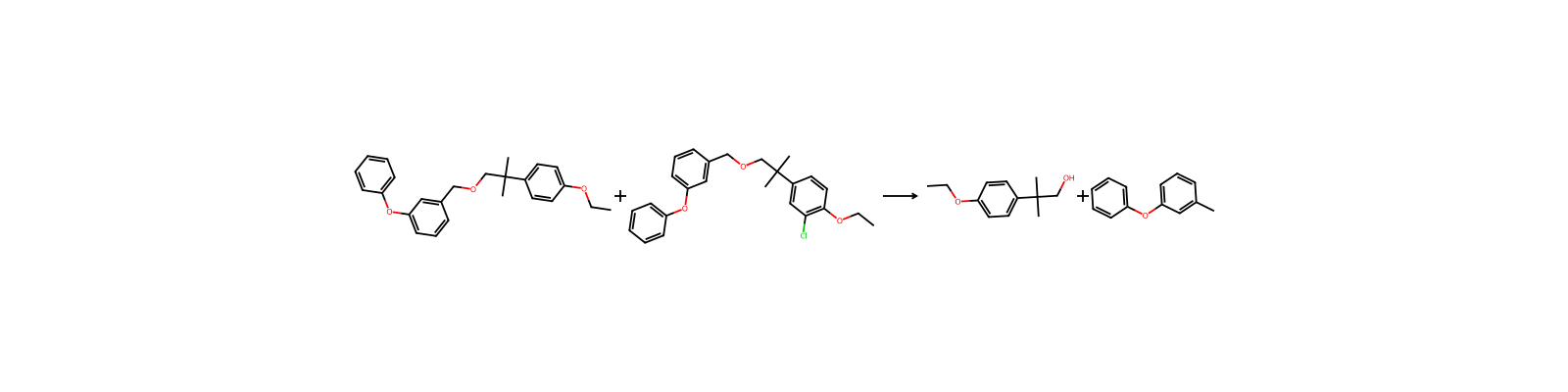
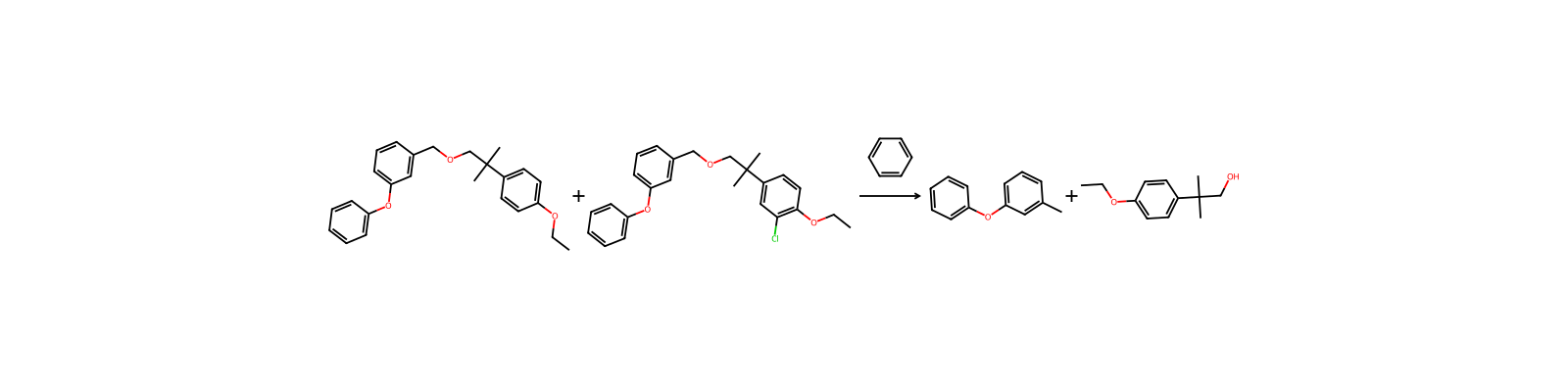
Related reactions
12 records





Linked notes
Loading…