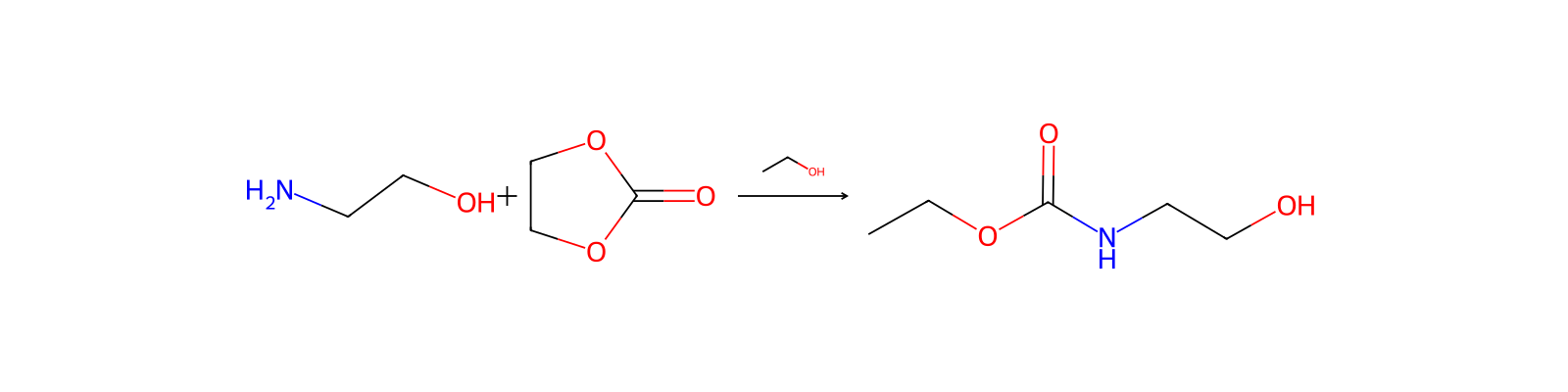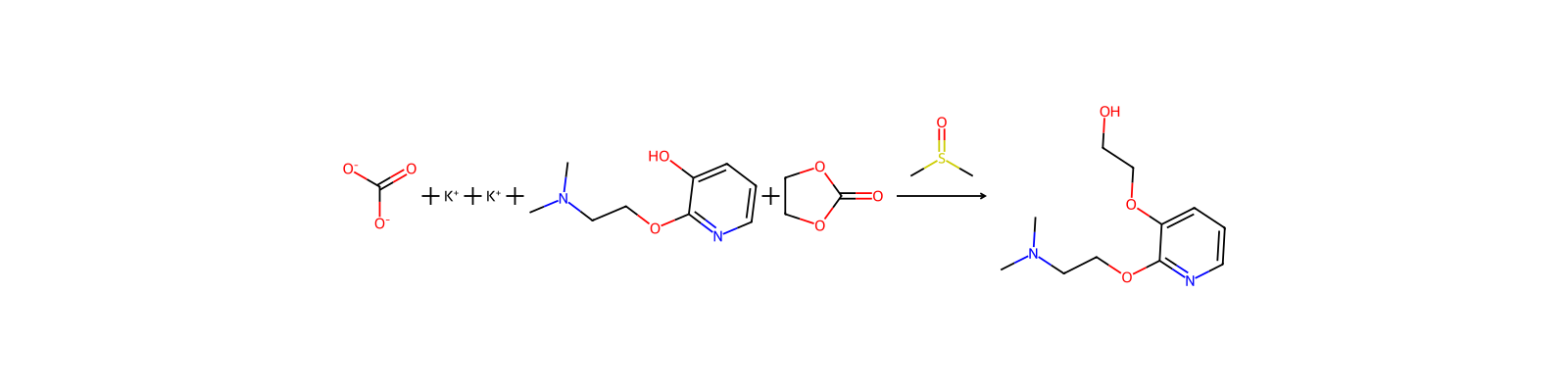
HRID 789As reactant

96-49-1O=C1OCCO1KMTRUDSVKNLOMY-UHFFFAOYSA-NEthylene carbonate is a carbonate ester.
96-49-1DTXSID2026600CHEMBL3181803CHEBI:1787251.3214 at 39 °C
1.322 @ 40°C
Monoclinic plates
Colorless solid or liquid
Solid at room temperature.
Colorless liquid or crystalline solid.
Soluble in water, alcohol, ether, and benzene
Miscible (40%) with water, alcohol, ethyl acetate, benzene, and chloroform; soluble in ether, n-butanol, and carbon tetrachloride.
Insoluble in gasoline and turpentine oil.
143 °C
290 °F (143 °C) (Open Cup)
248 °C
248 °C @760 [mm Hg]
36.4 °C
36.4 °C
Safety information is for reference only and does not replace the supplier’s Safety Data Sheet (SDS), applicable regulations, or professional assessment.
This chemical does not meet GHS hazard criteria for 5.7% (31 of 543) of reports.
Warning
H302 (56.4%): Harmful if swallowed [Warning Acute toxicity, oral]
P260, P264, P264+P265, P270, P280, P301+P317, P302+P352, P305+P351+P338, P319, P321, P330, P332+P317, P337+P317, P362+P364, and P501 (click each P-code to see the statement)
Aggregated GHS information provided per 543 reports by companies from 21 notifications to the ECHA C&L Inventory. Each notification may be associated with multiple companies.
Chemical: 1,3-Dioxolan-2-one
Council Directive (EEC) No 109/1989 (Repealed by Reg. EC No 1935/2004 (amended))
1,3-Dioxolan-2-one is listed on the EPA's Chemical Data Reporting (CDR) system. Manufacturers and importers of 1,3-Dioxolan-2-one are required to report information about their production and use of this chemical to the EPA under the Toxic Substances Control Act (TSCA). (40 eCFR Part 711)
REACH registered substance: Ethylene carbonate (EC: 202-510-0)
Ethylene carbonate: Does not have an individual approval but may be used under an appropriate group standard
This action promulgates standards of performance for equipment leaks of Volatile Organic Compounds (VOC) in the Synthetic Organic Chemical Manufacturing Industry (SOCMI). The intended effect of these standards is to require all newly constructed, modified, and reconstructed SOCMI process units to use the best demonstrated system of continuous emission reduction for equipment leaks of VOC, considering costs, non air quality health and environmental impact and energy requirements. Ethylene carbonate is produced, as an intermediate or a final product, by process units covered under this subpart.
SRP: At the time of review, criteria for land treatment or burial (sanitary landfill) disposal practices are subject to significant revision. Prior to implementing land disposal of waste residue (including waste sludge), consult with environmental regulatory agencies for guidance on acceptable disposal practices.
SRP: The scientific literature for the use of contact lenses in industry is conflicting. The benefit or detrimental effects of wearing contact lenses depend not only upon the substance, but also on factors including the form of the substance, characteristics and duration of the exposure, the uses of other eye protection equipment, and the hygiene of the lenses. However, there may be individual substances whose irritating or corrosive properties are such that the wearing of contact lenses would be harmful to the eye. In those specific cases, contact lenses should not be worn. In any event, the usual eye protection equipment should be worn even when contact lenses are in place.
30 [mg/m3]
330 [mg/m3]
2000 [mg/m3]
TERRESTRIALFATE: Based on a classification scheme(1), an estimated Koc value of 9.2(SRC), determined from a structure estimation method(2), indicates that ethylene carbonate is expected to have very high mobility in soil(SRC). Volatilization of ethylene carbonate from moist soil surfaces is expected to be an important fate process(SRC) given an estimated Henry's Law constant of 2.74X10⁻⁴ atm-cu m/mole(3,SRC), using a fragment constant estimation method(3), ethylene carbonate is not expected to volatilize from dry soil surfaces(SRC) based upon a vapor pressure of 9.80X10⁻³ mm Hg(4). Ethylene carbonate achieved 64.1 percent of its theoretical BOD using an activated sludge inoculum during a 2 week incubation period(5), suggesting biodegradation in soil will be an important environmental fate process(SRC).
AQUATIC FATE: Based on a classification scheme(1), an estimated Koc value of 9.2(SRC), determined from a structure estimation method(2), indicates that ethylene carbonate is not expected to adsorb to suspended solids and sediment in water(SRC). Volatilization from water surfaces is expected(3) based upon an estimated Henry's Law constant of 2.74X10⁻⁴ atm-cum/mole(4,SRC), developed using a fragment constant estimation method(4). Using this Henry's Law constant and an estimation method(3), volatilization half-lives for a model river and model lake are 3 and 110 hours, respectively(SRC). Ethylene carbonate achieved 64.1 percent of its theoretical BOD using an activated sludge inoculum during a 2 week incubation period(8), suggesting biodegradation in water will be an important process(SRC). Ethylene carbonate is expected to undergo hydrolysis due to the presence of hydrolyzable functional groups(3). According to a classification scheme(5), an estimated BCF of 3.2(SRC), from an estimated log Kow of -0.34(6) and a regression-derived equation(7), suggests the potential for bioconcentration in aquatic organisms is low.
ATMOSPHERIC FATE: According to a model of gas/particle partitioning of semivolatile organic compounds in the atmosphere(1), ethylene carbonate, which has a vapor pressure of 9.80X10⁻³ mm Hg at 25 °C(3), is expected to exist solely as a vapor in the ambient atmosphere. Vapor-phase ethylene carbonate is degraded in the atmosphere by reaction with photochemically-produced hydroxyl radicals(SRC); the half-life for this reaction in air is estimated to be 160 hours(SRC), calculated from its rate constant of 2.4X10⁻¹² cu cm/molecule-sec at 25 °C(2) determined using a structure estimation method(2). Ehtylene carbonate may also undergo direct photolysis in the environment since this compound contains a functional group that can absorb light >290 nm(4).
Using a structure estimation method based on molecular connectivity indices(1), the Koc for ethylene carbonate can be estimated to be 9.2(SRC). According to a classification scheme(2), this estimated Koc value suggests that ethylene carbonate is expected to have very high mobility in soil.
1,3-Dioxolan-2-one (Ethylene carbonate, CAS # 96-49-1) was evaluated for teratogenicity in 108 female Sprague-Dawley rats (27/group) orally administered doses of 0 (deionized water control), 750, 1500, and 3000 mg/kg/day on gestation days (GD) 6 through 15. Technical error accounted for solitary maternal lethalities in 1500 and 3000 mg/kg/day groups. Clinical signs of toxicity associated with treatment included post dose salivation (750, 1500, 3000 mg/kg/day), chromodacryorrhea (1500 mg/kg/day), dyspnea (1500, 3000 mg/kg/day), alopecia, decreased body tone, decreased activity and dyspnea (3000 mg/kg/day). Suppressed group mean body weight gain was biologically significant in dams of 3000 mg/kg doses, while food consumption appeared unaffected by treatment. Caesarian section and fetal analyses (at least 24-26 litters, 337-382 fetuses/group) on GD 20 revealed no statistically significant (p</= 0.05) departure from controls in fetal mortality, number of gravid animals per group, total number of implantation sites, viable fetuses, non-viable fetuses, early or late resorptions, corpora lutea, fetal sex distribution, or number and percentage of pre-implantation or post-implantation losses. Group mean fetal body weights were significantly depressed from dams of 1500 and 3000 mg/kg/day dose groups. Fetuses of high-dose (3000 mg/kg/day) dams also exhibited statistically significant increased incidence (10%) of external, soft tissue, and skeletal malformations relative to both current and historical controls. Specifically, increased ossification of the sternebrae 1-4 and non-ossification of the 6th sternebra (1500, 3000 mg/kg/day) and increased incidence of bipartite thoracic vertebra (3000 mg/kg/day) reached statistical significance; fetuses of 3000 mg/kg/day also exhibited an increased, but not statistically significant, incidence of bipartite lumbar vertebra.
Ethylene carbonate's production and use as a solvent for many polymers and resins, plasticizer, intermediate for pharmaceuticals, rubber chemicals, textile finishing agents, and also in hydroxyethylation reactions(1) may result in its release to the environment through various waste streams(SRC).
An estimated BCF of 3.2 was calculated for ethylene carbonate(SRC), using an estimated log Kow of -0.34(1,SRC) and a regression-derived equation(2). According to a classification scheme(3), this BCF suggests the potential for bioconcentration in aquatic organisms is low.
The Henry's Law constant for ethylene carbonate is estimated as 2.74X10⁻⁴ atm-cu m/mole(SRC) using a fragment constant estimation method(1). This Henry's Law constant indicates that ethylene carbonate is expected to volatilize from water surfaces(2). Based on this Henry's Law constant, the volatilization half-life from a model river (1 m deep, flowing 1 m/sec, wind velocity of 3 m/sec)(2) is estimated as 3 hours(SRC). The volatilization half-life from a model lake (1 m deep, flowing 0.05 m/sec, wind velocity of 0.5 m/sec)(2) is estimated as 110 hours(SRC). ethylene carbonate's Henry's Law constant(1) indicates that volatilization from moist soil surfaces is expected to occur(SRC). Ethylene carbonate is not expected to volatilize from dry soil surfaces(SRC) based upon a vapor pressure of 9.80X10⁻³ mm Hg(3).
The mechanism and disposition of ethylene-carbonate (96491) were studied in rats to determine if the toxicity of ethylene-carbonate could be the result of it being metabolized to ethylene-glycol. In-vitro, no ethylene-carbonate hydrolysis occurred. Male Fischer-344-rats were given 200 mg/kg (14)C labeled ethylene-carbonate or 141 mg/kg radiolabeled ethylene-glycol by gavage. In-vivo, ethylene-carbonate was rapidly metabolized, 60 percent of the dose being recovered as carbon-dioxide in the expired air and 27 percent in the urine after 3 hours. Approximately 90 percent of the ethylene-glycol dose was excreted in the expired air or urine after 24 hours. Ethylene-glycol was the only ethylene-carbonate metabolite detected. Peak blood ethylene-carbonate and ethylene-glycol concentrations in rats dosed with ethylene-carbonate were 0.028 and 2.3 umol/g, respectively. The respective halflives were 0.25 and 2 hours. The peak blood ethylene-glycol concentration in ethylene-glycol dosed rats was 1.1 umol/g. The half life was 3 hours. It was concluded that ethylene-carbonate is rapidly metabolized to ethylene-glycol in-vivo. The systemic toxicity following oral administration of ethylene-carbonate is probably due to its being converted into ethylene-glycol.
Moderately toxic by intraperitoneal route. Mildly toxic by ingestion.
The rate constant for the vapor-phase reaction of ethylene carbonate with photochemically-produced hydroxyl radicals has been estimated as 2.4X10⁻¹² cu cm/molecule-sec at 25 °C(SRC) using a structure estimation method(1). This corresponds to an atmospheric half-life of about 160 hours at an atmospheric concentration of 5X10+5 hydroxyl radicals per cu cm(1). Ethylene carbonate is expected to undergo hydrolysis due to the presence of hydrolyzable functional groups(2). It may also undergo direct photolysis in the environment since this compound contains a functional group that can absorb light >290 nm(2).
NIOSH (NOES Survey 1981-1983) has statistically estimated that 4,051 workers (573 of these are female) are potentially exposed to ethylene carbonate in the US(1). Occupational exposure to ethylene carbonate may occur through inhalation and dermal contact with this compound at workplaces where ethylene carbonate is produced or used(SRC).
Ethylene carbonate's production and use as a solvent for many polymers and resins, plasticizer, intermediate for pharmaceuticals, rubber chemicals, textile finishing agents, and also in hydroxyethylation reactions, may result in its release to the environment through various waste streams. If released to air, a vapor pressure of 9.80X10⁻³ mm Hg at 25 °C indicates ethylene carbonate will exist solely as a vapor. Vapor-phase ethylene carbonate will be degraded in the atmosphere by reaction with photochemically-produced hydroxyl radicals; the half-life for this reaction in air is estimated to be 160 hours. It may also undergo direct photolysis in the environment since this compound contains a functional group that can absorb light >290 nm. If released to soil, ethylene carbonate is expected to have very high mobility based upon an estimated Koc of 9.2. Volatilization from moist soil surfaces is expected to be an important fate process based upon an estimated Henry's Law constant of 2.74X10⁻⁴ atm-cum/mole. Ethylene carbonate achieved 64.1 percent of its theoretical BOD using an activated sludge inoculum during a 2 week incubation period, in a single screening study. If released into water, ethylene carbonate is not expected to adsorb to suspended solids and sediment in water based upon the estimated Koc. Volatilization from water surfaces is expected to be an important fate process based upon this compound's estimated Henry's Law constant. Ethylene carbonate is expected to undergo hydrolysis due to the presence of hydrolyzable functional groups. An estimated BCF of 3.2 suggests the potential for bioconcentration in aquatic organisms is low. Occupational exposure to ethylene carbonate may occur through inhalation and dermal contact with this compound at workplaces where ethylene carbonate is produced or used. (SRC)
This action promulgates standards of performance for equipment leaks of Volatile Organic Compounds (VOC) in the Synthetic Organic Chemical Manufacturing Industry (SOCMI). The intended effect of these standards is to require all newly constructed, modified, and reconstructed SOCMI process units to use the best demonstrated system of continuous emission reduction for equipment leaks of VOC, considering costs, non air quality health and environmental impact and energy requirements. Ethylene carbonate is produced, as an intermediate or a final product, by process units covered under this subpart.
Male Fischer-344-rats were given 200 mg/kg (14)C labeled ethylene-carbonate or 141 mg/kg radiolabeled ethylene-glycol by gavage. Ethylene-glycol was the only ethylene-carbonate metabolite detected. Peak blood ethylene-carbonate and ethylene-glycol concentrations in rats dosed with ethylene-carbonate were 0.028 and 2.3 umol/g, respectively. The respective half lives were 0.25 and 2 hours. The peak blood ethylene-glycol concentration in ethylene-glycol dosed rats was 1.1 umol/g. The half life was 3 hours.
Used as a solvent for many polymers and resins, a plasticizer, and an intermediate for pharmaceuticals; Also used in the rubber and textile industries; [Hawley] Used as a solvent (surface coatings, plastics, polymers, resins, and lithium-ion battery electrolytes), reactive diluent (urethanes and epoxy resins), dye assistant, plasticizer, water scavenger, foundry sand binder, and chemical intermediate; [CHEMINFO]
Molding and Core Making [Category: Foundry]
Solvent for many polymers and resins, plasticizer, intermediate for pharmaceuticals, rubber chemicals, textile finishing agents, hydroxyethylations reactions.
...ethylene carbonate is a solvent of a number of polymeric materials and plasticizers.
...extensively used as solvents for aromatics, polymers, and saltlike compounds.
Solvent used industrially for /the/ wet spinning /process, which is one of 4 steps in the production of polyacrylonitrile fibers/.
Prepared from ethylene oxide by addition of carbon dioxide with ammonium or alkali metal salts as catalysts.
Interaction of ethylene glycol and phosgene.
Ethylene carbonate is commercially produced by the reaction of ethylene oxide and carbon dioxide at 190-200 °C and 80 atm using Et4NBr as a catalyst.
...by reacting equimolecular amounts of 1,2-ethanediol and phosgene in a closed tube at room temperature.
For more Methods of Manufacturing (Complete) data for 1,3-DIOXOLAN-2-ONE (7 total), please visit the HSDB record page.
...purified ethylene carbonate for dielectric constant and dipole moment studies by fractional distillation at reduced pressure and fractional crystallizations from dry ethyl ether.
...studied a process for the continuous purification of cyclic ethylene carbonate by continuous crystallization in a column with thermal gradient; the product was 99.93%.
...purified a commercially available /ethylene carbonate/ by the zone refining method...
...purified ethylene carbonate...by a sequence of fractional freezings under a nitrogen atmosphere until a constant maximum freezing point was obtained.
...purified commercial ethylene carbonate...by distilling several times at 5 Torr.
Transportation Equipment Manufacturing
1,3-Dioxolan-2-one: ACTIVE
When 12 yr old Muscat Bailey A grapevines in a greenhouse were sprayed with either 0.0016 M ethylene carbonate, 10 ppm diuron, 0.001 M Ca EDTA, 0.000015 M rutin, 0.001 M CaCO3, or 0.001 M K2CO3 on July 31, the proportion of berries with complete coloration on August 27 increased from 10% of the control to approx 40 with ethylene carbonate or diuron, approx 35 with Ca EDTA, 30 with rutin, and approx 20 with K2CO3 or CaCO3. Data on Kyoho grapes are also reported. Sugar content was not affected.
UsesEthylene carbonate is an ester of ethylene glycol and carbonic acid. Ethylene carbonate is used as a polar solvent with a molecular dipole moment of 4.9 D, only 0.1 D lower than that of propylene carb onate. It can be used as a high permittivity component of electrolytes in lithium batteries.
UsesSolvent for many polymers and resins, plasticisers, rubbers and textiles.Ethylene carbonate is used as a polar solvent and a high permittivity component of electrolytes in lithium batteries. It finds application in surface coatings, dyes, fibers and plastics. It is also used as a plasticizer and as a precursor to vinylene carbonate. Further, it is used in the preparation of dimethyl carbonate, which acts as a useful solvent and a mild methylating agent.
UsesEthylene carbonate has been used:In the synthesis of aliphatic polyurethanes using diamines and diols.As a precursor for ring-opening polymerization using KOH as initiator.As a reactant in the preparation of dimethyl carbonate, glycerol carbonate by transesterification reaction.
DefinitionChEBI: Ethylene carbonate is a carbonate ester.