
Basic information
- Standard SMILES
CC(C)N(CCO)C(C)C- InChIKey
ZYWUVGFIXPNBDL-UHFFFAOYSA-N- Molecular formula
- C8H19NO
- Average molar mass
- 145.24 g/mol
- Monoisotopic mass
- 145.14666423
Overview
N,n-diisopropyl ethanolamine appears as a colorless liquid. Slightly soluble in water and less dense than water. Severely irritates skin and eyes. Used to make other chemicals.
Names & identifiers
- Preferred name
- 2-Diisopropylaminoethanol
- IUPAC
- 2-[di(propan-2-yl)amino]ethanol
- English name
- 2-Diisopropylaminoethanol
- Molecular formula
- C8H19NO
- Molecular weight
- 145.24
Names & synonyms
2-DiisopropylaminoethanolRefChem:8193002-(Diisopropylamino)ethanol96-80-0(Diisopropylamino)ethanolDiisopropylethanolamineN,N-DiisopropylethanolamineN,N-DiisopropylaminoethanolN,N-Diisopropyl ethanolamineEthanol, 2-[bis(1-methylethyl)amino]-(N,N-Diisopropylamino)ethanolEthanol, 2-(diisopropylamino)-
Show more names
DIISOPROPYLAMINOETHANOLn,n-diisopropylDiisopropylethanolaminDI-ISO-PROPYLAMINETHANOLAcotinamide impurity c-5N,N-DIISOPROYLETHANOAMINEEthanol, diisopropylamino-N,N-diisopropylethanoaMine
2-(Diisopropylamino)ethyl alcohol2-[di(propan-2-yl)amino]ethanolNSC 454752-[Bis(Propan-2-Yl)Amino]Ethan-1-OlDTXSID6021822DK7FND4TJZMonoethanoldiisopropylamine2-Diisopropylamino-ethanol
Database identifiers
- CAS
96-80-0- PubChem CID
- 7313
- DTXSID
DTXSID6021822- ChEMBL
CHEMBL122184- UNII
- DK7FND4TJZ
- EC Number
- 202-536-2
- Nikkaji
- J34.788D
Properties
Computed structural properties
- XLogP
- 1.2
- Topological polar surface area
- 23.5 Ų
- Hydrogen bond donors
- 1
- Hydrogen bond acceptors
- 2
- Rotatable bonds
- 4
- Heavy atoms
- 10
- Formal charge
- 0
- Complexity
- 73.3
Experimental & physicochemical properties
Chemical ClassesCorrosives
SpringerMaterials PropertiesOptical coefficient
Density0.826 @25 °C
Flash Point175 °F (NFPA, 2010)
Boiling Point190 °C @760 [mm Hg]
Physical DescriptionN,n-diisopropyl ethanolamine appears as a colorless liquid. Slightly soluble in water and less dense than water. Severely irritates skin and eyes. Used to make other chemicals.
Physicochemical properties
- Melting point
- -39 °C · -39 °C
- Boiling point
- 187 · 187-192 °C(lit.)
- Density
- 0.826 g/mL · 0.826 g/mL at 25 °C(lit.)
- vapor density
- 5 · 5 (vs air)
- vapor pressure
- 1 mm · <1 mm Hg ( 20 °C)
- refractive index
- 20 · n20/D 1.442(lit.)
- Flash point
- 158 °F · 158 °F
- storage temp.
- Refrigerator, under inert atmosphere
- solubility
- Chloroform (Soluble), Methanol (Slightly)
- form
- Oil
- pka
- 14.75 · 14.75±0.10(Predicted)
- color
- Light Yellow to Yellow
- BRN
- 1697955 · 1697955
- Henry's Law Constant
- 2.2 · 2.2×100 mol/(m3Pa) at 25℃, Du et al. (2017)
- Stability
- Stable. Incompatible with acids, strong oxidizing agents.
- InChIKey
- ZYWUVGFIXPNBDL-UHFFFAOYSA-N
- CAS DataBase Reference
- 96 · 96-80-0(CAS DataBase Reference)
- EWG's Food Scores
- 1 · 1
- FDA UNII
- 7 FND4TJZ · DK7FND4TJZ
- NIST Chemistry Reference
- (Diisopropylamino)ethanol(96-80-0)
- EPA Substance Registry System
- 2 · Ethanol, 2-[bis(1-methylethyl)amino]- (96-80-0)
- Symbol(GHS)
- 5 · GHS05,GHS06
- Signal word
- Danger
- Hazard statements
- 302 · H302-H311+H331-H314
- Precautionary statements
- 261 · P261-P280-P301+P312-P303+P361+P353-P304+P340+P310-P305+P351+P338
- Hazard Codes
- T
- Risk Statements
- 20 · 20/22-24-34
- Safety Statements
- 26 · 26-36/37/39-45
- RIDADR
- 2922 · UN 2922 8/PG 2
- WGK Germany
- 2 · 2
- RTECS
- 5950000 · KK5950000
- F
- 9 · 9-23
- TSCA
- TSCA listed
- HazardClass
- 3.2 · 3.2
- PackingGroup
- III
- REACH Registrations
- Active
Safety & regulation
GHS classification
GHS Classification
Danger
H302 (100%): Harmful if swallowed [Warning Acute toxicity, oral]
P260, P261, P262, P264, P264+P265, P270, P271, P273, P280, P301+P317, P301+P330+P331, P302+P352, P302+P361+P354, P304+P340, P305+P354+P338, P316, P317, P321, P330, P361+P364, P363, P403+P233, P405, and P501 (click each P-code to see the statement)
Aggregated GHS information provided per 182 reports by companies from 5 notifications to the ECHA C&L Inventory. Each notification may be associated with multiple companies.
Hazard information
Regulatory Information
Chemical: Ethanol, 2-[bis(1-methylethyl)amino]-
Status: Active Update: 25-01-2022 https://echa.europa.eu/registration-dossier/-/registered-dossier/21097
Ethanol, 2-bis(1-methylethyl)amino-: Does not have an individual approval but may be used under an appropriate group standard
The New Jersey Worker and Community Right to Know Act requires public and private employers to provide information about hazardous substances at their workplaces. (N.J.S.A. 34:5A-1 et. seq.)
DOT LabelCorrosive
Fire HazardsExcerpt from ERG Guide 154 [Substances - Toxic and/or Corrosive (Non-Combustible)]:
Health HazardsExcerpt from ERG Guide 154 [Substances - Toxic and/or Corrosive (Non-Combustible)]:
Reactive GroupAlcohols and Polyols
Reactivity Profile
N,N-DIISOPROPYL ETHANOLAMINE is an amino alcohol. Neutralizes acids in exothermic reactions to form salts plus water. May be incompatible with isocyanates, halogenated organics, peroxides, phenols (acidic), epoxides, anhydrides, and acid halides. Flammable gaseous hydrogen is generated in combination with strong reducing agents, such as hydrides.
Air and Water ReactionsSlightly soluble in water.
Hazard Classes and Categories
Acute Tox. 4 (100%)
Corrosives, Flammable agents - 2nd degree
Safety & protection
Fire FightingExcerpt from ERG Guide 154 [Substances - Toxic and/or Corrosive (Non-Combustible)]:
First AidExcerpt from ERG Guide 154 [Substances - Toxic and/or Corrosive (Non-Combustible)]:
Nonfire Spill ResponseExcerpt from ERG Guide 154 [Substances - Toxic and/or Corrosive (Non-Combustible)]:
Isolation and EvacuationExcerpt from ERG Guide 154 [Substances - Toxic and/or Corrosive (Non-Combustible)]:
Protective Action Criteria (PAC)
1.5 [mg/m3]
17 [mg/m3]
99 [mg/m3]
Personal Protective Equipment (PPE)Excerpt from ERG Guide 154 [Substances - Toxic and/or Corrosive (Non-Combustible)]:
Safety data
- F
- 9-23
- wgk
- 2
- tsca
- TSCA listed
- rtecs
- KK5950000
- ridadr
- UN 2922 8/PG 2
- risk_code
- 20/22-24-34
- Signal word
- Danger
- Symbol(GHS)
- GHS05,GHS06
- hazard_code
- T
- safety_code
- 26-36/37/39-45
- hazard_class
- 3.2
- packing_group
- III
- Hazard statements
- H302-H311+H331-H314
- REACH Registrations
- Active
- Precautionary statements
- P261-P280-P301+P312-P303+P361+P353-P304+P340+P310-P305+P351+P338
Chemistry & industry
Uses & manufacturing
General Manufacturing InformationEthanol, 2-[bis(1-methylethyl)amino]-: ACTIVE
Applications
Uses2-(Diisopropylamino)ethanol is used in method for preparing Fluvardiol catalyzed by carbonyl reductase.
General DescriptionA colorless liquid. Slightly soluble in water and less dense than water. Severely irritates skin and eyes. Flash point 175°F. Used to make other chemicals.
Upstream & downstream products
Upstream raw materials
Downstream products
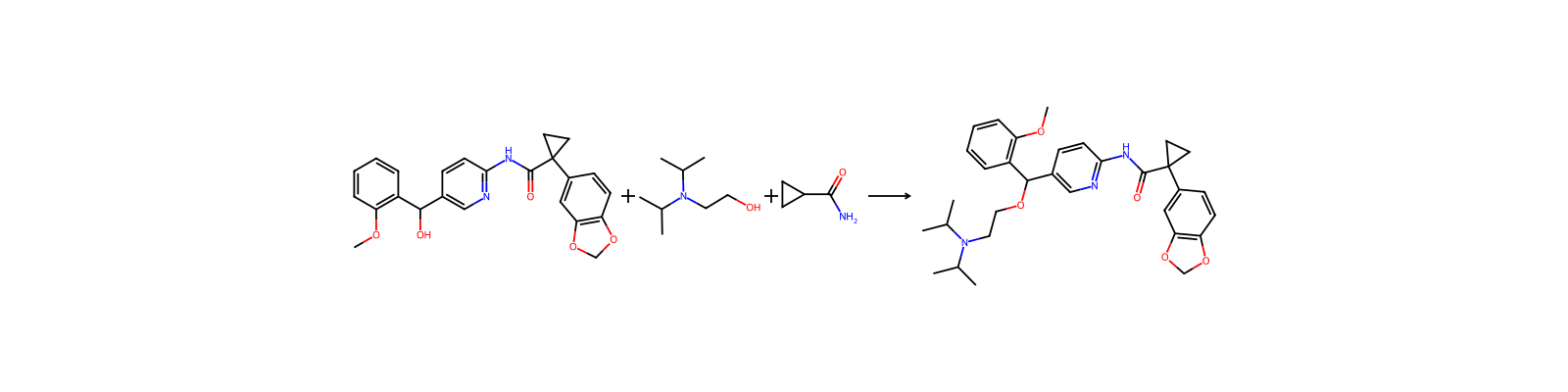
Related reactions
15 records


Linked notes
Loading…