
Flusilazole
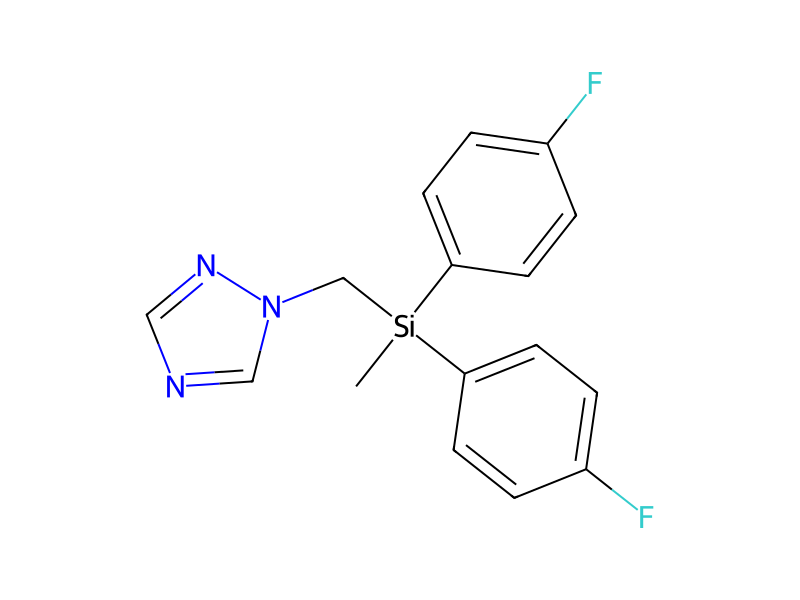
Basic information
- CAS
85509-19-9- Standard SMILES
C[Si](Cn1cncn1)(c1ccc(F)cc1)c1ccc(F)cc1- InChIKey
FQKUGOMFVDPBIZ-UHFFFAOYSA-N- Molecular formula
- C16H15F2N3Si
- Average molar mass
- 315.39 g/mol
- Monoisotopic mass
- 315.10033035
Overview
Flusilazole is an organosilicon compound that is dimethylsilane in which the hydrogens attached to the silicon are replaced by p-fluorophenyl groups and a hydrogen attached to one of the methyl groups is replaced by a 1H-1,2,4-triazol-1-yl group. It is a broad-sepctrum fungicide used to protect a variety of crops. It has a role as a xenobiotic, an EC 1.14.13.70 (sterol 14alpha-demethylase) inhibitor, an environmental contaminant and an antifungal agrochemical. It is an organosilicon compound, a member of triazoles, a member of monofluorobenzenes, a conazole fungicide and a triazole fungicide.
Names & identifiers
- Preferred name
- Flusilazole
- IUPAC
- bis(4-fluorophenyl)-methyl-(1,2,4-triazol-1-ylmethyl)silane
- English name
- Flusilazole
- Molecular formula
- C16H15F2N3Si
- Molecular weight
- 315.4
Names & synonyms
Flusilazole85509-19-9NustarFlusilazolOlympPunchFluzilazolSanctionDPX-H 6573DTXSID3024235F3WG2VVD87Bis(4-fluorophenyl)methyl(1H-1,2,4-triazol-1-ylmethyl)silane
Show more names
FlusiazoleMTDHLyric3D3AEG1Cursor
DPX-H65731-((Bis(4-fluorophenyl)(methyl)silyl)methyl)-1H-1,2,4-triazoleDTXCID704235CHEBI:819221-{[bis(4-fluorophenyl)(methyl)silyl]methyl}-1H-1,2,4-triazole1H-1,2,4-Triazole, 1-((bis(4-fluorophenyl)methylsilyl)methyl)-bis(4-fluorophenyl)(methyl)(1H-1,2,4-triazol-1-ylmethyl)silane1H-1,2,4-Triazole, 1-[[bis(4-fluorophenyl)methylsilyl]methyl]-
Database identifiers
- CAS
85509-19-9- PubChem CID
- 73675
- DTXSID
DTXSID3024235- ChEMBL
CHEMBL1900522- ChEBI
CHEBI:81922- UNII
- F3WG2VVD87
- EC Number
- 617-717-5
Properties
Computed structural properties
- Topological polar surface area
- 30.7 Ų
- Hydrogen bond donors
- 0
- Hydrogen bond acceptors
- 4
- Rotatable bonds
- 4
- Heavy atoms
- 22
- Formal charge
- 0
- Complexity
- 333
Experimental & physicochemical properties
Pesticides
Pesticide -> EPA IRIS
Fungicides
Active substance -> EU Pesticides database: Not approved
Fungicides
Pesticide (Flusilazole) -> USDA PDB
LogP3.70
Endocrine DisruptorsPotential endocrine disrupting compound
Melting Point48 °C
Physical DescriptionSolid
Ionization Efficiency
Positive
3.88
2.7
Agilent XCT
Electrospray ionization
formic acid (5.3nM)
Collision Cross Section174.9 Ų [M+H]+ [CCS Type: DT; Buffer gas: N2; Ionization: ESI+; Dataset: TOXCAST; Source Identifier: DTXSID3024235]
Physicochemical properties
- Melting point
- 55 ° · 55°
Safety & regulation
Safety information is for reference only and does not replace the supplier’s Safety Data Sheet (SDS), applicable regulations, or professional assessment.
GHS classification
GHS Classification
Danger
H302: Harmful if swallowed [Warning Acute toxicity, oral]
P203, P264, P270, P273, P280, P301+P317, P318, P330, P391, P405, and P501 (click each P-code to see the statement)
Danger
H302 (100%): Harmful if swallowed [Warning Acute toxicity, oral]
P203, P264, P270, P273, P280, P301+P317, P318, P330, P391, P405, and P501 (click each P-code to see the statement)
Hazard information
Regulatory Information
Hazard Traits - Reproductive Toxicity
Regulation (EC) No 396/2005 (amended)
Flusilazole is listed in the dataset of EPA Human Health Benchmarks for Pesticides under the Safe Drinking Water Act (40 eCFR 141)
06/133/EC, Reg. (EU) 2022/801, Reg. (EU) No 540/2011
Flusilazole: Does not have an individual approval but may be used as a component in a product covered by a group standard. It is not approved for use as a chemical in its own right.
Hazard Classes and Categories
Acute Tox. 4 (100%)
Carcinogenicity - category 2
Carc. 2
Toxicology
Target OrgansHepatic
Health EffectsFlusilazole can cause testicular Leydig-cell tumours and bladder tumours in rats and hepatocellular tumours in mouse. An increased gestation length and increased placental weight have been found in the reproductive toxicity studies.
Toxicity Summary
Flusilazole has a dose-related inhibition of serum testosterone and estradiol concentrations in rats. This inhibition of testosterone and estradiol biosynthesis may disrupt the hypothalamus–pituitary–testis axis, resulting in overstimulation of the testicular endocrine tissues and increase the risk of Leydig-cell tumours.
Chemistry & industry
Pharmacology
MeSH Pharmacological ClassificationChemicals that kill or inhibit the growth of fungi in agricultural applications, on wood, plastics, or other materials, in swimming pools, etc.
Cellular LocationsMembrane
Uses & manufacturing
UsesThis is a man-made compound that is used as a pesticide.
Use ClassificationFungicides
Applications
DescriptionFlusilazole is a curative and preventative fungicide used to control a range of fungal pathogens. It has a moderate aqueous solubility and a low volatility. It can be persistent in soils and water-sediment systems depending on local conditions. Risk of leaching to groundwater is low. There are concerns that flusilazole may be a reproduction / developmental toxin and an endocrine disrupter. Oral mammalian toxicity is moderate. For most species ecotoxicity is moderate.
UsesAgricultural fungicide.
UsesFlusilazole is a silicon-containing triazole fungicide. Flusilazole is used to control fungal infections on a variety of fruit and vegetable crops
UsesFlusilazole is a broad spectrum fungicide used to control fungal disease caused by pathogens of the Ascomycetes, Basidiomycetes and Deuteromycetes families. Flusilazole exhibits curative and preventative activities and is recommended for use in agriculture, horticulture and viticulture. Diseases controlled include eyespot, mildew, and rusts of cereals, cercospora and rust of sugar beets, leaf spots of oilseed rape, scab and mildew of pome and stone fruits, mildew and black rot of grapes and Sigatoka disease of bananas.
Upstream & downstream products
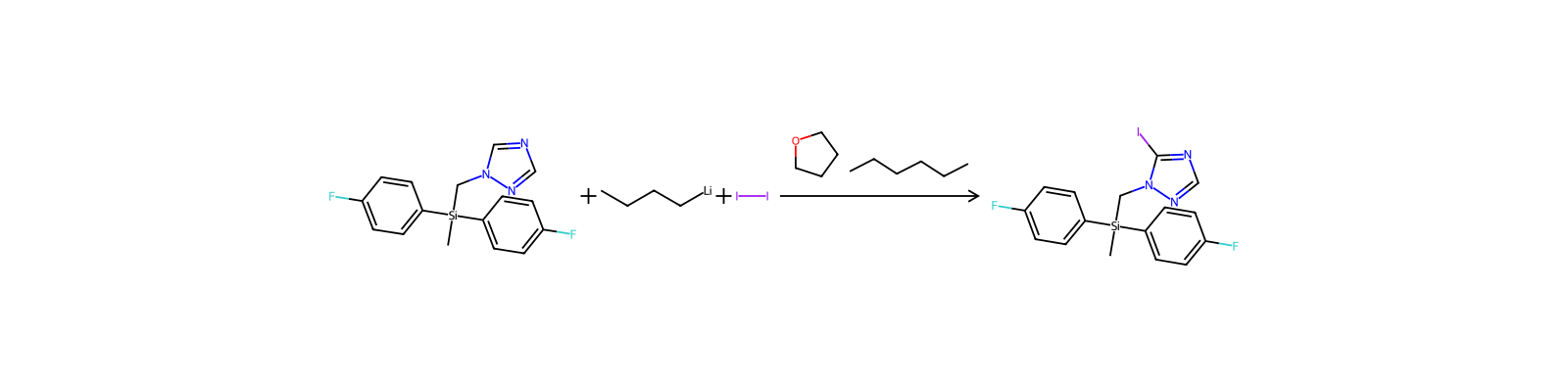
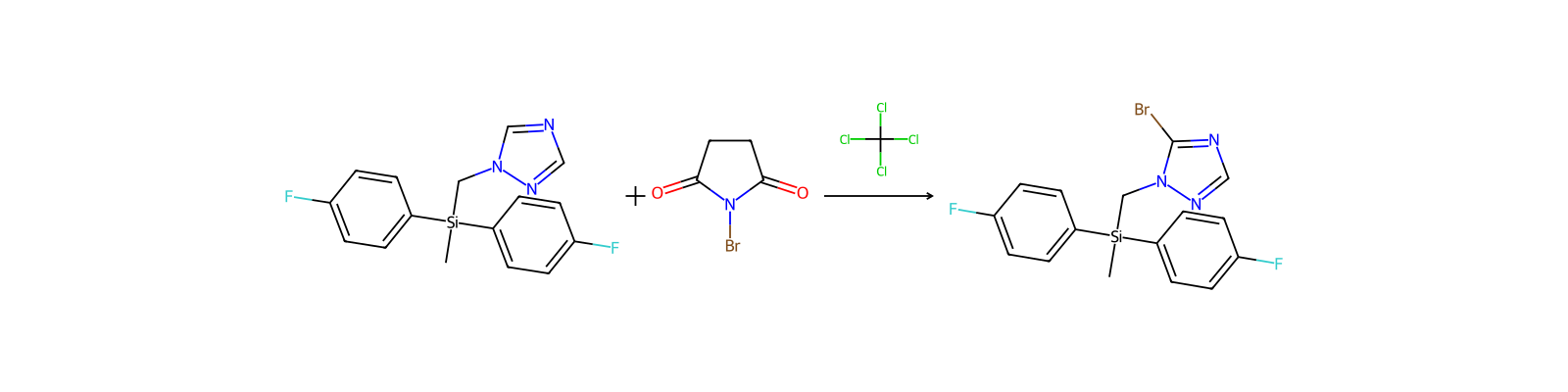
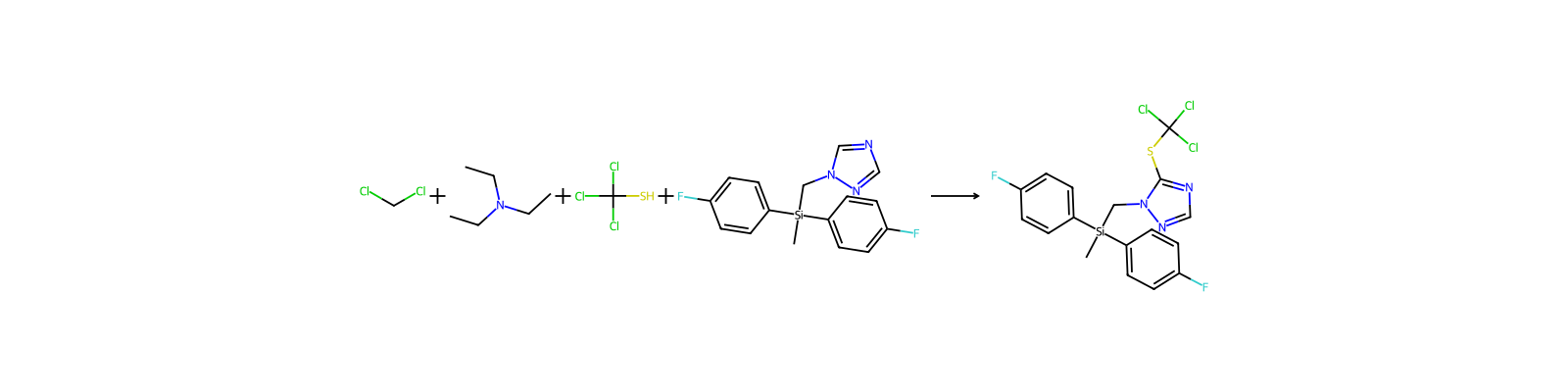
Related reactions
10 records




Compound notes
Loading…