HomeMCPWorkbenchSkills
HomeWorkbenchNotificationsMe
llms.txt · MCP GuidePrivacy Policy · Terms of Service · Supportv1.8.3
  1. Home
  2. /Compound

Tetracyanoquinodimethane

HCID 73697
New reaction
Print
Basic informationOverviewNames & identifiersPropertiesSafety & regulationChemistry & industryRelated reactionsCompound notes
Substructure searchFind similar structures

Basic information

CAS
1518-16-7
Standard SMILES
N#CC(C#N)=c1ccc(=C(C#N)C#N)cc1
InChIKey
PCCVSPMFGIFTHU-UHFFFAOYSA-N
Molecular formula
C12H4N4
Average molar mass
204.19 g/mol
Monoisotopic mass
204.04359615

Overview

Tetracyanoquinodimethane is a quinodimethane that is p-quinodimethane in which the methylidene hydrogens are replaced by cyano groups. It is a nitrile, an alicyclic compound and a quinodimethane. It is functionally related to a p-quinodimethane.

Names & identifiers

Preferred name
Tetracyanoquinodimethane
IUPAC
2-[4-(dicyanomethylidene)cyclohexa-2,5-dien-1-ylidene]propanedinitrile
English name
7,7,8,8-Tetracyanoquinodimethane
Molecular formula
C12H4N4
Molecular weight
204.19

Names & synonyms

1518-16-77,7,8,8-TetracyanoquinodimethaneTCNQTetracyanoquinodimethaneTetracyanoquinodimethanTetracyano-p-quinodimethanePropanedinitrile, 2,2'-(2,5-cyclohexadiene-1,4-diylidene)bis-Tetracyanoquinodimethan(e)7,7,8,8-Tetracyano-p-quinodimethane7,7,8,8-Tetracyano-1,4-quinodimethan2,5-Cyclohexadiene-1,4-diylidenedimalononitrile2-[4-(dicyanomethylidene)cyclohexa-2,5-dien-1-ylidene]propanedinitrile
Show more names
Tetracyano p-Quinone Dimethane2,2'-(Cyclohexa-2,5-diene-1,4-diylidene)dimalononitrileTIMTEC-BB SBB0004357,7,8,8-Tetracyanoqutetracyano-quinodimethaetracyanoquinodimethane7,7,8,8-Tetracyanodimethan
7,7',8,8'-TetracyanoquinodimethaneHC6FB4H2KW2,5-Cyclohexadiene-delta(sup1alpha:4alpha)dimalononitrileNSC-1052372,5-Cyclohexadiene-delta1,alpha:4,alpha'-dimalononitrileDTXSID5061748CHEBI:524452,5-Cyclohexadiene-1,4-diylidene-alpha,alpha'-dimalononitrile

Properties

Computed structural properties

XLogP
1
Topological polar surface area
95.2 Ų
Hydrogen bond donors
0
Hydrogen bond acceptors
4
Rotatable bonds
0
Heavy atoms
16
Formal charge
0
Complexity
535

Experimental & physicochemical properties

Chemical ClassesNitrogen Compounds -> Nitriles
SpringerMaterials PropertiesBand gap energy
Physical DescriptionGreen crystalline solid; [Alfa Aesar MSDS]

Physicochemical properties

Melting point
287 · 287-289 °C (dec.) (lit.)
Boiling point
332.67 °C · 332.67°C (rough estimate)
Density
1.3596 · 1.3596 (rough estimate)
refractive index
1.5 · 1.5000 (estimate)
storage temp.
Sealed in dry,Room Temperature
form
Crystalline Powder
color
Orange-brown to green
Water Solubility
insoluble
semiconductor properties
N-type (mobility=10-5cm2/V·s)

Safety & regulation

Safety information is for reference only and does not replace the supplier’s Safety Data Sheet (SDS), applicable regulations, or professional assessment.

GHS classification

GHS Classification · 4 items

Danger

H301+H311+H331 (87%): Toxic if swallowed, in contact with skin or if inhaled [Danger Acute toxicity, oral; acute toxicity, dermal; acute toxicity, inhalation]

P261, P262, P264, P270, P271, P280, P301+P316, P301+P317, P302+P352, P304+P340, P316, P317, P321, P330, P361+P364, P403+P233, P405, and P501 (click each P-code to see the statement)

Aggregated GHS information provided per 46 reports by companies from 4 notifications to the ECHA C&L Inventory. Each notification may be associated with multiple companies.

Hazard information

Regulatory Information7,7,8,8-Tetracyanoquinonedimethane: Does not have an individual approval but may be used under an appropriate group standard
Hazards SummaryIntravenous LD50 (mouse) = 56 mg/kg; [RTECS] May cause irritation; Harmful by ingestion and skin absorption; Toxic by inhalation; [Alfa Aesar MSDS] See NITRILES.
Hazard Classes and CategoriesAcute Tox. 3 (89.1%)

Safety & protection

Protective Action Criteria (PAC) · 3 items

0.18 [mg/m3]

2.0 [mg/m3]

12 [mg/m3]

Toxicology

Treatment · 1 item

Antidotes to cyanide poisoning include hydroxocobalamin and sodium nitrite, which release the cyanide from the cytochrome system, and rhodanase, which is an enzyme occurring naturally in mammals that combines serum cyanide with thiosulfate, producing comparatively harmless thiocyanate. Oxygen therapy can also be administered. (L97)

Chemistry & industry

Pharmacology

Metabolism/Metabolites · 1 item

Organic nitriles are converted into cyanide ions through the action of cytochrome P450 enzymes in the liver. Cyanide is rapidly absorbed and distributed throughout the body. Cyanide is mainly metabolized into thiocyanate by either rhodanese or 3-mercaptopyruvate sulfur transferase. Cyanide metabolites are excreted in the urine. (L96)

Uses & manufacturing

Uses · 2 items

Synthetic Polymer MALDI Matrix Compounds

Tetracyanoquinodimethane is an electron-acceptor that is used to prepare charge transfer salts, which are of interest in the area of molecular electronics. (L614)

General Manufacturing InformationPropanedinitrile, 2,2'-(2,5-cyclohexadiene-1,4-diylidene)bis-: ACTIVE
Applications · 4 items

Description7,7,8,8-tetracyanoquinodimethane (TCNQ), with a LUMO at 4.5 eV, is known for the charge-transfer salts formed by its radical anion TCNQ inphotovoltaic, light-emitting diodes, and organic field-effect transistordevices. TCNQ and its derivativeshave been used as dopants, leading to an increase in hole mobility or to the lowering of injectionbarriers. One classic example of such is the treatment of tetrathiafulvene (TTF), an electron donor with TCNQ. TFF and TCNQ form an ion pair, the TTF-TCNQ complex. This process of doping leads to the crystallisation of the ion pair into a one-dimensionally stacked polymer. This polymer consists of segregated stacks of cations and anions of the donors and the acceptors, respectively. The complex crystal is an organic semiconductor that exhibits metallic electric conductivity [1, 2].

HistoryThe first report on the electrical conductivity in an organic solid appeared in 1954, namely, a perylene—bromine complex with a room-temperature conductivity of 0.1 S cm1. In 1960, the organic acceptor Tetracyanoquinodimethane (TCNQ; 7,7,8,8-Tetracyanoquinodimethane) was synthesized, as well as a great number of its conducting charge-transfer complexes and radical ion salts. In the 1970s, the organic donor TTF led to the first organic metal TTF-TCNQ. Its room-temperature conductivity (500 S cm1) increases with a decrease in the temperature to the value of 6000 S cm1 at 60 K, where a metal-insulator transition occurs[1].

Related reactions

13 records
New reaction record
HRID 26169 reaction equation
HRID 26169As reactant
HRID 26170 reaction equation
HRID 26170As catalyst
HRID 85324 reaction equation
HRID 85324As reactant
HRID 85325 reaction equation
HRID 85325As reactant
HRID 485999 reaction equation
HRID 485999As reactant
HRID 622615 reaction equation
HRID 622615As reactant
HRID 903818 reaction equation
HRID 903818As product
HRID 1164189 reaction equation
HRID 1164189As reactant
PreviousPage 1 of 2

Compound notes

On this pageBasic informationOverviewNames & identifiersPropertiesSafety & regulationChemistry & industryRelated reactionsCompound notes

Database identifiers

CAS
1518-16-7
PubChem CID
73697
DTXSID
DTXSID5061748
ChEBI
CHEBI:52445
UNII
HC6FB4H2KW
EC Number
216-174-8
Nikkaji
J38.157H
λmax
395 nm · 395nm(CH3CN)(lit.)
BRN
611604 · 611604
Stability
Stable. Incompatible with strong acids, strong bases, strong reducing agents, strong oxidizing agents.
InChI
InChI=1S/C12H4N4/c13-5-11(6-14)9-1-2-10(4-3-9)12(7-15)8-16/h1-4H
InChIKey
PCCVSPMFGIFTHU-UHFFFAOYSA-N
SMILES
C1(=C(C#N)C#N)C=CC(=C(C#N)C#N)C=C1 |c:8,t:0|
CAS DataBase Reference
1518 · 1518-16-7(CAS DataBase Reference)
FDA UNII
6 FB4H2KW · HC6FB4H2KW
NIST Chemistry Reference
2 · Propanedinitrile, 2,2'-(2,5-cyclohexadiene-1,4-diylidene)bis-(1518-16-7)
EPA Substance Registry System
2 · Propanedinitrile, 2,2'-(2,5-cyclohexadiene-1,4-diylidene)bis- (1518-16-7)
UNSPSC Code
12352103 · 12352103
NACRES
23 · NA.23
Symbol(GHS)
6 · GHS06
Signal word
Danger
Hazard statements
301 · H301+H311+H331
Precautionary statements
280 · P280-P301+P310+P330-P302+P352+P312-P304+P340+P311
PPE
95 · dust mask type N95 (US), Eyeshields, Gloves
Hazard Codes
Xn,Xi,T
Risk Statements
22 · 22-20/21/22-23/24/25
Safety Statements
22 · 22-24/25-36/37-26-36-45
RIDADR
3276 · 3276
WGK Germany
3 · 3
RTECS
4850000 · GU4850000
Hazard Note
Irritant
TSCA
TSCA listed
HazardClass
6.1 · 6.1
PackingGroup
II
HS Code
2926909090 · 2926909090
Storage Class
6.1 A · 6.1A - Combustible acute toxic Cat. 1 and 2very toxic hazardous materials
Hazard Classifications
3 DermalAcute · Acute Tox. 3 DermalAcute Tox. 3 InhalationAcute Tox. 3 Oral
Health Effects · 1 item

Exposure to high levels of cyanide for a short time harms the brain and heart and can even cause coma, seizures, apnea, cardiac arrest and death. Chronic inhalation of cyanide causes breathing difficulties, chest pain, vomiting, blood changes, headaches, and enlargement of the thyroid gland. Skin contact with cyanide salts can irritate and produce sores. (L96, L97)

Exposure RoutesOral (L96) ; inhalation (L96) ; dermal (L96)
Toxicity Summary · 1 item

Organic nitriles decompose into cyanide ions both in vivo and in vitro. Consequently the primary mechanism of toxicity for organic nitriles is their production of toxic cyanide ions or hydrogen cyanide. Cyanide is an inhibitor of cytochrome c oxidase in the fourth complex of the electron transport chain (found in the membrane of the mitochondria of eukaryotic cells). It complexes with the ferric iron atom in this enzyme. The binding of cyanide to this cytochrome prevents transport of electrons from cytochrome c oxidase to oxygen. As a result, the electron transport chain is disrupted and the cell can no longer aerobically produce ATP for energy. Tissues that mainly depend on aerobic respiration, such as the central nervous system and the heart, are particularly affected. Cyanide is also known produce some of its toxic effects by binding to catalase, glutathione peroxidase, methemoglobin, hydroxocobalamin, phosphatase, tyrosinase, ascorbic acid oxidase, xanthine oxidase, succinic dehydrogenase, and Cu/Zn superoxide dismutase. Cyanide binds to the ferric ion of methemoglobin to form inactive cyanmethemoglobin. (L97)

Signs and SymptomsCyanide poisoning is identified by rapid, deep breathing and shortness of breath, general weakness, giddiness, headaches, vertigo, confusion, convulsions/seizures and eventually loss of consciousness. (L96, L97)
Carcinogen ClassificationNo indication of carcinogenicity to humans (not listed by IARC).

Safety data

PPE
dust mask type N95 (US), Eyeshields, Gloves
wgk
3
tsca
TSCA listed
rtecs
GU4850000
ridadr
3276
hs_code
2926909090
risk_code
22-20/21/22-23/24/25
Signal word
Danger
Symbol(GHS)
GHS06
hazard_code
Xn,Xi,T
hazard_note
Irritant
safety_code
22-24/25-36/37-26-36-45
hazard_class
6.1
Storage Class
6.1A - Combustible acute toxic Cat. 1 and 2very toxic hazardous materials
packing_group
II
Hazard statements
H301+H311+H331
Hazard Classifications
Acute Tox. 3 DermalAcute Tox. 3 InhalationAcute Tox. 3 Oral
Precautionary statements
P280-P301+P310+P330-P302+P352+P312-P304+P340+P311

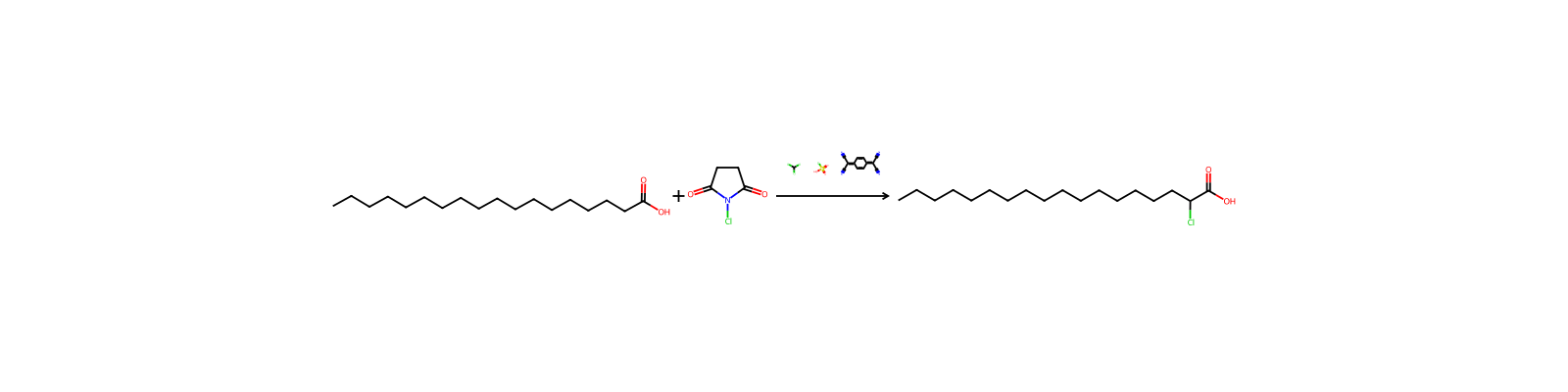
Uses7,7,8,8-Tetracyanoquinodimethane is an electron-acceptor molecule used to form charge-transfer superconductors. It is an effective catalyst used for the -chlorination of carboxylic acids using chlorosulfonic acid; the presence of TCNQ suppresses competing free-radical chlorination.

General Description7,7,8,8-Tetracyanoquinodimethane (TNCQ) is a strong electron acceptor as it has four cyano groups and π-conjugation bonds that form charge transferring chains and ion radical salts which are mainly used as p-dopants for the fabrication of a variety of semiconductor applications.

Upstream & downstream products

Downstream products

5-Methyl-1,3,4-oxadiazol-2-ylamine

Additional notes

DefinitionChEBI: A quinodimethane that is p-quinodimethane in which the methylidene hydrogens are replaced by cyano groups.