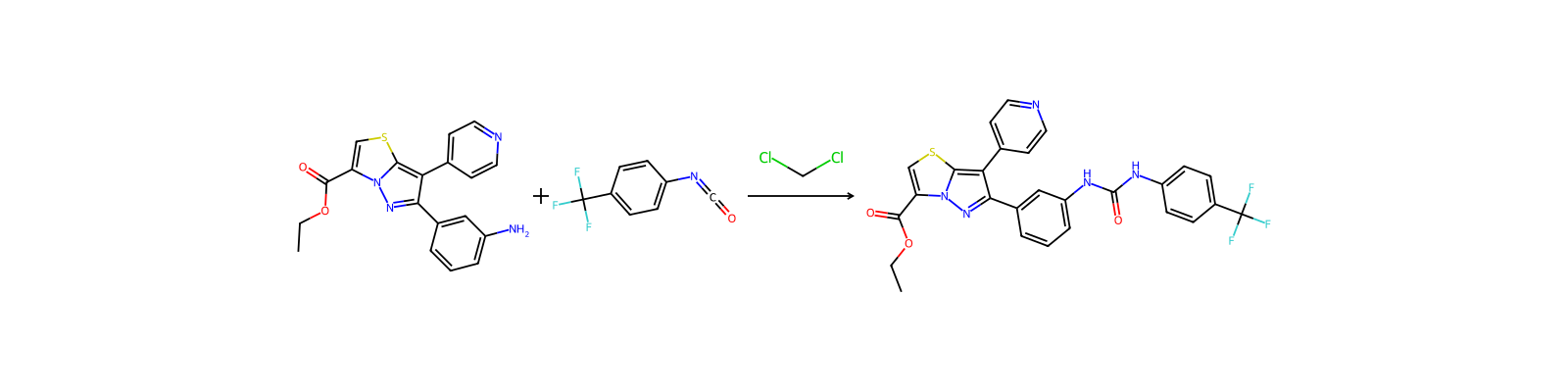
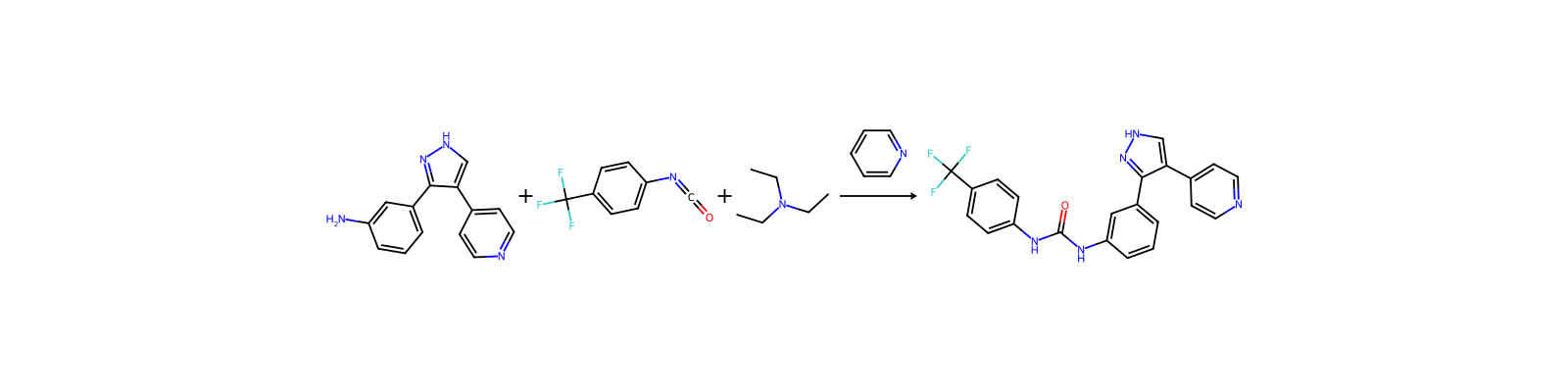
HRID 34705As reactant
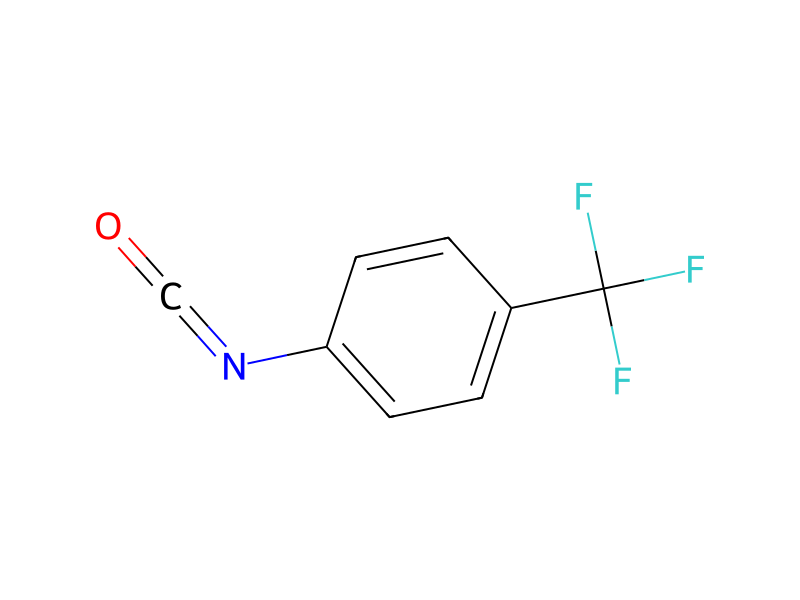
1548-13-6O=C=Nc1ccc(C(F)(F)F)cc1QZTWVDCKDWZCLV-UHFFFAOYSA-N1548-13-6DTXSID20935067Safety information is for reference only and does not replace the supplier’s Safety Data Sheet (SDS), applicable regulations, or professional assessment.
This chemical does not meet GHS hazard criteria for 44.6% (37 of 83) of reports.
Danger
H302 (48.2%): Harmful if swallowed [Warning Acute toxicity, oral]
P233, P260, P261, P264, P264+P265, P270, P271, P280, P284, P301+P317, P302+P352, P304+P340, P305+P351+P338, P317, P319, P321, P330, P332+P317, P337+P317, P342+P316, P362+P364, P403, P403+P233, P405, and P501 (click each P-code to see the statement)
Aggregated GHS information provided per 83 reports by companies from 7 notifications to the ECHA C&L Inventory. Each notification may be associated with multiple companies.
Uses4-(Trifluoromethyl)phenyl isocyanate has been used in the synthesis of fluorescent photoinduced electron transfer (PET) chemosensors and 2-ethyl-6-[(4-trifluoromethylphenylcarbamoyl)hydrazino]-benzo[de]iso-quinoline-1,3-dione, an amidourea-based sensor for anions. It has also been used in the synthesis of 1,8-naphthalimide based colorimetric and fluorescent sensor for anions.