HomeMCPWorkbenchSkills
HomeWorkbenchNotificationsMe
llms.txt · MCP GuidePrivacy Policy · Terms of Service · Supportv1.8.3
  1. Home
  2. /Compound

N,N-Dimethylcyclohexylamine

HCID 7415
New reaction
Print
Basic informationOverviewNames & identifiersPropertiesSafety & regulationChemistry & industryRelated reactionsCompound notes
Substructure searchFind similar structures

Basic information

CAS
98-94-2
Standard SMILES
CN(C)C1CCCCC1
InChIKey
SVYKKECYCPFKGB-UHFFFAOYSA-N
Molecular formula
C8H17N
Average molar mass
127.23 g/mol
Monoisotopic mass
127.13609955

Overview

Dimethylcyclohexylamine is a colorless liquid with a musky ammonia odor. Less dense than water. (USCG, 1999)

Names & identifiers

Preferred name
N,N-Dimethylcyclohexylamine
IUPAC
N,N-dimethylcyclohexanamine
English name
N,N-Dimethylcyclohexylamine
Molecular formula
C8H17N
Molecular weight
127.23

Names & synonyms

N,N-DIMETHYLCYCLOHEXYLAMINE98-94-2N,N-DimethylcyclohexanamineCyclohexyldimethylamineDimethylcyclohexylamineN-CyclohexyldimethylamineCyclohexanamine, N,N-dimethyl-(Dimethylamino)cyclohexaneCyclohexylamine, N,N-dimethyl-N,N-DimethylaminocyclohexaneN,N-Dimethyl-N-cyclohexylamineDTXSID9026633
Show more names
DMCHAPC8Polycat 8N,N-dimethyl-CyclohexanamineCyclohexanamine,N,N-dimethyl-
N1H19E7HTANSC-163904DTXCID906633CHEBI:59022RefChem:161290202-715-5DimethylaminocyclohexaneNSC 163904

Database identifiers

CAS
98-94-2
PubChem CID
7415
DTXSID
DTXSID9026633
ChEMBL
CHEMBL3186662
ChEBI
CHEBI:59022
UNII
N1H19E7HTA
EC Number
202-715-5
Nikkaji
J4.960C

Properties

Computed structural properties

XLogP
1.9
Topological polar surface area
3.2 Ų
Hydrogen bond donors
0
Hydrogen bond acceptors
1
Rotatable bonds
1
Heavy atoms
9
Formal charge
0
Complexity
72.6

Experimental & physicochemical properties

Chemical Classes · 2 items

Nitrogen Compounds -> Amines, Aliphatic

Corrosives

SpringerMaterials Properties15N nuclear magnetic resonance spectrum
LogP2.01
Density · 4 items

0.849 at 68 °F (USCG, 1999) - Less dense than water; will float

0.8490 @ 20 °C/20 °C

Relative density (water = 1): 0.85

0.8490 @ 20°C

Color/FormWATER-WHITE LIQ
Solubility · 2 items

PARTLY SOL IN WATER; MISCIBLE WITH ALC, BENZENE, ACETONE

Solubility in water, g/100ml: 20

Flash Point · 3 items

108 °F (USCG, 1999)

110 °F OC

42.2 °C c.c.

Boiling Point · 2 items

323.6 °F at 760 mmHg (USCG, 1999)

162-165 °C

Melting Point

Safety & regulation

Safety information is for reference only and does not replace the supplier’s Safety Data Sheet (SDS), applicable regulations, or professional assessment.

GHS classification

GHS Classification · 6 items

This chemical does not meet GHS hazard criteria for 14.6% (68 of 466) of reports.

Danger

H226 (85.2%): Flammable liquid and vapor [Warning Flammable liquids]

P210, P233, P240, P241, P242, P243, P260, P261, P262, P264, P264+P265, P270, P271, P273, P280, P284, P301+P316, P301+P317, P301+P330+P331, P302+P352, P302+P361+P354, P303+P361+P353, P304+P340, P305+P354+P338, P316, P317, P320, P321, P330, P361+P364, P363, P370+P378, P391, P403+P233, P403+P235, P405, and P501 (click each P-code to see the statement)

Aggregated GHS information provided per 466 reports by companies from 27 notifications to the ECHA C&L Inventory. Each notification may be associated with multiple companies.

Danger

Hazard information

Regulatory Information · 5 items

Chemical: Cyclohexanamine, N,N-dimethyl-

Cyclohexanamine, N,N-dimethyl- is listed on the EPA's Chemical Data Reporting (CDR) system. Manufacturers and importers of Cyclohexanamine, N,N-dimethyl- are required to report information about their production and use of this chemical to the EPA under the Toxic Substances Control Act (TSCA). (40 eCFR Part 711)

REACH registered substance: Cyclohexyldimethylamine (EC: 202-715-5)

Cyclohexyldimethylamine: Does not have an individual approval but may be used under an appropriate group standard

The New Jersey Worker and Community Right to Know Act requires public and private employers to provide information about hazardous substances at their workplaces. (N.J.S.A. 34:5A-1 et. seq.)

DOT LabelCorrosive Flammable Liquid
Fire Hazards · 4 items

Behavior in Fire: Dangerous when exposed to heat or flame. Can react vigorously with oxidizing materials. (USCG, 1999)

· Flammable/combustible material.

· Flammable/combustible material.

Chemistry & industry

Uses & manufacturing

Uses · 6 items

Used as a catalyst for polyurethane foams and an intermediate for rubber accelerators and dyes; Also used in the treatment of textiles; [HSDB]

Textiles (Fiber & Fabric Manufacturing) [Category: Industry]

CATALYST FOR POLYURETHANE FOAMS; INTERMEDIATE FOR RUBBER ACCELERATORS; TREATMENT OF TEXTILES

CHEMICAL INTERMEDIATE, EG, FOR RUBBER ACCELERATORS & DYES

CATALYST FOR POLYURETHANE FOAMS (POSSIBLE USE)

COMPONENT OF TEXTILE TREATMENTS (POSSIBLE USE)

U.S. Exports · 2 items

(1979) No Data

(1981) No Data

U.S. Imports · 2 items

(1979) 2.33X10+7 GRAMS (PRINCPL CUSTMS DISTS)

(1981) 2.49X10+8 GRAMS (PRINCPL CUSTMS DISTS)

U.S. Production · 3 items

2023: 2,500,000 - <4,000,000 lb

(1979) PROBABLY GREATER THAN 2.27X10+6 GRAMS

(1981) PROBABLY GREATER THAN 2.27X10+6 GRAMS

Consumer UsesCatalyst
Industry UsesChemical reaction regulator
Methods of ManufacturingREACTION OF CYCLOHEXYLAMINE WITH FORMALDEHYDE & HYDROGEN; REACTION OF CYCLOHEXYLAMINE WITH METHYL CHLORIDE
General Manufacturing Information · 3 items

Plastics Product Manufacturing

Cyclohexanamine, N,N-dimethyl-: ACTIVE

N,N-DIMETHYLCYCLOHEXYLAMINE WAS BUBBLED WITH 0.2-0.3 L/MIN N CONTAINING 2020 PPM HYDROGEN SULFIDE FOR 15 MIN; THE HYDROGEN SULFIDE REMOVAL WAS 100%.

Applications · 3 items

Related reactions

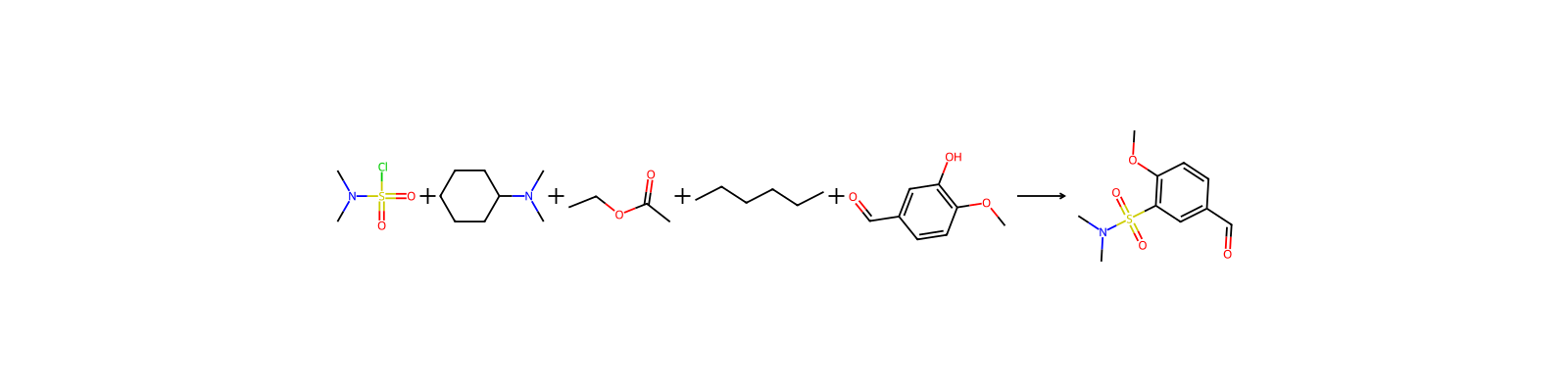
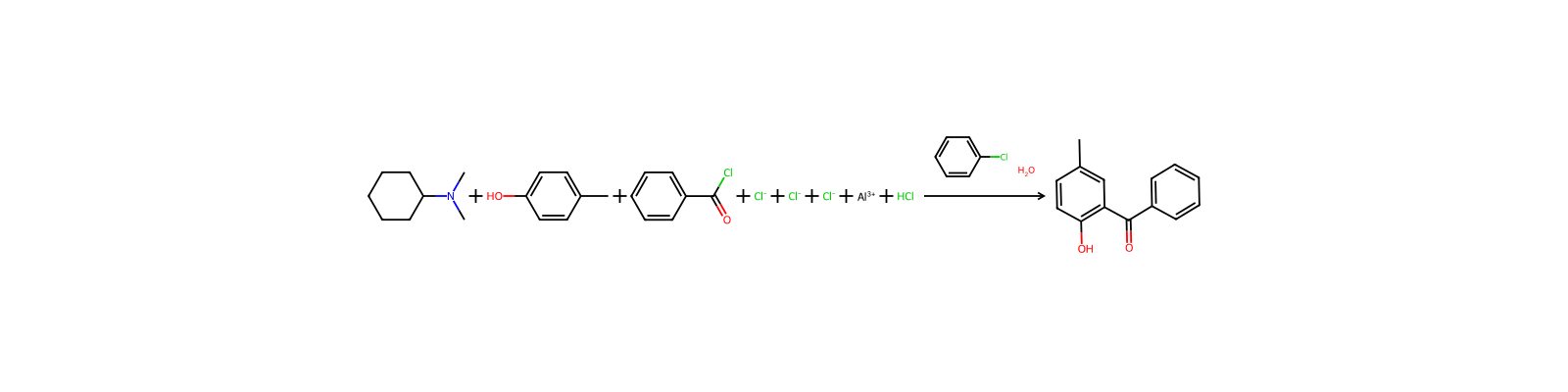
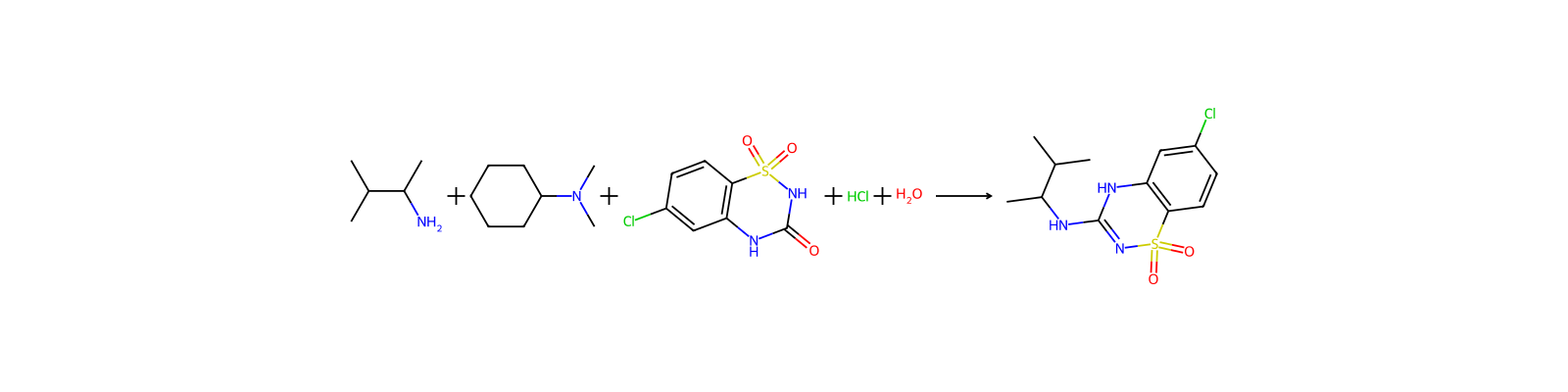
47 records
New reaction record
HRID 19954 reaction equation
HRID 19954As solvent
HRID 134394 reaction equation
HRID 134394As reactant
HRID 170960 reaction equation
HRID 170960As reactant
HRID 203867 reaction equation
HRID 203867As reactant
HRID 292007 reaction equation
HRID 292007As reactant
HRID 617670 reaction equation
HRID 617670As reactant
HRID 672255 reaction equation
HRID 672255As reactant
HRID 692310 reaction equation
HRID 692310As reactant
PreviousPage 1 of 6

Compound notes

On this pageBasic informationOverviewNames & identifiersPropertiesSafety & regulationChemistry & industryRelated reactionsCompound notes
· 3 items

FP: BELOW -77 °C

-60 °C

-77 °C

Vapor DensityRelative vapor density (air = 1): 4.4
Vapor Pressure · 3 items

3.0 [mmHg]

Vapor pressure, kPa at 25 °C: 0.4

3.6 [mm Hg] @20 °C

Food Contact SubstancesFCS -> FDA Inventory of Food Contact Substances Listed in 21 CFR

Physicochemical properties

Melting point
-60 °C · -60 °C
Boiling point
160 °C · 160 °C
Density
0.85 · 0.85
vapor pressure
3.6 mm · 3.6 mm Hg ( 20 °C)
refractive index
1.45 · 1.45
Flash point
42 °C · 42 °C
storage temp.
30 °C · Store below +30°C.
solubility
10 g/L · 10 g/L (20°C)
pka
1 · pK1:10.72(+1) (25°C)
form
clear liquid
color
Colorless to Almost colorless
PH
12 · 12 (5g/l, H2O, 20℃)
explosive limit
3.6 · 3.6-19%(V)
Viscosity
1.49 mm2/s · 1.49mm2/s
Water Solubility
10 g/L · 10 g/L (20 ºC)
FreezingPoint
-77 ℃ · <-77℃
Sensitive
Air Sensitive
BRN
1919922 · 1919922
Henry's Law Constant
4.2 · 4.2×10-1 mol/(m3Pa) at 25℃, Altschuh et al. (1999)
Dielectric constant
2.86 · 2.8599999999999999
InChI
1S/C8H17N/c1-9(2)8-6-4-3-5-7-8/h8H,3-7H2,1-2H3
InChIKey
SVYKKECYCPFKGB-UHFFFAOYSA-N
SMILES
CN(C)C1CCCCC1
LogP
2.31 at · 2.31 at 25℃
CAS DataBase Reference
98 · 98-94-2(CAS DataBase Reference)
Indirect Additives used in Food Contact Substances
N,N-DIMETHYLCYCLOHEXYLAMINE
FDA 21 CFR
177.26 · 177.2600
EWG's Food Scores
1 · 1
FDA UNII
1 H19E7HTA · N1H19E7HTA
NIST Chemistry Reference
Cyclohexanamine, N,N-dimethyl-(98-94-2)
EPA Substance Registry System
N,N-Dimethylcyclohexylamine (98-94-2)
UNSPSC Code
12352116 · 12352116
NACRES
22 · NA.22
Symbol(GHS)
2 · GHS02,GHS05,GHS06,GHS08,GHS09
Signal word
Danger
Hazard statements
330 · H330-H301+H311-H314-H370-H341-H335-H410-H226
Precautionary statements
501 · P501-P273-P260-P270-P202-P240-P210-P233-P201-P243-P241-P242-P271-P264-P280-P284-P370+P378-P391-P308+P311-P361+P364-P303+P361+P353-P301+P330+P331-P301+P310+P330-P304+P340+P310-P305+P351+P338+P310-P403+P233-P403+P235-P405
PPE
Faceshields, Gloves, Goggles, type ABEK (EN14387) respirator filter
Hazard Codes
C,N,T
Risk Statements
10 · 10-20/21/22-34-50/53-23/24-22
Safety Statements
26 · 26-28-36/37/39-45-61-28A-16
RIDADR
2264 · UN 2264
WGK Germany
1 · 1
RTECS
1198000 · GX1198000
Autoignition Temperature
419 °F · 419 °F
TSCA
TSCA listed
HazardClass
8 · 8
PackingGroup
II
HS Code
2921300090 · 2921300090
Storage Class
3 · 3 - Flammable liquids
Hazard Classifications
2 InhalationAcute · Acute Tox. 2 InhalationAcute Tox. 3 DermalAcute Tox. 4 OralAquatic Acute 1Flam. Liq. 3Skin Corr. 1B
Hazardous Substances Data
98 · 98-94-2(Hazardous Substances Data)
Toxicity
50 orally · LD50 orally in Rabbit: 272 mg/kg LD50 dermal Rat > 400 mg/kg
REACH Registrations
Active

Flammable. Gives off irritating or toxic fumes (or gases) in a fire. Above 42.2 °C explosive vapour/air mixtures may be formed.

Health Hazards · 3 items

Inhalation of high concentration of vapor will will produce irritation of the respiratory tract and lungs. Inhalation of large quantities of vapor may be fatal. (USCG, 1999)

· May cause toxic effects if inhaled or ingested.

· May cause toxic effects if inhaled or ingested.

Hazards Summary · 1 item

A corrosive substance that can cause injury to the skin, eyes, and respiratory tract; Inhalation may cause pulmonary edema; Can be absorbed through skin; [ICSC] Irritating or corrosive to animal skin; Irritating to rabbit eyes; Not sensitizing to guinea pig skin using skin painting test; [IUCLID] Causes muscle contraction or spasticity in lethal-dose studies of mice (inhalation and oral routes); [RTECS] Causes burns; Toxic if inhaled; [Alfa Aesar MSDS]

DOT ID and Guide · 2 items

2264 132

2264 132

Reactive GroupAmines, Phosphines, and Pyridines
UN ClassificationUN Hazard Class: 8; UN Subsidiary Risks: 3; UN Pack Group: II
Reactivity AlertsHighly Flammable
Reactivity Profile · 1 item

DIMETHYLCYCLOHEXYLAMINE neutralizes acids in exothermic reactions to form salts plus water. May be incompatible with isocyanates, halogenated organics, peroxides, phenols (acidic), epoxides, anhydrides, and acid halides. Flammable gaseous hydrogen may be generated in combination with strong reducing agents, such as hydrides.

Chemical DangersDecomposes on burning. This produces toxic fumes including nitrogen oxides. The substance is a medium strong base.
Packaging and LabellingDo not transport with food and feedstuffs.

Safety & protection

Fire Fighting · 2 items

Fire Extinguishing Agents: Carbon dioxide, dry chemical powder, polymer or alcohol foam. (USCG, 1999)

Use water spray, powder, alcohol-resistant foam, carbon dioxide. In case of fire: keep drums, etc., cool by spraying with water.

First Aid Measures · 4 items

Fresh air, rest. Half-upright position. Artificial respiration may be needed. Refer for medical attention.

First rinse with plenty of water for at least 15 minutes, then remove contaminated clothes and rinse again. Refer for medical attention .

First rinse with plenty of water for several minutes (remove contact lenses if easily possible), then refer for medical attention.

Rinse mouth. Give one or two glasses of water to drink. Do NOT induce vomiting. Refer for medical attention .

Accidental Release Measures · 4 items

· CALL 911. Then call emergency response telephone number on shipping paper. If shipping paper not available or no answer, refer to appropriate telephone number listed on the inside back cover.

· ELIMINATE all ignition sources (no smoking, flares, sparks or flames) from immediate area.

· CALL 911. Then call emergency response telephone number on shipping paper. If shipping paper not available or no answer, refer to appropriate telephone number listed on the inside back cover.

· ELIMINATE all ignition sources (no smoking, flares, sparks or flames) from immediate area.

First Aid · 3 items

Get medical attention.

General First Aid:

General First Aid:

Safe StorageFireproof. Separated from strong acids and food and feedstuffs.
Exposure Control and Personal Protection · 2 items

· Wear positive pressure self-contained breathing apparatus (SCBA).

· Wear positive pressure self-contained breathing apparatus (SCBA).

Nonfire Spill ResponseExcerpt from ERG Guide 132 [Flammable Liquids - Corrosive]:
Spillage Disposal · 1 item

Personal protection: filter respirator for organic gases and vapours adapted to the airborne concentration of the substance. Collect leaking and spilled liquid in sealable containers as far as possible. Carefully collect remainder. Then store and dispose of according to local regulations. Do NOT let this chemical enter the environment.

Isolation and Evacuation · 3 items

Excerpt from ERG Guide 132 [Flammable Liquids - Corrosive]:

Immediate precautionary measure

Immediate precautionary measure

Eye PreventionWear face shield or eye protection in combination with breathing protection.
Fire PreventionNO open flames, NO sparks and NO smoking. Above 42.2 °C use a closed system, ventilation and explosion-proof electrical equipment.
Inhalation RiskNo indication can be given about the rate at which a harmful concentration of this substance in the air is reached on evaporation at 20 °C.

Toxicology

Adverse EffectsDermatotoxin - Skin burns.
Exposure RoutesThe substance can be absorbed into the body by inhalation, through the skin and by ingestion.
Signs and Symptoms · 4 items

Sore throat. Burning sensation. Cough. Laboured breathing. Shortness of breath. Symptoms may be delayed.

Redness. Pain. Skin burns.

Redness. Pain. Severe deep burns.

Burning sensation. Abdominal pain. Shock or collapse.

ICSC Environmental DataThe substance is harmful to aquatic organisms.
Toxicity DataLC50 (rat) = 1,889 mg/m3/2h
EPA Provisional Peer-Reviewed Toxicity Values · 3 items

n,n-Dimethylcyclohexylamine

PDF Document

2011

Safety data

PPE
Faceshields, Gloves, Goggles, type ABEK (EN14387) respirator filter
wgk
1
tsca
TSCA listed
rtecs
GX1198000
ridadr
UN 2264
hs_code
2921300090
Toxicity
LD50 orally in Rabbit: 272 mg/kg LD50 dermal Rat > 400 mg/kg
risk_code
10-20/21/22-34-50/53-23/24-22
Signal word
Danger
Symbol(GHS)
GHS02,GHS05,GHS06,GHS08,GHS09
hazard_code
C,N,T
safety_code
26-28-36/37/39-45-61-28A-16
hazard_class
8
Storage Class
3 - Flammable liquids
packing_group
II
Hazard statements
H330-H301+H311-H314-H370-H341-H335-H410-H226
REACH Registrations
Active
Hazard Classifications
Acute Tox. 2 InhalationAcute Tox. 3 DermalAcute Tox. 4 OralAquatic Acute 1Flam. Liq. 3Skin Corr. 1B
Autoignition Temperature
419 °F
Precautionary statements
P501-P273-P260-P270-P202-P240-P210-P233-P201-P243-P241-P242-P271-P264-P280-P284-P370+P378-P391-P308+P311-P361+P364-P303+P361+P353-P301+P330+P331-P301+P310+P330-P304+P340+P310-P305+P351+P338+P310-P403+P233-P403+P235-P405
Hazardous Substances Data
98-94-2(Hazardous Substances Data)

UsesDimethylcyclohexylamine is used in polyurethane plastics and textiles and as a chemical intermediate.

UsesN,N-Dimethylcyclohexylamine has been used:as switchable hydrophilicity solvent (SHS) for the extraction of lipids from freeze-dried samples of Botryococcus braunii microalgae for biofuel productionas catalyst in three-component organocatalyzed Strecker reaction on water

General DescriptionColorless liquid with a musky ammonia odor. Less dense than water.

Upstream & downstream products

Upstream raw materials

CyclohexanoneDimethylamine

Downstream products

N-MethylcyclohexylamineN-nitroso-N-methylcyclohexylamine

Additional notes

DefinitionChEBI: A tertiary amine consisting of cyclohexane having a dimethylamino substituent.