
Basic information
- CAS
1635-61-6- Standard SMILES
Nc1cc(Cl)ccc1[N+](=O)[O-]- InChIKey
ZCWXYZBQDNFULS-UHFFFAOYSA-N- Molecular formula
- C6H5ClN2O2
- Average molar mass
- 172.57 g/mol
- Monoisotopic mass
- 172.00395508
Names & identifiers
- Preferred name
- 5-Chloro-2-nitroaniline
- IUPAC
- 5-chloro-2-nitroaniline
- English name
- 5-Chloro-2-nitroaniline
- Molecular formula
- C6H5ClN2O2
- Molecular weight
- 172.57
Names & synonyms
5-Chloro-2-nitroaniline1635-61-6Benzenamine, 5-chloro-2-nitro-2-Nitro-5-chloroaniline3-Chloro-6-nitroaniline5-chloro-2-nitrobenzenamineAniline, 5-chloro-2-nitro-5-Chloro-2-nitrobenzeneamine5-chloro-2-nitrophenylamine5-chlor-2-nitroanilinCCRIS 8934UNII-656XJM4CON
Show more names
oro-2-nitroaniLTIMTEC-BB SBB0038285-Chloro-2-nitroamilineAtorvastatin Impurity 146
EINECS 216-661-5656XJM4CONNSC 4008662-amino-4-chloro-1-nitrobenzeneNSC-4008661-NITRO-2-AMINO-4-CHLOROBENZENEDTXSID201676045-CHLORO,2-NITRO-ANILINE
Database identifiers
- CAS
1635-61-6- PubChem CID
- 74218
- DTXSID
DTXSID20167604- UNII
- 656XJM4CON
- EC Number
- 216-661-5
- Nikkaji
- J140.783J
Properties
Computed structural properties
- XLogP
- 2.7
- Topological polar surface area
- 71.8 Ų
- Hydrogen bond donors
- 1
- Hydrogen bond acceptors
- 3
- Rotatable bonds
- 0
- Heavy atoms
- 11
- Formal charge
- 0
- Complexity
- 159
Physicochemical properties
- Melting point
- 125 · 125-129 °C (dec.)(lit.)
- Boiling point
- 200 °C · 200°C (rough estimate)
- Density
- 1.561 · 1.5610 (rough estimate)
- refractive index
- 1.587 · 1.5870 (estimate)
- storage temp.
- Keep in dark place,Inert atmosphere,Room temperature
- solubility
- soluble in Chloroform, Methanol
- form
- Liquid
- pka
- -1.46 · -1.46±0.25(Predicted)
- color
- Clear colorless to light yellow
- BRN
- 2210201 · 2210201
- InChI
- InChI=1S/C6H5ClN2O2/c7-4-1-2-6(9(10)11)5(8)3-4/h1-3H,8H2
- InChIKey
- ZCWXYZBQDNFULS-UHFFFAOYSA-N
- SMILES
- C1(N)=CC(Cl)=CC=C1[N+]([O-])=O
- CAS DataBase Reference
- 1635 · 1635-61-6(CAS DataBase Reference)
- FDA UNII
- 656 XJM4CON · 656XJM4CON
Safety & regulation
GHS classification
GHS Classification
Danger
H300 (96.4%): Fatal if swallowed [Danger Acute toxicity, oral]
P260, P262, P264, P270, P271, P273, P280, P284, P301+P316, P302+P352, P304+P340, P316, P319, P320, P321, P330, P361+P364, P391, P403+P233, P405, and P501 (click each P-code to see the statement)
Aggregated GHS information provided per 56 reports by companies from 7 notifications to the ECHA C&L Inventory. Each notification may be associated with multiple companies.
Not Classified
Hazard information
Regulatory Information5-Chloro-2-nitroaniline: Does not have an individual approval but may be used under an appropriate group standard
Hazard Classes and Categories
Acute Tox. 2 (96.4%)
Self-reactive substances and mixtures - Type G
Safety data
- F
- 9-23
- PPE
- Eyeshields, Faceshields, Gloves, type P3 (EN 143) respirator cartridges
- wgk
- 3
- ridadr
- UN 2237 6.1/PG 3
- hs_code
- 29214210
- risk_code
- 26/27/28-33-51/53
- Signal word
- Danger
- Symbol(GHS)
- GHS06,GHS08,GHS09
- hazard_code
- T+,N,T
- hazard_note
- Irritant
- safety_code
- 28-36/37-45-61-28A
- hazard_class
- 6.1
- Storage Class
- 6.1A - Combustible acute toxic Cat. 1 and 2very toxic hazardous materials
Chemistry & industry
Applications
Description2-Nitro-5-chloroaniline is an important pharmaceutical and veterinary drug intermediate. It has been applied in the upgraded product of veterinary drug albendazole-fenbendazole, and has a broad market prospect.
Uses5-Chloro-2-nitroaniline is a useful synthetic intermediate. It can be used as a reagent to synthesize benzamide derivatives as histone deacetylase inhibitors. It is an intermediate used to synthesize 1-Nitro Febantel a Febantel impurity.
Uses5-Chloro-2-nitroaniline was used in the synthesis of 5-(4-substituted piperazin-1-yl)-2-nitroanilines and 5-(4-substituted piperazin-1-yl)benzimidazole-2-carbamates.
General DescriptionThe coupling of divinylbenzene cross-linked polystyrene with 5-chloro-2-nitroaniline followed by oxidative decyanation afforded benzophenone.
Preparation methods
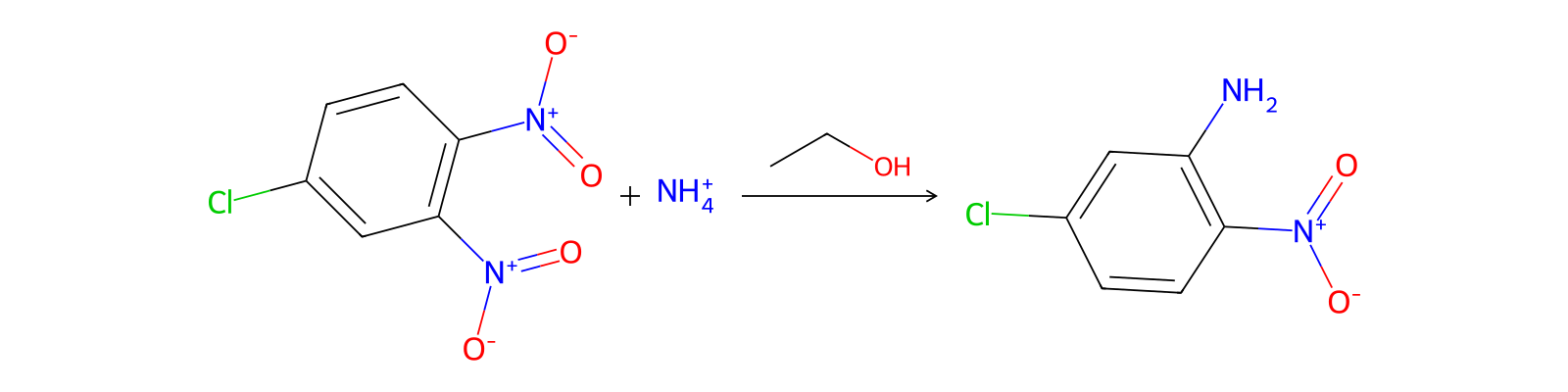
PreparationAdd 2.46mol of 2,4-dichloronitrobenzene, 7.72mol of toluene to a 3L autoclave, seal the autoclave, replace the air with nitrogen, then pass in 14.1mol of liquid ammonia, increase the temperature to 160℃, continue the reaction for 8h, and then lower the temperature to 40℃, drain the excess ammonia gas, open the kettle, add the obtained solid-liquid mixture to 800mL of water, continue to cool to 10℃, filter, add the resulting filter cake to the water, continue beating and filtering, the obtained solid is crystallized with methanol to obtain 388g , yield 91.2%, the purity of the liquid phase external standard is 99.5%.
Upstream & downstream products
Downstream products
Related reactions
251 records





Compound notes
Loading…