
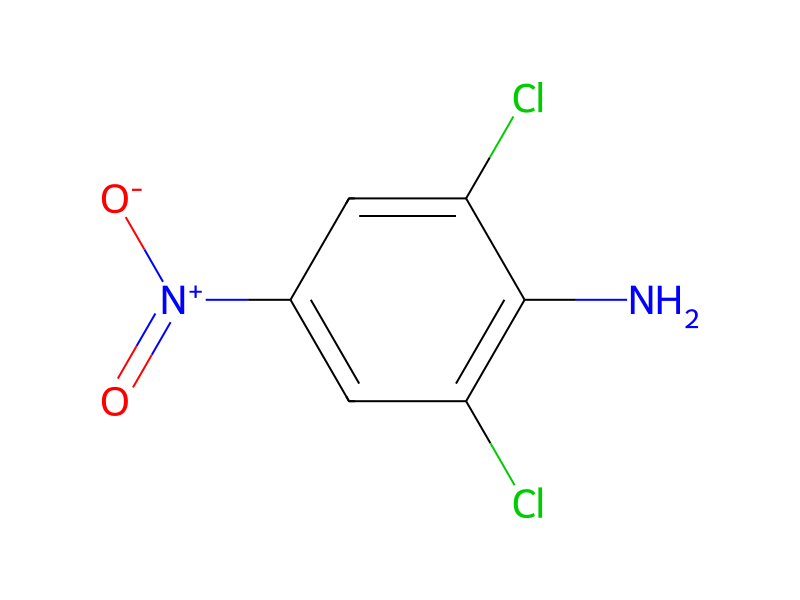
Basic information
- Standard SMILES
Nc1c(Cl)cc([N+](=O)[O-])cc1Cl- InChIKey
BIXZHMJUSMUDOQ-UHFFFAOYSA-N- Molecular formula
- C6H4Cl2N2O2
- Average molar mass
- 207.01 g/mol
- Monoisotopic mass
- 205.96498273
Overview
Dichloran appears as yellow crystals or solid. Slight aniline odor. Used as a fungicide. Insoluble in water, but often formulated as a wettable powder (easily dispersed in water).
Names & identifiers
- Preferred name
- 2,6-Dichloro-4-nitroaniline
- IUPAC
- 2,6-dichloro-4-nitroaniline
- English name
- 2,6-Dichloro-4-nitroaniline
- Molecular formula
- C6H4Cl2N2O2
- Molecular weight
- 207.01
Names & synonyms
2,6-DICHLORO-4-NITROANILINE99-30-9DicloranDichloranAllisanBotranDCNABortranDitranilResisanBatran2,6-Dichloro-4-nitrobenzenamine
Show more names
2,6-Dichloro Para Nitro AnilineCNACDNAu-2069
DCNA (fungicide)2,6-Dichlor-4-nitroanilinBenzenamine, 2,6-dichloro-4-nitro-4-Nitro-2,6-dichloroanilineDichloran (amine fungicide)AL-50Botran 45WCaswell No. 311
Database identifiers
- CAS
99-30-9- PubChem CID
- 7430
- DTXSID
DTXSID2020426- ChEMBL
CHEMBL504381- ChEBI
CHEBI:27864- UNII
- F0BE9UC5J7
- EC Number
- 202-746-4
- Nikkaji
- J5.236A
Properties
Computed structural properties
- XLogP
- 2.9
- Topological polar surface area
- 71.8 Ų
- Hydrogen bond donors
- 1
- Hydrogen bond acceptors
- 3
- Rotatable bonds
- 0
- Heavy atoms
- 12
- Formal charge
- 0
- Complexity
- 173
Experimental & physicochemical properties
Chemical ClassesTextile
SpringerMaterials Properties13C nuclear magnetic resonance spectrum
Pesticides
Fungicides
Active substance -> EU Pesticides database: Not approved
Pesticides -> Fungicides
Pesticide (Dicloran) -> USDA PDB
LogP
log Kow = 2.80 at 25 °C
1.80
2.84
OdorOdorless
Density0.28 (bulk)
Color/Form
Yellow needles from alcohol and acetic acid
Yellow crystals
Solubility
less than 0.1 mg/mL at 77 °F (NTP, 1992)
In water, 6.3 mg/L at 20 °C
Soluble in ethanol and acid; slightly soluble in DMSO
All in g/L at 20 °C: 34 acetone; 4.6 benzene; 12 chloroform; 60 cyclohexane; 40 dioxane; 19 ethyl acetate
SLIGHTLY SOL IN NON-POLAR SOLVENTS
Solubility in water at 20 °C: none
CorrosivityNON-CORROSIVE
Human DrugsPharmaceuticals
Boiling Pointat 0.27kPa: 130 °C
DecompositionWhen heated to decomposition it emits toxic fumes of /hydrogen chloride and nitrogen oxides/.
Physicochemical properties
- Melting point
- 190 · 190-192 °C (lit.)
- Boiling point
- 130 °C · 130°C 2mm
- Density
- 1.6257 · 1.6257 (rough estimate)
- vapor pressure
- 1.6 x · 1.6 x 10-4 Pa (20 °C)
- refractive index
- 1.656 · 1.6560 (estimate)
- Flash point
- 130 °C/2mm · 130°C/2mm
- storage temp.
- Keep in dark place,Inert atmosphere,Room temperature
- solubility
- 0.006 g/l · 0.006g/l (HSDB)
- pka
- 1 · pK1:-3.31(+1) (25°C)
- form
- powder
- color
- Light Yellow to Yellow
- Water Solubility
- 1 g/L · 1 g/L (60 ºC)
- BRN
- 1459581 · 1459581
- Henry's Law Constant
- 1.2 · 1.2×102 mol/(m3Pa) at 25℃, HSDB (2015)
- InChI
- 1S/C6H4Cl2N2O2/c7-4-1-3(10(11)12)2-5(8)6(4)9/h1-2H,9H2
- InChIKey
- BIXZHMJUSMUDOQ-UHFFFAOYSA-N
- SMILES
- Nc1c(Cl)cc(cc1Cl)[N+]([O-])=O
- LogP
- 2.8 · 2.800
- CAS DataBase Reference
- 99 · 99-30-9(CAS DataBase Reference)
- EWG's Food Scores
- 1 · 1
- FDA UNII
- 0 BE9UC5J7 · F0BE9UC5J7
- NIST Chemistry Reference
- 2 · 2,6-Dichloro-4-nitroaniline(99-30-9)
- EPA Substance Registry System
- Dichloran (99-30-9)
- Pesticides Freedom of Information Act (FOIA)
- DCNA
- UNSPSC Code
- 41116107 · 41116107
- NACRES
- 24 · NA.24
- Symbol(GHS)
- 6 · GHS06,GHS08,GHS09
- Signal word
- Danger
- Hazard statements
- 300 · H300+H310+H330-H373-H410
- Precautionary statements
- 262 · P262-P273-P280-P302+P352+P310-P304+P340+P310-P314
- PPE
- 95 · dust mask type N95 (US), Eyeshields, Gloves
- Hazard Codes
- Xi,Xn,N,T+
- Risk Statements
- 33 · 33-36/37/38-20/21/22-51/53-26/27/28
- Safety Statements
- 22 · 22-26-36-37/39-61-45-36/37-28
- RIDADR
- 2811 · 2811
- WGK Germany
- 3 · 3
- RTECS
- 2975000 · BX2975000
- TSCA
- TSCA listed
- HazardClass
- 6.1 · 6.1(b)
- PackingGroup
- III
- HS Code
- 29214210 · 29214210
- Storage Class
- 6.1 A · 6.1A - Combustible acute toxic Cat. 1 and 2very toxic hazardous materials
- Hazard Classifications
- 1 DermalAcute · Acute Tox. 1 DermalAcute Tox. 2 InhalationAcute Tox. 2 OralAquatic Chronic 1STOT RE 2
- Hazardous Substances Data
- 99 · 99-30-9(Hazardous Substances Data)
- Limited Quantities
- 5 kg · 5.0 kg (11 lbs) (solid)
- Excepted Quantities
- Max Inner Pack (30g or 30ml) and Max Outer Pack (1Kg or 1L)
Safety & regulation
GHS classification
GHS Classification
This chemical does not meet GHS hazard criteria for 4.9% (4 of 81) of reports.
Danger
H300+H310+H330 (34.6%): Fatal if swallowed, in contact with skin or if inhaled [Danger Acute toxicity, oral; acute toxicity, dermal; acute toxicity, inhalation]
P260, P262, P264, P270, P271, P273, P280, P284, P301+P316, P302+P352, P304+P340, P316, P319, P320, P321, P330, P361+P364, P391, P403+P233, P405, and P501 (click each P-code to see the statement)
Aggregated GHS information provided per 81 reports by companies from 10 notifications to the ECHA C&L Inventory. Each notification may be associated with multiple companies.
Hazard information
Regulatory Information
Chemical: Benzenamine, 2,6-dichloro-4-nitro-
Commission Regulation (EC) No 1490/2002
Benzenamine, 2,6-dichloro-4-nitro- is listed on the EPA's Chemical Data Reporting (CDR) system. Manufacturers and importers of Benzenamine, 2,6-dichloro-4-nitro- are required to report information about their production and use of this chemical to the EPA under the Toxic Substances Control Act (TSCA). (40 eCFR Part 711)
Dichloran is listed in the dataset of EPA Human Health Benchmarks for Pesticides under the Safe Drinking Water Act (40 eCFR 141)
2011/329/EU
Dicloran: Does not have an individual approval but may be used under an appropriate group standard
Fire Hazards
Flash point data for this chemical are not available; however, it is probably combustible. (NTP, 1992)
Combustible. Gives off irritating or toxic fumes (or gases) in a fire. Finely dispersed particles form explosive mixtures in air.
Fire Potential... NON-FLAMMABLE
Health Hazards
SYMPTOMS: Symptoms of exposure to this compound may include irritation of the nose, eyes, skin and throat, coughing, chest discomfort, nausea and vomiting. Absorption into the body leads to the formation of methemoglobin which in sufficient concentrations causes cyanosis. Exposure to this compound may also cause sensitization and bladder irritation. (NTP, 1992)
Hazards Summary
A skin, eye, and respiratory tract irritant; [ICSC] Effects in high-dose animal studies include convulsions, methemoglobinemia, and liver injury; [RTECS] No indication that administration of dicloran at 10 mg/day to men for 90 days had any adverse effect. Extensive examinations were made on one industrial worker occupationally exposed to dicloran over three years, with considerable inhalation and dermal exposure for about 60 days/year. No adverse effects were observed. [Reference #1]
Reactive GroupNitro, Nitroso, Nitrate, and Nitrite Compounds, Organic
Special Reports
USEPA/Office of Pesticide Programs; Reregistration Eligibility Decision Document - DCNA (Dicloran), EPA-738-F-05-003 (June 2006). The RED summarizes the risk assessment conclusions and outlines any risk reduction measures necessary for the pesticide to continue to be registered in the U.S.[Available from, as of February 16, 2012: http://www.epa.gov/pesticides/reregistration/status.htm]
VETTORAZZI FG; STATE OF THE ART OF THE TOXICOLOGICAL EVALUATION CARRIED OUT BY JOINT FAO/WHO EXPERT COMMITTEE ON PESTICIDE RESIDUES. III. MISCELLANEOUS PESTICIDES USED IN AGRICULTURE & PUBLIC HEALTH; RESIDUE REV 66: 137 (1977)
DICLORAN; WHO TECH REP SER (574): 215 (1975). REVIEW ARTICLE ON THE CHEMICAL AND PHYSICAL PROPERTIES, METABOLISM, AND TOXICITY OF DICLORAN.
Toxicology Review: Critical Review in Toxicology 1 (1): 93 (1971).
TSCA Requirements
Pursuant to section 8(d) of TSCA, EPA promulgated a model Health and Safety Data Reporting Rule. The section 8(d) model rule requires manufacturers, importers, and processors of listed chemical substances and mixtures to submit to EPA copies and lists of unpublished health and safety studies. Benzenamine, 2,6-dichloro-4-nitro- is included on this list. Effective date: 10-4-82; Sunset date: 10-4-92.
FIFRA Requirements
Tolerances are established for residues of the fungicide dicloran, 2,6-dichloro-4-nitroaniline, including its metabolites and degradates, in or on the commodities in the following table. Compliance with the tolerance levels specified in this paragraph is to be determined by measuring only dicloran, 2,6-dichloro-4-nitroaniline, in or on the commodity. Unless otherwise specified, the tolerances prescribed in this paragraph provide for residues from preharvest application only. [Table#3251]
The Agency has completed its review of submitted data and its assessment of the human health risk, occupational exposure and risk, and ecological risk associated with the use of pesticide products containing the active ingredient DCNA. Based on a review of these data, the Agency has sufficient information on the human health and ecological effects of DCNA to make decisions as part of the tolerance reassessment process under FFDCA and the reregistration process under FIFRA, as amended by FQPA. The Agency has determined that DCNA-containing products are eligible for reregistration provided that: (i) required product-specific data are submitted; (ii) the risk mitigation measures outlined in this document are adopted; and (iii) label amendments are made to reflect these measures. ... Based on its evaluation of DCNA, the Agency has determined that DCNA products, unless labeled and used as specified in this document, would present risks inconsistent with FIFRA and FFDCA. Accordingly, should a registrant fail to implement any of the risk mitigation measures identified in this document, the Agency may take regulatory action to address the risk concerns from the use of DCNA. If all changes outlined in this document are incorporated into the product labels, then all current risks for DCNA will be adequately mitigated for the purposes of this determination under FIFRA.
As the federal pesticide law FIFRA directs, EPA is conducting a comprehensive review of older pesticides to consider their health and environmental effects and make decisions about their continued use. Under this pesticide reregistration program, EPA examines newer health and safety data for pesticide active ingredients initially registered before November 1, 1984, and determines whether the use of the pesticide does not pose unreasonable risk in accordance to newer saftey standards, such as those described in the Food Quality Protection Act of 1996. Dichloran is found on List A, which contains most pesticides that are used on foods and, hence, have a high potential for human exposure. List A consists of the 194 chemical cases (or 350 individual active ingredients) for which EPA issued registration standards prior to FIFRA '88. Case No: 0113; Pesticide type: fungicide; Registration Standard Date: 12/30/83; Case Status: OPP is reviewing data from the pesticide's producers regarding its human health and/or environmental effects, or OPP is determining the pesticide's eligibility for reregistration and developing the RED document.; Active ingredient (AI): dichloran; Data Call-in (DCI) Date(s): 10/13/95; AI Status: The producers of the pesticide have made commitments to conduct the studies and pay the fees required for reregistration, and are meeting those commitments in a timely manner.
Reactivity ProfileDICHLORAN is incompatible with acids, acid chlorides, acid anhydrides, and strong oxidizing agents (NTP, 1992).
Chemical DangersDecomposes on heating and on burning. This produces toxic and corrosive fumes including nitrogen oxides and hydrogen chloride.
Physical DangersDust explosion possible if in powder or granular form, mixed with air.
Safety & protection
Fire Fighting
Fires involving this compound can be controlled with a dry chemical, carbon dioxide or Halon extinguisher. A water spray may also be used. (NTP, 1992)
Use water spray, powder, foam, carbon dioxide.
First Aid Measures
Fresh air, rest.
Remove contaminated clothes. Rinse and then wash skin with water and soap.
First rinse with plenty of water for several minutes (remove contact lenses if easily possible), then refer for medical attention.
Rinse mouth.
First Aid
EYES: First check the victim for contact lenses and remove if present. Flush victim's eyes with water or normal saline solution for 20 to 30 minutes while simultaneously calling a hospital or poison control center. Do not put any ointments, oils, or medication in the victim's eyes without specific instructions from a physician. IMMEDIATELY transport the victim after flushing eyes to a hospital even if no symptoms (such as redness or irritation) develop.
Safe StorageProvision to contain effluent from fire extinguishing. Separated from food and feedstuffs.
Firefighting HazardsDispersion of fine dust in air may form explosive mixture. /Botran 5F Fungicide/
Fire Fighting Procedures
Appropriate Extinguishing Media: water spray, Class A, B or C extinguisher. /Botran 5F Fungicide/
Fire Fighting Guidance: Wear self-contained breathing apparatus (SCBA). /Botran 5F Fungicide/
Storage Conditions
Do not contaminate water, food or feed by storage ... Store in original container and keep closed. Store in a cool, dry place. /Botran 5F Fungicide/
Safe Storage of Pesticides. Always store pesticides in their original containers, complete with labels that list ingredients, directions for use, and first aid steps in case of accidental poisoning. Never store pesticides in cabinets with or near food, animal feed, or medical supplies. Do not store pesticides in places where flooding is possible or in places where they might spill or leak into wells, drains, ground water, or surface water. /Residential users/
Cleanup Methods
Do not contaminate /receiving/ water when disposing of equipment, washwaters or rinsate. /Botran 5F Fungicide/
In Case of Spills or Leaks: Keep unnecessary people away and isolate hazard area. Spread absorbent material over spill and sweep up. Sweep up spill carefully. Place material into a clean, dry container and cover for disposal. Wash contaminated areas with water and detergent. Inform authorities if material enters sewer or watercourse. Do not contaminate water, food or animal feed through inappropriate disposal. /Botran 5F Fungicide/
If a spill occurs, clean it up promptly. Don't wash it away. Instead, sprinkle the spill with sawdust, vermiculite, or kitty litter. Sweep it into a plastic garbage bag, and dispose of it as directed on the pesticide product label./Residential users/
After Applying a Pesticide, Indoors or Outdoors. To remove pesticide residues, use a bucket to rinse tools or equipment three times, including any containers or utensils that you used when mixing the pesticide. Then pour the rinsewater into the pesticide sprayer and reuse the solution by applying it according to the pesticide product label directions. After applying any pesticide wash your hands and any other parts of your body that may have come in contact with the pesticide..To prevent tracking pesticides inside, remove or rinse your boots or shoes before entering your home. Wash any clothes that have been exposed to a lot of pesticide separately from your regular wash. /Residential users/
Nonfire Spill Response
SMALL SPILLS AND LEAKAGE: If a spill of this chemical occurs, FIRST REMOVE ALL SOURCES OF IGNITION, then you should dampen the solid spill material with acetone and transfer the dampened material to a suitable container. Use absorbent paper dampened with acetone to pick up any remaining material. Seal your contaminated clothing and the absorbent paper in a vapor-tight plastic bag for eventual disposal. Solvent wash all contaminated surfaces with acetone followed by washing with a soap and water solution. Do not reenter the contaminated area until the Safety Officer (or other responsible person) has verified that the area has been properly cleaned.
Disposal Methods
SRP: The most favorable course of action is to use an alternative chemical product with less inherent propensity for occupational harm/injury/toxicity or environmental contamination. Recycle any unused portion of the material for its approved use or return it to the manufacturer or supplier. Ultimate disposal of the chemical must consider: the material's impact on air quality; potential migration in soil or water; effects on animal and plant life; and conformance with environmental and public health regulations.
SRP: Wastewater from contaminant suppression, cleaning of protective clothing/equipment, or contaminated sites should be contained and evaluated for subject chemical or decomposition product concentrations. Concentrations shall be lower than applicable environmental discharge or disposal criteria. Alternatively, pretreatment and/or discharge to a permitted wastewater treatment facility is acceptable only after review by the governing authority and assurance that "pass through" violations will not occur. Due consideration shall be given to remediation worker exposure (inhalation, dermal and ingestion) as well as fate during treatment, transfer and disposal. If it is not practicable to manage the chemical in this fashion, it must be evaluated in accordance with EPA 40 CFR Part 261, specifically Subpart B, in order to determine the appropriate local, state and federal requirements for disposal.
SRP: At the time of review, criteria for land treatment or burial (sanitary landfill) disposal practices are subject to significant revision. Prior to implementing land disposal of waste residue (including waste sludge), consult with environmental regulatory agencies for guidance on acceptable disposal practices.
Safe Disposal of Pesticides. The best way to dispose of small amounts of excess pesticides is to use them - apply them - according to the directions on the label. If you cannot use them, ask your neighbors whether they have a similar pest control problem and can use them. If all of the remaining pesticide cannot be properly used, check with your local solid waste management authority, environmental agency, or health department to find out whether your community has a household hazardous waste collection program or a similar program for getting rid of unwanted, leftover pesticides. These authorities can also inform you of any local requirements for pesticide waste disposal. /Residential users/
Safe Disposal of Pesticides. An empty pesticide container can be as hazardous as a full one because of residues left inside. Never reuse such a container. When empty, a pesticide container should be rinsed carefully three times and the rinsewater thoroughly drained back onto the sprayer or the container previously used to mix the pesticide. Use the rinsewater as a pesticide, following label directions. Replace the cap or closure securely. Dispose of the container according to label instructions. Do not puncture or burn a pressurized container like an aerosol - it could explode. Many communities have programs to recycle household waste such as empty bottles and cans. Do not recycle any pesticide containers, however, unless the recycling program specifically accepts pesticide containers and you follow the program's instructions for preparing the empty containers for collection. /Residential users/
Spillage Disposal
Personal protection: particulate filter respirator adapted to the airborne concentration of the substance. Do NOT wash away into sewer. Sweep spilled substance into covered containers. If appropriate, moisten first to prevent dusting. Carefully collect remainder. Then store and dispose of according to local regulations.
Preventive Measures
Use this product only in accordance with its labeling and with the Worker Protection Standard, 40 CFR Part 170. /Botran 5F Fungicide/
Do not apply directly to water, to areas where surface water is present or to intertidal areas below the mean high water mark. Drift and runoff may be hazardous to aquatic organisms in water adjacent to treated areas. /Botran 5F Fungicide/
Do not apply this product in a way that will contact workers or other persons, either directly or through drift. Only protected handlers may be in the area during application. /Botran 5F Fungicide/
... Do not enter or allow worker entry during the restricted entry interval of 12 hours. Exception: If the product is soil-injected or soil-incorporated, the Worker Protection Standard, under certain circumstances, allows workers to enter the treated area if there will be no contact with anything that has been treated. /Botran 5F Fungicide/
For more Preventive Measures (Complete) data for 2,6-DICHLORO-4-NITROANILINE (14 total), please visit the HSDB record page.
Toxicology
Ecotoxicity Values
LC50; Species: Anas platyrhynchos (Mallard Duck) diet 8850 ppm for 8 days
LC50; Species: Anas platyrhynchos (Mallard Duck) age 31 days; diet 6193 ppm for 8 days (95% confidence interval: 4045-714817 ppm)
LD50; Species: Anas platyrhynchos (Mallard duck) 3-4 month old females; oral >2000 mg/kg /sample purity 97%/
LC50; Species: Colinus virginianus (Northern Bobwhite Quail) diet 2438 ppm for 8 days
For more Ecotoxicity Values (Complete) data for 2,6-DICHLORO-4-NITROANILINE (15 total), please visit the HSDB record page.
Environmental Fate
TERRESTRIAL FATE: Based on a classification scheme(1), a measured Koc value range of 660-1100(2), indicates that 2,6-dichloro-4-nitroaniline is expected to have low mobility in soil(SRC). Mobility may increase in coarser soils(3). Volatilization of 2,6-dichloro-4-nitroaniline from moist soil surfaces is not expected to be an important fate process(SRC) given an estimated Henry's Law constant of 8.4X10⁻⁸ atm-cu m/mole(SRC), derived from its vapor pressure, 1.95X10⁻⁶ mm Hg at 25 °C(4), and water solubility, 6.3 mg/L(4). 2,6-Dichloro-4-nitroaniline is not expected to volatilize from dry soil surfaces based upon its vapor pressure(SRC) and a 6 month-incubation study where only 5% of the compound was lost(5). 2,6-Dichloro-4-nitroaniline is susceptible to direct photolysis in sunlight(4); therefore, photodegradation on surfaces exposed to sunlight may occur(SRC). Field-soil dissipation half-lives of 39-78 days have been observed(2,4). In aerobic mineral soils, the half-life ranged from 6 to 18 months(3); in anaerobic sandy soils, the half-life ranged from 24 to 38 days(3). The persistence of 2,6-dichloro-4-nitroaniline in soil appears to be largely determined by factors favoring certain microbial activities(6). The compound has been shown to degrade more rapidly in soil that has received previous treatments of 2,6-dichloro-4-nitroaniline, apparently as the result of selective microbial buildup and adaptation(6,7). Amending soil with microbial-enhancing substances (such as glucose, alfalfa, and rice straw) has been shown to markedly decrease soil persistence(6,5). Degradation of 2,6-dichloro-4-nitroaniline is faster under anaerobic soil conditions than under aerobic soil conditions(3). Degradation in three CA soils was much faster under flooded laboratory conditions as compared to upland conditions (half-lives of 1-3 weeks versus 13-30 months)(5,8). A half-life of less than 3 days has been reported for a flooded sediment(4). Microbial degradation in soil involves reduction to 4-amino-2,6-dichloroaniline(4).
TERRESTRIAL FATE: A (14)C-labeled sample was incubated in flooded soil that had been amended with d-glucose. After 3 days the amount of dichloran that could be recovered from the soil decreased to 7% & to 3% after 9 days. Evolution of radioactive carbon dioxide could not be detected even after 9-day experimental period. Much of radioactivity (ultimately 65%) could not be removed from the soil sample by extraction with an acetone-water solution. The major extractable soil metabolite was 4-amino-3,5-dichloroacetanilide. Its expected metabolic precursor 2,6-dichloro-p-phenylenediamine was also isolated. A third compound isolated appeared to be formed by dimerization of 2,6-dichloro-p-phenylenediamine.
TERRESTRIAL FATE: Dichloran was strongly fixed in clay soils and was not completely extracted from treated soils. It was slightly water soluble and leached slowly.
AQUATIC FATE: Based on a classification scheme(1), a measured Koc value range of 660-1100(2), indicates that 2,6-dichloro-4-nitroaniline is expected to adsorb to suspended solids and sediment(SRC). Volatilization from water surfaces is not expected(3) based upon an estimated Henry's Law constant of 8.4X10⁻⁸ atm-cu m/mole(SRC), derived from its vapor pressure, 1.95X10⁻⁶ mm Hg(4), and water solubility, 6.3 mg/L(4). 2,6-Dichloro-4-nitroaniline is not expected to undergo hydrolysis in the environment since it is reported to be stable to hydrolysis over a pH range of 5-9(4). Nitro aromatic compounds absorb light strongly above 290 nm(5); therefore, 2,6-dichloro-4-nitroaniline has been shown to be susceptible to direct photolysis in sunlight(SRC). In aqueous solution at pH 7.1, 2,6-dichloro-4-nitroaniline has a reported half-life of 41 hours when exposed to light greater than 290 nm(4). Biodegradation has been shown to be the major degradation process in soil with the rate of biodegradation increasing significantly in the presence of adapted microbes(6,7); it can therefore be expected that biodegradation in natural water will also occur with the rate dependent on local microbial populations and adaptability.
ATMOSPHERIC FATE: According to a model of gas/particle partitioning of semivolatile organic compounds in the atmosphere(1), 2,6-dichloro-4-nitroaniline, which has a vapor pressure of 1.95X10⁻⁶ mm Hg at 25 °C(2), is expected to exist in both the vapor and particulate phases in the ambient atmosphere. Vapor-phase 2,6-dichloro-4-nitroaniline is degraded in the atmosphere by reaction with photochemically-produced hydroxyl radicals(SRC); the half-life for this reaction in air is estimated to be 116 days, calculated from its rate constant of 1.4X10⁻¹³ cu cm/molecule-sec at 25 °C(SRC) that was derived using a structure estimation method(3). Particulate-phase 2,6-dichloro-4-nitroaniline may be removed from the air by wet or dry deposition(SRC). 2,6-Dichloro-4-nitroaniline is susceptible to direct photolysis in sunlight(2).
Food Survey Values
As part of the US FDA Total Diet Studies (Market Basket Survey) of the adult diet, analysis of 324 food composites (from 12 different food groups) collected from 27 US cities between Oct 1980 and Mar 1982 found 30 food composites positive for 2,6-dichloro-4-nitroaniline with concentrations ranging from a trace to 0.011 ppm(1); food groups with positive detections included dairy products, potatoes, leafy and root vegetables, fruits, and sugar and adjuncts(1). As part of the US FDA Total Diet Studies (Market Basket Survey) of the toddler and infant diet, analysis of 286 food composites (from 11 different food groups) collected from 13 US cities between Oct 1980 and Mar 1982 found 14 food composites positive for 2,6-dichloro-4-nitroaniline with concentrations ranging from 0.002 to 0.122 ppm(2); food groups with positive detections included meats (fish and poultry), potatoes, vegetables, fruits and fruit juices, and oils and fats(2). As part of the US FDA Total Diet Studies (Market Basket Survey) of the adult diet, analysis of 240 food composites (from 12 different food groups) collected from 20 US cities between Oct 1979 and Sept 1980 found 13 food composites positive for 2,6-dichloro-4-nitroaniline with concentrations ranging from 0.001 to 0.058 ppm(3).
During a 5 year period from Oct 1981 to Sep 1986, the Los Angeles District Lab of the US FDA analyzed 19,851 samples of domestic and imported food and feed commodities for pesticide residues; 2,6-dichloro-4-nitroaniline was detected in 384 samples with levels ranging from 0.05 to greater than 2.0 ppm(1).
As part of the US FDA Total Diet Studies (Market Basket Survey) of the adult diet, analysis of 234 food composites (from 12 different food groups) collected from 24 US cities between April 1982 and April 1984 found 6% of food composites positive for 2,6-dichloro-4-nitroaniline with the total average daily intake for a 25-30 year male equaling 4.56 ug, mainly from fruits and vegetables(1). 2,6-Dichloro-4-nitroaniline was found in 5% of the selected foods in the market basket during the 1986-1991 Total Diet Study(2). During this study it was found that a 25-30 year male would intake 0.0773 ug/kg body wt/day(2). As part of the US FDA Total Diet Studies (Market Basket Survey) of the toddler and infant diet, analysis of 234 identical food items (from 8 different food categories) collected from 13 US cities between 1985 and 1991 found 14 food composites positive for 2,6-dichloro-4-nitroaniline with concns ranging from 0.002 to 0.122 ppm(2); 2,6-dichloro-4-nitroaniline was detected in domestic apples (14 of 2464), domestic oranges (1 of 862), domestic pears (1 of 571), imported apples (8 of 735), bananas (1 of 1097), imported pears (53 of 816)(3). 2,6-Dichloro-4-nitroaniline was detected in celery (24 of 200 samples), grapes (16 of 198), onions (3 of 429), peaches (3 of 84), plums (15 of 53), tomatoes (5 of 207) taken from a pesticide residue screening program on 6970 produce samples(4). 2,6-Dichloro-4-nitroaniline was detected in pesticide residues on blueberries (1 of 74 samples), carrots (1 of 210), peaches (5 of 42), tomatoes (1 of 978), beans (1 of 271), broccoli (2 of 187), celery (40 of 196), grapes (3 of 449), limes (1 of 6), nectarines (6 of 17), plums (1 of 19), and spinach (2 of 167) in agricultural food commodities available in Canada(5).
For the five-year period 1991-1995, 1536 vegetable and 802 fruit samples collected from points of consumer purchase in Ontario Canada were analyzed for pesticide residues(1); dicloran (2,6-dichloro-4-nitroaniline) was detected in 49 samples at concentrations of <0.01 to <10 ug/g(1). For the USDA Total Diet Study July 1986-April 1991, 2,6-dichloro-4-nitroaniline was detected in 237 food samples (5% of total samples)(2).
Adverse EffectsNeurotoxin - Other CNS neurotoxin
Exposure RoutesThe substance can be absorbed into the body by inhalation of its aerosol and by ingestion.
Average Daily Intake
The US EPA conducted acute and chronic dietary exposure assessments for 2,6-Dichloro-4-nitroaniline using the Dietary Exposure Evaluation Model software with the Food Commodity Intake Database (DEEM-FCID, Version 2.03), which incorporates consumption data from USDA's Continuing Surveys of Food Intakes by Individuals (CSFII), 1994-1996 and 1998, as well as monitoring data from USDA's Pesticide Data Program (PDP) ... For Dietary (Food Only) Exposure and Risk, 2,6-dichloro-4-nitroaniline had Acute Dietary Estimates (99.9th Percentile) of 0.0049 mg/kg/day for females 13-49 years old ... Chronic Dietary Estimates for the US population (food only) were 0.00015 mg/kg/day and for Children 1-2 yrs were 0.00032 mg/kg/day ... For Dietary (Food + Drinking Water) Exposure and Risk, 2,6-dichloro-4-nitroaniline had Acute Dietary Estimates (99.9th Percentile) of 0.026 mg/kg/day for females 13-49 years old ... Chronic Dietary Estimates for the US population (food + drinking water) were 0.00019 mg/kg/day and for Children 1-2 yrs were 0.00038 mg/kg/day(1).
Based on monitoring results of the US FDA Total Diet Studies for July 1986-April 1991, the AVDI (in ug/kg body weight/day) are reported as(1): 0.2342 (6-11 months old), 0.2586 (2 yr-old), 0.0866 (14-16 yr-old females), 0.0505 (14-16 yr-old males), 0.0773 (25-30 yr-old females), 0.0592 (25-30 yr-old males), 0.1298 (60-65 yr-old females) and 0.1113 (60-65 yr-old males).
FOOD: Based on monitoring results of the US FDA Total Diet Studies for the adult diet, the average daily intake (ug/kg of body wt/day) of 2,6-dichloro-4-nitroaniline for fiscal years 1978, 1979, 1980, and 1981/1982 has been estimated to be 0.033, 0.030, 0.023, and 0.047, respectively(1).
Ecotoxicity Excerpts
/BIRDS and MAMMALS/ Signs of intoxication /from acute oral administration/: Regurgitation (in mallards), hyporeactivity, ataxia, asthenia, imbalance, slowness, wing-drop, falling when walking, withdrawal, and ataraxia. Regurgitation occurred as soon as 20 min; other signs appeared as soon as 1.5 hr after treatment in mallards. In pheasants, signs appeared the day after treatment, and mortalities occurred between 2 to 4 days after treatment. Remission took up to 5 wk for both species. /Sample purity 97%/
Signs and Symptoms
Cough. Sore throat.
Redness.
Redness. Pain.
Ongoing Test Status
The following link will take the user to the National Toxicology Program (NTP) Test Agent Search Results page, which tabulates all of the "Standard Toxicology & Carcinogenesis Studies", "Developmental Studies", and "Genetic Toxicity Studies" performed with this chemical. Clicking on the "Testing Status" link will take the user to the status (i.e., in review, in progress, in preparation, on test, completed, etc.) and results of all the studies that the NTP has done on this chemical.[http://ntp-apps.niehs.nih.gov/ntp_tox/index.cfm?fuseaction=ntpsearch.searchresults&searchterm=99-30-9]
Effluent Concentrations
2,6-Dichloro-4-nitroaniline was found to occur only once in over 4000 samples of wastewaters from 46 industrial categories(1); the detection (concentration and source not reported) occurred in a sample from the organic and plastics industry(1).
ICSC Environmental DataThis substance may be hazardous to the environment. Special attention should be given to crustacea and fish.
Soil Adsorption/Mobility
Measured Koc values for 2,6-dichloro-4-nitroaniline in a variety of soils are reported to range from 660 to 1100(1). A 2,6-dichloro-4-nitroaniline Koc value of 1000, based on measured data, is recommended for developing QSAR estimation methods(2). According to a classification scheme(3), these Koc values suggests that 2,6-dichloro-4-nitroaniline is expected to have low mobility in soil. Mobility is expected to increase in coarser soils(4).
A soil Rf value of 0.01 was measured for 2,6-dichloro-4-nitroaniline using soil TLC (thin-layer chromatography) which is indicative of soil immobility(1). 2,6-Dichloro-4-nitroaniline was found to have poor soil mobility in laboratory percolation soil columns using a loamy sand soil from a peanut field and a loam soil not used for peanut cultivation(2). 2,6-Dichloro-4-nitroaniline was strongly fixed in clay soils and was not completely extracted from treated soils and it leached slowly(3).
Regulatory information
TSCA Requirements
Pursuant to section 8(d) of TSCA, EPA promulgated a model Health and Safety Data Reporting Rule. The section 8(d) model rule requires manufacturers, importers, and processors of listed chemical substances and mixtures to submit to EPA copies and lists of unpublished health and safety studies. Benzenamine, 2,6-dichloro-4-nitro- is included on this list. Effective date: 10-4-82; Sunset date: 10-4-92.
FIFRA Requirements
Tolerances are established for residues of the fungicide dicloran, 2,6-dichloro-4-nitroaniline, including its metabolites and degradates, in or on the commodities in the following table. Compliance with the tolerance levels specified in this paragraph is to be determined by measuring only dicloran, 2,6-dichloro-4-nitroaniline, in or on the commodity. Unless otherwise specified, the tolerances prescribed in this paragraph provide for residues from preharvest application only. [Table#3251]
The Agency has completed its review of submitted data and its assessment of the human health risk, occupational exposure and risk, and ecological risk associated with the use of pesticide products containing the active ingredient DCNA. Based on a review of these data, the Agency has sufficient information on the human health and ecological effects of DCNA to make decisions as part of the tolerance reassessment process under FFDCA and the reregistration process under FIFRA, as amended by FQPA. The Agency has determined that DCNA-containing products are eligible for reregistration provided that: (i) required product-specific data are submitted; (ii) the risk mitigation measures outlined in this document are adopted; and (iii) label amendments are made to reflect these measures. ... Based on its evaluation of DCNA, the Agency has determined that DCNA products, unless labeled and used as specified in this document, would present risks inconsistent with FIFRA and FFDCA. Accordingly, should a registrant fail to implement any of the risk mitigation measures identified in this document, the Agency may take regulatory action to address the risk concerns from the use of DCNA. If all changes outlined in this document are incorporated into the product labels, then all current risks for DCNA will be adequately mitigated for the purposes of this determination under FIFRA.
As the federal pesticide law FIFRA directs, EPA is conducting a comprehensive review of older pesticides to consider their health and environmental effects and make decisions about their continued use. Under this pesticide reregistration program, EPA examines newer health and safety data for pesticide active ingredients initially registered before November 1, 1984, and determines whether the use of the pesticide does not pose unreasonable risk in accordance to newer saftey standards, such as those described in the Food Quality Protection Act of 1996. Dichloran is found on List A, which contains most pesticides that are used on foods and, hence, have a high potential for human exposure. List A consists of the 194 chemical cases (or 350 individual active ingredients) for which EPA issued registration standards prior to FIFRA '88. Case No: 0113; Pesticide type: fungicide; Registration Standard Date: 12/30/83; Case Status: OPP is reviewing data from the pesticide's producers regarding its human health and/or environmental effects, or OPP is determining the pesticide's eligibility for reregistration and developing the RED document.; Active ingredient (AI): dichloran; Data Call-in (DCI) Date(s): 10/13/95; AI Status: The producers of the pesticide have made commitments to conduct the studies and pay the fees required for reregistration, and are meeting those commitments in a timely manner.
Safety data
- PPE
- dust mask type N95 (US), Eyeshields, Gloves
- wgk
- 3
- tsca
- TSCA listed
- rtecs
- BX2975000
- ridadr
- 2811
- hs_code
- 29214210
- risk_code
- 33-36/37/38-20/21/22-51/53-26/27/28
- Signal word
- Danger
- Symbol(GHS)
- GHS06,GHS08,GHS09
- hazard_code
- Xi,Xn,N,T+
- safety_code
- 22-26-36-37/39-61-45-36/37-28
- hazard_class
- 6.1(b)
- Storage Class
- 6.1A - Combustible acute toxic Cat. 1 and 2very toxic hazardous materials
- packing_group
- III
- Hazard statements
- H300+H310+H330-H373-H410
- Limited Quantities
- 5.0 kg (11 lbs) (solid)
- Excepted Quantities
- Max Inner Pack (30g or 30ml) and Max Outer Pack (1Kg or 1L)
- Hazard Classifications
- Acute Tox. 1 DermalAcute Tox. 2 InhalationAcute Tox. 2 OralAquatic Chronic 1STOT RE 2
- Precautionary statements
- P262-P273-P280-P302+P352+P310-P304+P340+P310-P314
- Hazardous Substances Data
- 99-30-9(Hazardous Substances Data)
Chemistry & industry
Pharmacology
Mechanism of Action
As a fungicide, it delays germination and causes a severe check to hyphal growth. It is suggested that dicloran is a structurally non-specific toxicant exerting its effect by disorganizing cell growth and division in particular plant pathogens. The mode of action in test animals is not clear.
Biological Half-Life
AFTER ORAL ADMIN OF 14(C) LABELED DICHLORAN TO MALE RATS, DICHLORAN WAS RAPIDLY ABSORBED, METABOLIZED, & EXCRETED WITH 89% OF LABEL IN URINE. URINARY EXCRETION WAS FIRST ORDER, K= 0.199/HR & HALF-LIFE= 3.5 HR. ... EXCRETION OF URINARY RADIOACTIVITY IN HUMAN SUBJECTS COULD BE DESCRIBED BY TWO SIMULTANEOUS PSEUDO FIRST-ORDER PROCESSES WITH MEAN RATE CONSTANTS OF 0.0749 & 0.0260/HR, WHICH ARE EQUIV TO EXCRETION HALF-TIMES OF 9.26 & 27.4 HR, RESPECTIVELY.
Metabolism/Metabolites
AFTER ORAL ADMIN OF (14)C-LABELED DICHLORAN TO MALE RATS, DICHLORAN WAS ... METABOLIZED, & EXCRETED WITH 89% OF THE LABEL IN THE URINE. ... 24 HR URINE POOLS CONTAINED ONLY FREE & CONJUGATED 2,6-DICHLORO-4-HYDROXYANILINE (DCHA); 1 DICHLORAN: 1 DICHLORAN GLUCURONIDE; 6 DICHLORAN SULFATE. HYDROLYSIS OF THE URINE SHOWED TWO COMPOUNDS IN ADDITION TO TRACES OF STARTING MATERIAL. 4-AMINO-3,5-DICHLOROPHENOL ACCOUNTED FOR 70% OF THE URINARY RADIOACTIVITY; 4-AMINO-2,6-DICHLOROANILINE FOR ABOUT 2.4%. SMALL AMOUNTS OF AN ARYLDIAMINE WAS INDICATED. IN VITRO STUDIES SHOWED THAT MOUSE LIVER MICROSOMES CONVERTED DICHLORAN TO THE AMINOPHENOL AND THE PHENYLENEDIAMINE. TLC SHOWED THAT THIS CONVERSION WAS SMALL. ABOUT 91% OF THE BOTRAN WAS RECOVERED UNCHANGED.
The in-vitro metabolism of 2,6-dichloro-4-nitroaniline was studied in efforts to characterize the isozymes of cytochrome-P-450 by which it is metabolized and to determine the origin of the oxygen in the phenol metabolite. Female Sprague-Dawley-rats were given 500 mg/kg or 1000 mg/kg of 2,6-dichloro-4-nitroaniline by gavage or 80 mg/kg phenobarbital (PB) intraperitoneally (ip) for 4 days. On day five the animals were injected with 35 mg/mg pentobarbital ip, and sleeping times were recorded. Liver microsomes were prepared from immature female Sprague-Dawley-rats treated with 75mg/kg PB, 40 mg/kg 3-methylcholanthrene (MC), or 1000 mg/kg 2,6-dichloro-4-nitroaniline. The parent compound appeared to induce its own metabolism. In-vitro microsomal aerobic production of 3,5-dichloro-p-aminophenol (DCAP) was increased 4 to 6.5 fold with respect to controls after treatment with 2,6-dichloro-4-nitroaniline. The addition of specific antibodies to cytochrome-P-450d inhibited the microsomal production of DCAP, indicating that the removal of the nitro group and subsequent replacement with a hydroxyl group was initiated by cytochrome-P-450d in the mixed function oxidase system. This hydroxyl group came from water and not molecular oxygen. The findings showed that cytochrome-P-450d was induced by 2,6-dichloro-4-nitroaniline and this cytochrome initiated the hepatic metabolism of 2,6-dichloro-4-nitroaniline to an N-hydroxylamine, followed by a non P-450 mediated attack of water causing the removal of nitrous-acid and the formation of the phenol.
RATS FED DICLORAN EXCRETE A TRACE OF THE UNCHANGED CMPD PLUS 3,5-DICHLORO-4-AMINOPHENOL & 2,6-DICHLORO-P-PHENYLENEDIAMINE. THIS APPARENTLY REPRESENTS 2 ROUTES OF METABOLISM, AS INTERCONVERSION OF THE 2 METABOLITES COULD NOT BE DEMONSTRATED. IN RATS GIVEN (14)C DICLORAN, 70% OF THE ACTIVITY IN THE FIRST 24 HR URINE REPRESENTED THE OTHER METABOLITE, & THE REMAINDER WAS IN THE FORM OF UNIDENTIFIED MATERIALS.
Oral metabolism studies in rats showed that dicloran is rapidly absorbed and metabolized ... The major urine metabolites were DCHA- sulfate and DCHA-glucuronide which accounted for 45.5% to 79% of the total dose. Other metabolites detected were DCHA (3.3 to 22.8%), DCAP (0.3% to 8.5%), and DCNAP (<0.1% to 1.0%).
For more Metabolism/Metabolites (Complete) data for 2,6-DICHLORO-4-NITROANILINE (7 total), please visit the HSDB record page.
Absorption, Distribution and Excretion
Dicloran is well absorbed. ... Rats given (14)C-dicloran at rates of 5 or 10 mg/rat (about 20 or 40 mg/kg) excreted 70 & 77%, respectively, in the urine within 24 hr following intraperitoneal & oral intake; by 48 hr, the corresponding values were 80 & 90%. Only about 1% was excreted in feces, & this was less than 1/5 the amount excreted in the bile.
Oral metabolism studies in rats showed that dicloran is rapidly absorbed and metabolized in rats. Approximately 96 % of the administered dose was excreted in 24 hours. The urine was the major route of excretion (86.3% of the administered dose), and smaller amounts in feces (8.7% of the administered dose). Dicloran does not appear to accumulate in tissues. ... A small amount of dicloran was detected in feces.
In goats intubated with (14)C-dicloran, the administered radiolabel was completely recovered from urine and faeces by 72 hr; 38% was recovered within the first 24 hr from goats treated with 1.5 mg/kg bw and 96% from those given 8 mg/kg bw. More than 10 times more residues were found in goats than in Sprague-Dawley rats 72 hr after treatment, with only trace amounts of residues in other tissues. The liver residues in goats could not be extracted with organic solvents, whereas most of the radiolabelled residues were extractable from rat liver. In contrast, muscle residues from goats treated with a single dose of 8 mg/kg bw were not covalently bound to macromolecules. In a lactating goat given 613 mg (14)C-dicloran in a capsule daily for five days, 0.5% of the administered radiolabel was detected in milk. The parent compound and 4-amino-2,6-dichlorophenol were the major residues.
In groups of five hens dosed with (14)C-dicloran in capsules (0.37 or 6 mg/hen per day) for five days, dicloran was rapidly absorbed, metabolized, and eliminated. More than 80% was excreted, and 50-57% of the administered dose was recovered within 24 hr of dosing.
For more Absorption, Distribution and Excretion (Complete) data for 2,6-DICHLORO-4-NITROANILINE (7 total), please visit the HSDB record page.
Uses & manufacturing
Uses
Used as a selective agricultural fungicide by soil treatment, foliage spray, or dust for vegetables and fruits; Also used to make yellow-brown disperse dyes; [HSDB] Used as an indicator; [CHEMINFO]
Farming (Pesticides) [Category: Industry]
For 2,6-dichloro-4-nitroaniline (USEPA/OPP Pesticide Code: 031301) ACTIVE products with label matches. /SRP: Registered for use in the U.S. but approved pesticide uses may change periodically and so federal, state and local authorities must be consulted for currently approved uses./
Fungicide
Fungicide for control of Botrytis, Monilinia, Rhizopus, Sclerotinia and Sclerotium spp. on stone fruit, berry fruit, vines, rhubarb, potatoes, ornamentals, lettuce, capsicums, cucurbits, glasshouse tomatoes, some vegetables, and other crops, at 0.8-3.0 kg/ha
... A diazo component specifically for yellow-brown disperse dyes.
U.S. Imports
(1979) 4.00X10+6 G (PRINCIPAL CUSTOMS DISTRIBUTORS)
(1981) 1.28X10+7 G (PRINCIPAL CUSTOMS DISTRIBUTORS)
U.S. Production
2023: 39,683 lb
(1978) 1.82X10+8 G-CONSUMPTION AS A FUNGICIDE
(1981) PROBABLY GREATER THAN 2.27X10+6 G
Benzenamine, 2,6-dichloro-4-nitro- is listed as a High Production Volume (HPV) chemical (65FR81686). Chemicals listed as HPV were produced in or imported into the U.S. in >1 million pounds in 1990 and/or 1994. The HPV list is based on the 1990 Inventory Update Rule. (IUR) (40 CFR part 710 subpart B; 51FR21438).
Production volumes for non-confidential chemicals reported under the Inventory Update Rule. [Table#3253]
Production volume for non-confidential chemicals reported under the 2006 Inventory Update Rule. Chemical: Benzenamine, 2,6-dichloro-4-nitro-. Aggregated National Production Volume: < 500,000 lbs.
Consumer UsesNot Known or Reasonably Ascertainable
Industry UsesNot Known or Reasonably Ascertainable
Methods of Manufacturing
Dicloran is produced by chlorination of 4-nitro-o-anilinesulfonic acid to form the monochloro product, which is further chlorinated to yield dicloran.
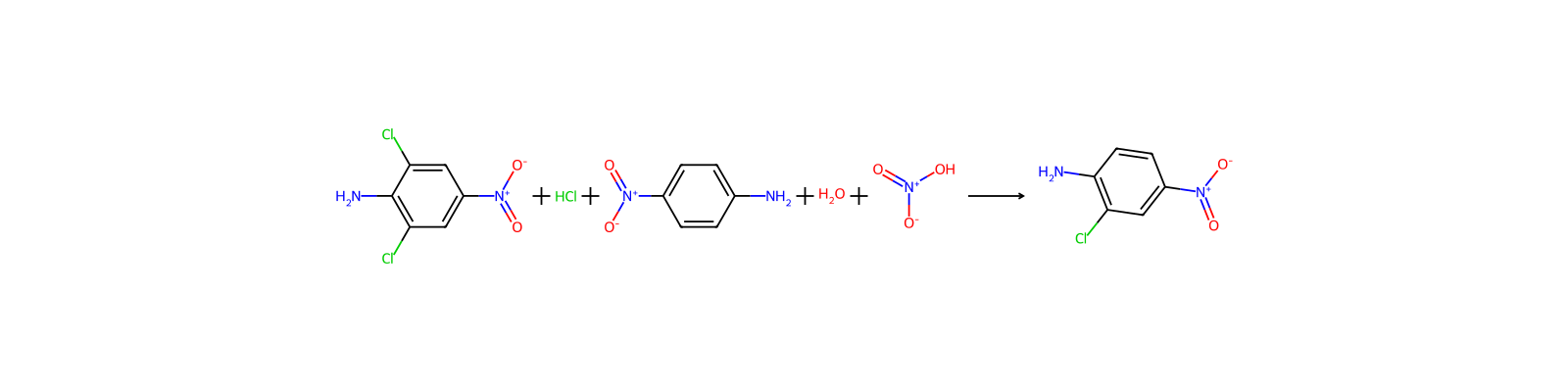
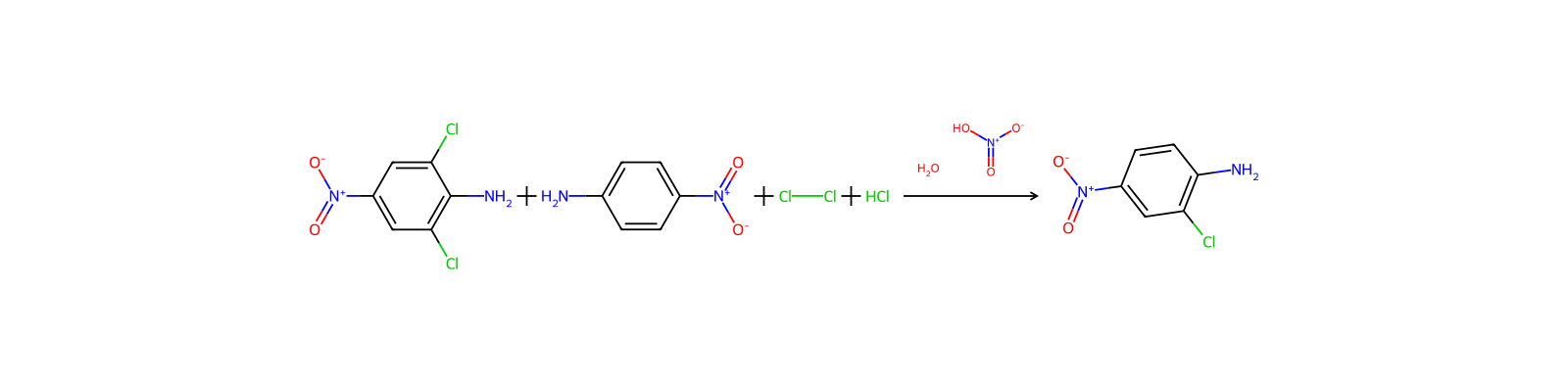
DIRECT CHLORINATION OF 4-NITROANILINE WITH SULFURYL CHLORIDE; ACETYLATION OF ANILINE FOLLOWED BY REACTION WITH NITRIC ACID, CHLORINATION, & HYDROLYSIS OF THE AMIDE
Formulations/Preparations
Dust, wettable powder, and flowable.
4% DUST & 50% WETTABLE POWDER IN UNITED KINGDOM; 8% DUST & 50% WETTABLE POWDER IN NETHERLANDS; 4 & 8% DUSTS & 50% WETTABLE POWDER IN USA. BOTRAN 35-35 (ORTHO) 35% DICHLORAN, 35% CAPTAN.
Botran 75-W Fungicide (Gowan Company), Dicloran 75%.
Botran Technical (Gowan Company), Dicloran 95%.
Botran 5F Fungicide (Gowan Company), Dicloran 46.7%.
Use ClassificationPharmaceuticals
General Manufacturing Information
Agriculture, Forestry, Fishing and Hunting
Benzenamine, 2,6-dichloro-4-nitro-: ACTIVE
Over 200,000 pounds of 2,6-dichloro-4-nitroaniline (dichloran) is applied annually throughout the United States; it's primary uses as a fungicide are on celery, lettuce, and grapes; it is primarily used in California and the Pacific Northwest.
The WHO Recommended Classification of Pesticides by Hazard identifies dicloran (technical grade) as Class III: slightly hazardous; Main Use: fungicide, other than for seed treatment.
Applications
DescriptionDicloran is a protective fungicide. It has a low aqueous solubility and is volatile. Based on its chemical properties, it may leach to groundwater. It can also be quite persistent in soils but not usually so in water. It is moderately toxic to mammals but is not expected to bioaccumulate. Exposure may damage reproduction and/or development. Dicloran is moderately toxic to most aquatic organisms, birds, honeybees and earthworms.
UsesDicloran is a protectant fungicide used to control various rots pathogens (Botrytis, Monilinia, Rhizopus and Sclerotinia) in a wide variety of fruits and vegetables.
UsesIt is used as dyestuff, agricultural and pharmaceutical intermediate.
UsesDichloran is a component for pesticide formulations.
Upstream & downstream products
Upstream raw materials
Downstream products
Suppliers50 total
梯希爱(上海)化成工业发展有限公司021-67121386 · [email protected]
上海阿拉丁生化科技股份有限公司400-6206333 13167063860 · [email protected]
Shandong chuangyingchemical Co., Ltd.18853181302 · [email protected]
合肥翰刚医药科技有限公司+8618062405514 · [email protected]
武汉欣扬瑞和化学科技有限公司153-07155313 15307155313 · [email protected]
温州共赢化学有限公司+86-0086-577-64498589 +86-15355981851 · [email protected]
河北创海生物科技有限公司+86-86-13131129325 · [email protected]
Dayang Chem (Hangzhou) Co.,Ltd.+86-0571-88938639 17705817739 · [email protected]
上海迈瑞尔生化科技有限公司4006356688 18621169109 · [email protected]
阿法埃莎(中国)化学有限公司400-6106006 · [email protected]
安耐吉化学&3A(安徽泽升科技股份有限公司)400-0056266 · [email protected]
石家庄斯迪亚诺精细化工有限公司0311-89250318 13582355795 · [email protected]
Allfluoro Pharmaceutical Company Limited+86-400-0216110 +86-15958047586 · [email protected]
常州安轩化工有限公司13912302692 · [email protected]
上海瀚鸿科技股份有限公司021-54306202 13764082696 · [email protected]
上海钰康生物科技有限公司+86-18930848214 +86-021-56762820 · [email protected]
嘉兴市艾森化工有限公司0573-85285100 18627885956 · [email protected]
上海泰坦科技股份有限公司400-6009262 15618770481 · [email protected]
上海隆盛化工有限公司58099637 13585536065 · [email protected]
武汉盈邦医药有限公司+86-13296627870; +86-13971566811 · [email protected]
玛雅试剂+86 (573) 82222445 (0)18006601000 452520369 · [email protected]
四川库利南科技有限公司400-1166-196 18981987031 · [email protected]
天津希恩思生化科技有限公司400 638 7771 · [email protected]
北京泰亚杰科技有限公司021-33690831-8001 13552411790;18616022633 · [email protected]
赛默飞世尔科技(中国)有限公司800-810-5118 · [email protected]
TCI AMERICA800-4238616 · [email protected]
TOKYO CHEMICAL INDUSTRY CO., LTD.03-36680489 · [email protected]
TCI Europe320-37350700 · [email protected]
湖南复瑞生物医药技术有限责任公司15901640172,19275032510 15901640172 · [email protected]
南京生利德生物科技有限公司025-57798810 18652991625 · [email protected]
上海皋翔化工有限公司021-57816257 18930243658 · [email protected]
宁波台康化工有限公司0574-87365517 18074210286 · [email protected]
上海将来实业股份有限公司400-0066400 13621662912 · [email protected]
上海石洋化工有限公司021-56795766 · [email protected]
成都零六生物科技有限公司400-1166-196 13458535857 · [email protected]
天津安浩生物科技有限公司[email protected]
上海麦克林生化科技股份有限公司15221275939 15221275939 · [email protected]
杭州杰恒化工有限公司0571-87396432 · [email protected]
南京多隆生物科技有限公司18905173768 · [email protected]
上海嵩爰化工科技有限公司010-1234567 18521000990 · [email protected]
江苏艾康生物医药研发有限公司025-66028182 17714375163 · [email protected]
湖北巨胜科技有限公司027-59599241 18871490274 · [email protected]
Sigma-Aldrich西格玛奥德里奇(上海)贸易有限公司021-61415566 800-8193336 · [email protected]
桦特昇生物科技(武汉)有限公司027-59207879 1972026995 18140587686 · [email protected]
天津阿尔塔科技有限公司022-6537-8550 15522853686 · [email protected]
TargetMol中国(陶术生物)021-021-33632979 15002134094 · [email protected]
上海陶术生物科技股份有限公司+1-781-999-5354; +1-00000000000 · [email protected]
上海博熠生物医药科技有限公司021-021-54331997 18321536537 · [email protected]
厦门志信化学有限公司+86-5922680277 +86-13806087780 · [email protected]
上海石洋化工有限公司+86-021-56795779 +86-13651600618 · [email protected]
Additional notes
DefinitionChEBI: A nitroaniline that is 4-nitroaniline in which the hydrogens at positions 2 and 6 are replaced by chlorines. An agricultural fungicide, it is not approved for use in the European Union.
Related reactions
32 records


Linked notes
Loading…