
Basic information
- CAS
1711-02-0- Standard SMILES
O=C(Cl)c1ccc(I)cc1- InChIKey
NJAKCIUOTIPYED-UHFFFAOYSA-N- Molecular formula
- C7H4ClIO
- Average molar mass
- 266.46 g/mol
- Monoisotopic mass
- 265.89954043
Names & identifiers
- Preferred name
- 4-Iodobenzoyl chloride
- IUPAC
- 4-iodobenzoyl chloride
- English name
- 4-Iodobenzoyl chloride
- Molecular formula
- C7H4ClIO
- Molecular weight
- 266.46
Names & synonyms
4-Iodobenzoyl chlorideBenzoyl chloride, 4-iodo-4-iodo-benzoyl chlorideFY4KZ93RHKEINECS 216-974-7NSC 97335NSC-97335P-IODO-BENZOYL CHLORIDEDTXSID5061904RefChem:99459DTXCID3035478216-974-7
Show more names
SKL12884-iodo-benzoylchloridBenzoylchloride,4-iodo-4-IodobenzoylChloride>4-Iodobenzoylchloride97%4-Iodobenzoyl chloride,98%
NJAKCIUOTIPYED-UHFFFAOYSA-N1711-02-0p-Iodobenzoyl chlorideBenzoyl chloride, p-iodo-4-iodobenzoylchlorideMFCD000010584-IODOBENZOIC ACID CHLORIDE4iodobenzoyl chloride
Database identifiers
- CAS
1711-02-0- PubChem CID
- 74373
- DTXSID
DTXSID5061904- UNII
- FY4KZ93RHK
- EC Number
- 216-974-7
- Nikkaji
- J203.099C
Properties
Computed structural properties
- XLogP
- 4
- Topological polar surface area
- 17.1 Ų
- Hydrogen bond donors
- 0
- Hydrogen bond acceptors
- 1
- Rotatable bonds
- 1
- Heavy atoms
- 10
- Formal charge
- 0
- Complexity
- 130
Experimental & physicochemical properties
SpringerMaterials PropertiesChemical shift
Physicochemical properties
- Melting point
- 63 · 63-65 °C (lit.)
- Boiling point
- 120 · 120-121 °C/1 mmHg (lit.)
- Density
- 1.9367 · 1.9367 (estimate)
- Flash point
- 110 °C · >110°C
- storage temp.
- Keep in dark place,Inert atmosphere,Room temperature
- solubility
- Soluble in toluene and benzene.
- form
- Crystalline Powder and Chunks or Crystalline Mass
- color
- Light yellow to beige
- Sensitive
- Moisture Sensitive
- BRN
- 774718 · 774718
- InChI
- InChI=1S/C7H4ClIO/c8-7(10)5-1-3-6(9)4-2-5/h1-4H
- InChIKey
- NJAKCIUOTIPYED-UHFFFAOYSA-N
- SMILES
- C(Cl)(=O)C1=CC=C(I)C=C1
- CAS DataBase Reference
- 1711 · 1711-02-0(CAS DataBase Reference)
- FDA UNII
- 4 KZ93RHK · FY4KZ93RHK
- NIST Chemistry Reference
- 4 · Benzoyl chloride, 4-iodo-(1711-02-0)
- EPA Substance Registry System
- 4 · Benzoyl chloride, 4-iodo- (1711-02-0)
- UNSPSC Code
- 12352100 · 12352100
- NACRES
- 22 · NA.22
- Symbol(GHS)
- 5 · GHS05
- Signal word
- Danger
- Hazard statements
- 314 · H314
- Precautionary statements
- 260 · P260-P280-P303+P361+P353-P304+P340+P310-P305+P351+P338-P363
- PPE
- 3 · Eyeshields, Faceshields, Gloves, type P3 (EN 143) respirator cartridges
- Hazard Codes
- C
- Risk Statements
- 34 · 34
- Safety Statements
- 28 A-26-45-36/37/39 · 28A-26-45-36/37/39
- RIDADR
- 3261 · UN 3261
- WGK Germany
- 3 · 3
- Hazard Note
- Corrosive/Moisture Sensitive
- TSCA
- TSCA listed
- HazardClass
- 8 · 8
- PackingGroup
- II
- HS Code
- 29163990 · 29163990
- Storage Class
- 8 A · 8A - Combustible corrosive hazardous materials
- Hazard Classifications
- 1 Skin · Eye Dam. 1Skin Corr. 1B
- Limited Quantities
- 1 Kg · 1 Kg (2.2 lbs) (solid)
- Excepted Quantities
- Max Inner Pack (30g or 30ml) and Max Outer Pack (500g or 500ml)
Safety & regulation
GHS classification
GHS Classification
Danger
H314 (100%): Causes severe skin burns and eye damage [Danger Skin corrosion/irritation]
P260, P264, P280, P301+P330+P331, P302+P361+P354, P304+P340, P305+P354+P338, P316, P321, P363, P405, and P501 (click each P-code to see the statement)
Aggregated GHS information provided per 48 reports by companies from 5 notifications to the ECHA C&L Inventory.
Hazard information
Hazard Classes and CategoriesSkin Corr. 1B (100%)
Safety data
- PPE
- Eyeshields, Faceshields, Gloves, type P3 (EN 143) respirator cartridges
- wgk
- 3
- tsca
- TSCA listed
- ridadr
- UN 3261
- hs_code
- 29163990
- risk_code
- 34
- Signal word
- Danger
- Symbol(GHS)
- GHS05
- hazard_code
- C
- hazard_note
- Corrosive/Moisture Sensitive
- safety_code
- 28A-26-45-36/37/39
- hazard_class
- 8
- Storage Class
- 8A - Combustible corrosive hazardous materials
- packing_group
- II
- Hazard statements
- H314
- Limited Quantities
- 1 Kg (2.2 lbs) (solid)
- Excepted Quantities
- Max Inner Pack (30g or 30ml) and Max Outer Pack (500g or 500ml)
- Hazard Classifications
- Eye Dam. 1Skin Corr. 1B
- Precautionary statements
- P260-P280-P303+P361+P353-P304+P340+P310-P305+P351+P338-P363
Chemistry & industry
Uses & manufacturing
General Manufacturing InformationBenzoyl chloride, 4-iodo-: ACTIVE
Applications
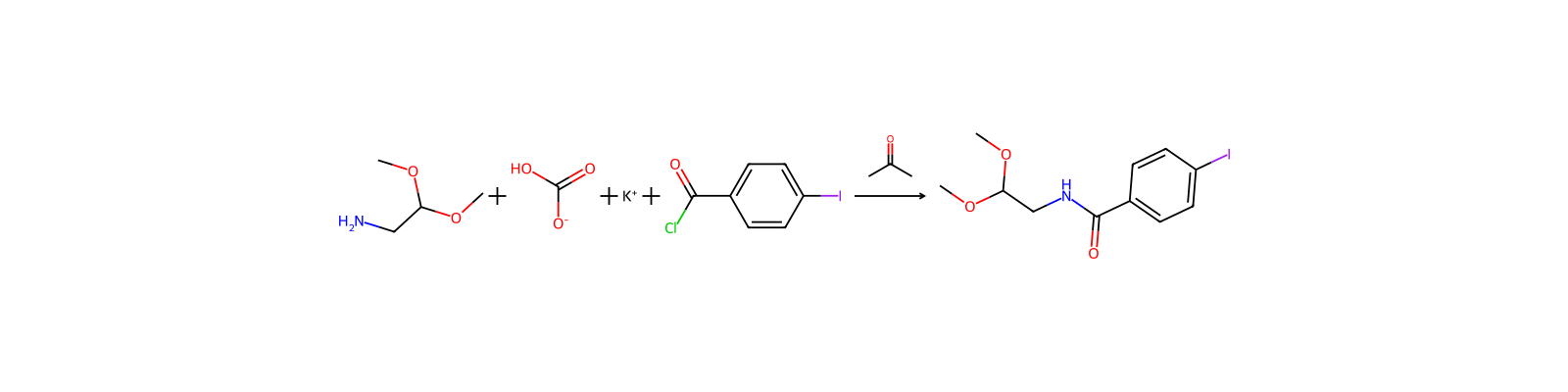
Uses4-Iodobenzoyl chloride is employed in the preparation of pyrroles by reaction with imines and acetylenes mediated by isocyanides using palladium catalysis. It is also used in the preparation of N-(1-benzylpyrrolidin-3-yl)arylbenzamides, potential human dopamine D4 antagonists. Further, it is used to prepare [2]rotaxane monomer and poly[2] rotaxane. In addition to this, it is important in the modification of poly(allylamine) in order to make the polymer X-ray visible.
Upstream & downstream products
Upstream raw materials
Downstream products
Suppliers100 total
梯希爱(上海)化成工业发展有限公司021-67121386 · [email protected]
郑州阿尔法化工有限公司+86-18530059196 · [email protected]
上海麦克林生化科技股份有限公司021-50706066 15221275939 · [email protected]
上海腾准生物科技有限公司19821570922 · [email protected]
温州共赢化学有限公司+86-0086-577-64498589 +86-15355981851 · [email protected]
Baoji Guokang Healthchem co.,ltd+8615604608665 15604608665 · [email protected]
Dayang Chem (Hangzhou) Co.,Ltd.+86-0571-88938639 17705817739 · [email protected]
科瑞迪化学400-821-5857 021-64326257 · [email protected]
衢州明锋化工有限公司0570-3062502 13819002126;13819008176 · [email protected]
毕佳索(上海毕得医药科技股份有限公司)400-6005915 · [email protected]
Syntechem Co.,Ltd[email protected]
南通萧畅医药贸易有限公司0513-82104991 18862997351 · [email protected]
上海迈瑞尔生化科技有限公司4006356688 18621169109 · [email protected]
北京索莱宝科技有限公司010-50973130 17801761073 · [email protected]
阿法埃莎(中国)化学有限公司400-6106006 · [email protected]
安耐吉化学&3A(安徽泽升科技股份有限公司)400-0056266 · [email protected]
常州安轩化工有限公司13912302692 · [email protected]
广东云星生物技术有限公司0751-18902340975/189023400307 18902340307 · [email protected]
上海瀚鸿科技股份有限公司021-54306202 13764082696 · [email protected]
南京圣亿来化工有限公司19951936396 · [email protected]
上海相辉医药科技有限公司13761987713 · [email protected]
嘉兴市艾森化工有限公司0573-85285100 18627885956 · [email protected]
上海泰坦科技股份有限公司400-6009262 15618770481 · [email protected]
上海隆盛化工有限公司58099637 13585536065 · [email protected]
郑州研德生物科技有限公司0371-63682289 15538176268 · [email protected]
山东西亚化学有限公司13355009207 13355009207 · [email protected]
南京唐正生物医药科技有限公司13016839191 · [email protected]
南京维奥化工有限公司Please Send Email 18652950785 · [email protected]
赛默飞世尔科技(中国)有限公司800-810-5118 · [email protected]
TCI AMERICA800-4238616 · [email protected]
TOKYO CHEMICAL INDUSTRY CO., LTD.03-36680489 · [email protected]
TCI Europe320-37350700 · [email protected]
卡迪亚医药科技有限公司0371-86615086 18203638366 0371-86159066 13526786601
成都麦卡希化工有限公司028-85632863 18108198598 · [email protected]
上海贤鼎生物科技有限公司4009209199 · [email protected]
越林试剂021-62960152 · [email protected]
上海毕得医药科技股份有限公司400-164-7117 18317119277 · [email protected]
湖南华腾制药有限公司400-8592883 · [email protected]
上海馨远医药科技有限公司021-24206007 13764915196 · [email protected]
天津安浩生物科技有限公司[email protected]
南京多隆生物科技有限公司18905173768 · [email protected]
陕西缔都医药化工有限公司+86-29-87569262 +86-15003564040 · [email protected]
苏州氟洛科医药技术有限公司0512-62706796 · [email protected]
Sigma-Aldrich西格玛奥德里奇(上海)贸易有限公司021-61415566 800-8193336 · [email protected]
AN PharmaTech Co Ltd86(21)68097365 · [email protected]
苏州晶拓生物医药科技有限公司0512-65916026 18015586221 · [email protected]
成都瑞欧克科技有限公司028-64353063 · [email protected]
北京禾兴源科技有限公司18511709189 · [email protected]
嘉兴市德亿化工有限公司0573-85866609 13325730825 · [email protected]
山东宜仁药业有限公司531-87922518 15628888630 · [email protected]
Related reactions
209 records


Compound notes
Loading…