HRID 17241As reactant
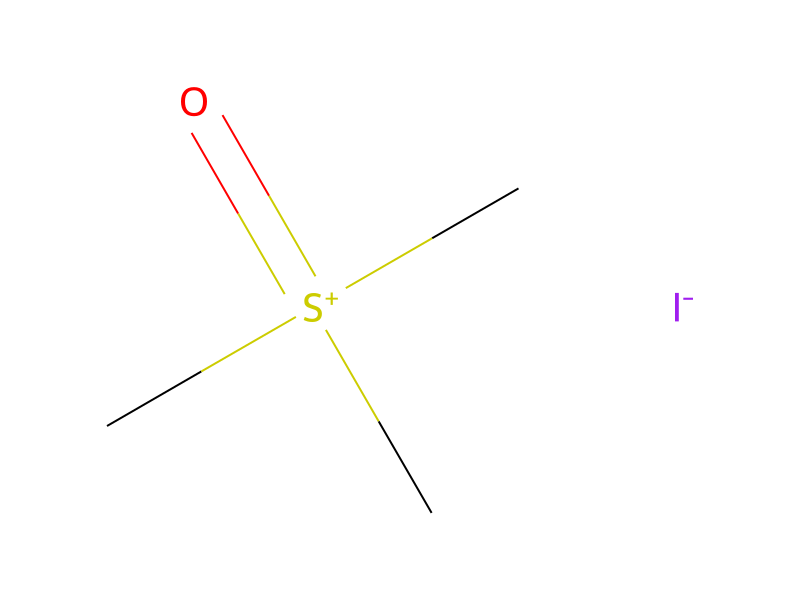
1774-47-6C[S+](C)(C)=O.[I-]BPLKQGGAXWRFOE-UHFFFAOYSA-M1774-47-6DTXSID001014581CHEMBL283149Safety information is for reference only and does not replace the supplier’s Safety Data Sheet (SDS), applicable regulations, or professional assessment.
This chemical does not meet GHS hazard criteria for 8.5% (4 of 47) of reports.
Warning
H303 (17%): May be harmful if swallowed [Warning Acute toxicity, oral]
P261, P264, P264+P265, P271, P273, P280, P301+P317, P302+P352, P304+P340, P305+P351+P338, P319, P321, P332+P317, P337+P317, P362+P364, P391, P403+P233, P405, and P501 (click each P-code to see the statement)
Aggregated GHS information provided per 47 reports by companies from 11 notifications to the ECHA C&L Inventory. Each notification may be associated with multiple companies.
REACH registered substance: Trimethyloxosulphonium iodide (EC: 217-204-2)
Sulfoxonium, trimethyl-, iodide: Does not have an individual approval but may be used under an appropriate group standard
UsesTreatment with strong base yields the ylide which adds to the carbonyl group of ketones1 and aldehydes2,3 to give epoxides. Also adds preferentially to the double bond of α,β-unsaturated esters to give cyclopropyl esters.4,5
UsesTrimethylsulfoxonium iodide is a sulfoxonium salt. It is used to generate dimethyloxosulfonium methylide by reaction with sodium hydride. The latter compound is used as a methylene-transfer reagent, and is used to prepare epoxides.
UsesTrimethylsulfoxonium Iodide is used to synthesize methylene-transfer reagents that are used in the preparation of epoxides.