
Methyltriphenyliphosphonium bromide
Completing data — refresh the page later to see the latest
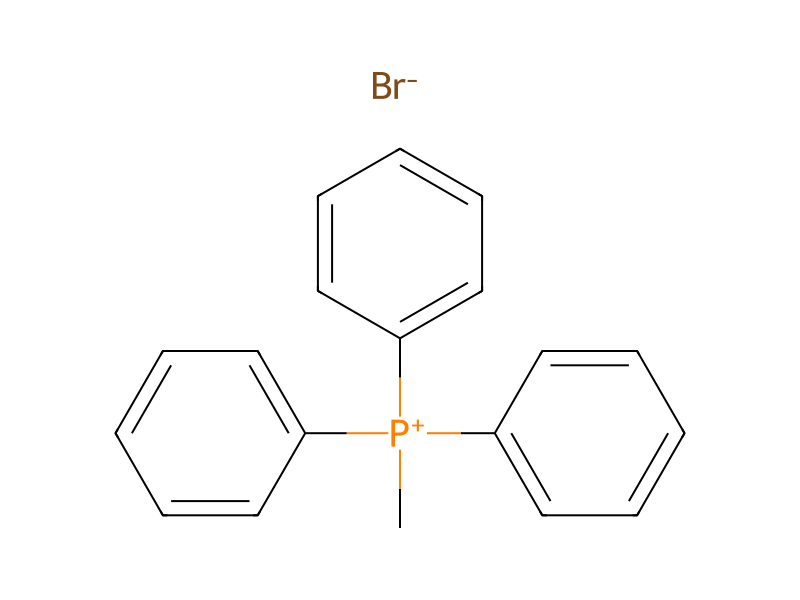
Basic information
- CAS
1779-49-3- Standard SMILES
C[P+](c1ccccc1)(c1ccccc1)c1ccccc1.[Br-]- InChIKey
LSEFCHWGJNHZNT-UHFFFAOYSA-M- Molecular formula
- C19H18P.Br
- Average molar mass
- 357.2 g/mol
- Monoisotopic mass
- 356.03294931
Names & identifiers
- Preferred name
- Methyltriphenyliphosphonium bromide
- IUPAC
- methyl(triphenyl)phosphanium bromide
- English name
- Methyltriphenylphosphonium bromide
- Molecular formula
- C19H18P.Br
- Molecular weight
- 357.22
Names & synonyms
Methyltriphenylphosphonium bromide1779-49-3Phosphonium, methyltriphenyl-, bromide (1:1)Phosphonium, methyltriphenyl-, bromideMethyl triphenylphosphonium bromideLW2UZ3E9EGMTPPBMethyltriphenyliphosphonium bromideEINECS 217-218-9NSC 20740NSC-20740NSC 102058
Show more names
MePPh3BrTRIPHENYLMETHYLPHOSPHONIUM BROMIDEMethyltriphenylphosphanium bromideMethyltriphenylphosphine bromideBromo(methyl)triphenylphosphoraneMTPBrMethyl Triphenyl Phosphonium Bromide (MTPBB)TPP-MBMethyl triphenyl pho
NSC-102058DTXSID30883580EC 217-218-9Methyl-Triphenyl-Phosphonium BromideTRIPHENYLPHOSPHONIUM METHOBROMIDETRIPHENYLPHOSPHONIUM METHYLBROMIDEM-0779RefChem:818743
Database identifiers
- CAS
1779-49-3- PubChem CID
- 74505
- DTXSID
DTXSID30883580- ChEMBL
CHEMBL54469- UNII
- LW2UZ3E9EG
- EC Number
- 217-218-9
Properties
Computed structural propertiesFilling in
- Topological polar surface area
- 0 Ų
- Hydrogen bond donors
- 0
- Hydrogen bond acceptors
- 1
- Rotatable bonds
- 3
- Heavy atoms
- 21
- Formal charge
- 0
- Complexity
- 235
Experimental & physicochemical properties
Chemical ClassesOther Classes -> Phosphorus Compounds
Physical DescriptionWhite hygroscopic powder; [Acros Organics MSDS]
Physicochemical properties
- Melting point
- 230 · 230-234 °C (lit.)
- vapor pressure
- 2e-7 hPa · 0.0000002 hPa
- Flash point
- 240 °C · >240°C
- storage temp.
- Inert atmosphere,Room Temperature
- solubility
- 2 O: · H2O: 0.1 g/mL, clear
- form
- Powder
- color
- White
- PH
- 6 · 6.0-6.5 (400g/l, H2O, 20℃)
- Water Solubility
- 400 g/L · 400 g/L (25 ºC)
- Sensitive
- Hygroscopic
- BRN
- 3599467 · 3599467
- InChI
- 1S/C19H18P.BrH/c1-20(17-11-5-2-6-12-17,18-13-7-3-8-14-18)19-15-9-4-10-16-19;/h2-16H,1H3;1H/q+1;/p-1
Safety & regulation
Safety information is for reference only and does not replace the supplier’s Safety Data Sheet (SDS), applicable regulations, or professional assessment.
GHS classification
GHS Classification
This chemical does not meet GHS hazard criteria for 7.7% (6 of 78) of reports.
Danger
H300 (21.8%): Fatal if swallowed [Danger Acute toxicity, oral]
P261, P264, P264+P265, P270, P271, P273, P280, P301+P316, P301+P317, P302+P352, P304+P340, P305+P351+P338, P317, P321, P330, P332+P317, P337+P317, P362+P364, P391, P405, and P501 (click each P-code to see the statement)
Aggregated GHS information provided per 78 reports by companies from 10 notifications to the ECHA C&L Inventory. Each notification may be associated with multiple companies.
Hazard information
Regulatory Information
Chemical: Phosphonium, methyltriphenyl-, bromide
Status: Active Update: 16-09-2013 https://echa.europa.eu/registration-dossier/-/registered-dossier/6999
Phosphonium, methyltriphenyl-, bromide: Does not have an individual approval but may be used under an appropriate group standard
Hazards SummaryAn irritant; Harmful by ingestion and skin absorption; [Acros Organics MSDS] See Triphenylphosphine oxide and Triphenylphosphine.
Hazard Classes and CategoriesAcute Tox. 2 (21.8%)
Safety data
- PPE
- dust mask type N95 (US), Eyeshields, Gloves
- wgk
- 3
- tsca
- TSCA listed
- ridadr
- UN 1390 4.3/PG 2
- hs_code
- 2931900090
- Toxicity
- LD50 orally in Rabbit: 118 mg/kg
- risk_code
Chemistry & industry
Uses & manufacturing
General Manufacturing InformationPhosphonium, methyltriphenyl-, bromide (1:1): ACTIVE
Applications
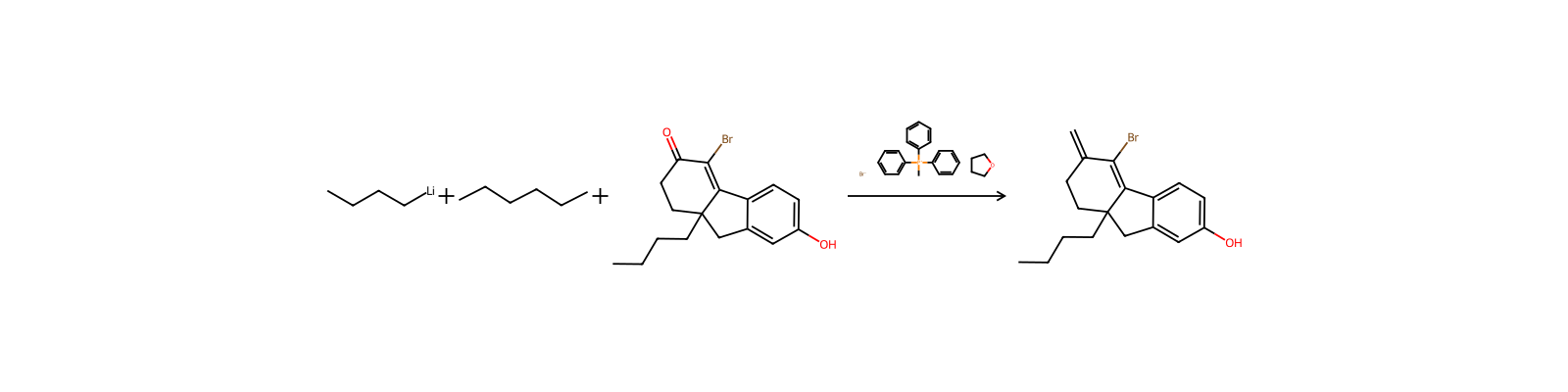
UsesMethyltriphenylphosphonium bromide is used for methylenation through the Wittig reaction. It is utilized in the synthesis of an enyne and 9-isopropenyl -phenanthrene by using sodium amide as reagent. It is a lipophilic molecule and used to deliver molecules to specific cell components. Further, it acts as an antineoplastic agent.
UsesMethyltriphenylphosphonium Bromide is a lipophilic molecule with a cation allowing for it to be used to deliver molecules to specific cell components. Also considered an antineoplastic agent.
UsesPTC catalyst
General DescriptionMethyltriphenylphosphoniumbromide is an organophosphorus compound, with potential use as a precursor and a solvent in organic synthesis.Mettler-Toledo calibration substance ME 30130598, methyltriphenylphosphoniumbromide is ideal for use in the regular calibration of Mettler-Toledo melting point instrument. Its value is a mean of 6 to 12 iterations with a Mettler-Toledo MP70 Excellence instrument that is calibrated against primary standards. The melting point is validated by Capillary method according to European Pharmacopeia (2.2.14.)
Upstream & downstream products
Upstream raw materials
Downstream products
Related reactions
1,003 records






Compound notes
Loading…