

Basic information
- CAS
1871-76-7- Standard SMILES
O=C(Cl)C(c1ccccc1)c1ccccc1- InChIKey
MSYLETHDEIJMAF-UHFFFAOYSA-N- Molecular formula
- C14H11ClO
- Average molar mass
- 230.69 g/mol
- Monoisotopic mass
- 230.04984265
Names & identifiers
- Preferred name
- 2,2-Diphenylacetyl chloride
- IUPAC
- 2,2-diphenylacetyl chloride
- English name
- Diphenylacetyl chloride
- Molecular formula
- C14H11ClO
- Molecular weight
- 230.69
Names & synonyms
Diphenylacetyl chloride2,2-Diphenylacetyl chloridealpha-Phenylbenzeneacetyl chlorideEINECS 217-493-5NSC 120906UNII-6553C1CB9SBRN 12115886553C1CB9SNSC-120906DTXSID301719793-09-00-03300 (Beilstein Handbook Reference).ALPHA.-PHENYLBENZENEACETYL CHLORIDE
Show more names
DpacEOS-61468DiphenylacetylTIMTEC-BB SBB006586diphenyl-acetylchloridDiphenylacetylChloride>diphenylaceticacidchloride2,2-diphenylacetylchloride
DIPHENYLACETIC ACID ACID CHLORIDE [MI]RefChem:81116DTXCID7094470DIPHENYLACETIC ACID ACID CHLORIDEMSYLETHDEIJMAF-UHFFFAOYSA-N1871-76-7Diphenylacetic acid chlorideAcetyl chloride, diphenyl-
Database identifiers
- CAS
1871-76-7- PubChem CID
- 74637
- DTXSID
DTXSID30171979- UNII
- 6553C1CB9S
- EC Number
- 217-493-5
- Nikkaji
- J90.804E
Properties
Computed structural properties
- XLogP
- 4.1
- Topological polar surface area
- 17.1 Ų
- Hydrogen bond donors
- 0
- Hydrogen bond acceptors
- 1
- Rotatable bonds
- 3
- Heavy atoms
- 16
- Formal charge
- 0
- Complexity
- 209
Physicochemical properties
- Melting point
- 49 · 49-53 °C (lit.)
- Boiling point
- 175 · 175-176 °C/17 mmHg (lit.)
- Density
- 1.1223 · 1.1223 (rough estimate)
- refractive index
- 1.526 · 1.5260 (estimate)
- Flash point
- 230 °F · >230 °F
- storage temp.
- 30 °C · Store below +30°C.
- solubility
- Chloroform (Slightly), DMSO (Slightly)
- form
- Crystalline Powder
- color
- Slightly yellow
- Sensitive
- Moisture Sensitive
- Merck
- 14 · 14,3316
- BRN
- 1211588 · 1211588
- InChI
- InChI=1S/C14H11ClO/c15-14(16)13(11-7-3-1-4-8-11)12-9-5-2-6-10-12/h1-10,13H
- InChIKey
- MSYLETHDEIJMAF-UHFFFAOYSA-N
- SMILES
- C(C(Cl)=O)(C1C=CC=CC=1)C1=CC=CC=C1
- CAS DataBase Reference
- 1871 · 1871-76-7(CAS DataBase Reference)
- EWG's Food Scores
- 1 · 1
- FDA UNII
- 6553 C1CB9S · 6553C1CB9S
- NIST Chemistry Reference
- Diphenylacetyl chloride(1871-76-7)
- UNSPSC Code
- 12352100 · 12352100
- NACRES
- 22 · NA.22
- Symbol(GHS)
- 5 · GHS05
- Signal word
- Danger
- Hazard statements
- 303 · H303-H318-H314
- Precautionary statements
- 260 h-P301+P330+P331-P405-P501a-P260-P280-P303+P361+P353-P304+P340+P310-P305+P351+P338 · P260h-P301+P330+P331-P405-P501a-P260-P280-P303+P361+P353-P304+P340+P310-P305+P351+P338
- PPE
- 3 · Eyeshields, Faceshields, Gloves, type P3 (EN 143) respirator cartridges
- Hazard Codes
- C
- Risk Statements
- 34 · 34-36/37
- Safety Statements
- 26 · 26-27-28-36/37/39-45
- RIDADR
- 3261 · UN 3261 8/PG 2
- WGK Germany
- 2 · 2
- RTECS
- 6750000 · AO6750000
- HazardClass
- 8 · 8
- PackingGroup
- II
- HS Code
- 29163900 · 29163900
- Storage Class
- 8 A · 8A - Combustible corrosive hazardous materials
- Hazard Classifications
- 1 Skin · Eye Dam. 1Skin Corr. 1B
- REACH Registrations
- Active
- Limited Quantities
- 1 Kg · 1 Kg (2.2 lbs) (solid)
- Excepted Quantities
- Max Inner Pack (30g or 30ml) and Max Outer Pack (500g or 500ml)
Safety & regulation
GHS classification
GHS Classification
Danger
H314 (100%): Causes severe skin burns and eye damage [Danger Skin corrosion/irritation]
P260, P261, P264, P271, P280, P301+P330+P331, P302+P361+P354, P304+P340, P305+P354+P338, P316, P319, P321, P363, P403+P233, P405, and P501 (click each P-code to see the statement)
Aggregated GHS information provided per 47 reports by companies from 5 notifications to the ECHA C&L Inventory. Each notification may be associated with multiple companies.
Hazard information
Regulatory InformationStatus: Active Update: 10-01-2018 https://echa.europa.eu/registration-dossier/-/registered-dossier/21746
Hazard Classes and CategoriesSkin Corr. 1C (100%)
Safety data
- PPE
- Eyeshields, Faceshields, Gloves, type P3 (EN 143) respirator cartridges
- wgk
- 2
- rtecs
- AO6750000
- ridadr
- UN 3261 8/PG 2
- hs_code
- 29163900
- risk_code
- 34-36/37
- Signal word
- Danger
- Symbol(GHS)
- GHS05
- hazard_code
- C
- safety_code
- 26-27-28-36/37/39-45
- hazard_class
- 8
- Storage Class
- 8A - Combustible corrosive hazardous materials
- packing_group
- II
- Hazard statements
- H303-H318-H314
- Limited Quantities
- 1 Kg (2.2 lbs) (solid)
- Excepted Quantities
- Max Inner Pack (30g or 30ml) and Max Outer Pack (500g or 500ml)
- REACH Registrations
- Active
- Hazard Classifications
- Eye Dam. 1Skin Corr. 1B
- Precautionary statements
- P260h-P301+P330+P331-P405-P501a-P260-P280-P303+P361+P353-P304+P340+P310-P305+P351+P338
Chemistry & industry
Applications
UsesDiphenylacetyl Chloride is a reagent used in the synthesis of β-lactam estrogen receptor antagonists promoting antiproliferative and anti-tubulin polymerizatiion activity.
UsesDiphenylacetyl chloride was used as a reagent in regioselective acylation of cyclomalto-oligosaccharides. It was also used in the preparation of N-substituted amides having local anesthetic properties.
Preparation methods
PreparationDiphenylacetyl Chloride is prepared by the action of Thionyl Chloride on diphenylacetic acid.
Upstream & downstream products
Downstream products
Suppliers100 total
国药集团化学试剂有限公司86-21-63210123 · [email protected]
梯希爱(上海)化成工业发展有限公司021-67121386 · [email protected]
河北贞田食品添加剂有限公司0319-5925599 13373390591
湖北宥澄新材料科技有限公司17764017698 13163370568 · [email protected]
毕佳索(上海毕得医药科技股份有限公司)400-6005915 · [email protected]
上海麦克林生化科技股份有限公司021-50706066 15221275939 · [email protected]
上海腾准生物科技有限公司19821570922 · [email protected]
湖北海克斯生化有限公司17362916295; 17362916295 · [email protected]
Dayang Chem (Hangzhou) Co.,Ltd.+86-0571-88938639 17705817739 · [email protected]
Syntechem Co.,Ltd[email protected]
上海迈瑞尔生化科技有限公司4006356688 18621169109 · [email protected]
北京索莱宝科技有限公司010-50973130 17801761073 · [email protected]
天津中信凯泰化工有限公司022-66880623 · [email protected]
上海颖心实验室设备有限公司021-59178156 17002132182 · [email protected]
阿法埃莎(中国)化学有限公司400-6106006 · [email protected]
安耐吉化学&3A(安徽泽升科技股份有限公司)400-0056266 · [email protected]
上海瀚鸿科技股份有限公司021-54306202 13764082696 · [email protected]
南京圣亿来化工有限公司19951936396 · [email protected]
广东方信生物科技有限公司0751-2838688 13376594225 · [email protected]
上海相辉医药科技有限公司13761987713 · [email protected]
Pure Chemistry Scientific Inc.001-857-928-2050 or 1-888-588-9418 · [email protected]
上海隆盛化工有限公司58099637 13585536065 · [email protected]
湖北微斯汀科技有限公司027-61182895 13367240285 · [email protected]
山东西亚化学有限公司13355009207 13355009207 · [email protected]
赛默飞世尔科技(中国)有限公司800-810-5118 · [email protected]
南京精瑞久安生物技术有限公司025-58196018 800028039 · [email protected]
北京伊诺凯科技有限公司400-810-7969 010-59572699 · [email protected]
TCI AMERICA800-4238616 · [email protected]
TOKYO CHEMICAL INDUSTRY CO., LTD.03-36680489 · [email protected]
TCI Europe320-37350700 · [email protected]
Shanghai Witofly Chemical Co.,Ltd[email protected]
北京环宇世纪化学科技有限公司hysj_bj.com
安徽科迪达化工有限公司0554-2106669 · [email protected]
HBCChem, Inc.+1-510-219-6317 · [email protected]
上海毕得医药科技股份有限公司400-164-7117 18317119277 · [email protected]
成都零六生物科技有限公司400-1166-196 13458535857 · [email protected]
上海御略医药科技有限公司021-60345187 13671753212 · [email protected]
上海鑫圭生物科技有限公司15121041756 · [email protected]
阳谷荣科商贸有限公司15863541132 · [email protected]
南京多隆生物科技有限公司18905173768 · [email protected]
南京恰风和医药科技有限公司025-57018978 18251899859 · [email protected]
江苏艾康生物医药研发有限公司025-66028182 17714375163 · [email protected]
陕西缔都医药化工有限公司029-81024372 17792795018 · [email protected]
Sigma-Aldrich西格玛奥德里奇(上海)贸易有限公司021-61415566 800-8193336 · [email protected]
成都瑞欧克科技有限公司028-64353063 · [email protected]
九鼎化学(上海)科技有限公司4009209199 · [email protected]
BOC Sciences16314854226; +8616314854226 · [email protected]
广东翁江化学试剂有限公司0751-2886766 13927870850 · [email protected]
河南誉康卓宁进出口有限公司13393721940 · [email protected]
安阳鸿蒙新材料有限公司19588588067 · [email protected]
Related reactions
252 records


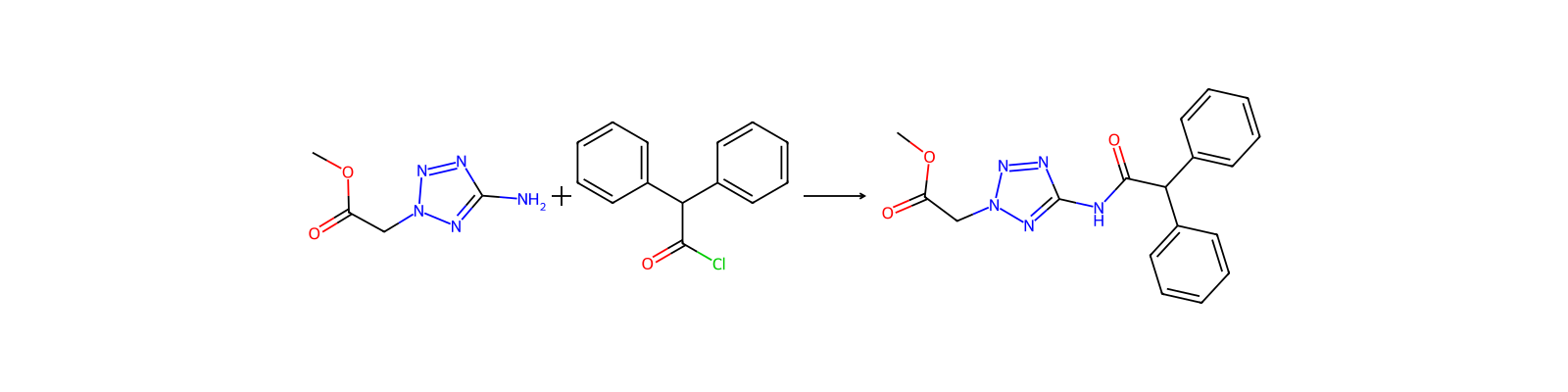


Compound notes
Loading…