
(3-Bromophenyl)acetic acid
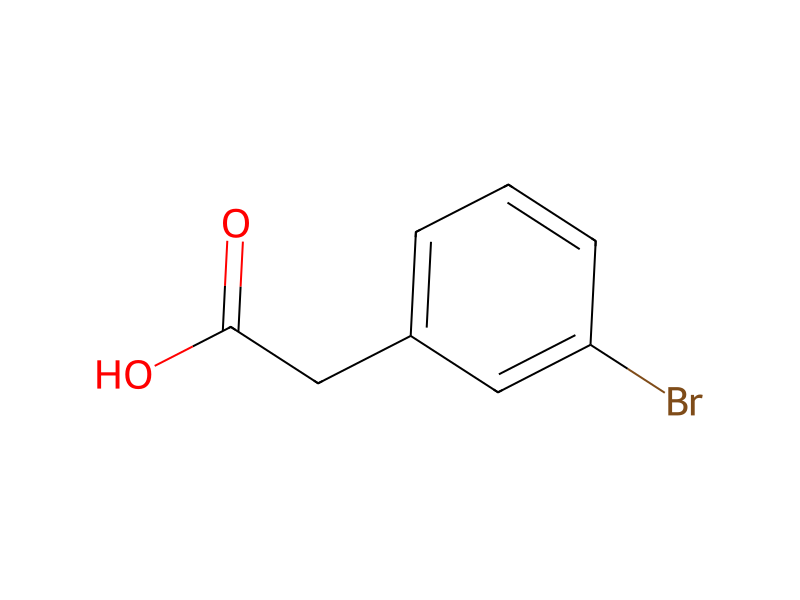
Basic information
- CAS
1878-67-7- Standard SMILES
O=C(O)Cc1cccc(Br)c1- InChIKey
KYNNBXCGXUOREX-UHFFFAOYSA-N- Molecular formula
- C8H7BrO2
- Average molar mass
- 215.04 g/mol
- Monoisotopic mass
- 213.96294156
Names & identifiers
- Preferred name
- (3-Bromophenyl)acetic acid
- IUPAC
- 2-(3-bromophenyl)acetic acid
- English name
- 3-Bromophenylacetic acid
- Molecular formula
- C8H7BrO2
- Molecular weight
- 215.04
Names & synonyms
3-Bromophenylacetic acid1878-67-7(3-Bromophenyl)acetic acidBenzeneacetic acid, 3-bromo-EINECS 217-522-1DTXSID0075152RefChem:400000DTXCID3035927217-522-12-(3-bromophenyl)acetic acidM-BROMOPHENYLACETIC ACIDMFCD00004330
Show more names
RARECHEM AL BO 0120Between broMine acid3-Bromobenzeneacetic acid(3-bromophenyl)acric acid3-Bromophenylacetic Acid >243-Bromo benzeneacetic acid
(m-Bromophenyl)acetic Acid; 2-(3-Bromophenyl)acetic Acid; 3-Bromobenzeneacetic Acid;3-bromo-phenylacetic acid3-bromophenyl acetic acidmeta-bromophenylacetic acid3-bromo-phenyl acetic acid3-bromo-phenyl-acetic acid6QF7XW7X4J(3-bromo-phenyl)acetic acid
Database identifiers
- CAS
1878-67-7- PubChem CID
- 74653
- DTXSID
DTXSID0075152- ChEMBL
CHEMBL139276- UNII
- 6QF7XW7X4J
- EC Number
- 217-522-1
- Nikkaji
- J199.693B
Properties
Computed structural properties
- XLogP
- 2.4
- Topological polar surface area
- 37.3 Ų
- Hydrogen bond donors
- 1
- Hydrogen bond acceptors
- 2
- Rotatable bonds
- 2
- Heavy atoms
- 11
- Formal charge
- 0
- Complexity
- 147
Experimental & physicochemical properties
LogP2.37
Physicochemical properties
- Melting point
- 98 · 98-102 °C (lit.)
- Boiling point
- 252.95 °C · 252.95°C (rough estimate)
- Density
- 1.5313 · 1.5313 (rough estimate)
- refractive index
- 1.55 · 1.5500 (estimate)
- storage temp.
- Sealed in dry,Room Temperature
- solubility
- DMSO, Methanol
- form
- Crystalline Powder or Needles
- pka
- 4.12 · 4.12±0.10(Predicted)
- color
- White
- BRN
- 2045104 · 2045104
- InChI
- InChI=1S/C8H7BrO2/c9-7-3-1-2-6(4-7)5-8(10)11/h1-4H,5H2,(H,10,11)
- InChIKey
- KYNNBXCGXUOREX-UHFFFAOYSA-N
- SMILES
- C1(CC(O)=O)=CC=CC(Br)=C1
Safety & regulation
Safety information is for reference only and does not replace the supplier’s Safety Data Sheet (SDS), applicable regulations, or professional assessment.
GHS classification
GHS Classification
This chemical does not meet GHS hazard criteria for 16.7% (1 of 6) of reports.
Danger
H314 (16.7%): Causes severe skin burns and eye damage [Danger Skin corrosion/irritation]
P260, P261, P264, P264+P265, P271, P280, P301+P330+P331, P302+P352, P302+P361+P354, P304+P340, P305+P351+P338, P305+P354+P338, P316, P319, P321, P332+P317, P337+P317, P362+P364, P363, P403+P233, P405, and P501 (click each P-code to see the statement)
Aggregated GHS information provided per 6 reports by companies from 5 notifications to the ECHA C&L Inventory. Each notification may be associated with multiple companies.
Hazard information
Hazard Classes and CategoriesSkin Corr. 1B (16.7%)
Safety data
- PPE
- Eyeshields, Gloves, type N95 (US)
- wgk
- 3
- hs_code
- 29163900
- risk_code
- 36/37/38
- Signal word
- Warning
- Symbol(GHS)
- GHS07
- hazard_code
- Xi
- safety_code
- 22-24/25
- hazard_class
- IRRITANT
- Storage Class
- 11 - Combustible Solids
- Hazard statements
- H315-H319
- Precautionary statements
- P264-P280-P302+P352+P332+P313+P362+P364-P305+P351+P338+P337+P313
Chemistry & industry
Applications
Uses3-Bromophenylacetic Acid is a halo substituted phenylacetic acid with anti oxidative properties. 3-Bromophenylacetic Acid has been shown to inhibit penicillin biosynthetic enzymes.
Uses3-Bromophenylacetic acid was used in the preparation of 3-bromophenylacetaldehyde by di-isobutyl aluminum hydride (DIBAL) reduction.
Upstream & downstream products
Upstream raw materials
Downstream products
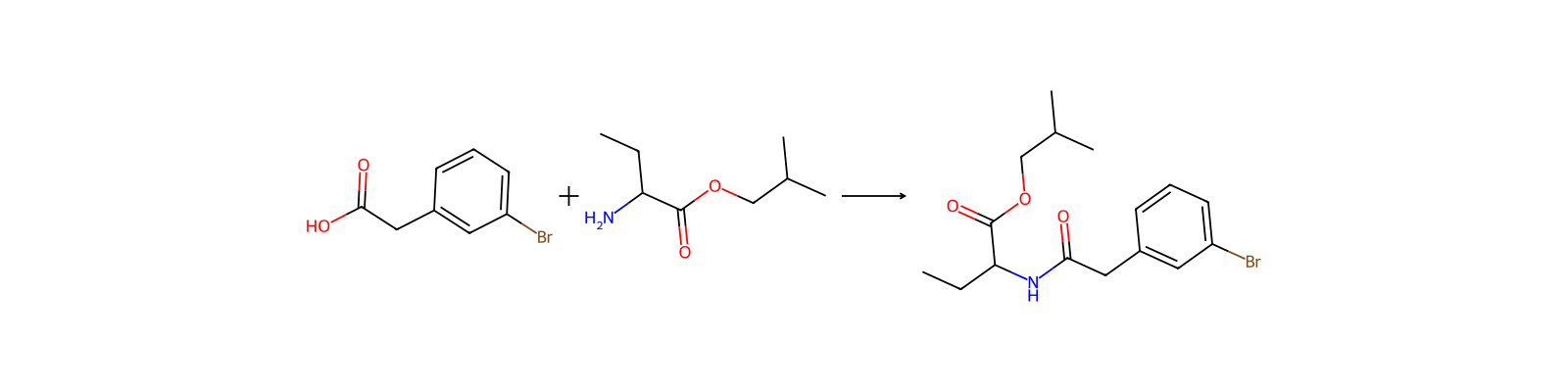
Related reactions
225 records




Compound notes
Loading…