
Basic information
- Standard SMILES
CN(C)c1ccc(N)cc1- InChIKey
BZORFPDSXLZWJF-UHFFFAOYSA-N- Molecular formula
- C8H12N2
- Average molar mass
- 136.19 g/mol
- Monoisotopic mass
- 136.10004839
Names & identifiers
- Preferred name
- N,N-dimethyl-p-phenylenediamine
- IUPAC
- 4-N,4-N-dimethylbenzene-1,4-diamine
- English name
- N,N'-Bis(methylphenyl)-1,4-benzenediamine
- Molecular formula
- C20H20N2
- Molecular weight
- 288.39
Names & synonyms
N,N-Dimethyl-p-phenylenediamine99-98-9N,N-Dimethyl-1,4-phenylenediaminep-Aminodimethylaniline4-(Dimethylamino)anilinep-Amino-N,N-dimethylanilineDimethyl-p-phenylenediaminep-(Dimethylamino)anilineN,N-Dimethyl-1,4-benzenediaminep-DimethylaminophenylamineN,N-DIMETHYL-P-BENZENEDIAMINE4-(Dimethylamino)benzenamine
Show more names
Antioxidant DTPDN,N-Ditolyl-1,4-BenzenediamineN,N'-Ditolyl-p-phenylenediamineN,N'-Ditolyl-1,4-phenylenediamineN,N'-ditolyl-para-phenylene diamine-Bis(methylphenyl)-1,4-benzenediamineN,N'-Bis(methylphenyl)-1,4-benzenediamineN1,N4-Bis(methylphenyl)-1,4-benzenediamineN,N'-Bis (Methylphenyl)-1,4-BenzenediamineN,N''-Bis(methylphenyl)-1,4-benzenediamine
p-Phenylenediamine, N,N-dimethyl-N,N-dimethylbenzene-1,4-diamineDimethyl-para-phenylenediamineC.I. 76075DTXSID6025149CI 760757GZH2FMK7XNSC-1493
Database identifiers
- CAS
27417-40-9、99-98-9- PubChem CID
- 7472
- DTXSID
DTXSID6025149- ChEMBL
CHEMBL36296- ChEBI
CHEBI:15783- UNII
- 7GZH2FMK7X
- EC Number
- 202-807-5
- Nikkaji
- J3.998E
Properties
Computed structural properties
- XLogP
- 1.8
- Topological polar surface area
- 29.3 Ų
- Hydrogen bond donors
- 1
- Hydrogen bond acceptors
- 2
- Rotatable bonds
- 1
- Heavy atoms
- 10
- Formal charge
- 0
- Complexity
- 93
Experimental & physicochemical properties
Density
1.036 at 68 °F (EPA, 1998) - Denser than water; will sink
1.036 g/cu cm at 20 °C
1.036 @ 20°C
Color/Form
Reddish-violet crystals
Needles from benzene
Solubility
less than 1 mg/mL at 68 °F (NTP, 1992)
Soluble in chloroform; very soluble in ethanol, ethyl ether, benzene; slightly soluble in ligroin
Soluble in alcohol, chloroform, ether
Flash Point
195 °F (NTP, 1992)
91.00 °C (195.80 °F) - closed cup
90 °C
Boiling Point
504 °F at 760 mmHg (EPA, 1998)
263 °C
BP: 262 °C
262 °C @760 [mm Hg]
DecompositionWhen heated to decomposition it emits toxic fumes of NOx.
Melting Point
106 to 127 °F (EPA, 1998)
53 °C; also stated as 41 °C
41 °C
Vapor Density4.69 (NTP, 1992) - Heavier than air; will sink (Relative to Air)
Vapor Pressure
0.00791 [mmHg]
0.0001 [mm Hg] @25 °C
Physical Description
Dimethyl-p-phenylenediamine is a colorless to reddish-violet solid. Used in the production of methylene blue and photographic developer. Used as a chemical intermediate for dyes and diazonium chloride salts and as an analytical reagent to detect chloroamine in water. (EPA, 1998)
Colorless to reddish-violet solid; [HSDB] Black or grey solid; [MSDSonline]
Stability/Shelf LifeChemical stability: Stable under recommended storage conditions.
Ionization Efficiency
Positive
3.28
2.7
Agilent XCT
Electrospray ionization
formic acid (5.3nM)
Physicochemical properties
- Melting point
- 183.5 · 183.5-185.5 °C
- storage temp.
- Refrigerator
- solubility
- Acetone (Slightly), Benzene (Very Slightly), Chloroform (Slightly), DMSO (Very Slightly)
- form
- Solid
- color
- Dark Brown
- InChI
- InChI=1S/C20H20N2/c1-15-7-3-5-9-19(15)21-17-11-13-18(14-12-17)22-20-10-6-4-8-16(20)2/h3-14,21-22H,1-2H3
- InChIKey
- MDZBMZIJIUEQJS-UHFFFAOYSA-N
- SMILES
- C1(C=CC=CC=1C)NC1=CC=C(NC2C=CC=CC=2C)C=C1
- LogP
- 5.573 · 5.573 (est)
- EPA Substance Registry System
- 1 · 1,4-Benzenediamine, N,N'-bis(methylphenyl)- (27417-40-9)
- TSCA
- TSCA listed
Safety & regulation
GHS classification
GHS Classification
Danger
H301: Toxic if swallowed [Danger Acute toxicity, oral];H311: Toxic in contact with skin [Danger Acute toxicity, dermal];H331: Toxic if inhaled [Danger Acute toxicity, inhalation]
P261, P262, P264, P270, P271, P280, P301+P316, P302+P352, P304+P340, P316, P321, P330, P361+P364, P403+P233, P405, and P501 (click each P-code to see the statement)
Danger
Hazard information
Regulatory Information
Chemical: 1,4-Benzenediamine, N,N-dimethyl-
Dimethyl-4-phenylenediamine: Does not have an individual approval but may be used under an appropriate group standard
Other Safety InformationIMAP assessments - Chemicals with limited data availability that may be used in hair dyes overseas: Human health tier II assessment;IMAP assessments - 1,4-Benzenediamine, N,N-dimethyl-: Environment tier I assessment
DOT LabelPoison
Fire HazardsWhen heated to decomposition, it emits toxic fumes of nitrogen oxides. (EPA, 1998)
Fire PotentialNot flammable or combustible.
Health HazardsLowest toxic dose with skin effect is 14 mg/kg. Irritant to skin and eyes. (EPA, 1998)
Hazards Summary
A skin and eye irritant; May cause skin sensitization; [CAMEO] A skin and eye irritant; Three cases of allergic contact dermatitis reported in bacteriology lab; Induces mild methemoglobinemia in rats; Can be absorbed through skin, with small amounts being highly toxic; [HSDB] Causes hemorrhage, irritation, and allergic dermatitis in dermal studies with humans; Causes convulsions and dyspnea in inhalation lethal-concentration studies with guinea pigs and rabbits; Caused convulsions in oral lethal-dose study of cats; [RTECS] An irritant; Toxic by inhalation or skin absorption; Fatal by ingestion; [Aldrich MSDS]
Reactive GroupAmines, Aromatic
Reactivity Profile
DIMETHYL-P-PHENYLENEDIAMINE neutralizes acids in exothermic reactions to form salts plus water. May be incompatible with isocyanates, halogenated organics, peroxides, phenols (acidic), epoxides, anhydrides, and acid halides. Flammable gaseous hydrogen may be generated in combination with strong reducing agents, such as hydrides. Incompatible with strong oxidizers, strong acids and acid anhydrides. Also incompatible with alkalis (NTP, 1992).
Air and Water ReactionsNo rapid reaction with air. No rapid reaction with water.
Toxic Combustion ProductsHazardous decomposition products formed under fire conditions. - Carbon oxides, nitrogen oxides (NOx)
CERCLA Reportable Quantities
Releases of CERCLA hazardous substances are subject to the release reporting requirement of CERCLA section 103, codified at 40 CFR part 302, in addition to the requirements of 40 CFR part 355. Dimethyl-p-phenylenediamine is an extremely hazardous substance (EHS) subject to reporting requirements when stored in amounts in excess of its threshold planning quantity (TPQ) of 10 or 10,000 lbs. Extremely hazardous substances that are solids are subject to either of two threshold planning quantities ... The lower quantity applies only if the solid exists in powdered form and has a particle size less than 100 microns; or is handled in solution or in molten form; or meets the criteria for a National Fire Protection Association (NFPA) rating of 2, 3 or 4 for reactivity. If the solid does not meet any of these criteria, it is subject to the upper ... threshold planning quantity ... .
Safety & protection
Fire FightingFires involving this material can be controlled with a dry chemical, carbon dioxide or Halon extinguisher. A water spray may also be used. (NTP, 1992)
First Aid
Warning: Dimethyl-p-phenylenediamine is an irritant of the skin and eyes, and is a skin sensitizer.;Signs and Symptoms of Dimethyl-P-Phenylenediamine Exposure: Signs and symptoms of acute exposure to dimethyl-p-phenylenediamine may include irritation of skin and eyes, optic neuritis, lenticular opacities, methemoglobinemia, hypoglycemia, hyper-excitability, and convulsions.;Emergency Life-Support Procedures: Acute exposure to dimethyl-p-phenylenediamine exposure may require decontamination and life support for the victims. Emergency personnel should wear protective clothing appropriate to the type and degree of contamination. Air-purifying or supplied-air respiratory equipment should also be worn, as necessary. Rescue vehicles should carry supplies such as plastic sheeting and disposable plastic bags to assist in preventing spread of contamination.;Inhalation Exposure:;1. Move victims to fresh air. Emergency personnel should avoid self-exposure to dimethyl-p-phenylenediamine.;2. Evaluate vital signs including pulse and respiratory rate and note any trauma. If no pulse is detected, provide CPR. If not breathing, provide artificial respiration. If breathing is labored, administer 100% humidified oxygen or other respiratory support.;3. Obtain authorization and/or further instructions from the local hospital for administration of an antidote or performance of other invasive procedures.;4. Transport to a health care facility.;Dermal/Eye Exposure:;1. Remove victims from exposure. Emergency personnel should avoid self-exposure to dimethyl-p-phenylenediamine.;2. Evaluate vital signs including pulse and respiratory rate and note any trauma. If no pulse is detected, provide CPR. If not breathing, provide artificial respiration. If breathing is labored, administer 100% humidified oxygen or other respiratory support.;3. Remove contaminated clothing as soon as possible.;4. If eye exposure has occurred, eyes must be flushed with lukewarm water for at least 15 minutes.;5. Wash exposed skin areas thoroughly with soap and water.;6. Obtain authorization and/or further instructions from the local hospital for administration of an antidote or performance of other invasive procedures.;7. Transport to a health care facility.;Ingestion Exposure:;1. Evaluate vital signs including pulse and respiratory rate and note any trauma. If no pulse is detected, provide CPR. If not breathing, provide artificial respiration. If breathing is labored, administer 100% humidified oxygen or other respiratory support.;2. DO NOT induce vomiting or attempt to neutralize.;3. Obtain authorization and/or further instructions from the local hospital for administration of an antidote or performance of other invasive procedures.
Fire Fighting ProceduresSuitable extinguishing media Use water spray, alcohol-resistant foam, dry chemical or carbon dioxide. Special protective equipment for firefighters Wear self contained breathing apparatus for fire fighting if necessary.
Storage Conditions
Keep container tightly closed in a dry and well-ventilated place. Light sensitive. Store under inert gas. Air sensitive.
Keep tightly closed and protected from light.
Cleanup Methods
Environmental precautions: Prevent further leakage or spillage if safe to do so. Do not let product enter drains. Methods and materials for containment and cleaning up: Pick up and arrange disposal without creating dust. Sweep up and shovel. Keep in suitable, closed containers for disposal.
Nonfire Spill Response
(Nonspecific -- Phenylenediamine). Do not touch material; stop leak if it can be done without risk. Keep unnecessary people away. Isolate area and deny entry. Stay upwind and out of low areas. For small spills, use shovel to place material into clean, dry container and cover; move containers from spill area. For large spills, dike far ahead to collect for later disposal. (EPA, 1998)
Disposal Methods
SRP: The most favorable course of action is to use an alternative chemical product with less inherent propensity for occupational harm/injury/toxicity or environmental contamination. Recycle any unused portion of the material for its approved use or return it to the manufacturer or supplier. Ultimate disposal of the chemical must consider: the material's impact on air quality; potential migration in soil or water; effects on animal and plant life; and conformance with environmental and public health regulations.
Product: Offer surplus and non-recyclable solutions to a licensed disposal company. Contact a licensed professional waste disposal service to dispose of this material. Dissolve or mix the material with a combustible solvent and burn in a chemical incinerator equipped with an afterburner and scrubber. Contaminated packaging: Dispose of as unused product.
Preventive MeasuresPrecautions for safe handling: Avoid contact with skin and eyes. Avoid formation of dust and aerosols. Provide appropriate exhaust ventilation at places where dust is formed.
Isolation and Evacuation
Excerpt from ERG Guide 154 [Substances - Toxic and/or Corrosive (Non-Combustible)]:;IMMEDIATE PRECAUTIONARY MEASURE: Isolate spill or leak area in all directions for at least 50 meters (150 feet) for liquids and at least 25 meters (75 feet) for solids.;SPILL: Increase the immediate precautionary measure distance, in the downwind direction, as necessary.;FIRE: If tank, rail tank car or highway tank is involved in a fire, ISOLATE for 800 meters (1/2 mile) in all directions; also, consider initial evacuation for 800 meters (1/2 mile) in all directions. (ERG, 2024)
Protective Action Criteria (PAC)
0.012 [mg/m3]
0.13 [mg/m3]
9.9 [mg/m3]
Personal Protective Equipment (PPE)
For emergency situations, wear a positive pressure, pressure-demand, full facepiece self-contained breathing apparatus (SCBA) or pressure- demand supplied air respirator with escape SCBA and a fully-encapsulating, chemical resistant suit. (EPA, 1998)
Hand protection: Handle with gloves.
Respiratory protection: Where risk assessment shows air-purifying respirators are appropriate use a full-face particle respirator type N100 (US) or type P3 (EN 143) respirator cartridges as a backup to engineering controls. If the respirator is the sole means of protection, use a full-face supplied air respirator. Use respirators and components tested and approved under appropriate government standards such as NIOSH (US) or CEN (EU).
Eye protection: Face shield and safety glasses. Use equipment for eye protection tested and approved under appropriate government standards such as NIOSH (US) or EN 166(EU).
Skin and body protection: Complete suit protecting against chemicals, The type of protective equipment must be selected according to the concentration and amount of the dangerous substance at the specific workplace.
Toxicology
Environmental Fate
TERRESTRIAL FATE: Based on a classification scheme(1), an estimated Koc value of 38(SRC), determined from a structure estimation method(2), indicates that N,N-dimethyl-p-benzenediamine is expected to have very high mobility in soil(SRC). The pKa of N,N-dimethyl-p-benzenediamine is 6.59(3), indicating that this compound will exist partially in the cation form in the environment and cations generally adsorb more strongly to soils containing organic carbon and clay than their neutral counterparts(4). Aromatic amines are expected to bind strongly to humus or organic matter in soils due to the high reactivity of the aromatic amino group(5,6); therefore, mobility may be much lower in some soils(SRC). N,N-Dimethyl-p-benzenediamine is not expected to volatilize from dry soil surfaces(SRC) based upon an estimated vapor pressure of 7.91X10⁻³ mm Hg(SRC), determined from a fragment constant method(7). Volatilization of the neutral species of N,N-dimethyl-p-benzenediamine from moist soil surfaces is not expected to be an important fate process(SRC) given an estimated Henry's Law constant of 3.0X10⁻⁸ atm-cu m/mole(SRC), using a fragment constant estimation method(7). N,N-Dimethyl-p-benzenediamine is not expected to volatilize from dry soil surfaces(SRC) based upon an estimated vapor pressure of 7.9X10⁻³ mm Hg at 25 °C(SRC), determined from a fragment constant method(2). Biodegradation data in soil were not available(SRC, 2014).
AQUATIC FATE: Based on a classification scheme(1), an estimated Koc value of 38(SRC), determined from a structure estimation method(2), indicates that N,N-dimethyl-p-benzenediamine is not expected to adsorb to suspended solids and sediment(SRC). Volatilization from water surfaces is not expected(3) based upon an estimated Henry's Law constant of 3.0X10⁻⁸ atm-cu m/mole(SRC), developed using a fragment constant estimation method(4). N,N-Dimethyl-p-benzenediamine in the water column may be susceptible to photo-oxidation via hydroxyl and peroxy radicals; half-lives for these photo-oxidations may be on the order of 19-30 sunlight hours(5). According to a classification scheme(6), an estimated BCF of 3(SRC), from an estimated log Kow of 1.25(2) and a regression-derived equation(2), suggests the potential for bioconcentration in aquatic organisms is low(SRC). Biodegradation data in water were not available(SRC, 2014).
ATMOSPHERIC FATE: According to a model of gas/particle partitioning of semivolatile organic compounds in the atmosphere(1), N,N-dimethyl-p-benzenediamine, which has an estimated vapor pressure of 7.9X10⁻³ mm Hg at 25 °C((SRC), determined from a fragment constant method(2), is expected to exist solely as a vapor in the ambient atmosphere. Vapor-phase N,N-dimethyl-p-benzenediamine is degraded in the atmosphere by reaction with photochemically-produced hydroxyl radicals(SRC); the half-life for this reaction in air is estimated to be 2 hrs(SRC), calculated from its rate constant of 2.0X10⁻¹⁰ cu cm/molecule-sec at 25 °C(SRC) that was derived using a structure estimation method(3). N,N-Dimethyl-p-benzenediamine contains chromophores that absorb at wavelengths >290 nm(4) and, therefore, may be susceptible to direct photolysis by sunlight(SRC).
Adverse EffectsMethemoglobinemia - The presence of increased methemoglobin in the blood; the compound is classified as secondary toxic effect;Skin Sensitizer - An agent that can induce an allergic reaction in the skin.
Toxicity Summary
IDENTIFICATION AND USE: N,N-Dimethyl-p-benzenediamine forms colorless needles or reddish-violet crystals. It is used in microscopy, as a reagent in some chemical and biochemical tests, as a base for production of methylene blue, and as a photodeveloper. It is also used in laboratories to screen bacterial culture plates for Neisseria gonorrheae. HUMAN EXPOSURE AND TOXICITY: N,N-Dimethyl-p-benzenediamine is a severe skin irritant. There have been occasional reports of positive patch tests. In human erythrocytes it produced ferrihemoglobin (methemoglobin), diminished glutathione, and thioethers. ANIMAL STUDIES: Studies on the carcinogenic activity of N,N-Dimethyl-p-benzenediamine in rats gave no indications that the substance has carcinogenic potential. The substance was shown to be a severe skin irritant in the rabbit and caused systemic toxicity after absorption through the skin. Subcutaneous injection of N,N-Dimethyl-p-benzenediamine at 25 mg/100 g in rats produced focal necrosis and myofibrillar contracture in skeletal muscles. In the red muscle fibers, band-shaped injury foci accompanied by rapid and intensive plasma cell infiltration was observed. In the white muscle fibers, nodular foci were accompanied by slow, mild plasma cell infiltration. N,N-Dimethyl-p-benzenediamine is not embryotoxic, fetotoxic or teratogenic in rats. It was positive in bacterial mutagenicity assay with Salmonella typhimurium strains TA100 and TA98 with or without activation, and in vitro in CHO cell cytogenetics-sister chromatid exchange assay with or without activation. It was negative in vitro in CHO cell cytogenetics-chromosome aberrations assay with or without activation. Phenolic metabolites and a nitrosamine have been found in the urine and the feces following the oral administration of N,N-Dimethyl-p-benzenediamine to rats.
Ongoing Test Status
The following link will take the user to the National Toxicology Program (NTP) Test Agent Search Results page, which tabulates all of the "Standard Toxicology & Carcinogenesis Studies", "Developmental Studies", and "Genetic Toxicity Studies" performed with this chemical. Clicking on the "Testing Status" link will take the user to the status (i.e., in review, in progress, in preparation, on test, completed, etc.) and results of all the studies that the NTP has done on this chemical.[Available from, as of June 30, 2014: http://ntp-apps.niehs.nih.gov/ntp_tox/index.cfm?fuseaction=ntpsearch.searchresults&searchterm=99-98-9]
Soil Adsorption/Mobility
Using a structure estimation method based on molecular connectivity indices(1), the Koc for the unprotonated form of N,N-dimethyl-p-benzenediamine can be estimated to be 38(SRC). According to a classification scheme(2), this estimated Koc value suggests that N,N-dimethyl-p-benzenediamine is expected to have very high mobility in soil. However, aromatic amines are expected to bind strongly to humus or organic matter in soils due to the high reactivity of the aromatic amino group(3,4); therefore, mobility may be much lower in some soils(SRC). The pKa of N,N-dimethyl-p-benzenediamine is 6.59(5), indicating that this compound will exist partially in the cation form in the environment and cations generally adsorb to organic carbon and clay more strongly than their neutral counterparts.
TSCA Test Submissions
N,N-Dimethyl-p-phenylenediamine (CAS # 99-98-9) was evaluated for subchronic oral toxicity in rats (5/group) fed concentrations of 1.0%, 0.1%, and 0.0% in the diet for 11 days. The entire 1.0% group refused feed, lost weight, and were sacrificed prior to termination of study. The 0.1% group likewise refused food initially but subsequently recovered appetite and weight, although final weights were markedly lower than those of the control group. Approximately 59 mg/kg/day was eaten by the 0.1% treatment group over the course of 11-day study. Hematology and serum chemistry of the 0.1% treatment were normal. Gross necropsy revealed enlarged, dark brown thyroid glands. Upon histopathological analysis, mild, equivocal hypertrophy of thyroid follicular cells was further identified.
N,N-Dimethyl-p-phenylenediamine (CAS # 99-98-9) was evaluated for eye irritation in 6 rabbits following single respective ocular instillations (dosage unspecified). The treated eyes of 3/6 rabbits, rinsed immediately of the instilled test substance, exhibited a strong irritative response, with profound corneal and adnexal necrosis, and delayed purulent discharge and iritis. All signs of irritation were resolved in rinsed eyes by Day 14. The 3/6 unrinsed eyes were destroyed, requiring humane sacrifice of the animals within 24 hours of treatment.
Human Toxicity Excerpts
/SIGNS AND SYMPTOMS/ N,N-Dimethyl-p-phenylenediamine is a severe skin irritant in man. There have been occasional reports of positive patch tests.
/CASE REPORTS/ Three cases of allergic contact dermatitis due to N,N-dimethyl-para-phenylenediamine in a bacteriology laboratory are presented. This chemical, a dye closely related to the common contact allergen para-phenylenediamine, is used in laboratories to screen bacterial culture plates for Neisseria gonorrheae. The three patients had strongly positive patch test reactions to N,N-dimethyl-para-phenylenediamine, but had negative reactions to para-phenylenediamine.
Artificial Pollution SourcesN,N-Dimethyl-p-benzenediamine's production and use as a chemical intermediate and reagent(1) may result in its release to the environment through various waste streams(SRC).
Environmental Bioconcentration
An estimated BCF of 23 was calculated for N,N-dimethyl-p-benzenediamine(SRC), using an estimated log Kow of 1.25(1) and a regression-derived equation(2). According to a classification scheme(2), this BCF suggests the potential for bioconcentration in aquatic organisms is low.
Volatilization from Water/Soil
The Henry's Law constant for N,N-dimethyl-p-benzenediamine is estimated as 3.0X10⁻⁸ atm-cu m/mole(SRC) using a fragment constant estimation method(1). N,N-Dimethyl-p-benzenediamine is not expected to volatilize from dry soil surfaces(SRC) based upon an estimated vapor pressure of 7.91X10⁻³ mm Hg(SRC), determined from a fragment constant method(3).
Non-Human Toxicity Excerpts
/LABORATORY ANIMALS: Chronic Exposure or Carcinogenicity/ Altogether, the available early studies on the carcinogenic activity of N,N- dimethyl-p-phenylenediamine in rats have given no indications that the substance has carcinogenic potential.
/LABORATORY ANIMALS: Developmental or Reproductive Toxicity/ The oxidative dyes, 4,4'-diaminodiphenylene sulfate, N'-(2-hydroxyethyl)-4-nitro-O-phenylenediamine, N,N-dimethyl-p-phenylenediamine, 2,3-dihydroxynaphthalene, and resorcinol, were evaluated for teratogenic potential. Dyes were administered by gavage to pregnant Sprague-Dawley rats on gestation Days 6 through 15 at doses ranging from 12.5 to 500 mg/kg. No overt signs of toxicity were observed during the treatment period. A significant reduction in mean maternal weight gain was noted during the treatment period at the high dose for 4,4'-diaminodiphenylene sulfate, N'-(2-hydroxyethyl)-4-nitro-O-phenylenediamine, and 2,3-dihydroxynaphthalene. The high dose for N,N-dimethyl-p-phenylenediamine and resorcinol, which exceeded a 100-fold exaggeration of human exposure, did not produce a significant reduction in maternal weight gain. An evaluation of fetal external, visceral, and skeletal anomalies revealed no statistically significant differences between dye-treated and vehicle control groups. Administration of 100,000 units of vitamin A, the positive control, on Day 9 of gestation resulted in a significant increase in abnormal fetuses.
/LABORATORY ANIMALS: Developmental or Reproductive Toxicity/ N,N-Dimethyl-p-phenylenediamine is not embryotoxic, fetotoxic or teratogenic in rats.
/GENOTOXICITY/ N,N-dimethyl-p-phenylenediamine was mutagenic in Salmonella typhimurium only with S9 activation.
For more Non-Human Toxicity Excerpts (Complete) data for N,N-DIMETHYL-P-BENZENEDIAMINE (13 total), please visit the HSDB record page.
Environmental Abiotic Degradation
The rate constant for the vapor-phase reaction of N,N-dimethyl-p-benzenediamine with photochemically-produced hydroxyl radicals has been estimated as 2.0X10⁻¹⁰ cu cm/molecule-sec at 25 °C(SRC) using a structure estimation method(1). This corresponds to an atmospheric half-life of about 2 hours at an atmospheric concentration of 5X10+5 hydroxyl radicals per cu cm(1). N,N-Dimethyl-p-benzenediamine is not expected to undergo hydrolysis in the environment due to the lack of functional groups that hydrolyze under environmental conditions(3). N,N-Dimethyl-p-benzenediamine contains chromophores that absorb at wavelengths >290 nm(3) and, therefore, may be susceptible to direct photolysis by sunlight(SRC). As a class, aromatic amines react relatively rapidly in sunlit natural waters via reaction with photochemically-produced hydroxyl radicals and peroxy radicals(4); typical half-lives for hydroxyl radical and peroxy radical reactions are on the order of 19-30 sunlight hours(4).
Regulatory information
Regulatory Information
Chemical: 1,4-Benzenediamine, N,N-dimethyl-
Dimethyl-4-phenylenediamine: Does not have an individual approval but may be used under an appropriate group standard
CERCLA Reportable Quantities
Releases of CERCLA hazardous substances are subject to the release reporting requirement of CERCLA section 103, codified at 40 CFR part 302, in addition to the requirements of 40 CFR part 355. Dimethyl-p-phenylenediamine is an extremely hazardous substance (EHS) subject to reporting requirements when stored in amounts in excess of its threshold planning quantity (TPQ) of 10 or 10,000 lbs. Extremely hazardous substances that are solids are subject to either of two threshold planning quantities ... The lower quantity applies only if the solid exists in powdered form and has a particle size less than 100 microns; or is handled in solution or in molten form; or meets the criteria for a National Fire Protection Association (NFPA) rating of 2, 3 or 4 for reactivity. If the solid does not meet any of these criteria, it is subject to the upper ... threshold planning quantity ... .
Safety data
- tsca
- TSCA listed
Chemistry & industry
Pharmacology
Metabolism/Metabolites
The contribution of the radical cation versus the quinonediimine on redox and addition reactions was studied in human red blood cells exposed to N,N-dimethyl-p-phenylenediamine (99989) (DMPD). A direct reaction occurred between DMPD and oxyhemoglobin under the formation of ferrihemoglobin (methemoglobin) and the N,N-dimethyl-p-phenylenediamine radical cation (DMPP.+). Quinonediimine could not be excluded as the ultimate ferrihemoglobin forming oxidant. Addition of excess DMPD shifted the reaction towards the radical side, increasing ferrihemoglobin formation. This showed that the radical was the responsible oxidant. Reactions with glutathione occurred predominantly with the quinonediimine. In corresponding reactions with N,N,N',N'-tetramethyl-p-phenylenediamine radical cation, the disproportionation reaction of DMPD.+ was very fast. The formation of glutathione disulfide was negligible. Two isomeric glutathione adducts represented the main reaction products. DMPD in human erythrocytes produced many equivalents of ferrihemoglobin, diminished glutathione, and produced both thioethers. DMPD and glutathione disappearance as well as thioether appearance occurred only after a marked lag phase. At increasing concentrations of ferrihemoglobin, higher steady state concentrations of the radical were attained. Preformed ferrihemoglobin in red cells accelerated DMPD and glutathione disappearance significantly; ferrihemoglobin complexing cyanide completely prevented this effect. The authors emphasize the metabolic competency of blood for the biotransformation of aromatic amines.
Phenolic metabolites and a nitrosamine have been found in the urine and the feces following the oral administration of N,N-dimethyl-p-phenylenediamine to rats.
Uses & manufacturing
Uses
Used to make methylene blue, other dyes, diazonium chloride, and other compounds; Also used as a photodeveloper and reagent (i.e. detection of hydrogen sulfide and chloramine); [HSDB]
Photographic Processing [Category: Other]
/Used in/ microscopy and in tests for acetone, uric acid, thallic salts, oxydases, lignin, ozone, H2O2, H2S, and Br. /Dihydrochloride salt/.
Base for production of methylene blue, photodeveloper, reagent for detection of hydrogen sulfide, reagent for cellulose, organic synthesis, reagent for certain bacteria.
CHEM INT FOR DIAZONIUM CHLORIDE SALT (PHOTOGRAPHIC CHEM)
CHEM INT FOR DYES, EG, FOR C.I. BASIC BLACK 1
U.S. Imports
(1979) 1.00X10+6 GRAMS (PRINCPL CUSTMS DISTS)
(1982) 2.67X10+6 GRAMS (PRINCPL CUSTMS DISTS)
U.S. Production(1977) AT LEAST 4.99X10+6 GRAMS
Methods of Manufacturing
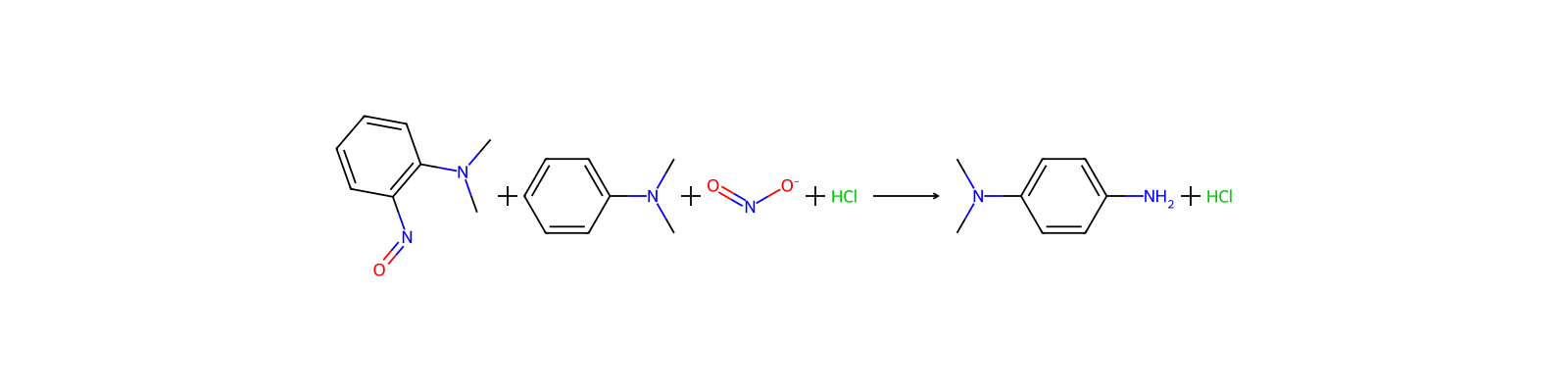
Preparation from p-nitrosodimethylaniline which is obtained from dimethylaniline ... . By reduction of methyl orange.
By reduction of p-nitrosodimethylaniline with zinc dust and hydrochloric acid. Method of purification: Recrystallization from mixture of benzene and ligroin.
...nitrosation, reduction of N,N-dimethylaniline
Use ClassificationCosmetics -> Hair dyeing
General Manufacturing Information1,4-Benzenediamine, N1,N1-dimethyl-: ACTIVE
Applications
UsesN,N''''-Bis(methylphenyl)-1,4-benzenediamine is used in preparation of novel high-strength rubber sound insulation pad composite material.
Suppliers50 total
国药集团化学试剂有限公司86-21-63210123 · [email protected]
梯希爱(上海)化成工业发展有限公司021-67121386 · [email protected]
衢州润东化工有限公司0570-8789886 18892685668 · [email protected]
上海阿拉丁生化科技股份有限公司400-6206333 13167063860 · [email protected]
上海伟聂化工科技有限公司13046668259 · [email protected]
合肥翰刚医药科技有限公司+8618062405514 · [email protected]
无锡市凯立生物科技有限公司0510-80721533 13327925606 · [email protected]
宁波季诺化学品有限公司0574-87314919 057487319282 · [email protected]
山东前元高分子材料有限公司18678041314 18765609661 · [email protected]
Dayang Chem (Hangzhou) Co.,Ltd.+86-0571-88938639 17705817739 · [email protected]
科瑞迪化学400-821-5857 021-64326257 · [email protected]
衢州明锋化工有限公司0570-3062502 13819002126;13819008176 · [email protected]
淮安嘉目生物科技有限公司0517-83187139 18205232085 · [email protected]
南京凯天化工有限公司+86 (25) 5860-8846 · [email protected]
Syntechem Co.,Ltd[email protected]
Ark Pharm, Inc.847-367-3680 · [email protected]
上海迈瑞尔生化科技有限公司4006356688 18621169109 · [email protected]
上海晶抗生物工程有限公司021-54721350 13524668266 · [email protected]
阿法埃莎(中国)化学有限公司400-6106006 · [email protected]
安耐吉化学&3A(安徽泽升科技股份有限公司)400-0056266 · [email protected]
梯希爱(上海)化工贸易有限公司021-61109150 · [email protected]
上海瀚鸿科技股份有限公司021-54306202 13764082696 · [email protected]
上海隆盛化工有限公司58099637 13585536065 · [email protected]
佛山宝诺生物科技有限公司0757-85921206 18520245316 · [email protected]
山东西亚化学有限公司13355009207 13355009207 · [email protected]
玛雅试剂+86 (573) 82222445 (0)18006601000 452520369 · [email protected]
HONG KONG IPURE BIOLOGY CO.,LIMITED86 18062405514 18062405514 · [email protected]
四川库利南科技有限公司400-1166-196 18981987031 · [email protected]
斯百全化学(上海)有限公司021-021-021-67601398-809-809-809 15221380277 · [email protected]
艾科试剂4008-755-333 18080918076 · [email protected]
上海思域化工科技有限公司86-21-34053660 · [email protected]
赛默飞世尔科技(中国)有限公司800-810-5118 · [email protected]
北京伊诺凯科技有限公司400-810-7969 010-59572699 · [email protected]
上海遐瑞医药科技有限公司+86 21 61551611
TCI AMERICA800-4238616 · [email protected]
TOKYO CHEMICAL INDUSTRY CO., LTD.03-36680489 · [email protected]
TCI Europe320-37350700 · [email protected]
上海贤鼎生物科技有限公司4009209199 · [email protected]
上海睿升化工科技有限公司+86-021-50935922
北京环宇世纪化学科技有限公司hysj_bj.com
上海湄水化工科技有限公司021-60549325 18616193163
北京阳光福润科技有限公司010-57495520 13521095525 · [email protected]
安徽科迪达化工有限公司0554-2106669 · [email protected]
HBCChem, Inc.+1-510-219-6317 · [email protected]
天津普西唐生物医药科技有限公司010-60605840 · [email protected]
上海麦克林生化科技股份有限公司15221275939 15221275939 · [email protected]
杭州杰恒化工有限公司0571-87396432 · [email protected]
上海有朋化工有限公司021-69005955 13701776567 · [email protected]
上海凯赛化工有限公司021-33516722 13701817765 · [email protected]
上海彤源化工有限公司021-021-69182866 13701855675 · [email protected]
Related reactions
85 records


Linked notes
Loading…