
4-Nitrobenzyl chloride
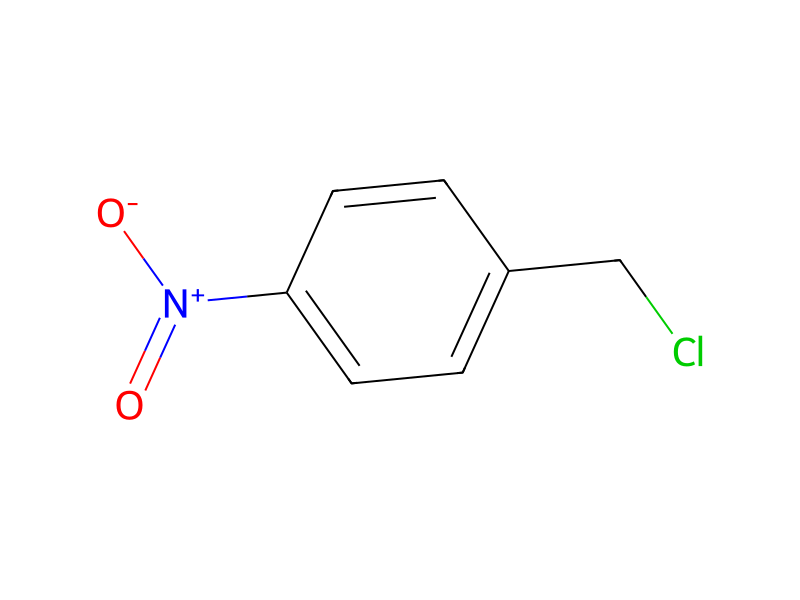
Basic information
- CAS
100-14-1- Standard SMILES
O=[N+]([O-])c1ccc(CCl)cc1- InChIKey
KGCNHWXDPDPSBV-UHFFFAOYSA-N- Molecular formula
- C7H6ClNO2
- Average molar mass
- 171.58 g/mol
- Monoisotopic mass
- 171.00870611
Overview
Benzene, 1-(chloromethyl)-4-nitro- is a solid. (EPA, 1998)
Names & identifiers
- Preferred name
- 4-Nitrobenzyl chloride
- IUPAC
- 1-(chloromethyl)-4-nitrobenzene
- English name
- 4-Nitrobenzyl chloride
- Molecular formula
- C7H6ClNO2
- Molecular weight
- 171.58
Names & synonyms
4-Nitrobenzyl chloride100-14-11-(Chloromethyl)-4-nitrobenzenep-Nitrobenzyl chlorideBenzene, 1-(chloromethyl)-4-nitro-alpha-Chloro-p-nitrotoluenep-(Chloromethyl)nitrobenzene4-(Chloromethyl)nitrobenzeneDTXSID40257454-nitrophenylmethyl chlorideToluene, alpha-chloro-p-nitro-3BLD9LVT3X
Show more names
p-nitrochlorideAKOS BBS-00003951NitrochlorobenzylNitrobenzylchlorideNitrobenzyl chloridà-chloro-4-nitrotolueneα-Chloro-4-nitrotoluene
BENZENE, 1-CHLOROMETHYL-4-NITRO-NSC-9803DTXCID105745CHEBI:87406para-nitrobenzyl chlorideRefChem:525941202-822-7alpha-Chloro-4-nitrotoluene
Database identifiers
- CAS
100-14-1- PubChem CID
- 7482
- DTXSID
DTXSID4025745- ChEMBL
CHEMBL176410- ChEBI
CHEBI:87406- UNII
- 3BLD9LVT3X
- EC Number
- 202-822-7
- Nikkaji
- J4.978F
Properties
Computed structural properties
- XLogP
- 2.5
- Topological polar surface area
- 45.8 Ų
- Hydrogen bond donors
- 0
- Hydrogen bond acceptors
- 2
- Rotatable bonds
- 1
- Heavy atoms
- 11
- Formal charge
- 0
- Complexity
- 138
Experimental & physicochemical properties
Chemical ClassesNitrogen Compounds -> Nitros, Aromatic
SpringerMaterials PropertiesDensity
Density1.5647 (NTP, 1992) - Denser than water; will sink
Color/FormPlates or needles from alcohol
Solubility
Insoluble (NTP, 1992)
Sol in alcohol, ether, acetone, benzene
Boiling Point230 °C @760 [mm Hg]
Melting Point
159.8 °F (EPA, 1998)
71 °C
71 °C
Vapor Pressure0.05 [mm Hg] @25 °C
Refractive IndexIndex of refraction: 1.5647 at 62 °C
Physical Description
Benzene, 1-(chloromethyl)-4-nitro- is a solid. (EPA, 1998)
Plates or needles from alcohol; [HSDB]
Other Experimental PropertiesUV: 6794 (Sadtler Research Laboratories Spectral Collection) /Benzyl chloride, 2-nitro/
Physicochemical properties
- Melting point
- 71 °C · 71 °C
- Boiling point
- 112 °C · 112 °C (0.6 mmHg)
- Density
- 1.3246 · 1.3246 (rough estimate)
- refractive index
- 1.5647 · 1.5647 (estimate)
- solubility
- 50 mg/mL, · chloroform: soluble50mg/mL, clear to very slightly hazy, faintly yellow
- form
- Crystalline Needles or Powder
- color
- Light yellow
- BRN
- 387187 · 387187
- Stability
- Stable. Incompatible with strong oxidizing agents, bases, amines, moisture, alcohols. Corrodes steel. Reacts slowly with water. Combustible.
- InChI
- 1S/C7H6ClNO2/c8-5-6-1-3-7(4-2-6)9(10)11/h1-4H,5H2
- InChIKey
- KGCNHWXDPDPSBV-UHFFFAOYSA-N
- SMILES
- [O-][N+](=O)c1ccc(CCl)cc1
- CAS DataBase Reference
- 100 · 100-14-1(CAS DataBase Reference)
- EWG's Food Scores
- 1 · 1
- FDA UNII
- 3 BLD9LVT3X · 3BLD9LVT3X
- NIST Chemistry Reference
- 4 · 4-Nitrobenzyl chloride(100-14-1)
- EPA Substance Registry System
- 1 · 1-(Chloromethyl)-4-nitrobenzene (100-14-1)
- UNSPSC Code
- 12352100 · 12352100
- NACRES
- 22 · NA.22
- Symbol(GHS)
- 5 · GHS05,GHS07
- Signal word
- Danger
- Hazard statements
- 302 · H302-H314
- Precautionary statements
- 260 · P260-P270-P280-P301+P312-P303+P361+P353-P305+P351+P338
- PPE
- 3 · Eyeshields, Faceshields, Gloves, type P3 (EN 143) respirator cartridges
- Hazard Codes
- C
- Risk Statements
- 22 · 22-34-36
- Safety Statements
- 26 · 26-36/37/39-45-27
- RIDADR
- 3261 · UN 3261 8/PG 2
- WGK Germany
- 3 · 3
- RTECS
- 9093000 · XS9093000
- F
- 4.8 · 4.8-19-21
- TSCA
- TSCA listed
- HazardClass
- 8 · 8
- PackingGroup
- II
- HS Code
- 29049090 · 29049090
- Storage Class
- 8 A · 8A - Combustible corrosive hazardous materials
- Hazard Classifications
- 4 OralSkin · Acute Tox. 4 OralSkin Corr. 1B
- Hazardous Substances Data
- 100 · 100-14-1(Hazardous Substances Data)
- Limited Quantities
- 1 Kg · 1 Kg (2.2 lbs) (solid)
- Excepted Quantities
- Max Inner Pack (30g or 30ml) and Max Outer Pack (500g or 500ml)
Safety & regulation
Safety information is for reference only and does not replace the supplier’s Safety Data Sheet (SDS), applicable regulations, or professional assessment.
GHS classification
GHS Classification
Danger
H302 (100%): Harmful if swallowed [Warning Acute toxicity, oral]
P260, P264, P270, P280, P301+P317, P301+P330+P331, P302+P361+P354, P304+P340, P305+P354+P338, P316, P321, P330, P363, P405, and P501 (click each P-code to see the statement)
Aggregated GHS information provided per 48 reports by companies from 5 notifications to the ECHA C&L Inventory. Each notification may be associated with multiple companies.
Warning
H302: Harmful if swallowed [Warning Acute toxicity, oral]
Hazard information
Regulatory Information4-Nitrobenzyl chloride: Does not have an individual approval but may be used under an appropriate group standard
DOT LabelCorrosive
Fire HazardsIncompatible with sodium hydroxide. (EPA, 1998)
Health HazardsPoisonous if swallowed or dust is inhaled. (EPA, 1998)
Hazards SummaryPoisonous by ingestion and inhalation; [CAMEO] Corrosive; Causes burns; A lachrymator; May cause pneumonitis and pulmonary edema after inhalation of high concentrations; [MSDSonline]
Reactive GroupHalogenated Organic Compounds
Reactivity Profile
Incompatible with sodium hydroxide. [EPA, 1998]. A halogenated aromatic nitro compound. Aromatic nitro compounds range from slight to strong oxidizing agents. If mixed with reducing agents, including hydrides, sulfides and nitrides, they may begin a vigorous reaction that culminates in a detonation. The aromatic nitro compounds may explode in the presence of a base such as sodium hydroxide or potassium hydroxide even in the presence of water or organic solvents. The explosive tendencies of aromatic nitro compounds are increased by the presence of multiple nitro groups.
Air and Water ReactionsMay react slowly with water. (NTP, 1992)
CERCLA Reportable Quantities
Releases of CERCLA hazardous substances are subject to the release reporting requirement of CERCLA section 103, codified at 40 CFR part 302, in addition to the requirements of 40 CFR part 355. Benzene, 1-(chloromethyl)-4-nitro- is an extremely hazardous substance (EHS) subject to reporting requirements when stored in amounts in excess of its threshold planning quantity (TPQ) of 500/10,000 lbs.
Hazard Classes and Categories
Acute Tox. 4 (100%)
Acute toxicity (Oral) - Category 4
Safety & protection
Fire FightingKeep unnecessary people away; isolate hazard area and deny entry. Stay upwind; keep out of low areas. Wear self-contained (positive pressure if available) breathing apparatus and full protective clothing.
First Aid
Signs and Symptoms of Acute Benzene, 1-(Chloromethyl)-4-Nitro-Exposure: Signs and symptoms of acute exposure to benzene, 1-(chloromethyl)-4-nitro- may be severe and include cyanosis (blue tint to the skin and mucous membranes), tachycardia (rapid heart rate), hypotension (low blood pressure), and cardiac arrhythmias. Respiratory depression and respiratory failure may also occur. Headache, lethargy, weakness, vertigo (dizziness), severe depression, and coma may be noted. GI symptoms include nausea and vomiting. Urine and vomitus may have the odor of bitter almonds.
Nonfire Spill ResponseKeep unnecessary people away; isolate hazard area and deny entry. Stay upwind; keep out of low areas. If water pollution occurs, notify appropriate authorities. Do not touch spilled material; stop leak if you can do so without risk.
Isolation and EvacuationExcerpt from ERG Guide 154 [Substances - Toxic and/or Corrosive (Non-Combustible)]:
Protective Action Criteria (PAC)
0.18 [mg/m3]
2.0 [mg/m3]
12 [mg/m3]
Personal Protective Equipment (PPE)
For emergency situations, wear a positive pressure, pressure-demand, full facepiece self-contained breathing apparatus (SCBA) or pressure- demand supplied air respirator with escape SCBA and a fully-encapsulating, chemical resistant suit. (EPA, 1998)
Toxicology
Adverse EffectsDermatotoxin - Skin burns.
Non-Human Toxicity Excerpts
The mutagenicity of 24 benzyl derivatives, containing a variety of substituents & leaving groups, were assayed in strain TA100 using Ames plate incorporation assay. P-nitrobenzyl chloride (12000 revertants/umole) was mutagenic. It was also mutagenic in strain TA98 (700 revertants/umole), but not in strain TA98NR (a strain deficient in nitro reducatase activity). This study suggests that nitrobenzyl derivatives were mutagenic due to nitro reductive metabolism.
Benzyl chloride, benzyl bromide, p-methylbenzyl chloride, & p-nitrobenzyl chloride were used to study chem reactivity with 4-(p-nitrobenzyl)pyridine & guanosine in vitro, in relation to mutagenic potency in Salmonella typhimurium & sister chromatid exchange (SCE) induction in CHO cells. Benzyl bromide was most reactive, followed by p-methylbenzyl chloride, benzyl chloride, & p-nitrobenzyl chloride. The order of mutagenicity was p-nitrobenzyl chloride much greater than benzyl bromide which was greater than benzyl chloride which was similar or equal to p-methylbenzyl chloride. They caused base-pair mutations only. The order of SCE-inducing ability decreased as follows: benzyl bromide greater than benzyl chloride which was similar or equal to p-nitrobenzyl chloride which was similar or equal to p-methylbenzyl chloride. The high mutagenicity of p-nitrobenzyl chloride in bacteria may be due to reactions other than direct aralkylation.
Toxicity DataLCLo (rat) = 280 mg/m3/4h
Regulatory information
CERCLA Reportable Quantities
Releases of CERCLA hazardous substances are subject to the release reporting requirement of CERCLA section 103, codified at 40 CFR part 302, in addition to the requirements of 40 CFR part 355. Benzene, 1-(chloromethyl)-4-nitro- is an extremely hazardous substance (EHS) subject to reporting requirements when stored in amounts in excess of its threshold planning quantity (TPQ) of 500/10,000 lbs.
Safety data
- F
- 4.8-19-21
- PPE
- Eyeshields, Faceshields, Gloves, type P3 (EN 143) respirator cartridges
- wgk
- 3
- tsca
- TSCA listed
- rtecs
- XS9093000
- ridadr
- UN 3261 8/PG 2
- hs_code
- 29049090
- risk_code
- 22-34-36
- Signal word
- Danger
- Symbol(GHS)
- GHS05,GHS07
- hazard_code
- C
- safety_code
- 26-36/37/39-45-27
- hazard_class
- 8
- Storage Class
- 8A - Combustible corrosive hazardous materials
- packing_group
- II
- Hazard statements
- H302-H314
- Limited Quantities
- 1 Kg (2.2 lbs) (solid)
- Excepted Quantities
- Max Inner Pack (30g or 30ml) and Max Outer Pack (500g or 500ml)
- Hazard Classifications
- Acute Tox. 4 OralSkin Corr. 1B
- Precautionary statements
- P260-P270-P280-P301+P312-P303+P361+P353-P305+P351+P338
- Hazardous Substances Data
- 100-14-1(Hazardous Substances Data)
Chemistry & industry
Pharmacology
Metabolism/Metabolites4-nitrobenzyl chloride has known human metabolites that include 4-nitrobenzyl-glutathione and S-(4-Nitrobenzyl)glutathione.
Uses & manufacturing
U.S. Exports(1987) No Data
U.S. Imports(1987) No Data
U.S. Production(1987) No Data
General Manufacturing InformationBenzene, 1-(chloromethyl)-4-nitro-: ACTIVE
Applications
DescriptionBenzene, 1-(chloromethyl)-4-nitro- is a crystalline solid. Molecular weight= 171.58; Freezing/Meltingpoint =71℃. Slightly soluble in water; slow reaction.
Uses4-Nitrobenzyl chloride was used to prepare unsymmetrically N,N′-bis(substituted) 4,13-diaza-18-crown-6-ether derivatives.
General DescriptionSolid.
Upstream & downstream products
Downstream products
Additional notes
DefinitionChEBI: A C-nitro compound that is nitrobenzene in which the hydrogen at position 4 is replaced by a chloromethyl group.
Related reactions
145 records


Compound notes
Loading…